SANSHO THE BAILIFF – Fumio Hayasaka
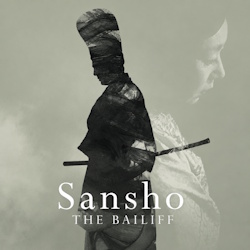 GREATEST SCORES OF THE TWENTIETH CENTURY
Original Review by Craig Lysy
Director Kenji Mizoguchi was inspired by Mori Ōgai’s 1915 novella Sanshō Dayū. Its tale about the tragic realities of human trafficking in feudal Japan resonated with him because of his own harrowing childhood experience of being given up for adoption. Also influential were his Marxist-feminist politics and his belief that post-WWII Japan needed to re-examine its brutal and oppressive past. Mizoguchi decided to use this historical tragedy to create a morality play exploring themes of resilience, human dignity, and the universal need for compassion. In the early 1950s, Mizoguchi’s career was ascendant, and although jidaigeki (period dramas) were not popular with the Japanese public, Daiei Film decided to back the project. Masaichi Nagata was assigned to produce, Mizoguchi would direct, and Fuji Yahiro and Yoshikata Yoda would write the screenplay. A fine cast was assembled, including Kinuyo Tanaka as Tamaki, Kyōko Kagawa as Anju, Eitarō Shindō as Sanshō, and Yoshiaki Hanayagi as Zushiō.
The film is both a morality play and a commentary on societal corruption and Japan’s merciless feudal system. Mizoguchi’s conception was also poetic, offering a mournful yet beautiful meditation on the profound wisdom of a Buddhist proverb spoken by a father to his son: “Without mercy, man is like a beast.” The film is set in Japan during the late Heian Period of the 11th century and follows the misfortunes of a virtuous governor’s family. A feudal lord banishes Governor Masauji Taira to the distant Tsukushi Province for refusing to ruthlessly impose higher taxes to fund the war. He decides to send his wife, Tamaki, his son, Zushiō, and his daughter, Anju, to live with his uncle, Masasue Taira. Before they depart, Zushiō’s father counsels him: “Without mercy, man is like a beast. Even if you are hard on yourself, be merciful to others.” He urges his son to remember these words and gives him a statuette of Kannon, the Goddess of Mercy.
It comes to pass that the family suffers terrible misfortune on the journey, with Tamaki being sold into prostitution and the children being sold to slave traders, who in turn sell them to a provincial estate where they are brutalized by the sadistic overseer Sanshō. The children survive into adulthood, and eventually Zushiō escapes and travels to the court of the Imperial Chief Advisor, where he proves his noble heritage. He is informed that his father, Governor Masauji Taira, has died and, as his heir, is appointed Governor of Tango Province. Zushiō returns and discovers that his sister sacrificed her life to facilitate his escape. Instead of taking revenge, he frees all the slaves and exiles Sanshō and his family. The film ends with a poignant reunion between Zushiō and his mother, during which he affirms that he remained true to his father’s counsel.
Commercially, the film was a modest success in the Japanese market; however, over time it achieved enormous critical acclaim worldwide and acquired a cultural longevity that ultimately allowed it to far exceed Daiei Film’s production costs. Most critics, including your reviewer, believe that the film is a masterpiece of world cinema and a legitimate contender for the title of “Greatest Film Ever Made.” The film won the Silver Lion Award at the 1954 Venice Film Festival; however, it received no Academy Award nominations.
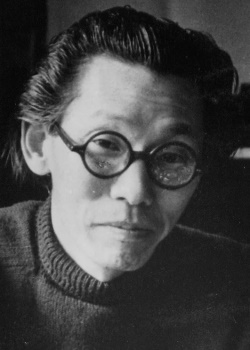 In the 1950s, Fumio Hayasaka was renowned as one of Japan’s most successful and prominent film composers. Director Kenji Mizoguchi was known as a demanding perfectionist who deeply respected Hayasaka and held his sophisticated, late-Romantic musical style in high esteem, recognizing how greatly it had contributed to the success of The Life of Oharu (1952) and Ugetsu (1953). As such, he had no doubt about who would score his latest film. Hayasaka accepted the assignment, and the rest is history. When all is said and done, critics, including your reviewer, consider Sansho the Bailiff the third installment in an extraordinary trilogy of cinematic masterpieces and an enduring testament to one of the greatest director-composer collaborations in cinematic history.
Mizoguchi provided Hayasaka with a general description of what he desired: a haunting, delicate, flute- and harp-driven score that blended traditional Japanese instruments with a Western orchestra to underpin the medieval setting and the film’s tragic emotional weight. To that end, Hayasaka conceived a soundscape built upon several core structural and thematic pillars. First, as a pioneer and champion of the “Pan-Asian” musical movement, he would blend Eastern and Western sensibilities. This would be achieved by augmenting the emotional power of a Western orchestra with traditional Asian pentatonic scales and gagaku instruments associated with Japanese court music, including the shō (mouth organ), komabue (a small, six-holed transverse bamboo flute), and biwa (lute).
Hayasaka knew from his prior collaborations that Mizoguchi disliked musical melodrama designed to manipulate the audience. As such, he strove to maintain a discreet aesthetic dignity within the tragic narrative, stepping back during moments of visceral cruelty. By doing so, he believed he could heighten the film’s mournfulness and tragedy, especially during scenes of psychological or emotional isolation. He also decided to employ diegetic folklore as a haunting refrain by structuring a significant portion of his music around Tamaki’s sad folk song. After being cruelly sold into prostitution, Tamaki sings a lament calling out for her beloved children, Zushiō and Anju. Hayasaka transforms this diegetic piece of folklore into a haunting, recurring, non-diegetic refrain, creating a musical echo and direct psychological link between the fractured family members during unexpected and devastating moments throughout the film.
For another important element of the score, Hayasaka decided to express a musical narrative steeped in grief that did not rely on a heavy, operatic, action-driven leitmotif structure, instead embracing ambient textures that evoke collective and systemic sorrow. In doing so, the score acts as a spiritual counterweight to the bleakness of the physical environments, providing a faint glimmer of moral conscience and human mercy in a world defined by brutality, violence, and oppression.
Finally, during the scoring of the film, Hayasaka’s health was declining due to tuberculosis, the disease to which he would tragically succumb the following year. As a result, he began to require assistance from other composers to ease his burden. Tamekichi Mochizuki and Kinshichi Kodera were tasked with providing and managing the traditional Japanese Noh theatrical elements, along with Japanese modal and percussion material.
There is no commercial release of the score. As such I will use film time indices and scene descriptors to provide film narrative context to the music. The Criterion and Janus Pictures logos, and the film’s restoration by Kadokawa Corporation are unscored. 0:20 “Logo” The Daiei Motion Picture Company logo displays supported by stark drum strikes and woodblock percussion. 0:30 “Main Title” offers a masterpiece, an overture which presages the coming epic tragedy. It sets a mournful tone that underscores the loss of humanity, family separation, maternal suffering, and the resilient endurance of the human spirit. We open with a haunting, dirge-like orchestral piece empowered by a slow, mournful horn fanfare, which immediately establishes the film’s tragic weight, acting as an ominous prologue. Hayasaka masterfully blends Western classical orchestration with traditional Japanese Hōgaku sensibilities, and by doing so infuses the weeping string borne melodic line with a distinctly Japanese sorrow that feels ancient, and unmoored from time. Ingenious is a heavy, heartbeat-like basso continuo borne by timpani and a bass ostinato, which creates a fateful atmosphere of inevitability, mirroring the inexorable tragedy that will soon overtake the exiled family. 2:13 “Prologue” offers another score highlight, which again affirms that “In simplicity, there is beauty.” It opens with the display of narrative script;
“This tale is set during the late Heian period, an era when mankind Had not yet awakened As human beings. It has been retold By the people for centuries and it is treasured today, as one of the world’s great folk tales, full of grief”.
I believe Mizoguchi sets a tragic, mythic tone by showing a bleak landscape featuring the weathered, ruined base pillars of a long destroyed historic structure, which symbolize a fractured world. Hayasaka uses a haunting and meandering solo flute adorned with plucked harp to evoke a sense of distance, and timelessness as the mythic text unfolds.
2:54 “The Calm Before The Storm” reveals Zushio, Anju, Tamaki and Ubatake, her servant walking along a forest stream back to their manor. Zushio asks his mother how father came to be sent away, and she deflects as the reason best remains unspoken. Hayasaka supports with a nuanced musical narrative, which presages the coming tragedy that will befall the family. He offers aching, elegiac beauty, with a blending of Western and Gagaku sensibilities expressed by western woodwinds, and Komabue (high pitched flute) and Shō (mouth organ). 4:17 “Flashback 1” reveals Governor house guards confronting a mob demanding that their beloved Governor not accept exile. Tamaki, Zushio and Anju are escorted to safety in the house. They yell this is not a transfer, but exile, all because our Master refused the general’s demand, because of the famine, to send more men to fight, and to impose a rice tax on the people. A village elder yells that if you oppose this order, our master, and the rest of us will be punished. Inside the general orders the riot put down with force, but the Governor declares he does not approve. The general is outraged, stands, grasps his sword sheath, and yells to shut up, as you are no longer governor.
6:35 “Return to the Present” reveals Tamaki, Zushio, Anju and Ubatake camped along a forest stream. Hayasaka supports with restraint, minimalism, and melancholia, which imparts a sense of dread within the idyllic beauty of their surroundings. A small ensemble of weeping strings, light plucked koto, biwa, and harp express the film’s central, and pervasive lament derived from the poem “Song of Unending Sorrow”. In 7:38 “Flashback 2”, we flashback with the musical narrative flowing seamlessly, shifting back to the manor of uncle Masasue Taira as a contemplative Masauji takes evening tea, while his family watches in the background. He apologizes for any inconvenience he and his family has caused. His uncle is angry, and reprimands him for being too merciful and lenient toward the peasants instead of ruling them with the harsh, iron hand. He adds, you have involved the whole family, and now your wife and children are in pain. When he says the peasants are in pain as well, the Masasue becomes furious and storms out, yelling; “Nonsense! You cannot compare us to peasants! You fool!”
8:32 “A Fateful Decision” offers a score highlight, which masterfully supports the ethical foundation of the film. Masasue’s rejection forces Masauji to ask Tamaki to take the children to her parents’ home in Iwashiro, and to accept his apology for disappointing them. At 9:00 music joins as Masauji offers Zushio counsel;
“Without mercy, man is like a beast. Even if you are hard on yourself, be merciful to others. Men are created equal. Everyone is entitled to their happiness.”
Masauji stands up and retrieves a statue. He tells Zushio:
“This is the goddess of mercy, Kwannon, a family treasure. Think of this as my principle. Keep it in remembrance of me. Always keep it with you. Understand?”
He asks Zushio to repeat his words, and he does so dutifully. Hayasaka’s drapes the scene with solemnity, and reverence, supporting a profound father-son moment where Masauji bestows upon Zushio, his legacy. Yet the musical narrative also presages the agonizing journey that lies ahead for the family, which ultimately shatters it. Hayasaka supports masterfully with poignant, elegiac thematic interplay. We open with a tender and noble Masauji’s Theme borne by strings of mourning, which empower the film’s defining moral precept: “Without mercy, man is like a beast.” Yet we discern ominous undercurrents where Hayasaka weaves in low, dissonant woodwind tones and subtle, shifting cluster chords. This portends the brutal separation and the loss of innocence the children are about to face. Lastly, for Tamaki, the children’s mother, Hayasaka presages the horrific fate that awaits her by offering the haunting, and tragic lament derived from the poem “Song of Unending Sorrow”, which grounds the scene in deep sorrow,
10:10 “The Journey” reveals Tamaki, the children and Ubatake walking through the countryside. Zushio recites his father’s words and we see the Goddess Kwannon in a sack hanging from his neck. Hayasaka supports with mournful, dirge-like strings mixed with delicate traditional Japanese instruments, creating a despondent musical landscape that underscores their profound loss, and the vast physical distance that will soon separate the family. A komabue (bamboo flute), shō (mouth organ) and plucked biwa (lute) join and speak to the idyllic countryside through which they pass. Lastly, subtly woven into the musical narrative is Tamaki’s Theme, which offers a tragic undertone that bears the musical seed of the courtesan’s song “Song of Unending Sorrow”. This serves as a haunting, and recurring thematic force that will echo throughout the children’s subsequent hardships and attempts at reunification. At 11:03 “Masauji’s Departure” offers another masterfully conceived score highlight. We flashback, and see Tamaki placing Masauji in his shoes. She asks Zushio to say goodbye to his father. Hayasaka understood that this scene offers the couple’s last physical interaction. As such, he introduces traditional Noh theater sensibilities with a komabue (transverse bamboo flute) piercing through the score with high, wailing, and unearthly tones, that float over a low register and grim orchestral foundation. This informs us of the gravity of their impending separation and the implacable nature of the law that will soon bring ruin to their family. As Masauji departs, he tells his family that we will not be separated forever, and to be hopeful and brave. Villagers kneel and bow their heads in respect and in sadness. As he rides in the fields, farmers and their families flock to him pleading for him to stay, forcing his guards to part the way so he may pass. Hayasaka shifts the musical narrative to Gagaku textures, by joining traditional wind instruments, like the high-pitched komabue, shō with cluster chords, which do not resolve harmoniously, thus informing us of the approaching chaos that will result in his family being torn asunder.
13:00 “A Warning” reveals a contemplative Tamaki as Zushio and Anju refresh themselves by a lake. She tells them that they need to go and find lodging before it is dark. They depart and are rejoined by Ubatake, who had been talking to other travelers. She informs Tamaki that there are no lodgings available in this area, warning that there have been bandits and slave traders posing as travelers, killing and kidnapping women and children. She says the governor has prohibited sheltering travelers. Hayasaka creates an idyllic and impressionistic musical narrative that speaks to the beauty and tranquility of the lake using plaintive strings, celeste, harp, and glockenspiel, yet I also perceive feelings of loneliness and isolation. However, this musical narrative is short-lived as clashing, dissonant tones subtly disrupt the melody, to evoke a foreboding omen, a musical foreshadowing of their vulnerability, and the cruel forces that will soon separate the family. Once again woven within the narrative is the haunting, dirge-like elegy, which juxtaposes a soaring komabue flute against, agonizing string motifs, which creates a feeling of inescapable fate. 14:50 “Flowers” reveals them walking through a field of chest high blossoms. Hayasaka shifts to the pentatonic scale to blend traditional Japanese instrumentation with Western orchestral arrangements. This creates a lightness of being, a floating, dreamlike quality, which mimics the natural movement of the wind blowing through the reeds. I believe it evokes the family’s brief moment of pastoral peace and innocence, which makes their impending capture by slave traders feel even more devastating. The Ubatake frets that they must build a shelter for the night and they stop to do so.
15:35 “Building The Shelter” reveals them building of the shelter using harvested brush. Hayasaka allows the ethereal, dreamlike and floating qualities of the previous scene to dissipate. The new musical narrative shifts to spritely strings, horns, and subtle percussion elements becoming distinctly more rhythmic, steady, and repetitive. The phrasing matches the physical, tactile actions on screen—the bending of branches, stacking of brush, and clearing of earth. The new steady tempo signals that the characters have transitioned from idealistic travelers into vulnerable survivors, actively trying to shield themselves from a hostile, brutal world. 17:48 “Dinner” reveals nightfall and the family sitting near a campfire eating a cold dinner. Ubatake decides to seek out some porridge and bedding at a nearby house and departs. A woman arrives and offers shelter and porridge and Tamaki graciously accepts as Ubatake returns. At 21:00 distant drum strikes are heard, which accelerate as they prepare to leave. Hayasaka eschews melodrama, instead embracing minimalism, which achieves a profound emotional impact. He scores this precarious, and fleeting moment using traditional Japanese flutes and strings. There is a pervasive melancholia, joined with an undercurrent of unease as the children bed down for the night. At 22:44 foreboding drum strikes support the old woman counselling to travel by boat as the mountain roads are often raided by the slavers. She says she knows reliable boatmen and agrees to assist them hire one.
22:48 “Tamaki’s Abduction” reveals it is morning, and the old woman takes them to some boatmen she hired. They move Tamaki into the boat and shove off, saying the children will take a second boat. A struggle ensues with the men refusing her money to go back and instead stealing it. On shore the children struggle against the men to reach their mother to no avail. Hayasaka supports tumultuously and shearing musical narrative evoked by a shrill, and piercing komabue, which emotes her panic and desperation. Shō cluster chords evoke a chaotic and horrific passage of pain as Ubatake falls overboard and is left to drown. We close the scene, with the song taking on an otherworldly echo, which informs us of the brutal severance of Tamaki from her children, and futility of her fight. Later in town Zushio and Anju cower as initial attempts to sell them into slavery fail. The bandit is told to take then to Sansho the Bailiff as he is rich and in need of more slaves. Sansho interviews them, but they refuse to disclose their names. He grudgingly accepts them and orders them to work. We see that his son Taro does not agree with his father’s methods. Outside, Zushio is placed with men while Anju is sent to work with women. 30:00 “Zushio Collapses” reveals Zushio after his first day of work in the fields returning to the camp hauling fire wood and kindling. He collapses in the mud from exhaustion, Anju runs to him, and then tends to him. Hayasaka uses minimalism with shō wails to speak to Zushio’s weariness, despair and loss of dignity. At 31:15 sharp wood stick percussion supports a rising panic as a woman flees several men who catch her. She pleads that she was not trying to escape, saying these two kids (Zushio and Anju) reminded her of her kids whom she misses. To set an example, Shanso orders Taro to brand her face. Taro refuses, evokes Shanso’s anger and disparagement, and we watch as Shanso does the face branding himself.
33:17 “Taro’s Compassion” reveals Taro telling Zushio and Anju to not look as he escorts them away. He takes them into a hut, earns their trust with his compassion, and gifting of rice cakes. They open up and he learns that they are of noble lineage. The scene is poignant as the children yearn for their mother and their former life. Hayasaka supports the unfolding tragedy with a haunting and sorrowful musical narrative empowered by the Song of Unending Sorrow Theme, which is inextricably linked to their mother. The profound pathos Hayasaka infuses into this scene is a testament to his skill as a composer. An interlude follows as Sansho orders the house prepared for a visit by the Right Minister and frets that Taro has disappeared. He sends Kichiji to find him and we shift back to the hut. 35:33 “Repeat Your Father’s Words” reveals Taro offering sympathy for their plight, and how cruel the world is. He asks Zushio to repeat the words spoken to him by his father, and he says; “A man is not a human being without mercy. Even if you are hard on yourself, be merciful to others.” Taro slams the ground in anger, clearly directed towards his father Sansho. He tells them that he wants to get them back to their parents, but Sado is far away, and Tsukushi even father. He says this distance cannot be traveled by children alone. He counsels them to be patient until they grow up, and whatever happens to them, they must endure it. He says it was wise to hide your names, but says they need names and so he names Zushio, Mutsu, and Anju, Shinobu. Hayasaka supports with strings teneri, melancholic woodwinds and traditional court instruments. This haunting arrangement serves as a musical haven from the brutal reality of their enslavement, offering a tragic beauty of a family struggling to preserve their humanity in an oppressive world.
Afterwards, Kichiji finds Taro and says Sansho orders him to join the reception of a Right Minister from Kyoto, which he does grudgingly. The minister commends Sansho for always delivering taxes on time, and in offering very generous tribute. He adds that he is the most trusted man among my bailiffs. 39:00 “Dance” reveals Sansho introducing his son Taro, and ordering his immaculately dressed women to dance. Hayasaka supports with a diegetic Gagaku (Japanese court music) performance using a small ensemble of koto, a plucked zither that provides a rigid, rhythmic melodic foundation, hichiriki and ryūteki, traditional bamboo flutes that produce piercing, gliding pitches, and tsuzumi, small hand drums emphasizing the formal cadence of the dance. The women sing; however, their vocals are stark, trembling and deeply melancholic. Most interesting is that Hayasaka scores the scene with a traditional pentatonic melody that is cold, repetitive and devoid of joy. He purposely uses his music to express the cruel, and absolute subjugation of these women, forced to perform flawless, graceful artistic expressions of joy, which belies their grief, degradation, and suffering as slaves under Sansho’s brutal captivity. Taro leaves to visit the children who sleep on straw with the Gagaku music wafting in. He returns to Mutsu a straw encase statue of Kwannon and then covers the children with a straw blanket. Tao departs, orders the sentry to open the estate gate, and then walks along a dirt road never intending to return. His self-exile is carried by a solitary Nōhkan flute that fades away as the scene fades to black.
41:37 “Ten Years Later” Reveals narrative script: “After ten years, the young children have developed into sturdy young adults in spite of their long hardship and misery. The winter finds Mutsu (Zushio), 23 years old, and Shinobu (Anju) 18 years old.” Mizoguchi once again sets a tragic, mythic tone by showing a bleak landscape featuring the weathered, ruined base pillars of a long destroyed historic structure, which symbolize a fractured world. Hayasaka imparts a pall of lingering sorrow in a sophisticated musical narrative within which is woven his “Work Song” Motif, which speaks of the grueling toil and brutal years of their enslavement. Its repetitive, rhythmic quality mimics the physical toll of their labor at the camp, and the suffering the siblings have endured. Once again, the pervasive lament of the “Song of Unending Sorrow” associated with their mother, Tamaki is heard. Yet it has grown distant, slowly weakening, and now expressing their fading hope that they will ever see her again. 42:14 “Alarm” reveals the camera shifting to Matsu and Shinobu sleeping. The slaves are awakened by the repeated banging of a hyoshigi (wooden clappers), which signal an escape attempt. They apprehend an old man crying out; “I have been toiling for 50 years. I am already 70 and my days are numbered”. He begs for mercy, but Sansho orders Mutsu to brand him, and he does so without hesitation. Later Shinobu listens as women gossip that Mutsu did the branding and that he is a bad man, probably the son of a bandit. She says nothing, yet the disappointment in her expression speaks volumes. She mentors a new girl on a spinning wheel and finds out she was from Sado. She asks if she knew of a woman, now about 45 years old named Tamaki? She answers no, and Shinobu is disappointed and leaves to tend to fellow slave Namiji who is suffering in pain. She then asks why the world has turned their backs on us.
47:15 “Song of Unending Sorrow” reveals a solitary woman’s haunting voice singing a lament. Shinobu turns and sees that a young woman is singing the song. She approaches her and asks her what song is she singing? She repeats the first four lines and says it was a popular song in Sado. She asks who sang the song, and the woman replies, a courtesan named Nakagimi. We see her hopeful, and she asks if she is still alive, and the woman says, I do not know. Sinobu asks her to sing it again, and she does. Devastation overcomes her as she says, “It is mother” and begins to weep. 50:16 “Tamaki Punished” reveals Nakagimi (Tamaki) running down to the beach as men slowly push a boat into the sea. She yells “Wait! Please wait!” The “Song of Unending Sorrow” melody joined by a wailing komabue support as we see men pursuing her as she shouts “Take me too! Please, Take me! This is all the money I have!” Her owner and his men abduct her and take her back to the brothel. The owner orders her tendon cut so she cannot run away again. She begs for mercy, and promises not to escape again to no avail. Off camera she screams as they sever her Achilles tendon. The owner then warns the other women that he will punish all runaways like this.
51:55 “A Mother’s Lament” reveals two courtesans carrying Nakagimi up to a bluff overlooking the sea. An aching “Song of Unending Sorrow” melody expresses her despair. With the aid of a walking stick, she stands and begins singing the a with a fragile voice full of distress. Hayasaka supports her unbearable heartache with strings angosciati, joined by koto and shakuhachi. Most interesting is how he purposefully leaves open spaces in the musical composition. I believe that by blending his music with the ambient heavy crashing of waves against the rocks below, and the whistling of the seaside wind, he frames the mother’s intense grief as a permanent, tragic fixture of the vast natural world surrounding her. 53:46 “You Have Changed” opens with the lament’s melody and lyrics flows seamlessly into a scene of Mutsu and Shinobu sitting in their hut, but here they are being sung by Shinobu. Mutsu tells her to stop singing, but she says that it’s the first news about mother we have heard. She asks if he cares, or has given up wanting to see mother and father again? He replies; “What is the use of wanting?” She pleads with him to retain hope, but he counters, without money, how can they look for them? He becomes angry because what has happened to them, and she reproaches him for already having the heart of a bandit, by branding an old man’s forehead. She asks how he can be so brutal, and had he forgotten father’s words? When she asks does he feel no shame, he throws away the statue of Kwannon, which she retrieves. She weeps that he has changed, and he responds saying it is better to be on the good side of the bailiff than the goddess.
The next day Kichiji orders Mutsu to dump Namiji who is dying, in the mountains. The other women slaves beg Matsu to let their sister die here, but he coldly pushes them away and takes Namiji away, saying it is the Bailiff’s orders. 57:26 “Matsu Awakens” reveals Shinobu and another woman accompanying Mutsu to the main gate where the sentry opens the gate. They bar the second woman and a sentry accompanies Mutsu and Shinobu. The reach the graveyard where many skeletal remains are seen. Mutsu lays Namiji down and Shinobu attaches a vine to a statue of Buddha, placing the other end in Namiji’s hand. She then gifts her the statue of Kwannon so she will be born fortunate in her next life. Hayasaka supports with an empathetic undercurrent, providing a tragic emotional commentary without overpowering the bleakness of the visual environment. Strings of mourning joined by shinobue and harp adornment imbue a somber tone for the last leg of Namiji’s journey. 1:00:15 “Let’s Escape” reveals Shinobu’s request to cover Namiji from the frost being granted by the guard. She walks to a tree and tries to snap off a branch and Matsu joins. He then assists her cutting straw, and she reminds him of the time they did when they were kids helping mother make a shelter. She turns suddenly and declares she hears mother calling their names. Hayasaka supports with an elegiac musical narrative with a komabue flute carrying the melody, joined by cluster chords and shō, which create an undercurrent of sorrow to the unfolding tragedy. Music gives way to a cooing turtledove, a symbol of a spiritual epiphany, the remembrance of lost loved ones, and as an invitation to find inner tranquility. The use of this symbology by Mizoguchi is genius. Zushio sheds a tear, and tells Anju, let’s run away. She tells him to go without her to the temple of Nakayama as they will catch us if we go together. She returns with branches, drapes Namiji and tells the guard her brother will do the rest. The guard agrees and they depart together.
1:05:44 “Where is Mutsu?” reveals Mutsu grabbing the statue, hoisting Namiji on his back and fleeing. Hayasaka initiates a clock-like motif that sow tension as Zushio flees and Shinobu returns to camp and is asked by the gatekeeper why her brother is taking so long. She reassures him he will come soon. As the time Zushio is missing increases, so does the intensity of the Clock Motif. The guard returns, shouts Mutsu is gone and Shinobu is blamed as the alarm is sounded. Sansho is advised, and orders Shinobu tortured as she must know where he is headed. The old woman tells Shinobu you will confess when they torture you, to which she replies, a dead person cannot confess. She ties the old woman up as a rouse and then runs out a small side gate. When the guards return, they cut her free and she misdirects them, saying she ran through the main gate. The old woman then walks out the side gate in search of Shinobu. 1:11:09 “Anju’s Sacrifice” reveals Anju standing lakeside. Her mother’s ghostly vocal is heard singing the “Song of Unending Sorrow”. Here, Anju begins walking out into the lake as Tamaki sings the next phrase, while the old woman looks on from above, kneels and prays.
When the camera shifts back to the lake, Anju has vanished with the last air from her lungs bubbling up to the surface supported by a ghostly woman’s wail. In a crucial unscored scene, we shift to Buddhist monks performing a ritual at the temple of Nakayama. Sansho’s men storm in and violate the sanctity of the temple. They are confronted by the Jūshoku (Head Priest) who demands they leave. Kichiji threatens him as they are acting under the Bailiff’s orders. The Jūshoku points up to a sign above them and says,this is an Imperial Temple, and your violation is punishable by death if you do not leave immediately. They do so, and in the courtyard a monk yells that the man exited the south gate, which elicits a stampede out of the temple. The monk then proceeds to a hidden safe compartment where we find Zushio and Namiji. The shave-headed monk is Taro, who abandoned the violence, evil and inhumanity of the world to find serenity as a monk. They thank him for the medicine that has helped Namiji recover, and for his protection. Zushio asks Taro for a favor, to care for Namiji as he intends to go to Kyoto. He asks who is the most powerful man there? Taro answers, Chief Advisor to the Emperor. He relates that he too went there, but in the end found it futile as humans care little about things that do not affect them directly. He has become cynical and counsels that the only path for a man of conscience is to keep close to Buddha. Zushio is determined, and so Taro says he will ask the Head Priest to write a letter to the Chief Advisor on your behalf. Zushio is very thankful and bows his head to the floor.
Zushio stands on a hilltop and we see the expansive imperial capital of Kyoto. He sneaks into the ministerial compound of the Emperor’s Chief Advisor. Outside his residence, Zushio removes his kasa, and assumes the seiza position. When the Chief Advisor and his party approaches, he runs to him with the letter and begs fervently, saying his father was the former deputy Governor of Mutsu, and that this is a letter from the Head Priest of the temple in Nakayama. He does not respond, they call the guard, who then drag him away. They find and take the statue of Kwannon, which they believe he stole. He becomes distraught, cries out it was his father’s, and pleads with them to return it. Later in a communal cell he weeps, and is surprised when guards call for him to come out. He begs them to not send him back to Sansho the Bailiff, and the guard assures him, and that he is a lucky man as the minister has summoned you to meet. During the meeting the Chief Advisor asks probing question, which confirm Zushio’s identity. He commends his father, and his courage arguing with arrogant military men. He says if he had been in office at the time, that his father would not have been exiled.
1:27:22 “Your Father Died” Zushio asks if he would then pardon his father, and the Chief advisor bends down to look him in the eye, saying sadly, that his father departed this transient life last year. Hayasaka supports with minimalism, rather than melodrama, offering a slow, stark and quiet passage born by strings lamentosi that emphasizes the tragic finality of the revelation, and Zushio’s unbearable devastation by this irreversible loss. As he weeps, unable to speak, I surmise that his contemplation involves remembrance of his father’s foundational moral teachings; “without mercy, man is like a beast”. The Chief Advisor voices his sympathy and support and then returns to his dais. He declares that in recognition of your father’s achievements and efforts, that I am empowering you to succeed your father’s title. Zushio cannot believe his ears, crawls forward and hears the Chief Advisor say that the post of Governor of Tanjo is vacant and that I give you that post. 1:28:20 “Installation Ceremony” reveals Zushio renamed Masamichi Taira to honor his father. He is elevated to Junior Grade for the Fifth Rank, and Governor of Tango Province. The Chief Advisor presents him the imperial prescript of Masamichi’s post, and commands him to come closer. He does so, and is told from now on, call yourself Masamichi (Righteous Path) Taira. He is told to visit his father’s grave, and Masamichi thanks the Chief Advisor. He says that my father may be dead, but my mother and sister will be delighted. I intend to make a happy life for them. He says he will also liberate the slaves from the inferno house of Sansho. The Chief Advisor however reproaches him saying; “Nonsense”. He declares that the slaves of Yura Manor are the property of the Right Minister, and that a Governor cannot interfere with a private manor. He tells Masamichi to be mindful of the limitations of his position. Hayasaka supports the scene with a small ensemble of traditional Japanese court instruments, which offer a reserved, stark, and solemn musical narrative borne. A shō speaks to the scared nature and political weight of Masamichi’s office, offering haunting cluster chords, which evoke an otherworldly atmosphere, A komabue creates a sharp, piercing, and echoing resonance, which speaks to Masamichi’s rise to power and unsettled inner conflict. Lastly, harp and plucked biwa embellishment imbue the narrative with melancholia, which presage the pain Masamichi will feel when the fate of his mother and sister are revealed.
1:30:10 “A Dutiful Son” reveals a reception party from Tsukushi awaiting with anticipation the arrival of the Governor to their humble prefecture. During the solemn ceremony, Masamichi apologizes for not coming sooner. Hayasaka scores Masamichi’s pilgrimage to honor his father with a somber dirge-like sensibility, which speaks to the tragedy, and quiet sorrow of his father, a noble man, dying in exile. Strings solenni evoke grief, a shō unsettles us with clashing cluster chords, while a komabue evokes the searing pain of his father’s humiliation and loss. At 1:31:54 Masamichi departs the gravesite on horse and a plucked biwa, shō and komabue create a mournful musical narrative, which speaks to Masamichi’s grief that befell his father. Judge Norimura welcomes him and presents him welcoming tea and gifts. Later, in a formal conference, Masamichi is introduced to the nobles. He thanks everyone, but then asks everyone to leave except Judge Norimura and his staff. He asks to dictate a decree; “In this province, the sale of human beings is forbidden by penalty of the law. The use of slaves shall be prohibited on both government lands and private manors”. Norimura is concerned and questions the wisdom of such a decree. Masamichi remains steadfast, and Norimura says you must admit this is reckless even for your young age. An argument erupts with Norimura reminding him that he has authority only over government lands, which make the Right Minister and his agent Sansho exempt. He adds that this will reach the capital and you will be removed from office, exiled like your father, or worse. He reproaches Norimura and orders the scribe to include that the freed slaves may stay and work as paid employees, or return home. He then dispatches Norimura to Sansho’s manor and retrieve the slave known as Shinobu.
1:36:14 “Norimura Departs” reveals his departure adorned with twinkling glockenspiel and a grim reprise of the “Song of Unending Sorrow” melody, which presages a new source of pain that awaits Masamichi when he discovers his sister’s fate. Nourimura is confronted by Sansho’s henchmen Kichiji who declares the Governor has no authority over the Right Minister’s mansion. They posture ready to attack if he does not leave. Hayasaka supports with low register strings offering a sad reprise of “Song of Unending Sorrow”. Norimoura departs and Sansho is briefed by his guards. Later, peasants read the posted edict where the Governor declares enslavement illegal. Shifting back to Sansho, he rages against this governor, orders a courier sent to Kyoto to inform the ministers of what is happening, and then orders his guards to tear down all the decree postings in town. A montage follows of Sansho’s henchmen destroying all the decrees posted in the village. When news reaches Masamichi, he orders his army deployed and leads them personally to Sansho’s residence. Masamichi rides in with superior forces and is received by Sansho, who fails to recognize him until Masamichi says; “It has been a while, bailiff.” He is shocked, says you have changed, and apologizes for not recognizing him. An argument ensues with each threatening the other. Masamichi loses patience and orders Sansho and his guards arrested. They succeed easily as they have superior numbers and military trained soldiers. Masamichi goes outside and announces to all the slaves that the slave trade is now banned on both government and private lands in the province of Tanjo. He tells them you are now free; free to go home, free to remain and work here as paid employees, or given land of your own to farm. Masamichi then kneels and asks Nio, the old man he branded, to forgive him. He then turns and calls out to Anju, and then Shinobu, yet no one answers. He asks the women where is his sister and he is told she passed away.
1:46:22 “Why Didn’t You Wait For Me?” reveals a shift to the lake where he asks; “Why didn’t you wait for me? Masamichi is distraught and tells her it was your great strength that gave me a new life. Hayasaka eschews melodrama and a sweeping orchestral melody, instead supporting with stark minimalism. A mournful passage borne by traditional Japanese instruments adorned with harp figures supports. Hayasaka masterfully joins this with pauses of silence, which echoes the natural beauty of the gentle, rippling water where Anju drowned, but also the profound human suffering Anju endured to secure her beloved brother’s freedom. 1:46:46 “Sansho’s Manor is Burned” reveals a change of scene. That night the freed slaves party in Sansho’s hall, drinking his sake, eating his food, and tossing his fine furniture in a fire atop his dais. A diegetic pounding of wood water buckets provides a steady rhythm for the merrymaking. Later, Norimura alerts Masamachi that Sansho’s manor is on fire. He looks out from his balcony, and fetches a letter form his desk. He informs Norimura to submit this letter of resignation to the Chief Advisor. He says those who suffered like me will understand. As he departs, he says he is going to Sado tomorrow and to make the necessary preparations. 1:49:34 “Zushio’s Search” reveals people waiting along a beach for passage by boat. The captain summons everyone and they run to the boat. We see a solitary man sitting on a dune. An oarsman asks, are you not coming? And he says no, I am looking for a woman named Nakagimi. The man says, she must be a courtesan. He points to where the brothels are and says to check there. A solitary komabue’s soft wailing blends with the breeze. In town, Zushio asks three women for Nakagimi. They laugh and say she is ready and waiting in that house. He enters, cannot see her, and asks for Nakagimi. A woman points to her and he slowly walks to her, and yet, she is not his mother. Zushio despairs and walks out as the women mock him. He meets the same women on the street who ask him what is wrong and he says the Nakagimi he seeks is over forty years old. They say, oh, you mean the former Nakagimi. Three other townspeople all say she died, but all have different stories. He asks where she died, and the man points to the cape to the left and Zushio departs.
1:53:53 “Reunion” reveals Zushio walking aimlessly along the beach as a lonely komabue whistles in the wind. As he walks, its sound intensifies, drawing him onward. He finds a man gathering sea weed who confirms that there was indeed a tsunami that killed nine people here two years ago. At 1:55:24 he hears a woman’s ghostly voice singing “Isn’t life torture?” He walks towards the sound and hears; “Zushio, how I long for you!” He walks past a seaside hut and sees an old woman siting. She sings; “Anju how I long for you!” He kneels by her and examines her as she sings; “Isn’t life torture?” “Anju how I long for you!” He realizes that this blind, decrepit woman sitting on the ground in front of him is in fact his mother. He hugs her, saying “Mother!” Then says it is Zushio. She replies; “You wretched being, you have come to try and fool me again.” She says; “Go away.” He calls out again; “Mother.” Yet she hobbles away saying; “You cannot fool me anymore.” He follows her and at the hut door calls out; “Mother”, but this time hands her the statue of Kwannon. She sits, unwraps it, and feels it. He says it is the Kwannon father gave me. She turns, caresses his face, and calls out; “Zushio”. She asks are you truly Zushio, and he says; “Do you recognize me?” He cries and says he came for you mother as they embrace. She asks if he is alone, and begs him to bring her Anju right away. He begins weeping and at 2:01:18 he tells her Anju has gone to join father. She does not understand, and so he tells her, that it is just you and me now, and that we are all alone now. Hayasaka now eschews restraint and offers a sweeping, mournful string borne musical narrative. Elegiac strings, woodwinds and a piercing, wailing komabue heighten the emotional devastation of the bittersweet reunion. He tells her I could have come to you as governor, but gave up my title in order to follow my father’s teachings. He sobs and asks for her forgiveness. She says there is nothing to forgive, as following your father’s teachings brough us together again. The music swells with aching pathos into a powerful exposition of redemption, and love’s triumph over all obstacles, concluding in a grand and magnificent horn declared flourish.
It is a tragedy that Fumio Hayasaka’s score to Sanshô Dayû” (1954) has no commercial release. I believe the collaboration between director Kenji Mizoguchi and composer Fumio Hayasaka on “Saikaku Ichidai Onna” (1952), “Ugetsu” (1953), and this latest “Sanshô Dayû” (1954), comprise a trilogy of timeless cinematic masterpieces. All three achieve a sublime, poetic and poignant confluence of storytelling, ensemble acting, cinematography, and musical score. For “Sanshô Dayû” Hayasaka composed a stark, minimalist, Pan-Orientalism score, enriched by ethereal auras, and beautiful traditional Japanese instrumentation, which drew inspiration from Noh Theater and Gagaku court musical traditions. Foremost, Hayasaka’s genius is revealed by his haunting idée fixe, “Song of Unending Sorrow”. This transcendent, and aching mother’s lament, offered a ghostly, telepathic, and recurring musical refrain of longing. This song echoed across time and space, providing an unbreakable emotional bridge of maternal love, which connected Tamaki to her children Zushio and Anju. In the end, Tamaki’s lament instilled spiritual resilience and hope in Zushio and Anju in the face of despair, which inspired Zushio to rescue her from her desolate existence. Folks, I believe Hayasaka clearly understood the heart aching, tear evoking pathos of the story’s tragic tale and so eschewed melodrama, choosing instead, minimalism and juxtaposition. He embraced delicate, lyrical counterpoint, often utilizing solitary instruments joined with silence and/or the sounds of nature. The film is graphic in its depiction of the horrific realities of slavery. For me, his delicate flute and harp-driven melodies were profound, in that they provided a stark auditory contrast to the visual violence, brutality, and inhumanity, and by doing so, his music evokes the fragility of human dignity, as well as the enduring perseverance of the soul. I highly recommend that you take in the film on a streaming service and bear witness Hayasaka’s genius, and the evocative power of film music.
For those of you unfamiliar with the score, I have embedded a YouTube link to a suite: https://www.youtube.com/watch?v=cjhhjNRaaTc&list=RDcjhhjNRaaTc&start_radio=1
Track Listing:
- NOT AVAILABLE
Music composed and conducted by Fumio Hayasaka. Orchestrations by Fumio Hayasaka, Tamekichi Mochizuki and Kinshichi Kodera. Recorded and mixed by XXXX. Score produced by Fumio Hayasaka.

Shop at the Movie Music UK Store

Member of the


