THE FLOWER IN HELL – Mok-In Son
 GREATEST SCORES OF THE TWENTIETH CENTURY
Original Review by Craig Lysy
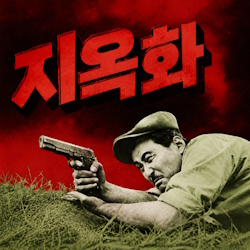
During the Korean War, director Sang-Ok Shin chose to share an apartment with a prostitute because it provided greater comfort than government evacuation housing, which often accommodated several families. During this time, he became familiar with the misfits, losers, and outcasts of society. Drawing upon these experiences, he conceived a film that revealed the bleak underbelly of Korean society inhabited by its lower classes. He secured financing from Seoul Films Company, Ltd. and personally oversaw both production and directing, while Jeong-Seon Lee was hired to write the screenplay. For the cast, Shin selected his wife, Choi Eun-Hee, a rising star of Korean cinema, for the starring role of So-Nya. Joining her were Kim Hak as Yeong-Shik, Hae-Won Jo as Dong-Shik, and Sun-Hee Kang as Julie.
Set during the Korean War, the story follows the fortunes of Yeong-Shik, the leader of a gang of misfits who eke out a living by stealing supplies from a U.S. Army base and selling them on the black market. He lives in a house in Seoul’s red-light district with his girlfriend, So-Nya, who helps pay the rent by offering her “services” to American soldiers. Eventually, Yeong-Shik’s younger brother, Dong-Shik, arrives in Seoul on a family mission to bring him back to their village. Yeong-Shik, however, has no intention of returning to his small town, as he is determined to make a fortune and build a better life with So-Nya. Dong-Shik persists, but matters become complicated when he develops feelings for Julie, a prostitute, only to be seduced by So-Nya during his efforts to convince her to leave Yeong-Shik. The two conspire to begin a new life in Hong Kong, and So-Nya tips off the police in order to sever ties with Yeong-Shik. Her betrayal leads to the destruction of his gang and leaves him mortally wounded during a heist. In the end, Yeong-Shik summons his remaining strength to kill So-Nya before succumbing to his wounds and drowning in the river. Dong-Shik, having lost both his brother and his lover, eventually proposes to Julie, and the two return to his rural hometown to begin a new life together.
The film was commercially successful and helped propel Eun-Hee Choi to stardom, establishing her as the leading Korean actress of the 1960s and 1970s. Critical reception praised the film as a masterpiece of film noir for its realistic and unapologetic depiction of Korean society’s outcasts. Indeed, over time the film has come to be regarded throughout Asia as a paradigmatic example of the genre. Nevertheless, the film received no Academy Award nominations.
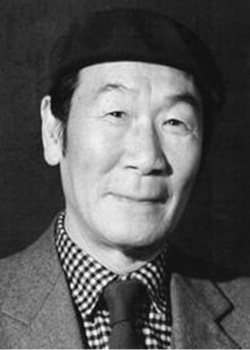 Director Shin Sang-ok recognized that composer Son Mok-in was a prominent figure in the Korean music industry and a prolific songwriter best known for composing some of the most iconic songs in Korean history, including Tears of Mokpo (1935) and Seonchang (1941). He believed that Son’s background in popular music and orchestration would enable him to realize his vision of a neorealist, noir-influenced sonic palette. Son welcomed the opportunity, which marked his first foray into film composition.
For the score, Son elected to support the drama with a minimalist approach centered on a single Main Theme — an idée fixe — that permeates the entire film. The melody is introduced early through a diegetic harmonica and possesses a lonely, mournful quality. Son sought to employ it both transpersonally, to express the grime and bleakness of postwar Seoul, and personally, to convey the confusion, displacement, and disorientation experienced by the country-boy protagonist Dong-Shik, who finds himself immersed in a brutal and corrupt urban environment. Within the film’s musical narrative, the harmonica symbolizes the clash between rural innocence and urban decay. While Dong-Shik embodies the simplicity and optimism of country life, the music he encounters in the city reflects a world of confusion and moral compromise spawned by U.S. military bases and the disintegration of civil society following thirty-five years of Japanese occupation.
Musically, the theme consists of succinct, repeated phrases that evoke uncertainty and aimless wandering, mirroring Dong-Shik’s lack of direction on society’s margins. One also notices that the melody never fully resolves, foreshadowing that Dong-Shik may never find true happiness or successfully adapt to Seoul’s urban environment. The theme is also sung wordlessly or hummed, often by So-Nya, the film’s femme fatale and one of the most amoral, selfish, and irredeemable characters I have encountered in cinema. In my view, Eun-Hee Choi’s performance merited an Academy Award nomination.
The Main Theme proves remarkably malleable, with two of its most evocative transformations occurring during the film’s final chapter. In the finale, the theme shifts to accordion as Son underscores Yeong-Shik’s tragic death and his dying reconciliation with Dong-Shik through the lens of shinpa, a traditional mode of Korean melodrama characterized by heightened sentiment and profound emotional sorrow. For the denouement, the theme becomes radiant and hopeful as Dong-Shik and Julie return to the countryside to begin a new life together.
Finally, Son’s decision to eschew indigenous Korean musical traditions was deliberate, reflecting the legacy of thirty-five years of Japanese occupation, during which systematic cultural suppression sought to eradicate Korean identity and language in service of assimilation into the Japanese Empire. Son filled this post–World War II cultural vacuum by incorporating Western idioms of the era, including jazz and popular music, both of which arrived alongside the American military presence and its growing cultural influence in postwar South Korea.
Accordingly, he infused jazz into scenes depicting social gatherings and dance parties on the American base. Son even employed a live performance by the Korean Black Eyes Orchestra, a group renowned for blending rhythm and blues with jazz—genres that were staples of the Korean nightclub scene. The ensemble featured electric guitar, saxophones, trumpets, double bass, electric bass, drums, and piano. Source music included W. C. Handy’s jazz classic St. Louis Blues (1914), Dámaso Pérez Prado’s Mambo No. 5 (1949), and Stardust (1940) as recorded by Artie Shaw and His Orchestra. Notably, Pérez Prado’s Mambo No. 5 served as the basis for the song of the same name that became an international pop hit when it was reimagined by German singer Lou Bega in 1999.
The score has no commercial release, so I will use film time indices and scene descriptors for musical context. The film opens in silence with white script against a black background relating that the film’s original 35mm master underwent a 4K digital restoration by the Korean Film Archive. There is no logo, nor Main Title. We immediately enter the film proper with visuals of Seoul bustling with traffic. No music, but instead a loud train horn supports the arrival of Dong-Shik. Seoul is destitute, with few jobs, a high crime rate, a huge American military presence, and a thriving black-market economy run by gangs. Dong-Shik sees a man stealing a woman’s purse and runs after the man. The thief’s gang stops him, he is punched to the ground, and his suitcase stolen. Later he sits with disgruntled workers who complain that the price of rice is up, and their wages low. They tell Dong-Shik that he looks out of place and he says he was robbed, and came from the country in search of his brother. The camera shifts back to the streets, which reveals a large US military presence, and we see a significant contrast of cultures with “Western Princesses”, Korean prostitutes, flirting in western style dresses and high heels, seeking Johns. We shift to Sonya’s apartment where she affectionately sends her American soldier lover on his way. One of Yeong-Shik’s gangsters tries to force himself on her to no avail as she repeated stabs him with a can opener.
6:06 “Men Playing Cards” reveals a diegetic harmonica player playing the Main Theme. Sonya changes attire to a blouse with Capri pants and heads out to recruit another American GI. Along the way she finds her boyfriend Yeong-Shik sleeping in a field and she wakes him. He declares his love as they kiss and hug. She asks about his brother, and he says he cannot ever allow him to see him. He says his next job will make him rich and asks her to marry him and settle in the countryside with his mother. She however refuses, saying she enjoys her status among American soldiers as a pampered “Western Princess”. She likes the comforts of city life and does not want to assume the traditional role of a Korean wife and mother. Back in town, Dong-Shik is advised by a fortune teller that he will indeed find his brother, but they will soon after part ways. As he departs, he sees Yeong-Shik, calls to him, only to have him run away. He loses him in a chase, but eventually finds him again strolling with Sonya. Dong-Shik is happy to find him, says mother misses him, and that two-weeks ago he was discharged from the army. Sonya is clearly smitten and asks to be introduced. After introductions, she says that you do not look anything like your brother. The next day Sonya’s friend and prostitute Julie discusses her fondness for Dong-Shik with a fellow prostitute. Sonya departs for a swim, asks Julie to join, but she declines. By a lake, Dong-Shik and Yeong-Shik again revisit going home, with Yeong-Shik refusing to go, and Dong-Shik saying he will not return without him. As Sonya departs Julie relates that she does not understand her, saying she has money and a good man but continues the profession. Her companion says, why not, as all men are dogs. Julie counters that she needs to give up the Yankees and settle down with her own kind. Sonya returns and asks Dong-Shik to join them in town, but he refuses as we discern sexual tension between them.
17:21 “Julie and Dong-Shik” reveals Julie arriving and asking Dong-Shik if he is leaving on the afternoon bus. He does not answer, walks away, and sits on the lakeshore. Julie joins, and asks what he thinks of her, being a Yankee whore? He replies he does not know anything about these things. We cut away to Yeong-Shik and Sonya with him again proposing marriage, and a return to the country. She refuses, and he counters, then anywhere of her choice as the world is not always going to be so out of control. She refuses, says his brother is more attractive, to which he agrees. She swims to the boat, he follows, and the scene ends with the boat rocking back and forth as they make love. Son supports with the harmonica borne Main Theme, which again speaks to the pervasive influence of American culture transforming Korean culture. Dong-Shik again moves off and sits down, only to have Julie follow. She takes the photo he is holding, which reveals the two brothers standing with their mother in between. She relates how she lost both her parents in the war, and had they lived she would have a better life than she has now. He counsels her to give up this life and marry a kind man. She then asks, would he marry her? He does not answer, and she says, see, even people like you don’t want me. Yeong-Shik returns, tells Julie to join the other girls, and then hands Dong-Shik money for a bus ticket home. He refuses, saying he would rather die than go home without him. Dong-Shik becomes angry that he has become like this, but Yeong-Shik cannot be swayed, forces the money in his shirt pocket, and then departs.
23:36 “Dong-Shik’s Request” reveals Sonya in her apartment dressing. She hums the Main Theme as she prepares herself for another night of “Yankee Princess” work. She hears a door knock, says come in, and is very pleased to see Dong-Shik. She asks to sit, yet he does not. He asks if she is going out, and she answers yes, as there are always parties with the Yankees. He sits, apologizes for disturbing her, and she asks why he came? He says he is leaving soon, and she serves up two cans of beer. He then says he has something to say, as she hands him a glass of beer. He is reticent and sips the beer as she resumes her humming and dressing. She returns and again asks why he came, and he asks her to stop seeing his brother so he can return home to our family. She deflects saying he should discuss this with Yeong-Shik, not her. He asks her again, she pours him another beer, and says she does not have him on a lease.
27:37 “Dance” reveals all the “Yankee Princesses” dancing in the rec hall with American soldiers as Yeong-Shik’s gang uses the diversion to cut the barbed wire fence and gain access to the base warehouse. Son supports the dance ambiance with a slow dance instrumental interpolation of the song “Stardust” (1940) from a recording by Artie Shaw and His Orchestra. At 28:36 we shift up tempo and festive Mambo No. 5 by Dámaso Pérez, which is performed live on stage by the Black Eyes Orchestra. The Yankee Princesses”, dressed in alluring bare midriff dresses work it, by offering a seductive danza erotica. Julie gives a signal and two of the girls head outside to distract the SP soldiers on patrol. At 30:16 a ‘Princess” in an alluring front slit open dress slow dances to “Saint Louis Blues” rendered as a seductive danza erotica, replete with pelvic thrusts. Outside the girls divert the guards through seduction as Yeong-Shik and his gang load a cart with supplies. Back at Sonya’s apartment, she attempts to seduce Dong-Shik. He resists, she presses, maneuvers’ him into the bedroom, and he succumbs as another girl watches through the window.
36:10 “The Photo” the Main Theme plays on harmonica as we see that Yeong-Shik has returned in the morning and is looking for his brother. In Sonya’s apartment, Julie finds a photo of Song-Shik, his brother and mother on the bedroom floor. Later a “princess” squeals to Julie that the reason Sonya did not show up last night was that she was seducing Yeong-Shik’s brother. Yeong-Shik joins, asks for his brother, and Julie says, follow Sonya. Sonya departs in a taxi, and Yeong-Shik follows in another taxi. In town she stops, the taxi beeps his horn and Dong-Shik joins. Yeong-Shik sees them get into the taxi, and as they drive off, he follows. He loses them when a construction road block holds him up. The taxi drops them off and departs, and Yeong-Shik reacquires them at a lakeside park. They stroll and eventually lay together only to be discovered by Yeong-Shik. He is furious and punches Dong-Shik, and then throws Sonya to the ground. He then repeatedly pummels Dong-Shik to the ground. Sonya tries to calm him, but he slaps her and yells, bitch. Yeong-Shik storms off and as she tends to Dong-Shik’s wounds, they join in a passionate kissing embrace.
48:03 “Yeong-Shik’s Fury” reveals Sonya being dropped off later that night by her American John. She hums the Main Theme as she walks home, while a stewing Yeong-Shik smokes a cigarette in his room. Sonya returns and he confronts her, placing his hand around her throat. A gangster joins and a fist fight breaks out. Yeong-Shik gains the upper hand, but when he grabs a knife, one of Yeong-Shik’s other men pummels and disarms him. 51:21 “Julie and Dong-Shik” reveals their rendezvous in an abandoned farm hut. The Main Theme rendered by harmonica supports as she brings a basket prepared by Sonya. He frets that he is a disgrace, and she counsels that he does not belong here and should return to the country as soon as he can. He says he was thinking of returning home tonight and she asks if a girl like her could live in the country? He says he does not know. We shift to Yeong-Shik lying in bed with Sonya with him asking her to leave his brother alone. She asks if he is jealous, and he asks her again to leave him alone, promising after the next job they will go far away together. Shifting back to Dong-Shik, he watches young boys playing and swimming naked in the river. He is ponderous, as if he is recalling such time when he and his brother did this, and indeed we flash back as we see Dong-Shik as a boy, stripping and telling Yeong-Shik to join him. Yeong-Shik warns that the water is too deep but he jumps in any way and begins to drown. He jumps in, rescues Dong-Shik, and yells, wake up!
The flashback ends and we return to the present with Sonya joining Dong-Shik. He asks her to please make his brother happy, and she laughs, saying she would rather make him happy. He says he is going back home to take care of mother on his behalf, and to atone for my sins. Back at the compound, Yeong-Shik distributes pistols to everyone, saying this is a risky job, but that we should be fine if we communicate. A large open bed truck arrives and they all pile in, including Sonya. The truck stops and Yeong-Shik gets out with Sonya. He says he’ll make it big this time and to wait for him. Dong-Shik happened to be walking nearby and ducks into the shadows so as to not be seen. Yeong-Shik departs with the gang, and as she walks, she discovers Dong-Shik. He asks where are they going, and she does not answer. The heist is at the train station and the gang infiltrates a stopped train. They climb up and hide by lying flat on the train roof. At a restaurant Dong-Shik and Sonya dine and he fears that the job will be dangerous. She says he is a good brother and should not worry. It is clear that he is self-loathing when he says that he deserves to die, and that he is less than human. Yet she drops all pretenses, saying she loves him. She then asks that he rescue her and go away to start a new life together. She then excuses herself and we see Yeong-Shik and his gang ready to strike with the truck driving alongside the train for the getaway.
We find that Sonya has called and alerted the authorities of the raid hoping to rid herself of Yeong-Shik so she can start a new life with Dong-Shik. When she returns, she discloses to Dong-Shik what she has done as she had to rid herself of Yeong-Shik so they could be together. Dong-Shik erupts with fury at her treachery. He bolts out of the restaurant and we see Korean military police dispatching jeeps with men to stop the robbery. Dong-Shik steals a truck and drives out to warn his brother and Sonya follows after hitch-hiking a ride. Yeong-Shik signals the truck, and they descend and successfully uncouple the last three cars as we see the police closing. They begin unloading as we see both Dong-Shik, Sonya and the police closing. The gang departs with a fully loaded truck only to have the police arrive. A chase and fire fight erupts and both sides suffer casualties, with the police reduced to one jeep. A police machine gun kills the driver and Yeong-Shik is forced to take over. A new police jeep approaches from the front and in trying to avoid gun fire, Yeong-Shik loses control and the truck tumbles down an embankment. Yeong-Shik escapes, Sonya arrives and descends the hill, as does Dong-Shik. In a muddy river bank, Yeong-Shik keeps trying to flee as Sonya and Dong-Shik both search for him. Dong-Shik finds him, and begins helping him to get back to the truck as he has a bloody abdominal gunshot wound. Since Yeong-Shik can go no farther, he tells him to wait and departs. Sonya finds Dong-Shik and says let’s get out of here. He throws her to the mud with contempt and walks off. Back at the truck, he cannot move as the wheels are trapped in mud, so he heads back to Yeong-Shik. Yeong-Shik hears Sonya and approaches her. She is fearful and keeps repeating “honey”, yet he realizes her treachery and pulls out his knife. She struggles to escape but become trapped in the muddy water. He grabs her, she begs for forgiveness and promises to be true, to no avail as he thrusts his dagger into her.
In 1:23:39 “Finale”, as Sonya dies, Yeong-Shik realizes his death soon follows. Son supports with “Shin-pa”, a traditional mode of melodrama in Korean culture, which is characterized by an emphatically sad musical tone. He expresses the Main Theme using a mournful accordion to evokes feelings of intense dread and tragedy, which presage Yeong-Shik’s demise. The brother reunite as Dong-Shik returns and takes him into his arms. He begs him to wake up, and Yeong-Shik asks that he forgive his foolish brother. He says no the blame is mine, only for Yeong-Shik speak his final words; “No, Dong-Shik. Do yourself proud. And take care of our mother”. 1:26:00 “Denouement” opens with the Main Theme carried by harmonica as we see several buses traveling down a highway. Julie runs out to the roadside and presents Dong-Shik with a gift, which she says she has been keeping for some time. He is thankful, and asks if she wants to go to the country with him. She is ecstatic, says yes, and runs to pack. We close with a happy and hopeful Main Theme as we see them riding on the bus, shifting to an external shot of the bus slowly fading in the distance.
Son’s score offers a quintessential example of minimalism, a “neorealist” and noir-influenced soundscape characterized by its gritty, sparse, and atmosphere-driven approach. He chose to use a simple melody borne primarily by harmonica, which serves as an idée fixe or essential thread that underpinned, and unified the film’s narrative. He also incorporated western musical idioms of the day including Jazz and Pop, as this foreign cultural influence took root as a byproduct of the American military presence. I believe that Son saw the nexus of the story as a struggle between the two brothers, which served as an allegory for South Korea’s identity crisis during the post-war reconstruction era. The younger brother Ding-Shik from the countryside represents a simpler, principled, and utopian Korea that is not wealthy, but remains culturally pure, and morally uncorrupted. In contrast, the older brother Yeong-Shik embodies the new Korea found in Seoul, which is depicted as a hellish, morally corrupted landscape of crime, thievery, and prostitution, driven by the foreign and contaminating presence of the American military. This Main Theme undergoes a transformation, which I believe mirrors Dong-Shik journey in the film; an initial iteration of disorientation and confusion felt by his arrival and experiences in Seoul, to a threnody supporting his brother granting absolution as he died in his arms, and ultimately as a joyous paean of hope as Dong-Shik and Julie return to the country to begin a new life together. Folks, this non-orchestral score is sparse, and nuanced, yet well-conceived and executed. You can only experience it with streaming the film, and I highly recommend you do so as the film is considered a masterpiece of Korean cinema.
Track Listing:
- NOT AVAILABLE
Music composed and arranged by Mok-In Son. Recorded and mixed by XXXX. Score produced by Mok-In Son.

Shop at the Movie Music UK Store

Member of the


