INDEPENDENCE DAY – David Arnold
 THROWBACK THIRTY
GREATEST SCORES OF THE TWENTIETH CENTURY
Original Review by Jonathan Broxton
When I look back at the time now, it’s increasingly clear to me that the years between 1994 and 1996 were formative in terms of how they shaped my taste in both film and music. Those were the years when I was really let loose on the world of cinema for the first time, enjoying a huge variety of movies and film scores, and many of the films I saw during those 36 months remain some of my all-time favorites. As such, it’s also important to recognize that I tend to look back at that period through rose-tinted glasses, and it’s with that in mind that I come to Independence Day.
Independence Day – or ID4, as it was sometimes called in publicity material – is a science fiction alien invasion action-adventure disaster movie directed by Roland Emmerich and written by Emmerich and his long-time creative partner, Dean Devlin. It features an all-star cast including Will Smith, Jeff Goldblum, Bill Pullman, Mary McDonnell, Judd Hirsch, and Randy Quaid, and begins when a number of enormous alien spacecraft arrive in Earth’s orbit and take up position above many of the world’s largest cities. As governments and military leaders scramble to determine the visitors’ intentions, satellite engineer David Levinson (Goldblum) uncovers evidence that the mysterious newcomers pose a far greater threat than anyone initially suspects, and desperately tries to warn the authorities. Eventually, Levinson finds himself working with hotshot fighter pilot Steven Hiller (Smith) and U.S. President Thomas Whitmore (Pullman) to try to end the alien threat and save humanity from global destruction. The film was a major commercial success, grossing more than $800 million worldwide and becoming the highest-grossing film of 1996. Its iconic imagery – including enormous spacecraft hovering over major cities and the destruction of landmarks such as the White House – helped redefine the scale of visual effects in mainstream cinema, and it went on to win the Academy Award for Best Visual Effects.
With the exception of its special effects, which remain outstanding, and its music, which I’ll get to in a minute, Independence Day is not a good film by any objective standard. The screenplay is weak and relies far too much on science fiction clichés, conspiracy theory ideas, sentimental and cheesy dialogue, and thin character development. The plot requires audiences to overlook major logical gaps, particularly the ease with which the human protagonists defeat an advanced alien civilization. The acting from its actually quite impressive cast veers from serviceable to downright terrible, and its portrayal of American flag-waving patriotism is simplistic and triumphalist. Despite this, I love it anyway. Seeing this film in a cinema with a huge, boisterous audience remains one of my all-time favorite movie-going experiences, and to this day I am easily swept away by its good-natured earnestness, action-packed set pieces, and spectacular thrills.
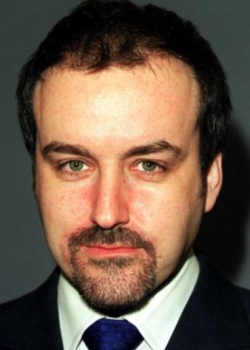 The music for Independence Day was written by the then-34-year-old English composer David Arnold, who had burst onto the film music mainstream two years earlier with his score for Emmerich’s Stargate. Independence Day was still only the fourth feature film Arnold had ever scored, the other two being The Young Americans in 1993 and Last of the Dogmen in 1995, but you would never realize it based on the music he wrote here, because it is utterly spectacular. Arnold was brought on board early in production and spent four to five months developing the music, beginning work before filming had been completed. In interviews, Arnold has recalled writing much of his score in a small hotel room in Los Angeles, with little more to go on than his impressions of the screenplay and some early footage.
Musically, the score embraces a grand, symphonic style inspired by the tradition of classic Hollywood adventure films, and employs a large orchestra and choir, with bold brass fanfares and soaring strings to create an unmistakably heroic sound, while darker orchestral textures, driving percussion, and electronic elements accompany the alien threat. There are numerous recurring themes weaving through the score, helping to unify the film’s multiple storylines, and the whole thing often erupts into brilliant, soaring, but also dense and complex action music that allows the thrills and spills of the alien encounters, fighter jet dogfights, and outer space adventures to take on a sense of joy, wonderment, and breathless excitement. As producer Dean Devlin once famously remarked, it took “a Brit to write some of the most rousing and patriotic music in the history of American cinema.”
The two primary themes in the score compete for dominance. The first is a broad “Heroic Theme” that is first introduced in a more subdued fashion in the first half of the album, but becomes much more prominent in the second half when the humans actually start to fight back against the aliens, and is most often associated with Captain Hiller. There are actually two parts to this theme: an initial bright brass fanfare, and then a more long-lined melody. The two can be played independently of one another, but more often than not they are played sequentially or contrapuntally, with the fanfare acting as an ostinato to drive the melody forward. The second is the more noble “Patriotic Theme,” most often associated with President Whitmore, and is intended to capture the sense of duty and sacrifice shown by the men and women at the forefront of the fight. Both themes are overflowing with Hollywood-centric Americana, and in certain circumstances may come across as hopelessly cheesy, but I absolutely love their crowd-pleasing, flag-waving ebullience.
Other themes and motifs include a set of dark textures for the invading aliens themselves, two relationship themes – one for Hiller and his family, and one for the President and the First Lady – and then an overarching Awe and Wonder Motif that often appears in moments where the humans encounter a new dimension to the alien invaders and their immense spaceships, either down on Earth or up in the heavens.
After a few moments of eerie build-up, the opening cue, “1969 – We Came In Peace,” actually begins with a slow, serious version of the Patriotic Theme backed by sinister martial drumbeats before switching to the first performance of the six-note Alien Theme, a mass of low brass clusters and imposing percussion hits that accompanies the opening shots of the massive alien spacecraft blanketing the moon in the darkness of their shadow while edging ever closer to Earth. It’s a spectacular opening, full of portent, that hints at the sheer size and scale of the alien invasion, and foreshadows the devastation to come as, cleverly, the rhythm of the percussion hits spells out the letters D-I-E in Morse code. This sense of nervous anticipation continues through the shifting textures of “S.E.T.I. – Radio Signal,” with the Alien Theme appearing in various guises and variations, until the literal explosion of sound in “The Darkest Day,” which accompanies the initial alien attack on New York City.
There are some fabulous touches in the cue – the staccato flurry of brass at 0:27, which is full of threatening menace, the repeated and increasingly alarming performances of the Alien Theme, more uses of the D-I-E percussion riff, and the way the whole thing builds to an enormous crescendo of dark choral majesty. The last minute or so of the cue starts to descend into delicious musical chaos via the use of discordant brass phrases, shrieking strings, and all manner of clattering percussion.
“Canceled Leave” offers a brief moment of pleasant respite in which Arnold presents the first performances of the Hiller Family Relationship Theme amid warmly noble statements of the Patriotic Theme, but then it all kicks off again with the staggeringly brilliant action cue “Evacuation,” and from that point on the score barely pauses for breath. “Evacuation” is the first of several absolute masterpieces of complicated, ferocious, thematic action writing, richly orchestrated, detailed, and full of energy and movement, and to its immense credit it never descends into simple brute force. There is so much musical brilliance going on here that it’s almost impossible to pinpoint particular standout moments. The strings are doing something different from the brass, the woodwinds, and the drums, while violins and cellos are doing different things from each other, as are trumpets and horns… but everything is done with purpose, clarity, and no small amount of panache. Arnold is constantly alluding to one or more of the themes, blending them together and offering slight variations here and there. There are moments which are just there, seemingly for Arnold’s own amusement, like the weird, slurred trumpet line at 3:02, but then, when the choir enters the proceedings during the final minute, it suddenly becomes much more serious – right up until the last second, when the sustained strings abruptly stop, and the alien attack begins.
The subsequent “Fire Storm” is the second of the score’s major action sequences, and it’s an absolute belter, perfectly capturing the panic, confusion, and sheer horror felt by the citizens of New York, Los Angeles, Washington, and elsewhere as landmark buildings are obliterated and fireballs rip through the streets. Arnold captures the moment with a massive explosion of furious orchestral bombast – I absolutely adore the roaring, howling trumpet line that begins at the 34-second mark, and how it then leads into a sequence of thrusting, percussive forward motion that builds to a climax reminiscent of “Bishop’s Countdown” from James Horner’s score for Aliens.
“The Aftermath” is an elegy led by strings and choir, featuring a haunted solo trumpet variation on the Patriotic Theme, which perfectly captures the devastation felt by the survivors of the initial attack as they stagger through the rubble of their cities. The crescendo that accompanies the devastating vista of Los Angeles at 1:54 is hauntingly beautiful, but this then shifts to convey a sense of triumphant resilience via the performances of the Patriotic Theme at the end of the cue, which have an Americana fife-and-drum sound before becoming an inspiring anthem as the U.S. military starts making plans to fight back.
“Base Attack” is another crackerjack action sequence, underscoring the alien attack on the El Toro military base in California, and the fantastic one-on-one fighter jet/alien spacecraft dogfight between Hiller and his alien counterpart through the narrow walls of a desert canyon. It opens with more allusions to the Patriotic Theme, becomes ominous via seemingly unstoppable performances of the Alien Theme and the D-I-E percussive motif when the aliens converge, but then explodes with relentless energy once Hiller and his squadron take to the skies to engage them. It is here that Arnold first starts introducing hints of the theme that will eventually dominate the finale of the score – the Heroic Theme – which comes to represent the bravery of the human resistance. As with the other action cues, Arnold’s writing here is orchestrated within an inch of its life, rich, dense, and complicated, but immensely satisfying from a musical point of view, and simply so much fun.
There are more feelings of poignant devastation in “El Toro Destroyed,” including a lovely choral variation on the Patriotic Theme that packs an emotional punch, but then, in “International Code,” what is left of the world’s militaries begins to mobilize and communicate with each other via Morse code as a way to perhaps defeat the aliens emerges. Arnold has great fun arranging the Patriotic Theme to evoke various national musical stereotypes – brassy formality for the British, rich male voice choirs for the Russians, and so on – before building it up to a sensational climax throughout the entirety of “The President’s Speech,” which, of course, underscores President Whitmore’s rallying cry to his troops to mount one last attack against the alien invaders. The music here is impossibly rousing and stirring, the height of inspiring Americana, and by the end of it Arnold has embraced a level of patriotism so great that you feel like you should join up yourself. It’s also very clever how Arnold almost subliminally blends the Patriotic Theme with elements of the Heroic Theme, suggesting that the two concepts are now linked. We will not go quietly into the night! We will not vanish without a fight! We’re going to live on! We’re going to survive! Today, we celebrate our Independence Day!
In film context, “The Day We Fight Back” and “Jolly Roger” play in tandem with each other, the former accompanying the fighter squadron led by President Whitmore and Randy Quaid’s character, Russell Casse, during their attack on an alien ship, and the latter accompanying Hiller and Levinson as they travel to space in a stolen alien craft and try to upload a devastating computer virus into the alien mothership – because the aliens are running an Apple Mac operating system, naturally. “The Day We Fight Back” is yet another knockout action sequence: urgent, intense, filled with fantastically complicated brass writing, extravagant string flourishes, thunderous percussive hits, immense back-and-forth contrapuntal passages featuring both the Patriotic Theme and the Alien Theme, and then an absolutely magnificent explosion of the Heroic Theme at the 2:32 mark as President Whitmore orders his gunners to ‘plough the road’ and clear a path for Russell to attack the alien ship with his one remaining nuclear missile. The grandiose statement of the theme in the last minute of the cue celebrates the success of Russell’s plan—even as Russell himself sacrifices his own life for the cause—as the alien craft comes crashing to the ground.
Meanwhile, up in space, Hiller and Levinson have successfully uploaded the Jolly Roger virus into the alien mothership mainframe, but are apparently stuck inside it, waiting for it to blow up. The noble, solemn statements of the Patriotic Theme and the Hiller Family Relationship Theme indicate that they have accepted their fate and are prepared to die with dignity, but all of a sudden an unexpected opportunity to escape presents itself, and the pair are suddenly careening headlong towards an exit in their stolen shuttlecraft. Arnold’s music accompanies their dash to freedom with blaring brass runs and frantically screaming strings, offset by flashes of the Alien Theme.
Even considering everything that has come before, Arnold saves the very best until last with his scintillating, utterly magnificent nine-minute “End Title” piece. It runs through every major thematic idea in the score in sequence, and it does so with a scale and intensity so enormous that it verges on the ridiculous. It opens with the Heroic Fanfare, an array of flutter-tongued horn triplets that seem designed to make the brass section collapse from exhaustion. The Heroic Theme enters almost immediately, with the Fanfare playing in rousing counterpoint, before switching to the long-lined Patriotic Theme at the 44-second mark. A softer version for strings takes over at 1:25, and there are lovely performances of both the Hiller Family Theme and the Presidential Family Theme, but then the piece is shattered at the 2:55 mark by the Alien Theme, huge, menacing, and overpowering.
As a piece of trivia, I once attended a concert at the Royal Festival Hall in London where David Arnold actually conducted an orchestral performance of the Independence Day End Titles – the first and, to my knowledge, only time he conducted them live himself. I was especially entranced by the use of percussion during the Alien Theme sequence, especially the fact that the enormous, low booming noises you can hear at around the 3:27 mark were actually made by two percussionists repeatedly dropping a huge piece of wood on the floor, then picking it up and dropping it again. Astonishing.
The cue continues with a magical variation on the Heroic Theme for chimes, a solo violin, and delicate woodwinds, beginning at the 4:40 mark. The fluttering flutes and high, searching strings are pure John Williams, but then, just when you think the piece is winding down, Arnold has more in store. Fifes and drums introduce the Heroic Theme, followed by a gradual increase in scale, and then an absolutely enormous reprise of the Patriotic Theme at its most glorious. Just when you think things can’t possibly get any bigger or more rousing, at 7:33, the choir comes in, sending the music to the heavens. It all ends with one final burst of the Heroic Fanfare and the Heroic Theme, before a series of immense crescendos, triangle strikes, timpani rolls, cymbal crashes, gong hits, and choral flourishes bring the score to a ludicrously brilliant, extravagantly entertaining close.
 The 50-minute soundtrack album from RCA Victor that was released at the time was satisfying, and remains one of my most-played albums, but there was a great deal of music missing from the album that many people wanted to hear. Finally, in 2010, La-La Land Records, working with producers Nick Redman and Mike Matessino, released a comprehensive 2-CD set featuring the whole 100-minute score along with various bonus cues and alternates. Among the highlights not included in the original presentation are the prominent statements of the Presidential Family Theme in “Marilyn Found” and “The Death of Marilyn,” the lovely reprise of the Hiller Family Theme in “Wedding,” and several extended action sequences, including the ill-fated “AWAC Attack,” the horror-adjacent tones of the encounters between Brent Spiner’s character, Dr. Okun, and a captured alien deep within Area 51 in “Area 51/The Big Tamale/Formaldehyde Freak Show” and “Slimey Wakes Up,” and more of Hiller and Levinson’s escapades in space in “The Launch Tunnel/Mutha Ship/Virus Uploaded.” This latter cue offers some excellent variations on the Heroic Theme, as well as some lovely choral awe-and-wonder moments, almost all of which are notably absent from the original album. Fans of the score will absolutely want to invest in this album, if you can find it.
Something that I haven’t really touched on in this review, but which I think is important to underline, is the fact that this was David Arnold’s fourth ever score. He went from complete obscurity to this score via a British crime thriller (The Young Americans), a massive Egyptian-influenced action epic (Stargate), and a romantic wilderness adventure (The Last of the Dogmen), in less than three years, and he did it all before he turned 35. Nobody does that, and the fact that he had all this music inside him at that young age, and had the capacity to write music this sophisticated, intricate, powerful, and memorably thematic, is absolutely astonishing. Within a year of writing the score for Independence Day, he would be hired as the next musical voice of the James Bond franchise for Tomorrow Never Dies, and he would then go on to write such outstanding scores as Godzilla, The Musketeer, The Stepford Wives, and The Chronicles of Narnia: The Voyage of the Dawn Treader, not to mention four more Bond scores, including The World is Not Enough and Casino Royale.
Much has been made of the fact that, while he has been busy scoring TV projects like Sherlock and Good Omens, Arnold has only scored one theatrical film in the past 15 years (Confess, Fletch in 2022), and nothing has come close to recapturing the massive scope of his early scores for Roland Emmerich. I understand that Arnold is exceptionally happy with his career today, working on whatever projects he wants to, with people he wants to, in whatever genre he wishes, but… still… I miss music like this, immensely. I miss him writing it.
Arnold won a Grammy Award in 1997 for Best Instrumental Composition Written for a Motion Picture or for Television for Independence Day but, incomprehensibly, he was entirely overlooked by the Oscars, the Golden Globes, and the BAFTAs. I say incomprehensibly because, if you can’t tell, I absolutely adore this score. It’s one of the formative scores from my early years as a film music fan and, to this day, it remains one of my all-time favorites. It is my choice for the best score of 1996, and I would, without any hesitation, rank it as one of the greatest scores written in the modern era.
Buy the Independence Day soundtrack from the Movie Music UK Store
Track Listing:
- ORIGINAL 1996 RELEASE
- 1969 – We Came In Peace (2:04)
- S.E.T.I. – Radio Signal (1:52)
- The Darkest Day (4:13)
- Canceled Leave (1:45)
- Evacuation (5:47)
- Fire Storm (1:23)
- Aftermath (3:35)
- Base Attack (6:11)
- El Toro Destroyed (1:30)
- International Code (1:32)
- The President’s Speech (3:10)
- The Day We Fight Back (4:58)
- Jolly Roger (3:15)
- End Titles (9:08)
- EXPANDED 2010 LA-LA LAND RELEASE
- 1969 – We Came In Peace (2:01)
- S.E.T.I. – Radio Signal (1:52)
- Mysto Bridge/Satellite Collision/Destroyers Disengage/Russell Casse – Pilot (2:16)
- First Sighting/AWAC Attack (2:18)
- The Darkest Day (4:13)
- Moving Day/Countdown (2:11)
- Cancelled Leave (1:46)
- Commence Lift-Off/Parabolic Indenwhat? (1:17)
- Evacuation (5:47)
- Firestorm (1:24)
- Aftermath (3:36)
- Base Attack (6:12)
- Marilyn Found (1:30)
- Area 51/The Big Tamale/Formaldehyde Freak Show (4:11)
- El Toro Destroyed (1:31)
- Slimey Wakes Up (5:23)
- Target Remains/Rescue (5:56)
- The Death of Marilyn/Dad’s A Genius (3:33)
- Alien Ship Powers Up (1:46)
- International Code (1:33)
- Wedding (1:50)
- The President’s Speech (3:11)
- Just In Case/Attacker Fires Up (3:11)
- The Launch Tunnel/Mutha Ship/Virus Uploaded (8:27)
- Hide!/Russell’s Packin’ (The Day We Fight Back) (4:44)
- He Did It (1:34)
- Jolly Roger (3:17)
- Victory (3:41)
- End Credits (9:12)
- 1969: We Came In Peace – Alternative (2:06) BONUS
- Destroyers Disengage – No Choir (0:34) BONUS
- Cancelled Leave – Alternative (1:44) BONUS
- Commence Lift-Off – Alternative (0:55) BONUS
- Base Attack (Segment – Film Version) (2:27) BONUS
- Marilyn Found – No Choir (1:29) BONUS
- Target Remains/Rescue – Alternative (2:41) BONUS
- Dad’s A Genius – Alternative (0:45) BONUS
- Attacker Fires Up – Original Version (2:01) BONUS
- Virus Uploaded – Alternative (2:35) BONUS
- The Day We Fight Back – Original Version (5:49) BONUS
- Jolly Roger – Alternative (3:22) BONUS
- End Credits (Segment – No Choir) (2:47) BONUS
Running Time: 50 minutes 23 seconds (Original)
Running Time: 128 minutes 38 seconds (Expanded)
RCA Victor 09026-68564-2 (1996) Original
La-La Land LLLCD-1113 (1996/2010) Expanded
Music composed by David Arnold. Conducted by Nicholas Dodd. Orchestrations by Nicholas Dodd. Recorded and mixed by Dennis Sands. Edited by Laurie Higgins. Album produced by David Arnold. La-La Land expanded album produced by Nick Redman, Mike Matessino, MV Gerhard and Matt Verboys.
Leave a comment

Shop at the Movie Music UK Store

Member of the


Good review, Jon. I always liked Arnold’s music and this score in particular. As much as I love the action cues and the main theme, I always loved the emotional material he wrote for the characters. And I like that he’s still attached to the James Bond world, given his work on the Lana del Rey song for the First Light videogame.