COURAGE UNDER FIRE – James Horner
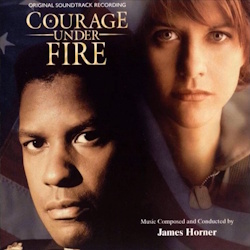 THROWBACK THIRTY
Original Review by Jonathan Broxton
Courage Under Fire is a military drama directed by Edward Zwick and written by Patrick Sheane Duncan. Set in the aftermath of the 1991 Gulf War, the story follows Lieutenant Colonel Nathaniel Serling (Denzel Washington), whose career and conscience are shaken after he accidentally destroys a friendly U.S. tank during combat, killing one of his own men. To restore his standing, Serling is assigned to investigate whether Captain Karen Walden (Meg Ryan), a helicopter commander killed in Iraq, deserves to become the first woman to receive the Medal of Honor. As Serling interviews the surviving members of Walden’s crew, he discovers that every witness offers a different version of the fatal battle. Some describe Walden as a fearless leader who repeatedly risked her life to protect her soldiers, while others claim she lost her nerve under fire, leading to confusion and tragedy. Determined to uncover the truth despite pressure from military officials eager for a politically convenient decision, Serling pieces together the conflicting accounts and, in doing so, confronts his own wartime guilt and begins to find redemption.
The film was a modest commercial success upon its release, and was praised by critics at the time for its intelligence and emotional honesty. Screenwriter Duncan was inspired in part by Akira Kurosawa’s classic film Rashomon, notably in the way Kurosawa used contradictory eyewitness accounts to construct a mystery from which objective truth gradually emerges. It features solid performances from the main cast, with praise being given especially to Meg Ryan for playing against type and undertaking a dramatic physical transformation to portray Captain Walden. The supporting cast is also notable because it features an early major role for Matt Damon, whose significant weight loss for the role attracted widespread attention and foreshadowed his breakout success the following year in Good Will Hunting. I liked the film a lot when it first came out, but I have to admit it doesn’t have a great deal of subsequent watchability, and I have not seen it since I saw it in the theater thirty years ago.
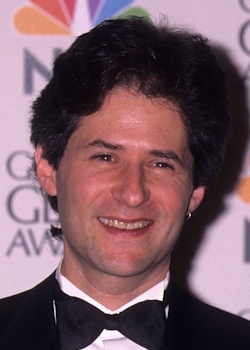 One thing I have experienced much more frequently, however, is the score, which was written by James Horner. The score was the third major collaboration between Horner and director Edward Zwick, following Glory and Legends of the Fall, the latter of which is of course my favorite score of all time. Courage Under Fire doesn’t come anywhere close to emulating either of those scores – how could it? – but it does offer some excellent passages of solemnly dramatic orchestral writing that treat the film’s themes of guilt, military honor, and redemption with a great deal of empathy and gravitas. Although there are also several action sequences in the film, Horner doesn’t build his score around them; instead, the music moves between restrained patriotic writing, mournful orchestral passages, tense investigative material, and harsher combat music, mirroring Serling’s gradual reconstruction of what happened during Walden’s final mission.
In terms of Horner’s wider career, Courage Under Fire has a great deal in common with scores like Glory, Apollo 13, and In Country from an emotional point of view, films and scores which also dealt with the concept of military/patriotic sacrifice. The score also draws a clear musical lineage from the tension of scores like Sneakers and The Pelican Brief, especially in the use of specific rhythmic ideas and percussion sounds. Interestingly, some of the action and tension cues Horner works with here would later go on to feature in the iceberg crash and subsequent sinking sequences in Titanic; in many ways, this score can be seen as something of a dry run for that film’s watery excitement.
The score’s principal idea is introduced in the opening cue “Hymn,” a dignified melody shaped by warm brass, strings, and intentionally militaristic-sounding snare drum tattoo riffs, all filled with spacious and emotionally poignant orchestral writing. It evokes the warm Americana of composers like Aaron Copland, but avoids falling into the trap of easy triumphalism; instead, it has a measured, elegiac character that suggests both nobility and loss, and tonally reminds me very much of the main theme from Glory, sans the Boys’ Choir. This theme returns as the investigation approaches the truth and becomes especially important in the title cue “Courage Under Fire,” and then the extended finale, “The Medal of Honor/A Final Resting Place,” which is one of Horner’s famous 14-minute cues where he builds on the material and transforms it into a musical expression of redemption and reconciliation that, by the end, is quite emotionally devastating. There is so much of James Horner’s familiar musical language running through these cues, from the searing solo horns to the gorgeous harmonies between violins and strings, and those deep, resonant piano clusters that he often used to underpin and emphasize moments of emotional significance.
The combat sequences use a markedly different musical language. “Al Bathra/Main Title” begins with the unexpected sound of helicopter rotors blending into the score before developing into an unnerving mixture of low brass clusters, snare drums, eerie electronic textures, keyboards, and even blasts from an electric guitar, which eventually explode into thunderous action. The effect is mechanical and disorienting, an excellent musical depiction of the confusion of modern warfare, and the chaos felt by Walden and her platoon. Later action and suspense cues such as “Monfriez’s Suicide,” “Night Mutiny,” and “The Betrayal” similarly rely on low strings, repeated rhythmic figures, and dark orchestral textures to communicate suspicion and suppressed fear rather than conventional battlefield excitement. “Night Mutiny” is especially bleak, a highlight for those who enjoy Horner’s explorations of the darker side of the human psyche, and “The Betrayal” employs a wonderfully satisfying minor-key crescendo, while “Monfriez’s Suicide” is a nerve-shredding exercise in percussive pressure and hammered anvils.
Some of the most affecting music accompanies Serling’s investigations into Walden’s story, and how that intersects with the aftermath of his own friendly-fire incident. “Friendly Fire/Ilario’s Story” and the gorgeous “The Elegy” both make excellent use of expressive string writing to convey the sense of grief and shame felt by the survivors of both incidents, but to his credit Horner avoids offering easy reassurance, underpinning even the most beautiful passages with an appropriate sense of unresolved pain. One of the best cues of this type is “Playing Back the Tape,” which builds a real sense of tension before eventually opening up into a satisfying, sweeping emotional statement of the main theme. It’s a piece of quintessential Horner, truly excellent.
Surrounded as it is on all sides by masterpieces like Legends of the Fall, Braveheart, Apollo 13, and Titanic, Courage Under Fire tends to be somewhat overlooked, even by ardent fans of James Horner’s career canon, but I actually think it’s worth exploring. It’s less overtly romantic than Legends, less expansive than Braveheart, and a little more restrained than Titanic, but it contains echoes and foreshadowings of all three that are interesting from an intellectual point of view. However, to think of it in only those terms would be a disservice; the main “Hymn” theme is outstanding, and its central musical contrast – martial force against vulnerable, elegiac melody – cleverly captures the film’s argument that genuine courage involves not only surviving combat, but also accepting responsibility and telling the truth.
Buy the Courage Under Fire soundtrack from the Movie Music UK Store
Track Listing:
- Hymn (3:39)
- Al Bathra/Main Title (10:12)
- Friendly Fire/Ilario’s Story (3:07)
- The Elegy (3:46)
- Courage Under Fire (6:38)
- Monfriez’s Suicide (3:21)
- Night Mutiny (2:58)
- The Betrayal (3:10)
- Playing Back The Tape (2:55)
- The Medal of Honor/A Final Resting Place (14:39)
Running Time: 54 minutes 38 seconds
Angel Records 7243-8-53105-2-2 (1996)
Music composed and conducted by James Horner. Orchestrations by James Horner. Recorded and mixed by Shawn Murphy. Edited by Jim Henrikson. Album produced by James Horner.

Shop at the Movie Music UK Store

Member of the


