Archive
NED KELLY – Klaus Badelt
 Original Review by Peter Simons
Now here’s a composer who has shot to stardom at rocket speed: Klaus Badelt. Whether or not he really deserved all the projects he’s worked on remains a hot issue on many a forum. I, for one, have yet to hear a soundtrack by Badelt that is not remarkably derivative of other scores. That is not to say his albums aren’t enjoyable, no siree! His music for The Time Machine, albeit severely “inspired” by many other scores, was one of last year’s highlights. Badelt’s latest, Ned Kelly, is no exception. It too shares so many similarities with other scores that I’ve had to look at the cover to remember which CD I put on. Not that the score isn’t enjoyable, though. It is in fact quite beautiful, if you can get past the obvious influences. Read more…
STARSKY & HUTCH – Theodore Shapiro
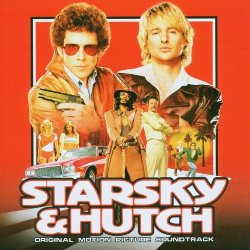 Original Review by Jonathan Broxton
It is de rigueur in Hollywood at the moment to re-make classic TV shows of the 70s and 80s as big-budget cinema outings: we’ve already had Charlie’s Angels and SWAT, and there are rumors of A-Team and Knight Rider movies in the pipeline. Starsky & Hutch was one of the comedy successes of the min-genre, paying loving homage to the well-loved original series while gently lampooning the fashions and morals of the decade. Directed by Todd Phillips, the film starred Owen Wilson and Ben Stiller as the eponymous Bay City detectives, the roles made famous by David Soul and Paul Michael Glaser. Here, they find themselves on the trail of shady businessman Reese Feldman (Vince Vaughan), who they believe is a drug dealer; along the way they are helped by their flamboyant jive-talking snitch Huggy Bear (Snoop Dogg), and hindered by their cantankerous boss Captain Doby (Fred Williamson). Plot is, of course, secondary in a film like this, which revels instead in the comedy set pieces, and the sense of nostalgia in the production: everything, from the classic Ford Torino, to the costumes and hairstyles, and the sexual attitudes, are a prefect recreation of the original setting. It’s a blast. Read more…
THE PASSION OF THE CHRIST – John Debney
 Original Review by Jonathan Broxton
The furore surrounding Mel Gibson’s The Passion of the Christ began almost before a shot was filmed, and continued unabated through principal photography, post-production, and the publicity process. In a nutshell, the crux of the matter was that several prominent Jewish groups accused the cast and crew, and especially Gibson, of intentionally inciting anti-Semitic feelings by portraying the Pharisees of the Jewish Temple in old Jerusalem as the ones who were ultimately responsible for causing the death of Christ (something made worse following some rather off the wall comments from Gibson’s father). As this is a soundtrack review, I’m not going to go into a great deal of detail as to why this film has become one of the most controversial in recent memory, but I do want to say this in regard to my own faith, and my view of the film: Read more…
PAYCHECK – John Powell
 Original Review by Nate Underkuffler
Budda-budda-bumpa. Is that what film music has become? There has been an undoubtable trend in the past decade, perhaps even for the last half of the century, of an increased use of alternative elements in film music apart from the symphony orchestra. Composers such as Goldsmith and Herrmann experimented and implemented synthesizer and other effects into their scores, later composers like Hans Zimmer in part defined themselves by it, and now a young writer like John Powell sees no inappropriateness or novelty in the idea. Powell has thus put his own spin on the techniques, and created unique soundscapes through both an orchestra and anything he can get his hands on in the studio. Nearly all of Powell’s recent scores since breaking away from Media Ventures and his productive tenure on children’s films with fellow MV student Harry Gregson-Williams have been driven by a quirky set of samples and percussion, as well as his now distinctive orchestral style. His latest score, Paycheck, continues this approach, but now adapts it for a futuristic film noir. Read more…
THE LORD OF THE RINGS: THE RETURN OF THE KING – Howard Shore
 Original Review by Jonathan Broxton
And so, five years after his journey began, Howard Shore’s travels through the musical word of Middle Earth and the spectacular Lord of Rings trilogy comes to an end with The Return of the King, the final installment of Peter Jackson’s groundbreaking adaptation of the classic fantasy novel by J.R.R. Tolkein. To say that Shore has come a long way is understatement indeed. Before Lord of the Rings, Howard Shore was “the David Cronenberg guy” who specialized in dark, tortured scores for dark tortured movies. Now, he is the undisputed king of the epic adventure, with the potential to become the benchmark by which all future sword-and-sorcery scores are measured. Before Lord of the Rings, Howard Shore was a well-respected, but largely unheralded member of the film music world. Now, he is a household name, with an Oscar on his mantle, who sells out concert halls worldwide. It’s been one massive ride for the quiet, unassuming Canadian – and with the strength of this final score, his stock can only rise. Read more…
GIRL WITH A PEARL EARRING – Alexandre Desplat
 Original Review by Jonathan Broxton
Johannes Vermeer was a Dutch baroque painter who lived in the city of Delft from 1632-1675, and left behind him a legacy of art that can equal that of other Dutch masters such as Van Gogh and Rembrandt. One of his most famous works is entitled “Girl with a Pearl Earring”, painted around 1665, and currently on display in the Mauritshuis museum in The Hague. Although much of Vermeer’s life is undocumented, Tracey Chevalier’s celebrated novel romanticized the creation of this famous piece of art – and is now the inspiration for the directorial debut of Peter Webber. Colin Firth stars as Vermeer, a talented yet tortured painter, trapped in a loveless marriage to the whiny, perpetually pregnant Catharina (Essie Davis), domineered by his mother in-law (Judy Parfitt), and harassed by his lecherous patron and chief source of funding, Van Ruijven (Tom Wilkinson). However, into Vermeer’s household comes a young peasant girl named Griet (Scarlett Johansson), who after a while becomes more interested in Vermeer’s work, and in Vermeer himself. Gradually, the two become attracted to each other, and Griet begins to “sit” for Vermeer (resulting in the famous painting) – much to the disgust of his wife, and Griet’s potential suitor Pieter (Cillian Murphy). Read more…
ANGELS IN AMERICA – Thomas Newman
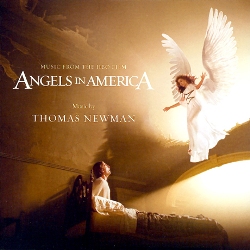 Original Review by Jonathan Broxton
The quality of original television music in recent years has improved immeasurably. Long gone are the days when all a TV-movie could hope for was a rising star or ageing has-been hiring a small orchestra or, worse still, mocking it all up on synths at home. Now, with recent excellent works like Brian Tyler’s Children of Dune, Laura Karpman’s Taken and Michael Kamen’s Band of Brothers, the upper echelons of television scoring is equaling – and occasionally surpassing – that of the cinema. One of these scores which surpasses almost everything written for the cinema is Thomas Newman’s Angels in America, by far one of the best scores written for any medium in 2003. Read more…
THE LAST SAMURAI – Hans Zimmer
 Original Review by Jonathan Broxton
The star of Hans Zimmer continues to grow as, year by year, he and his crew at Media Ventures continue to become attached to some of the most high profile, prestigious projects in Hollywood. With Klaus Badelt, Steve Jablonsky, and former alumni such as Harry Gregson-Williams and John Powell all having successful years, Zimmer has increasingly found himself in an “over-seeing” role, or leading a team of composers in a multi-faceted approach to a project, such as this year’s Tears of the Sun. Only occasionally does Zimmer approach a score on his own: these projects being the ones which have the potential to become box-office blockbusters, or which could garner awards. The Last Samurai is one of these scores. Read more…
OPEN RANGE – Michael Kamen
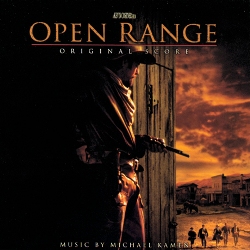 Original Review by Jonathan Broxton
As I write this review, it is now just over a week since Michael Kamen, the composer of Open Range, tragically died of a heart attack, at the age of just 55. In such circumstances, it is tempting to give in to sentimentality, and the fondness for which I held the man himself, and to allow it to cloud my judgment in giving what turned out to be his final score an impartial review. Kamen had taken something of a “sabbatical” during the years following the turn of the millennium, writing just three scores: Frequency, X-Men, and the amazing Band of Brothers. Even on Open Range he was not the first choice composer, being brought in as a replacement at short notice after the original score had been rejected by director Kevin Costner. Ultimately, Kamen wrote a gentle ballad to the old west, an evocative statement that celebrates the nobility, honor and steadfastness of the great American cowboy, a score which would have been just as lovely to listen to had its composer still been with us. Read more…
THE COOLER – Mark Isham
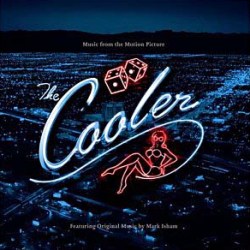 Original Review by Jonathan Broxton
For all his successful forays into the world of orchestral film music, Mark Isham will always remain, at heart, a jazzer. Having grown up with a trumpet almost permanently attached to his lips, Isham has soloed with the San Francisco Opera Orchestra, toured with The Beach Boys and Van Morrison, and performed as a “guest artist” on dozens and dozens of other records, as well as releasing many solo albums. Therefore, his jazz pedigree is in no doubt – but, in film at least, he rarely gets to show it. His work on The Cooler, therefore, is a wonderful change of pace. Read more…
THE MISSING – James Horner
 Original Review by Jonathan Broxton
After sitting out the entire summer of 2003, James Horner has exploded back onto the scene with four new scores in less than two months. The third of the four (the others being Radio, Beyond Borders and the Oscar-tipped House of Sand and Fog) is The Missing, a truly remarkable work which brings back wonderful memories of classic Horner scores from the early 1990s. And, although the stylistic elements of a dozen or so scores from his past are readily identifiable, in many ways it’s like revisiting an old friend. Yes, I have criticized other composers for doing the exact same thing in the past, but with Horner, it’s like coming home. Directed by Ron Howard and based on the novel “The Last Ride” by Thomas Eidson, The Missing stars Tommy Lee Jones as Samuel Jones, a father who returns to his home in 19th-century New Mexico, hoping to reconcile with his estranged adult daughter Maggie (Cate Blanchett). However, when Maggie’s young daughter (Evan Rachel Wood) is kidnapped by a psychopathic leader of a cult with mysterious powers, who has been kidnapping young girls all over the American south west, father and daughter must put aside their differences and work together to get her back. Read more…
MASTER AND COMMANDER: THE FAR SIDE OF THE WORLD – Iva Davies, Christopher Gordon, Richard Tognetti
 Original Review by Peter Simons
The movies of Peter Weir have had some interesting musical choices. Throughout the 1980s and early 1990s, Maurice Jarre was his composer of choice, contributing electronic scores for films such as The Year of Living Dangerously, Witness, The Mosquito Coast and Witness. For his last major movie, The Truman Show, he combined new and old Philip Glass recordings with an original score by Burkhard Dallwitz. Weir’s latest movie, the sea-faring epic Master And Commander: The Far Side Of The World, follows a similar vein, with multiple composers credited. Iva Davies, Christopher Gordon and Richard Tognetti teamed up to write a score that is certainly atmospheric, and has a fair share of enjoyable tracks, yet for some reason is not very memorable. The soundtrack album is a mix of new music by the three composers, several tracks of traditional folk music, and a handful of classical tracks by Mozart, Bach, Vaughan-Williams and the like. The result is a mixed bag – in the negative sense of the word. Read more…
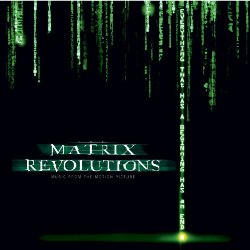
THE MATRIX REVOLUTIONS – Don Davis
 Original Review by Jonathan Broxton
For Don Davis (and for quite a number of score and movie fans) 2003 has been the year of The Matrix. With the original 1999 movie becoming a surprising world-wide smash, and the May release of The Matrix Reloaded taking a staggering $281 million in the US alone, The Matrix Revolutions is one of the most eagerly awaited films of this, or any year. Equally, following the stunningly realized score Davis provided for Part II, his work on Revolutions has equally become one of most anticipated releases of the year. In a rare turn of events, the score actually meets – and in some cases – surpasses all the expectations, making it easily one of the best scores of 2003. With the talented Wachowski Brothers, Andy and Larry, picking up where the last movie finished, The Matrix Revolutions finds Neo (Keanu Reeves) somehow trapped in an unusual limbo world in between the real world and the Matrix, in which he must again battle the nefarious Agent Smith (Hugo Weaving), and from which he must escape before the sentinels reach the stronghold inside the last human city, Zion. Meanwhile, the human leaders and the erstwhile crew of the Nebuchadnezzar – Morpheus (Laurence Fishburne), Trinity (Carrie-Anne Moss), Link (Harold Perrineau), Niobe (Jada Pinkett Smith) and Lock (Harry Lennix) – begin making preparations for the imminent invasion…. an invasion which will surely mark the final battle between humans and machines on what remains of the Earth. Read more…
VERONICA GUERIN – Harry Gregson-Williams
 Original Review by Jonathan Broxton
Veronica Guerin was an investigative journalist who covered organized crime for Ireland’s best-selling newspaper, the Sunday Independent. A household name, she was famous not only for her fearless reporting about the murderers and drug lords of Dublin’s criminal underworld but also for her commitment to defending the public’s right to know. As a result of her work, she received numerous death threats, and was attacked numerous times. Guerin was murdered on June 26 1996, when a man on a motorcycle fired six rounds from a pistol at close range as she waited in her car at a traffic light just outside Dublin. Her death led to Ireland’s largest criminal investigation, resulting in over 150 arrests and a crackdown on organized-crime gangs that her assassins could never have foreseen. In November 1998, a man named Paul Ward, a Dublin drug dealer, was convicted of Guerin’s murder and sentenced to life in prison. Read more…
MATCHSTICK MEN – Hans Zimmer
 Original Review by Peter Simons
One of the most unexpectedly fun albums of the year undoubtedly has to be Hans Zimmer’s Matchstick Men. The sheer joy with which this score was written just oozes from its pores. That alone is worth a million bucks for me. Its snazzy, southern European feel is slightly reminiscent of As Good As It Gets, the score for which Zimmer received an Oscar nominated in 1997, but although it would be deserved, Hans won’t get that kind of recognition for Matchstick Men. The score deliberately weaves in performances of Nino Rota’s theme from La Dolce Vita, which automatically renders the score illegible for the Academy Awards. This is a shame, because this wicked little score deserves all attention and recognition it can get… but on the other hand — who gives a hoot about the Oscars? Read more…

Shop at the Movie Music UK Store

Member of the

 MOVIE MUSIC UK