Remembering Stanley Myers, 1930-1993
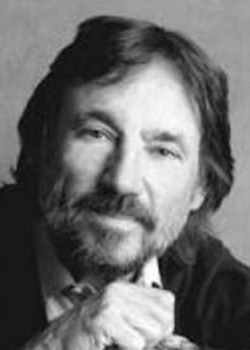 Composer Stanley Myers died ten years ago today in London on November 9, 1993, at the age of 63, following a battle with cancer.
One of Britain’s most prolific film composers, Myers wrote music for more than 100 film and television productions during a career spanning three decades, working with directors including Nicolas Roeg, Stephen Frears, Jerzy Skolimowski, Volker Schlöndorff and Michael Cimino.
Myers was born in Birmingham on October 6, 1930. By the 1960s he had established himself in cinema, with early successes including Jack Smight’s Kaleidoscope (1966) and Joseph Strick’s controversial adaptation of Ulysses (1967). Other notable scores from this period and the early 1970s included The Night of the Following Day, Michael Powell’s Age of Consent, The Walking Stick, Bryan Forbes’s The Raging Moon and the Oliver Reed thriller Sitting Target.
It was The Walking Stick (1970) that produced Myers’s most enduring composition. Its gentle guitar theme, “Cavatina,” was later expanded and recorded by classical guitarist John Williams. Eight years later Michael Cimino used Williams’s performance as the principal theme for The Deer Hunter (1978), where its delicate melancholy provided an unforgettable contrast to the film’s harrowing depiction of war and its aftermath. “Cavatina” became internationally famous and earned Myers an Ivor Novello Award.
Myers was never restricted to a single genre. During the 1970s he became closely associated with director Pete Walker’s distinctly British brand of exploitation horror, scoring House of Whipcord (1974), Frightmare (1974), House of Mortal Sin (1976) and Schizo (1976). Elsewhere he wrote for dramas, thrillers and international productions, including Ted Kotcheff’s The Apprenticeship of Duddy Kravitz and Volker Schlöndorff’s Coup de Grâce. His strongest music invariably reflected a considerable melodic gift, even when working within darker or more experimental material. Read more…
THE MATRIX REVOLUTIONS – Don Davis
 Original Review by Jonathan Broxton
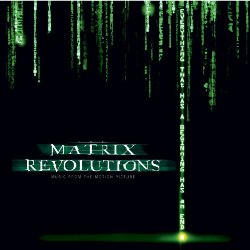
For Don Davis (and for quite a number of score and movie fans) 2003 has been the year of The Matrix. With the original 1999 movie becoming a surprising world-wide smash, and the May release of The Matrix Reloaded taking a staggering $281 million in the US alone, The Matrix Revolutions is one of the most eagerly awaited films of this, or any year. Equally, following the stunningly realized score Davis provided for Part II, his work on Revolutions has equally become one of most anticipated releases of the year. In a rare turn of events, the score actually meets – and in some cases – surpasses all the expectations, making it easily one of the best scores of 2003. With the talented Wachowski Brothers, Andy and Larry, picking up where the last movie finished, The Matrix Revolutions finds Neo (Keanu Reeves) somehow trapped in an unusual limbo world in between the real world and the Matrix, in which he must again battle the nefarious Agent Smith (Hugo Weaving), and from which he must escape before the sentinels reach the stronghold inside the last human city, Zion. Meanwhile, the human leaders and the erstwhile crew of the Nebuchadnezzar – Morpheus (Laurence Fishburne), Trinity (Carrie-Anne Moss), Link (Harold Perrineau), Niobe (Jada Pinkett Smith) and Lock (Harry Lennix) – begin making preparations for the imminent invasion…. an invasion which will surely mark the final battle between humans and machines on what remains of the Earth. Read more…
VERONICA GUERIN – Harry Gregson-Williams
 Original Review by Jonathan Broxton
Veronica Guerin was an investigative journalist who covered organized crime for Ireland’s best-selling newspaper, the Sunday Independent. A household name, she was famous not only for her fearless reporting about the murderers and drug lords of Dublin’s criminal underworld but also for her commitment to defending the public’s right to know. As a result of her work, she received numerous death threats, and was attacked numerous times. Guerin was murdered on June 26 1996, when a man on a motorcycle fired six rounds from a pistol at close range as she waited in her car at a traffic light just outside Dublin. Her death led to Ireland’s largest criminal investigation, resulting in over 150 arrests and a crackdown on organized-crime gangs that her assassins could never have foreseen. In November 1998, a man named Paul Ward, a Dublin drug dealer, was convicted of Guerin’s murder and sentenced to life in prison. Read more…
MATCHSTICK MEN – Hans Zimmer
 Original Review by Peter Simons
One of the most unexpectedly fun albums of the year undoubtedly has to be Hans Zimmer’s Matchstick Men. The sheer joy with which this score was written just oozes from its pores. That alone is worth a million bucks for me. Its snazzy, southern European feel is slightly reminiscent of As Good As It Gets, the score for which Zimmer received an Oscar nominated in 1997, but although it would be deserved, Hans won’t get that kind of recognition for Matchstick Men. The score deliberately weaves in performances of Nino Rota’s theme from La Dolce Vita, which automatically renders the score illegible for the Academy Awards. This is a shame, because this wicked little score deserves all attention and recognition it can get… but on the other hand — who gives a hoot about the Oscars? Read more…
S.W.A.T. – Elliot Goldenthal
 Original Review by Jonathan Broxton
When Elliot Goldenthal won the Best Original Score Academy Award last May, and joined the hallowed ranks of the Oscar winning composers, much interest was given to the film he would choose to score next. Goldenthal is a notoriously selective composer, rarely scoring more than two films per year, and who more often than not lends his talents to meaty dramas and weighty subjects. When S.W.A.T., an action packed cop thriller, was announced as being his next project, eyebrows were raised. But, after several quite “deep and meaningful” entries over the last couple of years, S.W.A.T. was exactly what the New Yorker needed: a chance to have fun. Read more…
Remembering Roy Budd, 1947-1993
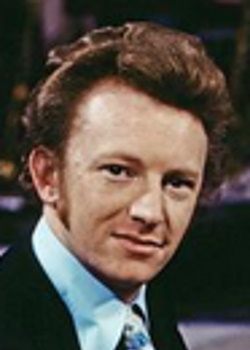 Composer Roy Budd died ten years ago today, on August 7, 1993, of a brain hemorrhage in hospital in London, UK. He was 46.
Roy Frederick Budd was born in London, England, in March 1947. A musical prodigy from a young age, Budd made his public debut on the piano at age six and was performing professionally by his teens. Deeply influenced by jazz legends such as Erroll Garner and Oscar Peterson, Budd quickly carved out a name for himself as a dynamic live performer, often appearing on British television and radio in the 1960s.
His entry into film scoring came in the late 1960s, but it was the 1971 crime thriller Get Carter that cemented his legacy, which he wrote when he was just 24 years old. The minimalist, percussive theme, composed and recorded in just a few days, went on become one of the most instantly recognizable pieces in British cinema history. Budd’s deft combination of jazz, funk, and moody atmospherics would become his signature, earning him further acclaim for scores to films such as Soldier Blue (1970), Fear Is the Key (1972), The Stone Killer (1973), The Marseille Contract (1974), Diamonds (1975), Paper Tiger (1975), Sinbad and the Eye of the Tiger (1977),The Wild Geese (1978), and The Sea Wolves (1980).
Over the course of his career, Budd scored more than 40 films, often working on films starring major British actors of the 1960s and 70s including Michael Caine, Richard Burton, and Roger Moore. In addition to his film work, he remained a passionate jazz performer, frequently recording albums and touring. Read more…
SEABISCUIT – Randy Newman
 Original Review by Jonathan Broxton
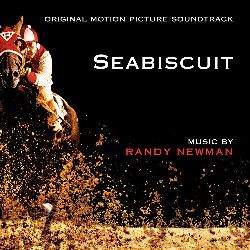
It’s been quite a while since Randy Newman scored something “serious”, having spent the last five years or so scoring either Pixar animations (A Bug’s Life, Toy Story 2, Monsters Inc.) or comedies (Meet the Parents). His last movie of real dramatic worth was Pleasantville, directed by Gary Ross, and he re-teams with the creative forces behind that film for Seabiscuit, a heart-warming true story of triumph over adversity in horse racing. Seabiscuit is based on a non-fiction book by Laura Hillenbrand. Set in Depression-era America, it stars Jeff Bridges as Charles Howard, a millionaire businessman, and owner of a racehorse named Seabiscuit, whose small size and tendency to injure itself indicates that the thing will never win a race. Sensing hidden depths in the animal, Howard hires revolutionary trainer Tom Smith (Chris Cooper), who sets about rehabilitating the poor pony with his new-fangled methods. One of these methods is to hire a new jockey, in the shape of Red Pollard (Tobey Maguire), a failed boxer who is considered too tall to be a jockey, and who has spent much of his life on the streets. However, bit by bit, Seabiscuit’s form improves – to the stage where, much to everyone’s surprise, the former failure has a shot at winning the 1938 Triple Crown. Read more…
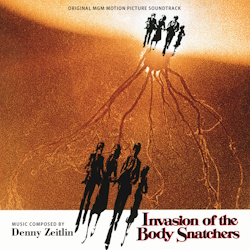
INVASION OF THE BODY SNATCHERS – Denny Zeitlin
 MOVIE MUSIC UK CLASSICS
Original Review by Jonathan Broxton
When people ask me “what is the scariest film you’ve ever seen”, my answer more often than not is this one: director Philip Kaufman’s 1978 remake of Invasion of the Body Snatchers. I distinctly remember seeing this film on television in the early hours of the morning, some time in the late 1980s (which would make me around 14-15 years of age), and being slowly terrified by the almost imperceptible sense of impending doom and creeping menace that permeates the film. By the time the final scene comes along, I was already pretty shaken. That final shot of Donald Sutherland, mouth open, with that inhuman scream, pointing at a disbelieving and hysterical Veronica Cartwright drove me over the edge. Read more…
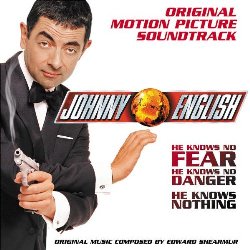
JOHNNY ENGLISH – Edward Shearmur
 Original Review by Jonathan Broxton
Every now and again, a score of such life and energy and surprising brilliance comes out of left field and restores your faith in modern film music. Emerging out of the predictable banality of the early months of 2003 is Johnny English, the latest score from British composer Edward Shearmur, hitherto best known for his work on the Charlie’s Angels series and for raising a few eyebrows in 2002 following his scores for The Count of Monte Cristo and Reign of Fire. Basically, Johnny English is a James Bond John Barry knockoff score, in much the same way as David Arnold’s latest 007 scores have been Barry wannabes. The brilliance of Johnny English, however, lies in the fact that whereas Arnold’s works are mere pastiche, Shearmur somehow has managed to recapture the life and energy and panache and humor Barry brought to his works, while at the same time giving it a modern spin and making it musically relevant for millennium audiences. Read more…
THE LEAGUE OF EXTRAORDINARY GENTLEMEN – Trevor Jones
 Original Review by Jonathan Broxton
It’s been a quiet couple of years for Trevor Jones. The excellent Jack the Ripper thriller From Hell notwithstanding, the talented South African has limited himself to small-scale features and TV fare since the turn of the millennium, with titles such as Dinotopia, the Britney Spears vehicle Crossroads and the Charlotte Church movie I’ll Be There to his name. He wasn’t even the first choice composer for The League of Extraordinary Gentlemen, with director Stephen Norrington originally approaching Mark Isham, with whom he had worked on Blade. But, with disastrous floods destroying sets in Prague, performers and directors clashing with each other on location, and a drawn out post-production period, LXG (the short-form acronym for the movie) eventually fell into the lap of Jones, who took it as another opportunity to create one of his well-liked action thriller scores. Read more…
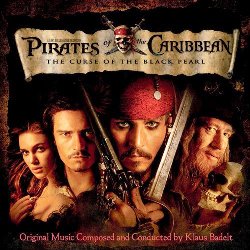
PIRATES OF THE CARIBBEAN: THE CURSE OF THE BLACK PEARL – Klaus Badelt
 Original Review by Jonathan Broxton
In giving Pirates of the Caribbean a four-star review, I’m making myself undergo a crisis of conscience. How can I, as a “respected” reviewer of film music, give such a high rating to a score which is quite blatantly inappropriate for the movie, predictable to the extreme, and derivative of virtually every major Media Ventures action score written in the last ten years? The answer, simply, is that it is a whole lot of fun. Pirates of the Caribbean is possibly the ultimate soundtrack guilty pleasure. Directed by Gore Verbinski, Pirates of the Caribbean is a large-budget action film based on the classic ride at the Disneyland theme park in Anaheim, California, in which visitors are treated to a stately underground boat ride through the old Caribbean, where animatronic pirates shiver their timbers on a daily basis. Read more…
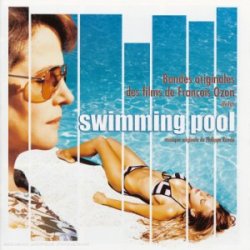
SWIMMING POOL – Philippe Rombi
 Original Review by Jonathan Broxton
Unlike twenty or thirty years ago, when composers such as Maurice Jarre and Georges Delerue were in the ascendancy, French film music today seems to be in a bit of a lull. There are certainly some extremely talented individuals writing music for French cinema at the moment – names such as Bruno Coulais, Jean-Claude Petit, Alexandre Desplat and Yann Tiersen spring to mind – but no-one from that part of the world has really taken the world by storm, in a soundtrack sense, for quite a while. This could all change if Hollywood ever discovers the work of Philippe Rombi. This album is actually subtitled “Music from the films of François Ozon”, and features score cuts from four of the talented young director’s most successful films – Swimming Pool (2003), Sous le Sable (2000), Les Amants Criminels (1999) and 8 Femmes (2002). It is Rombi’s music which dominates the CD, with sixteen minutes of his music from the headlining Swimming Pool, and a further 12 minutes of score from Sous Le Sable taking center stage. Read more…
SINBAD: LEGEND OF THE SEVEN SEAS – Harry Gregson-Williams
 Original Review by Jonathan Broxton
The second of summer 2003’s pirate movies, Sinbad: Legend of the Seven Seas, is by a long way one of the most enjoyable orchestral romps to emerge from the Hollywood studio system in several years. What’s ironic is that both this score and its sibling, Pirates of the Caribbean, should both have been written by Media Ventures alumni, Harry Gregson-Williams and Klaus Badelt. What’s most impressive is that they are as different as chalk and cheese, with Gregson-Williams treading a well-worn path of orchestral exuberance, dating back to the time of Korngold and Rozsa, and the old Sinbad scores of Bernard Herrmann and Roy Budd. Read more…
HULK – Danny Elfman
 Original Review by Jonathan Broxton
Call me old fashioned, but I miss the old Danny Elfman. I miss his bittersweet sweeping melodies, his lyrical touch, the music he used to compose for films like Edward Scissorhands, Sommersby, Black Beauty, or The Nightmare Before Christmas. In recent years, Elfman has undoubtedly become more intellectual and technically adept in his scores, but in doing so he has lost some of the enthusiastic magic that so enlivened his earlier works. He seems much more interested in creating interesting orchestral effects, or new ways of using percussion, than on eliciting emotions. His score for Hulk is a case in point. Read more…
WHALE RIDER – Lisa Gerrard
 Original Review by Peter Simons
Despite winning both the World Cinema Audience Award at the Sundance Film Festival and the People’s Choice Award at the Toronto Film Festival, Whale Rider is a little known, and even less seen film. Based on the novel by Witi Ihimaera and directed by Niki Caro, it slowly and beautifully tells a mythological story of the Whangara people of New Zealand. Debutante Keisha Castle-Hughes stars as Pai, a young girl from a rural community in modern New Zealand. According to tradition, Pai’s family, the Whangara, are directly descended from Paikea, the legendary leader who arrived in their country on the back of a whale thousands of years ago (in Maori mythology, the whale is said to be a guardian spirit who watches over his people at sea). Every generation, the first born son of the bloodline is destined to become chief of the tribe. However, Pai’s older baby brother died at birth, leaving her the sole heir to the chiefhood, and Pai’s loving but stubbornly traditional grandfather Koro (Rawiri Paratene) refuses to accept that a girl can be their leader. Sensing that hers is an important position, and acknowledging her heritage, Pai embarks on a quest to prove that she can undergo the rigorous training that will allow her to take her rightful place as head of the Whangara people. Read more…

Shop at the Movie Music UK Store

Member of the


