Under-the-Radar Round Up 2015, Part 2
 Original Reviews by Jonathan Broxton
The second installment in my series of articles looking at the best “under the radar” scores from around the world concentrates on music from films from Scandinavia. This year’s crop of outstanding scores from the far north of Europe features an animated film from Denmark, a wry comedy-drama from Iceland, a pair of historical dramas from Finland, and a wonderful children’s score from Norway written by one of that country’s most talented young composers!
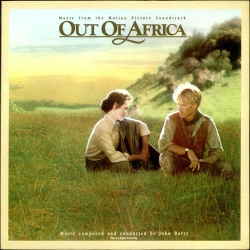
OUT OF AFRICA – John Barry
 THROWBACK THIRTY
GREATEST SCORES OF THE TWENTIETH CENTURY
Original Review by Jonathan Broxton
The winner of seven Academy Awards – including Best Picture, Best Director, Best Screenplay, and Best Cinematography – Out of Africa is generally considered one of the greatest romantic dramas in cinema history. Directed by Sydney Pollack, it is based on the semi-autobiographical writings of aristocratic Danish author Karen Dinesen, specifically the period in the 1910s when she moved to live on a coffee plantation in colonial Kenya with her then-husband, Baron Bror von Blixen-Finecke, and had an affair with a rugged and handsome big game hunter, Denys Finch Hatton. The film is a sumptuous, visually magnificent love letter to the unspoiled African savannah, reveling in the majestic vistas of the country, and using them as a backdrop to the affair Karen engages in, as her husband becomes increasingly distant and neglectful. Anchored by the three central performances of Meryl Streep as Karen, Robert Redford as Denys, and Klaus-Maria Brandauer as Bror, the film explores such challenging themes as marital fidelity, the expectations and conventions of aristocratic society, the role of women in the 1910s, and the differences between European and African tribal cultures, as well as the threat of World War I that loomed over everything. Read more…
STAR WARS: THE FORCE AWAKENS – John Williams
 Original Review by Jonathan Broxton
WARNING: THIS REVIEW CONTAINS PLOT SPOILERS. IF YOU HAVE NOT YET SEEN THE FILM, YOU MIGHT WANT TO CONSIDER WAITING UNTIL AFTER YOU HAVE DONE SO TO READ IT.
When John Williams first sat down to write the score for the original Star Wars over the winter of 1976, I doubt that even he could have imagined that he would still be writing music for those characters, and that universe, some 39 years later. There aren’t many film scores you can point to as being an actual turning point, a watershed moment in the history of the genre, but Star Wars was unquestionably one of those, and it went on to inspire a generation of filmmakers, composers, and fans. To say that The Force Awakens, the seventh film in the Star Wars franchise, is an eagerly awaited film would perhaps be one of the greatest understatements of all time – I don’t think I have ever seen a film with this much marketing, pre-release hype, and fevered anticipation – and, thankfully, it does not disappoint in any way. More than any installment in the prequels did, The Force Awakens feels like a proper Star Wars movie, a return to the fun and crowd-pleasing filmmaking of the original trio, and director J. J. Abrams should be congratulated for returning the franchise to its roots, and going some way to banishing the ghost of Jar Jar Binks forever. Read more…
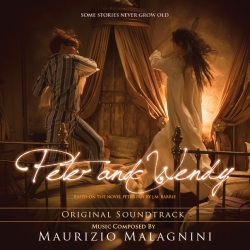
PETER AND WENDY – Maurizio Malagnini
 Original Review by Jonathan Broxton
J. M. Barrie’s story of Peter Pan has inspired numerous adaptations and spin-offs since it was first performed as a stage play in London in 1904. The latest of those is Peter and Wendy, a British TV movie directed by industry veteran Diarmuid Lawrence. Framed within a more contemporary setting, it tells the story of a young girl named Lucy who is about to receive open heart surgery at the famed Great Ormond Street Hospital. To help assuage her fears about her upcoming procedure, Lucy’s mother reads her the classic Peter Pan novel, and the famous story of Neverland, Captain Hook, Tinkerbell, Lost Boys, and the Boy Who Wouldn’t Grow Up unfolds inside her imagination, with herself as the heroine. The film, which airs in the UK on Christmas Day, stars Stanley Tucci as Captain Hook, Paloma Faith as Tinker Bell, Laura Fraser as Mrs. Darling, and newcomers Zac Sutcliffe and Hazel Doupe as Peter and Wendy respectively. Read more…
THE DANISH GIRL – Alexandre Desplat
 Original Review by Jonathan Broxton
Gender identity issues have been a major social topic in 2015, encompassing everything from Caitlin Jenner to the acclaimed TV series Transparent, so it is perhaps unsurprising that a film like The Danish Girl should be released this year. Directed by Oscar-winner Tom Hooper (The King’s Speech), it looks at the life of Einar Wegener, a young Danish man living in Copenhagen in the 1920s, who became the first ever recipient of male-to-female sex reassignment surgery. Lead actor Eddie Redmayne is heavily tipped for a second consecutive Academy Award for his performance as Einar and his alter ego, Lili, and he is ably supported by Alicia Vikander as his wife, Gerda. Also receiving a great deal of critical acclaim has been the score, written by French composer Alexandre Desplat, who has already received Golden Globe and Satellite Award nominations for his work. This is the fifth and final Desplat score of 2015, whose output in general has been disappointing compared to his usual stellar standards: Suffragette came and went without much fanfare, Everything Will Be Fine was barely released in the United States, and neither Il Racconto dei Racconti nor Une Histoire de Fou have been released outside their native countries at all. Read more…
Under-the-Radar Round Up 2015, Part 1
Original Reviews by Jonathan Broxton
The first installment in my series of articles looking at the best “under the radar” scores from around the world concentrates on music from films from Spain and Portugal. I have been very vocal in the past about my admiration for the music coming out of the Iberian peninsula, and this year just reinforces my view that some of the best film music in the world right now is being written there. My first look at the area features new scores by some of my favorite contemporary composers, including Federico Jusid and Nuno Malo, and there will be more to come later!
Golden Globe Nominations 2015
 The Hollywood Foreign Press Association (HFPA) has announced the nominations for the 73rd Golden Globe Awards, honoring the best in film and American television of 2015.
In the Best Original Score category, the nominees are:
- CARTER BURWELL for Carol
- ALEXANDRE DESPLAT for The Danish Girl
- ENNIO MORRICONE for The Hateful Eight
- DANIEL PEMBERTON for Steve Jobs
- RYUICHI SAKAMOTO and ALVA NOTO for The Revenant
These are the first major film music award nominations for both Pemberton and Noto, although Pemberton has received two BAFTA nominations for his work in video games. Noto is the stage name of German musician and artist Carsten Nicolai, an influential experimental electronic composer who has worked with Michael Nyman and Blixa Bargeld, among others.
This is the 2nd nomination for Burwell, the 8th nomination for Desplat (who won the Globe in 2006 for The Painted Veil), the 9th nomination for Morricone (who previously won Globes for The Mission in 1986 and The Legend of 1900 in 1999), and the third nomination for Sakamoto (who previously won Globes for The Last Emperor in 1987 and The Sheltering Sky in 1990).
In the Best Original Song category, the nominees are:
- JUSTIN FRANKS, ANDREW CEDAR, CHARLIE PUTH and CAMERON THOMAZ (WIZ KHALIFA) for “See You Again” from Furious 7
- DAVID LANG for “Simple Song #3” from Youth
- MAX MARTIN, SAVAN KOTECHA, ILYA SALMANZADEH, ALI PAYAMI and TOVE NILSSON for “Love Me Like You Do” from Fifty Shades of Grey
- SAM SMITH and JAMES NAPIER for “Writing’s On the Wall” from Spectre
- BRIAN WILSON and SCOTT BENNETT for “One Kind of Love” from Love and Mercy
The winners of the 73rd Golden Globe Awards will be announced on January 10, 2016.
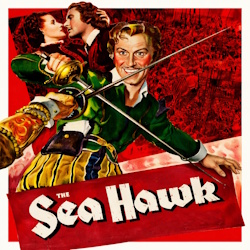
THE SEA HAWK – Erich Wolfgang Korngold
 GREATEST SCORES OF THE TWENTIETH CENTURY
Original Review by Craig Lysy
Warner Brothers Studios was very much interested in remakes of author Rafael Sabatini’s two seafaring novels The Sea Hawk (1915) and Captain Blood (1922). After acquiring the Vitagraph company, which produced the earlier Silent Era films, the studio set in motion its plan. Captain Blood (1935) was a stunning success, which propelled Errol Flynn to stardom, however the studio shelved The Sea Hawk in favor of starring Flynn in The Adventures Of Robin Hood (1938) and The Private Lives Of Elizabeth And Essex (1939). Upon completion of filming the Studio assigned Henry Blanke and Hal Wallis to produce The Sea Hawk and Michael Curtiz to direct. Howard Koch and Seton Miller were tasked with writing a swashbuckling epic to showcase Flynn’s charisma and talent. Supporting Erroll Flynn as Geoffrey Thorpe would be Henry Daniell as Lord Wolfingham, Brenda Marshall as Doña María, Claude Rains as Don José Álvarez de Córdoba, Donald Crisp as Sir John Burleson, Flora Robson as Queen Elizabeth I, Alan Hale as Carl Pitt and Una O’Connor as Miss Latham. Read more…
KRAMPUS – Douglas Pipes
 Original Review by Jonathan Broxton
Having grown up in the UK, Christmas for me has always been a time of joyous innocence, especially for children. Religious considerations aside, the season is dominated by the figure of Santa Claus, that jolly, rosy-cheeked old fellow who drives a magical sleigh pulled by reindeer and brings presents to children who are on his ‘good list’. Not much thought is given here to what happens to those on the ‘naughty list’, but that’s not the case in other parts of the world. In the Netherlands, for example, there is Zwarte Piet, who accompanies Santa around the world, and while the big guy is handing out gifts to the good kids, he is flogging the bad ones with a rod of birch twigs. Then, in the German-speaking areas of Austria and Switzerland, there is Krampus: a terrifying demon-like creature with cloven hooves and the horns of a goat, who carries chains, bells, and a sack on his back, into which he puts naughty children, so that he can eat them later, or transport them to Hell. The new film Krampus transposes this legend to contemporary America, and tells the story of a dysfunctional family who are forced to do battle with Krampus when he comes to visit… The comedy-horror is directed by Michael Dougherty and stars Adam Scott, Toni Collette, David Koechner, Allison Tolman, Conchata Ferrell, and Emjay Anthony. Read more…
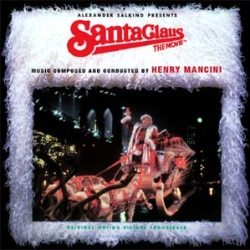
SANTA CLAUS: THE MOVIE – Henry Mancini
 THROWBACK THIRTY
Original Review by Jonathan Broxton
The winter of 1985 saw the release of one of the strangest holiday films of all time: Santa Claus: The Movie, which purportedly told the ‘real’ story of the origin of the Santa Claus legend. However, instead of actually going into the history of the Turkish bishop Saint Nicholas, the Sinterklaas story from traditional Dutch folklore, and how the two were blended with elements of Norse and Pagan mythology, and Clement Clarke Moore’s classic poem ‘The Night Before Christmas,’ to create the contemporary Christmas icon – a movie I would actually like to see, for real! – the film invents an original story about a kind-hearted 14th century woodcutter and his wife, who are caught in a blizzard while delivering toys to local children. Magically transported to the North Pole, the woodcutter and his wife are greeted by elves, who convince the man that it is his destiny to deliver toys to the children of the world every Christmas Eve, which the elves will make in their large workshops. At the same time, the film also tells a contemporary story set in modern day New York, in which Patch – one of Santa’s elves – decides to strike out on his own and set up his own toy-making business, but unwittingly joins forces with an unscrupulous millionaire who wants to “take over” Christmas for himself. Read more…
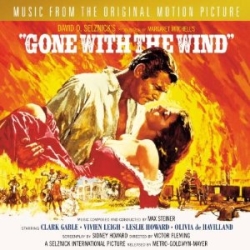
GONE WITH THE WIND – Max Steiner
 GREATEST SCORES OF THE TWENTIETH CENTURY
Original Review by Craig Lysy
Margaret Mitchell’s 1936 novel Gone With The Wind caught legendary producer David O. Selznick’s eye and he saw destiny in the making. At his bidding MGM purchased the film rights for an unprecedented $50,000. This was a passion project for Selznick and no expense would defer him from realizing his vision. Screenwriter Sidney Howard was hired to do the impossible – adapt the massive 1,037-page story to the big screen. Victor Fleming was tasked with directing and a cast that has become legend were hired including Clark Gable as Rhett Butler, Vivien Leigh as Scarlet O’Hara, Leslie Howard as Ashley Wilkes, Olivia de Havilland as Melanie Hamilton, Thomas Mitchell as Gerald O’Hara, Barbara O’Neil as Ellen O’Hara and Hattie McDaniel as Mammy. No movie to this date provided such a grand and epic sweep, and in the end six hours of film were shot, which featured thousands of actors. Read more…
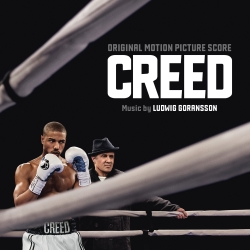
CREED – Ludwig Göransson
 Original Review by Jonathan Broxton
The seventh film in the iconic Rocky series of boxing-themed movies, Creed continues the story of Philly pugilist Rocky Balboa, who fought his way from nothing to become Heavyweight Champion of the World. Nine years after the events of the last film, Rocky is still in Philadelphia, running the restaurant named after his late wife Adrian, and generally staying out of the limelight. Things change when he is approached by a young fighter from Los Angeles named Adonis ‘Donny’ Johnson, who is actually the long-estranged son of Rocky’s former rival and great friend Apollo Creed, who had been killed in the ring thirty years previously (during Rocky IV). Rocky reluctantly agrees to train Adonis, and the two develop a father-son bond; simultaneously, Adonis begins a relationship with an aspiring singer-songwriter named Bianca. However, things change on several fronts when Adonis is challenged by the British world light heavyweight champion Ricky Conlan, and when Rocky develops health problems and is forced to confront his own mortality. Read more…
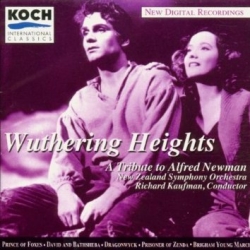
WUTHERING HEIGHTS – Alfred Newman
 GREATEST SCORES OF THE TWENTIETH CENTURY
Original Review by Craig Lysy
In 1938 studio executive Samuel Goldwyn was intent on finding a new project for his studio’s star Merle Oberon. By coincidence William Wyler was seeking financial backing for his next film, which would adapt Emily Bronte’s 1847 novel Wuthering Heights. He argued to Goldwyn that it would be a perfect tragic romantic tale to showcase Oberon’s talents. Goldwyn agreed and decided he would produce the film, with Wyler tasked with directing. He provided a generous budget and brought in screenwriters Charles MacArthur, Ben Hecht and John Huston to write the screenplay. They drew inspiration from the first sixteen chapters of the 34-chapter novel, and changed the setting from the 18th to the 19th Century. For their cast, Merle Oberon would take on the starring role of Catherine Earnshaw, joined by Laurence Olivier as Heathcliff. David Niven would play Edgar Linton and Geraldine Fitzgerald, Isabella Linton. Read more…
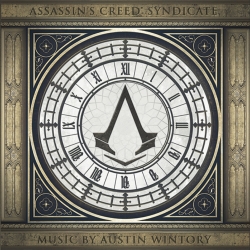
ASSASSIN’S CREED: SYNDICATE – Austin Wintory
 GAME ZONE REVIEW
Original Review by Jonathan Broxton
The ninth entry in the main series of Ubisoft’s Assassin’s Creed video games, Assassin’s Creed: Syndicate is one of the most eagerly-awaited game titles of 2015. Set in London in 1868 during the Industrial Revolution, the story follows twins Jacob and Evie Frye as they navigate the corridors of organized crime during the Victorian era. The story relates to the overarching narrative of the entire series, which primarily revolves around the rivalry between two ancient secret societies – the Assassins and the Knights Templar. The Fryes are members of the Assassins, seeking to take down the Templars who occupy the majority of the positions of power in society, and are aided in their quest by notable figures of the era including Charles Dickens, Charles Darwin, Karl Marx, Florence Nightingale, and even Queen Victoria herself. Read more…
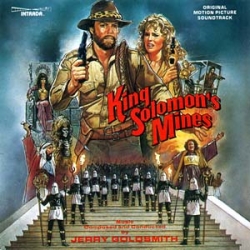
KING SOLOMON’S MINES – Jerry Goldsmith
 THROWBACK THIRTY
Original Review by Jonathan Broxton
With the massive box office success of the two Indiana Jones films, Raiders of the Lost Ark and The Temple of Doom, several film producers sought to bring to the silver screen a ‘rugged historical adventurer’ of their own. Cannon Films had acquired the rights to H. Rider Haggard’s classic novel King Solomon’s Mines and its main character Allan Quatermain, and put into production a light, family-friendly version of the tale, with J. Lee Thompson directing, and Richard Chamberlain in the lead role. The film is set in the early 1900s and follows Quatermain, who is hired by the beautiful Jesse Huston (Sharon Stone) to find her father, who has disappeared in central Africa while searching for the fabled mines of the title. The expedition brings Quatermain in contact with numerous dangers and enemies, not least of which is a rival expedition led by the ruthless Colonel Bockner (Herbert Lom), who will stop at nothing to find the mines himself. Read more…

Shop at the Movie Music UK Store

Member of the


