DRAGONHEART – Randy Edelman
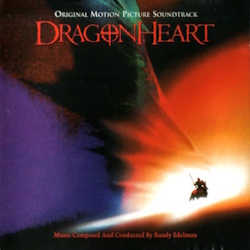 THROWBACK THIRTY
Original Review by Jonathan Broxton
Dragonheart was one of the most ambitious fantasy-adventure films of the 1990s. Directed by Rob Cohen and based on an original story by Charles Edward Pogue and Patrick Read Johnson (rather than an existing novel or legend), it starred Dennis Quaid as Bowen, a medieval knight who loses faith in both kings and dragons after his young pupil Einon (played by David Thewlis as an adult) grows into a cruel tyrant despite having his life saved by dragon magic as a child. Years later, Bowen – who now works as a dragon slayer – encounters Draco, the last surviving dragon on Earth, voiced with immense charisma by Sean Connery. When Bowen learns that Draco and Einon literally share the same heart, they form an unlikely friendship and later join forces with rebel leader Kara (Dina Meyer) to overthrow Einon and restore peace to the kingdom.
The film was noteworthy at the time for its groundbreaking visual effects. Created by Industrial Light & Magic, Draco was one of the most sophisticated CGI characters ever attempted, coming only a few years after Jurassic Park had revolutionized the industry. The visual effects team ultimately received a well-earned Academy Award nomination, and while the film received mixed reviews upon release and achieved only moderate box-office success, it has since developed a loyal cult following, spawning multiple straight-to-DVD sequels, several of which were scored by Mark McKenzie. Much of that affection stems from the central relationship between Bowen and Draco, Connery’s wonderfully avuncular vocal performance, and a genuinely emotional finale that still resonates with audiences today.
Early in its development, when screenwriter Patrick Read Johnson was still attached as director, Jerry Goldsmith read the script and personally asked Johnson to let him score the film. However, Goldsmith never got the opportunity to write any music for the project, as the production became increasingly fraught and Johnson was fired by producer Raffaella De Laurentiis. The search for a new director eventually resulted in Rob Cohen being hired, and Cohen’s regular composer was Randy Edelman.
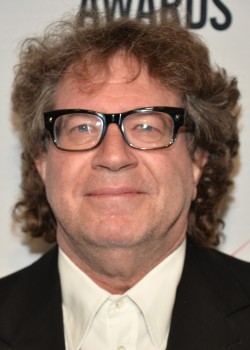 In the mid-1990s, Edelman was enjoying one of the most successful periods of his career, and this score came on the heels of landmark works such as The Last of the Mohicans, Gettysburg, and Dragon: The Bruce Lee Story. Dragonheart allowed Edelman to bring together many of the stylistic trademarks that had already made him popular with film music fans: broad melodic writing, noble brass fanfares, Celtic flourishes, prominent percussion, and a blend of orchestral and electronic textures that was very much characteristic of both the era and Edelman’s style in particular.
Dragonheart remains one of Edelman’s most famous scores, largely because of its extraordinary thematic strength and significantly enhanced emotional content. The score is built around two major ideas, both of which have endured long after the film itself faded from popular consciousness. The first is the sweeping main theme, introduced in the opening cue, “The World of the Heart,” and reprised throughout the score, most notably in “Wonders of an Ancient Glory,” “Flight to Avalon,” and the rousing “Finale.” It is a quintessential Edelman melody, filled with uplifting harmonic progressions and emotional directness. Some critics at the time found it overly sentimental, but there is no denying its effectiveness; I personally love it, and to this day it remains my all-time favorite Edelman theme. It became one of the most widely used pieces of trailer music of its generation, appearing in countless promotional campaigns, television broadcasts, and awards ceremonies throughout the late 1990s and early 2000s, to the extent that many people know the theme without ever realizing where it originated.
The second major theme belongs to Draco himself. Heard prominently in the aforementioned “Wonders of an Ancient Glory,” and later in cues such as “Draco” and especially the heartbreaking “To the Stars,” it is a gentler and more reflective idea, often accompanied by sparkling chimes, almost subliminal guitars, soft choral textures, and a warm humming sound that emphasizes the dragon’s nobility and wisdom, giving the whole piece a hymn-like quality. The emotional payoff of this material, especially during the film’s closing scene when Draco sacrifices his own life and is ultimately reborn in the heavens as a new constellation, is exceptionally effective, elevating what could have been a conventional fantasy adventure into something genuinely moving.
The action writing in Dragonheart has been criticized in some quarters for being a little inconsistent, but I have never found that to be an issue. While Edelman was never a composer renowned for aggressive action music, some of the faster-paced cues in this score successfully capture the energy and momentum one would expect from a fantasy adventure of this scale. I especially enjoy parts of “Einon,” which is a powerful synthesized action cue driven by heavy, warlike drums. The second half of “The Last Dragonslayer” possesses a swashbuckling adventurous spirit, while “A Refreshing Swim” offers a satisfying sense of sweep and momentum.
For me, the best action sequence on the album comprises the cues “Bowen’s Decoy,” “Kyle the Wheat Boy,” “The Connection,” and “Flight to Avalon,” which together underscore much of the film’s finale. Here, Edelman brings together both of the score’s main themes, places them within rousing action settings, and employs significantly larger orchestral forces to raise the stakes. There is a soaring, adventurous passage at the beginning of “Kyle the Wheat Boy” that I absolutely adore, with Bowen and Draco sharing a “How to Train Your Dragon” moment more than a decade before John Powell’s adventures in Berk.
One thing worth noting, however, is that some of the electronic sounds Edelman employs occasionally feel a little cheap and cheesy, lacking the sophistication and complexity that composers such as James Horner routinely brought to the genre during the same period. In fact, some veteran listeners may be reminded of the score for Ladyhawke or the music Tangerine Dream wrote for Legend, both of which were released in 1985.
Likewise, a handful of the lighter comedic passages in cues like “The Last Dragonslayer” and “Mexican Standoff” feel stylistically at odds with the film’s more serious dramatic elements, with the latter actually sounding like a refugee from the score for Kindergarten Cop. Furthermore, other than some of the vaguely Celtic flute writing that appears from time to time, Edelman makes little effort to capture either the musical conventions or authentic sounds of medieval England, which some listeners may find disappointing from an intellectual standpoint.
Where Dragonheart occasionally struggles is in its supporting material. Edelman introduces a surprising number of secondary themes and motifs, most of which receive an initial statement in the opening cue “The World of the Heart” but receive little or no further development thereafter, giving portions of the score a somewhat episodic quality. Notably, there is a playful flute theme at the 0:55 mark that is essentially discarded, while the galloping motif for Bowen introduced at the 1:23 mark only really reappears toward the end of the aforementioned “Einon,” where it is surrounded by fulsome brass flourishes.
However, while I acknowledge the validity of these criticisms, none of them ultimately diminish the score’s overall appeal for me. Dragonheart succeeds because it understands the importance of melody, emotion, and thematic identity. Edelman may not have written the most intricate fantasy score of the decade, but he wrote one of its most memorable. The soaring heroism of the main theme and the poignant warmth of the Draco material provide the film with an emotional core that endures to this day.
For many film music fans, Dragonheart remains Randy Edelman’s signature achievement. It may not satisfy listeners looking for technical brilliance, orchestral complexity, or period accuracy, but it possesses something equally valuable: heart. Thirty years after its release, the score’s finest moments continue to inspire the same sense of wonder, adventure, and melancholy that made them so beloved in the first place.
Buy the Dragonheart soundtrack from the Movie Music UK Store
Track Listing:
- The World of the Heart – Main Title (3:19)
- To The Stars (3:14)
- Wonders of an Ancient Glory (2:22)
- Einon (3:53)
- The Last Dragon Slayer (4:01)
- Bowen’s Ride (2:35)
- Mexican Standoff (2:21)
- Draco (1:15)
- A Refreshing Swim (1:26)
- Re-Baptism (2:48)
- Bowen’s Decoy (3:23)
- Kyle, The Wheat Boy (4:25)
- The Connection (2:26)
- Flight to Avalon (2:55)
- Finale (5:30)
Running Time: 45 minutes 58 seconds
MCA Soundtracks MCD-11449 (1996)
Music composed and conducted by Randy Edelman. Orchestrations by Ralph Ferraro. Recorded and mixed by Dennis Sands and Elton Ahi. Edited by Joanie Diener. Album produced by Randy Edelman.

Shop at the Movie Music UK Store

Member of the


