Archive
Under-the-Radar Round Up 2020, Part 1
 Original Reviews by Jonathan Broxton
With the COVID-19 Coronavirus having decimated the 2020 theatrical movie schedule, as well as the general mood of the world, good music is more important than ever when it comes to getting us all through these difficult times. As such (and as I did last year under much different circumstances) I am very pleased to present the latest installment in my ongoing series of articles looking at the best “under the radar” scores from around the world – this time concentrating on the first quarter of 2020!
The titles include romantic comedies from both China and Vietnam, children’s fantasy films from both Germany and France, a serious drama from Japan, a period murder-mystery from Australia, and a children’s adventure from the Netherlands. I heartily recommend all of these scores to anyone who needs some outstanding film music to ease them though their quarantine period!
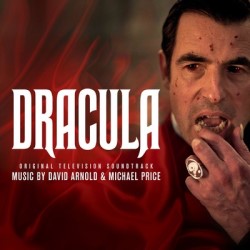
DRACULA – David Arnold, Michael Price
 Original Review by Jonathan Broxton
There have been literally dozens and dozens of adaptations of and variations on the Dracula story in the years since Bram Stoker wrote it in 1897. The most recent version is this BBC mini-series developed by Mark Gatiss and Steven Moffat, the brains behind such successful shows as Doctor Who, Sherlock, and The League of Gentleman. Danish actor Claes Bang is the latest to star in the title role as the undead aristocrat from Eastern Europe who drinks human blood to survive; the show begins with a fairly conventional re-telling of the Dracula myth – castles and brides, voyages to Whitby, Lucy and Mina and Jonathan Harker – but ends with a very unconventional contemporary twist that places Dracula in modern society and completely upends vampire lore. The show has not been entirely successful, but it certainly has handsome and impressive production values, which extend to its score by composers David Arnold and Michael Price. Read more…
Under-the-Radar Round Up 2019, Part 4
Original Reviews by Jonathan Broxton
I am pleased to present the fourth installment in my ongoing series of articles looking at the best “under the radar” scores from around the world in 2019. Rather than grouping the scores on a geographical basis, this year I decided to simply present the scores in a random order, and so this fourth batch again includes reviews of seven more disparate scores all around the world – including two TV scores from Spain, a psychological thriller score from Italy, a horror movie from Morocco, a Chinese drama TV series, a comedy from Argentina, and an intimate love story from Vietnam!
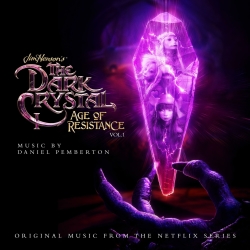
THE DARK CRYSTAL: AGE OF RESISTANCE – Daniel Pemberton, Samuel Sim
 Original Review by Jonathan Broxton
In 1982 the Jim Henson Company released what was, at the time, the most ambitious puppet-centric movie ever made: The Dark Crystal. Despite being a rich fantasy film of evil monsters and gallant heroes, visually stunning and wondrously creative, it was not an immediate success upon its release, with many people considering it much too scary for its young target audience. However, in the intervening 37 years it has become a beloved cult classic, a cultural touchstone for many 1980s children who were left enchanted and terrified in equal measure. Fans have been clamoring for a sequel for decades, but have been forced to be content with various comic books and novels to quench their thirst for additional tales from this universe – until now. The Dark Crystal: Age of Resistance is a 10-episode series produced by Netflix which acts as a prequel to the original movie, and with its increased budget actually surpasses the original in terms of its larger scope, richer detailing, brilliant storytelling, and visual majesty. Read more…
Under-the-Radar Round Up 2019, Part 2
Original Reviews by Jonathan Broxton
As I have done for the past several years, I am pleased to present the second installment in my ongoing series of articles looking at the best “under the radar” scores from around the world. Rather than grouping the scores on a geographical basis, this year I decided to again simply present the scores in a random order, and so this second batch includes reviews of five more disparate scores from the first six months of the year – including a German apocalyptic drama, an Australian horror movie, a Spanish animated film about a surrealist filmmaker, a French drama about religion and pig farming, and a sweeping romance set in the German film industry in the 1960s!
GOOD OMENS – David Arnold
 Original Review by Jonathan Broxton
I have been a fan of the late great British author Sir Terry Pratchett ever since I was a kid. Titles like The Color of Magic, The Light Fantastic, Mort, and Pyramids were among my most treasured literary discoveries in the 1980s and 90s; the combination of fantasy, science-fiction, and historical adventure with a distinctly Pythonesque brand of English humor and wit appealed to my sensibility greatly. Interestingly, and perhaps surprisingly, very few of his works have been translated into film or television projects, and even fewer of them have been seen outside of the UK, which means that while he remains massively popular at home, he is something of an unknown quantity to the rest of the world. This is why I’m so pleased that Good Omens has been so well received; it’s a 6-part TV adaptation of the novel Pratchett wrote with sci-fi author Neil Gaiman in 1990, and is a comedy about the end of the world. Michael Sheen and David Tennant star as Aziraphale, an angel, and Crowley, a demon, who have been living on Earth since the beginning of time as the official representatives of God and Satan. When they learn that the son of Satan has been born – an event which will in time trigger the apocalypse – Aziraphale and Crowley team up to stop it happening. It turns out that, over the millennia, the pair have become unlikely friends, and are not willing to give up their pleasant and comfortable lives in England – even if Armageddon is part of God’s ineffable plan. Read more…
CHERNOBYL – Hildur Guðnadóttir
 Original Review by Jonathan Broxton
On April 26, 1986, the Chernobyl Nuclear Power Plant, close to the Ukraine-Belarus border in what was then the Soviet Union, suffered a catastrophic accident in which one of the plant’s four nuclear reactor cores exploded. The explosion started a fire and released massive amounts of nuclear radiation into the atmosphere and across most of Eastern Europe; it entirely irradiated the nearby city of Pripyat and, although official totals are much lower, may have directly and indirectly lead to the deaths of hundreds of thousands of people. The new mini-series Chernobyl, produced jointly by HBO in the United States and Sky in the UK, is a detailed look at what happened: the events leading up to the disaster, the work of the emergency services in the immediate aftermath, the work of the scientists tasked with finding out what happened, and the fates of those directly affected. Many people have taken Chernobyl to be a cautionary tale about the dangers of nuclear power, but director Johan Renck and screenwriter Craig Mazin say that is not what the show is about at all. Instead, it’s supposed to be a damning indictment of government corruption, lies, and abuse of power, with parallels echoing the current situation involving global warming and climate change. Read more…
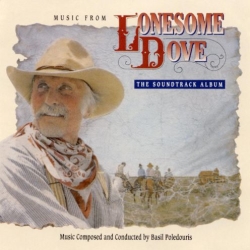
LONESOME DOVE – Basil Poledouris
 THROWBACK THIRTY
Original Review by Jonathan Broxton
Lonesome Dove, an epic western mini-series based on the Pulitzer Prize-winning novel by Larry McMurtry, was one of the television successes of the year after it premiered on CBS in the spring of 1989. Directed by Simon Wincer and starring Robert Duvall and Tommy Lee Jones, and set in the closing years of the Old West, the story focused on the relationship between Gus (Duvall) and Call (Jones), two retired Texas Rangers who decide to leave their quiet town on the Mexican border and drive a herd of cattle north to Montana. McMurtry’s original novel – which explores themes of old age, death, unrequited love, and friendship – was based on a screenplay that he had co-written with Peter Bogdanovich for a movie that was intended to star John Wayne, James Stewart, and Henry Fonda, but the project collapsed when John Ford advised Wayne to reject the script. Prior to its airing, the ‘classic western’ was considered to be a virtually dead genre, but Lonesome Dove almost singlehandedly re-vitalized it. The series drew staggering viewership numbers of more than 20 million homes, went on to win 7 Emmys from 18 nominations (including Best Director and a slew of technical awards), and paved the way for the cinematic resurrection of the genre with Kevin Costner’s Dances With Wolves in 1990 and Clint Eastwood’s Unforgiven in 1992. Read more…
Under-the-Radar Round Up 2018, Part 2
Original Reviews by Jonathan Broxton
This is the second installment in my annual series of articles looking at the best “under the radar” scores from around the world. Rather than grouping the scores on a geographical basis, this year I decided to simply present the scores in a random order, and so this first batch includes five scores from several disparate locations – a stunning romantic TV drama from China, a political drama score for a TV series from Egypt, a drama score from India by one of the world’s most successful composers, and two standout works from Spain – a historical TV drama series, and a stunning documentary work about mysteries of science, nature, and space.
WATERSHIP DOWN – Federico Jusid
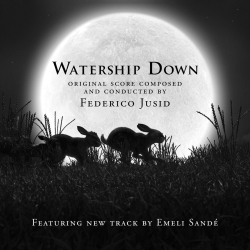 Original Review by Jonathan Broxton
The 1972 novel Watership Down by Richard Adams is a classic of British literature. Note that I said literature and not children’s literature, because although the story is about a group of anthropomorphized rabbits, the story is very much an adult one. Following the destruction of their warren, a group of rabbits led by the brave Hazel, the sensitive Fiver, and the strong Bigwig make their way across the English countryside in search of a new home, and must fight against all manner of dangers – both natural and man-made – as they do so. What’s so brilliant about Adams’s novel is the way in which it creates an entire culture for the rabbits, with a creation myth, gods and spirits, a unique language with specialized vocabulary, and even a hierarchical society – the latter of which comes into play when Hazel and his friends encounter rabbits from an authoritarian rival warren overseen by the tyrannical General Woundwort. When you combine this with themes that mirror classical epics about life and death, environmentalism, and politics, the result is one of the great English books of the last fifty years. The story was made into a much-loved animated film in 1978 – again, not for kids – and is now a three-part mini-series jointly produced by the BBC and Netflix, directed by Noam Murro, which features an astonishing voice cast including James McAvoy, Nicholas Hoult, John Boyega, Ben Kingsley, Tom Wilkinson, Gemma Arterton, Olivia Colman, Daniel Kaluuya, Taron Egerton, and many many others. Read more…
LOST IN SPACE – Christopher Lennertz
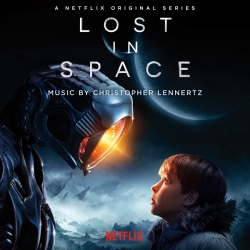 Original Review by Jonathan Broxton
Considering that American TV appears to be obsessed with nostalgic reboots, it was perhaps only a matter of time before producers began to look back even further than the 1980s for inspiration. Lost in Space was one of several TV series produced by the legendary Irwin Allen which, along with Land of the Giants, The Time Tunnel, and of course Star Trek (which was not produced by Allen), eventually came to be regarded as game-changers for science fiction television storytelling. Unlike anthology series like The Twilight Zone, Lost in Space was a sequential drama that followed the adventures of the Robinson family, who are chosen to lead an exploration to find a new planet for humans to colonize, but who become hopelessly lost in the depths of space when their mission is sabotaged by a sinister stowaway. Originally broadcast in 1965, it started out quite seriously, but gradually became sillier as it went on, concentrating much more on the antics of the stowaway Dr Zachary Smith, played by Jonathan Harris, and his relationship with the family’s youngest child Will Robinson, than the existential drama at the heart of the show. It was cancelled in 1968 after three seasons, and despite an initial attempt to re-boot it in 1998 as a movie starring William Hurt, Gary Oldman, and Matt LeBlanc, it has nevertheless remained something of a quaint relic of the 1960s – until now. Read more…
Under-the-Radar Round Up 2017, Part 8
Original Reviews by Jonathan Broxton
The penultimate installment in my annual series of articles looking at the best “under the radar” scores from around the world sees us back on Europe mainland for a final dash around the continent. This is where we get really obscure: we’ve got a total of eight scores here, including a TV series from Poland, a historical action movie from Russia written by a rock musician, a Norwegian supernatural thriller, children’s adventure films from both Germany and Norway – one of which is animated – and a comedy road movie about racism from Finland! It just goes to show that good film music being written everywhere, in the most unexpected places, if only you have the patience to seek it out.
Under-the-Radar Round Up 2017, Part 5
Original Reviews by Jonathan Broxton
The fifth installment in my annual series of articles looking at the best “under the radar” scores from around the world sees us in one of my favorite film music countries, Spain. I have long been a vocal promoter Spanish film music which, over last ten years or so, has become a soundtrack powerhouse filled with composers who – in terms of the number of excellent scores per film – are probably writing the highest quality film music in the world. 2017 was no exception, with dozens of excellent scores emerging from the country during the calendar year. This article contains the scores which, in my opinion, are the eight best, which encompass both film and television, span multiple genres, and are written both by familiar favorites and exciting newcomers.
WOJCIECH KILAR REVIEWS – 1964-2007
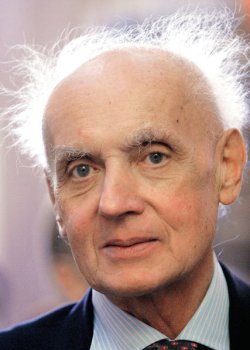 In this latest installment of the new irregular series looking at the career of some film music’s most iconic composers, we travel to Poland to look at the work of one of film music’s most unsung geniuses, Wojciech Kilar.
Wojciech Kilar was born in Lvov, Ukraine, when it was still part of Poland, in July 1932, but moved to Katowice in Silesia in 1948 with his father, a gynecologist, and his mother, an actress. Kilar studied at the State Higher School of Music in Katowice under composer and pianist Władysława Markiewiczówna, at the State Higher School of Music in Kraków under composer and pianist Bolesław Woytowicz, and then in Paris with the legendary Nadia Boulanger in the late 1950s. Upon his return to Poland, Kilar and fellow composers Henryk Górecki and Krzysztof Penderecki led an avant-garde music movement in the 1960s, during which time he wrote several acclaimed classical works.
Kilar scored his first film in 1959, and went on to write music from some of Poland’s most acclaimed directors, including Krzysztof Kieślowski, Krzysztof Zanussi, Kazimierz Kutz, and Andrzej Wajda. He worked on over 100 titles in his home country, but he did not score an major English-language film until Francis Ford Coppola’s adaptation of Bram Stoker’s Dracula in 1992.
In addition to his film work, Kilar’s classical output includes such masterworks as Krzesany (1974), a symphonic poem for orchestra, inspired by the “highlander” music of the Tatra mountains region of southern Poland; Exodus (1979), a religious choral piece used in the trailers for Schindler’s List, and others such as Prelude and Christmas Carol (1972), Mount Kościelec 1909 (1976), Angelus (1984), Orawa (1986), and Choralvorspiel (1988). His third, fourth and fifth symphonies – the September Symphony (2003), the Symphony of Motion (2005) and the Advent Symphony (2007) – were among his last major completed works. Kilar died on December 29, 2013, at his home in Katowice, after a battle with cancer, aged 81.
FEUD: BETTE AND JOAN – Mac Quayle
 Original Review by Jonathan Broxton
Building on the success of their hit TV anthology series American Horror Story, TV network FX and writer/director/producer Ryan Murphy have expanded into different areas with two additional shows. The first, American Crime Story, began in 2016 with The People vs. O. J. Simpson, an in-depth look at the celebrity murder trial which gripped the United States in the mid 1990s. The second, Feud, is intended to take a closer look at numerous different true-life inter-personal rivalries, and began by exposing the decades-long grudge between Hollywood actresses Joan Crawford and Bette Davis, which came to a head during the filming of the movie Whatever Happened to Baby Jane in 1962. The 8-episode series, which starred Jessica Lange and Susan Sarandon in the title roles and debuted in March 2017, reveled both in its Old Hollywood sheen and in the fading glamour of the two former starlets, while unearthing juicy details on a number of studio power players, ranging from Warner Brothers exec Jack Warner to director Robert Aldrich, and gossip columnist Hedda Hopper. The show was an enormous success, and went on to pick up 19 Emmy Award nominations. Read more…

Shop at the Movie Music UK Store

Member of the

 MOVIE MUSIC UK