Archive
ROMEO AND JULIET – Nino Rota
 GREATEST SCORES OF THE TWENTIETH CENTURY
Original Review by Craig Lysy
Director Franco Zeffirelli’s first film was The Taming of the Shrew in 1967, which was adapted from the original Shakespearean play. It was a commercial success, and for his next project he conceived a new adaptation of another of Shakespeare’s famous plays, “Romeo and Juliet”. A lack of funding however drove him to pursue a television production. Yet his fortunes changed when Paramount Pictures agreed to join in partnership with BHE Films, Verona Produzione and Dino de Laurentis Cinematografia to finance a big screen release. A budget of $850,000 was provided and the British team of Anthony Havelock-Allan and John Brabourne would produce the film. For the screen play Zeffirelli collaborated with Masolino d’Amico and Franco Brusati. In an audacious casting move Zeffirelli decided to cast the lead roles as minors, assuring fidelity to Shakespeare’s original conception. Leonard Whiting, a 17-year-old, was cast as Romeo, and Olivia Hussey, a 15 year old, as Juliet. Joining them would be Milo O’Shea as Friar Laurence, Michael York as Tybalt, John McEnery as Mercutio, Natasha Parry as Lady Capulet, and Robert Stephens as the Prince of Verona. Read more…
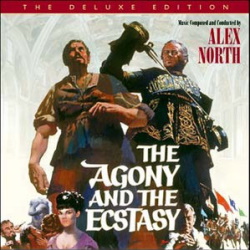
THE AGONY AND THE ECSTASY – Alex North
 GREATEST SCORES OF THE TWENTIETH CENTURY
Original Review by Craig Lysy
20th Century Fox Studio executive Peter Levathes took notice of Irving Stone’s best-selling novel 1961 The Agony and the Ecstasy with almost 51 million copies sold and saw opportunity. He purchased the film rights for $125,000, yet was unable to proceed with the project as the studio suffered significant financial reversals in 1962 due to cost overruns on several films, most notable “Cleopatra”. Industry icon Daryl F. Zanuck was brought in to save the studio, and within 12 months it was again operating in the black. This allowed him to move “The Agony and the Ecstasy” into production. Carol Reed was hired to both produce and direct the film with a $7.2 million budget. A stellar cast was hired including Charlton Heston as Michelangelo, Rex Harrison as Pope Julius II, Diane Cilento as Contessina Antonia Romola de Medici, Harry Andrews as Donata Bramente and Albert Lupo as the Duke of Urbino. Read more…
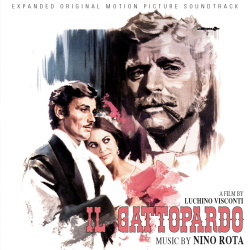
IL GATTOPARDO/THE LEOPARD – Nino Rota
 GREATEST SCORES OF THE TWENTIETH CENTURY
Original Review by Craig Lysy
Studio executives of the Italian production company Titanus decided to bring to the big screen the popular 1958 best-selling novel Il Gattopardo (The Leopard) by Giuseppe Tomasi di Lampedusa. Collaboration with 20th Century Fox brought the necessary financing for a budget of $2 million. Titanus producer Goffredo Lombardo was tasked with the project, and Luchino Visconti brought in to direct. Controversy arose over casting the key role of Prince Don Fabrizio Corbera of Salina as Visconti desired Marlon Brando or Laurence Olivier but the 20th Century Fox leveraged their financing of $2 million to force Burt Lancaster into the role over Visconti’s objections. Joining him would be Claudia Cardinale as Angelica Sedera, Alain Delon as Prince Tancredi Falconeri, and Rina Morelli as Princess Maria Stella of Salina. Read more…
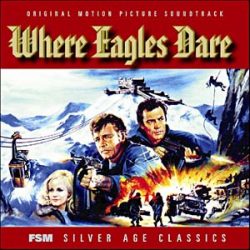
WHERE EAGLES DARE – Ron Goodwin
 GREATEST SCORES OF THE TWENTIETH CENTURY
Original Review by Craig Lysy
The genesis of Where Eagles Dare lay with actor Richard Burton, whose career was in decline. His two sons exhorted him to do an adventure film where he was the hero, and did not die in the end. Burton approached producer Elliot Kastner and asked if he had any projects that would fit the bill. He did not but Kastner asked novelist collaborator Alistair MacLean for a new original script to showcase Burton. Well, MacLean delivered the goods, and financing was provided by Winkast Productions with a budget of $6.2 million. Brian Hutton was brought in to direct and a stellar cast assembled to join Richard Burton as Major Jon Smith, including Clint Eastwood as Lieutenant Morris Schaffer, Mary Ure as Mary Ellison, Patrick Wymark as Colonel Wyatt Turner, and Michael Hordern as Vice Admiral Rotland. Read more…
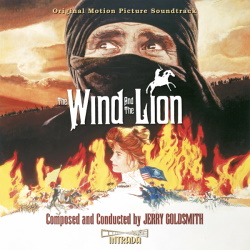
THE WIND AND THE LION – Jerry Goldsmith
 GREATEST SCORES OF THE TWENTIETH CENTURY
Original Review by Craig Lysy
Director John Milius was a longtime admirer of President Theodore Roosevelt. By chance he came upon an article “Pedecaris Incident” by Barbara W. Tuchman in American Heritage magazine and found a fascinating story which involved President Roosevelt sending American troops to free an American citizen kidnapped in Morocco by a Berber warlord. He was intrigued by the tale and further investigatory reading of the 1924 biography Raisuli, The Sultan of the Mountains by Rosita Forbes inspired him to proceed with a film adaptation. He had always dreamed of filming a grand sprawling epic film and believed this story gave him his opportunity. Given that this was a passion project, Milius wrote the screenplay himself and related: “I consider ‘The Wind and the Lion’ my first real movie. I approached it as a David Lean film, to do it in that style, a large epic canvas, to see if I could pull off great movements of troops. The story is even written that way. Two guys, the Raisuli and Teddy Roosevelt, yelling at each other across oceans.” However, to get MGM Studios buy in, he had to romanticize the story by changing the kidnapped victim to a beautiful woman, and casting Raisuli as one of the dashing leading men of the day. Herb Jaffe was tasked with producing the film and a budget of $4.5 million was provided. Casting was problematic with Omar Sharif turning down the part of Raisuli and Faye Dunaway withdrawing due to illness. Eventually Sean Connery was cast as Sharif Mulai Ahmed Mohammed Raisuli joined by Candice Bergen as Eden Pedecaris. Joining them would be Brian Keith as President Theodore Roosevelt and John Huston as Secretary of State John Hay. Read more…
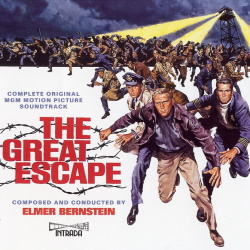
THE GREAT ESCAPE – Elmer Bernstein
 GREATEST SCORES OF THE TWENTIETH CENTURY
Original Review by Craig Lysy
Director John Sturges had long desired to bring the amazing true to life WWII novel The Great Escape by Paul Brockhill to the big screen but could never secure financial backing. All this changed in 1960 following his stunning critical and commercial success directing The Magnificent Seven. He secured financial backing from the Mirisch Company and United Artists, and would produce the film, as well as direct it with a budget of $3.8 million. A legendary cast was assembled, which included Steve McQueen as Virgil Hilts, James Garner as Lieutenant Robert Hendley, Richard Attenborough as Squadron Leader Roger Bartlett, Charles Bronson as Lieutenant Danny Velinski, James Donald as Captain Ramsey, Donald Pleasence as Lieutenant Colin Blythe, James Colburn as Flying Officer Louis Sedgwick, David McCallum as Lieutenant Commander Eric Ashley Pitt, and Hannes Messemer as Kommandant Oberst von Luger. Read more…
THE GADFLY – Dmitri Shostakovich
 GREATEST SCORES OF THE TWENTIETH CENTURY
Original Review by Craig Lysy
One day it dawned to director Aleksandr Faintsimmer that the popular 1897 novel Ovod – The Gadfly – by Ethel Voynich lent itself well for adaptation to the big screen. Its tale of revolutionary zeal, the excoriation of an anachronistic church and the unification of oppressed people in a modern egalitarian state had long been promoted by the Soviet Ministry of Culture. The book was also very popular with the populace, selling 2.5 million copies. He pitched his idea to the Ministry of Culture and secured backing after a review of the screenplay, which was written by Viktor Shklovsky. Lenfilm, a production unit of the Soviet Union, was formally authorized to produce the film. A fine cast was assembled, which included Oleg Strizhenov as Arthur Burton/Felice Rivarez, Marianna Strizhenova as Gemma, Nikolai Simonov as Cardinal Montanelli and Vladimir Etush as Cesare Martini. Read more…
THE COBWEB – Leonard Rosenman
 GREATEST SCORES OF THE TWENTIETH CENTURY
Original Review by Craig Lysy
Director Vincent Minnelli was intrigued by the cinematic possibilities offered by William Gibson’s novel, The Cobweb (1954), which takes place in a psychiatric institution where both the patients and the professional staff suffer from neuroses. He sold his idea to Metro-Goldwyn-Mayer Studios, John Houseman was tasked to produce, and a budget of $1,976 million was provided. Casting foundered when Robert Taylor, Lana Turner and Grace Kelly were either unavailable or declined. Eventually a fine cast was assembled, which included Richard Widmark as Dr. Stewart McIver, Lauren Bacall as Meg Rinehart, Charles Boyer as Dr. Devanal, Gloria Grahame as Karen McIver, Lilian Gish as Victoria Inch and John Kerr as Stevie. Read more…
C’ERA UNA VOLTA IL WEST/ONCE UPON A TIME IN THE WEST – Ennio Morricone
 GREATEST SCORES OF THE TWENTIETH CENTURY
Original Review by Craig Lysy
Renowned Italian director Sergio Leone had achieved what many believed to be the pinnacle of success in 1966, following completion of the last film of his famous Dollars trilogy, “The Good, The Bad, and the Ugly”. Despite receiving universal accolades, he decided that he had said everything he wanted to say, and would not be returning to the Western genre. Hollywood studios, however, had other ideas, and wanted to capitalize on his talent and record of success. United Artists offered him opportunity to make a new Western, and his choice of the leading actors of the day including Charlton Heston, Kirk Douglas or Rock Hudson. Leone declined, but when Paramount made a very generous financial offer, which also included an opportunity to work with Henry Fonda, Leone’s favorite actor, he agreed. Fulvio Morsella was tasked with producing and a budget of $5 million was provided. Leone hired Bernardo Bertolucci and Dario Argento to assist him in crafting a screenplay. Later in the project Italian screenwriter Sergio Donati was brought in to assist with editing the film’s length as well as fine tuning the script’s dialogue. A fine cast was assembled, which included Henry Fonda as Frank, Claudia Cardinale as Jill McBain, Jason Robards as Manuel “Cheyenne” Gutiérrez, Charles Bronson as “Harmonica”, Gabriele Ferzetti as Mr. Morton, Paolo Stoppa as Sam, and Frank Wolff as Brett McBain. Read more…
SHAFT – Isaac Hayes
 GREATEST SCORES OF THE TWENTIETH CENTURY
Original Review by Craig Lysy
In the 1960s and 1970s the larger than life screen detective genre flourished with stars such as Paul Newman in Harper), Frank Sinatra in Tony Rome, and Clint Eastwood in Dirty Harry. Producer Joel Freeman and MGM Studios sought to cash in on the genre and decided to adapt novelist Ernest Tidyman’s last book Shaft. It was decided that Tidyman and John D. F. Black would collaborate in writing the screenplay. Gordon Parks was given the reins to direct and he made a truly audacious move by casting the titular character with Richard Roundtree, a black former model and actor. In the novel, Shaft is white, and this bold move would ultimately prove transformative in the Hollywood film industry, unleashing the Blaxploitation film genre. Joining Roundtree would be Moses Gunn as Bumpy Jonas and Charles Cioffi as Lieutenant Vic Androzzi. Read more…
L’ASSASSINAT DU DUC DE GUISE/THE ASSASSINATION OF THE DUKE OF GUISE – Camille Saint-Saëns
 GREATEST SCORES OF THE TWENTIETH CENTURY
Original Review by Craig Lysy
During the 1880s a technological revolution occurred with the invention of celluloid photographic film and motion picture cameras. The first public screening of a motion picture in which an admission fee was charged occurred in New York City 1895 by the Lambda Company, founded by Woodville Latham. The idiom quickly gained popularity, and in 1907 Paul Lafitte, a wealthy novelist, publisher and financier founded the French production company Le Film d’Art to produce French films, which he hoped would gain the admiration of the cultural elite as well as the patronage of the common people. Throughout his life Lafitte had been tireless in fostering literature and the theatre. He saw motion pictures as a new way to bring education and entertainment to the masses. He recruited talented stage actors from the Comédie-Française theatre group, and in 1908 decided to produce his first film, the French historical drama L’Assassinat du Duc de Guise originally titled La Mort du Duc de Guise. The Pathé Frères company would distribute the film, and he tasked French actors Charles le Bargy and André Calmettes to direct. French dramatist Henri Lavedan was hired to write an original screenplay, and a fine cast was assembled, which included Charles le Bargy as King Henry III, Albert Lambert as Le Duc de Guise, Gabrielle Robinne as Marquise de Noirmoutier and Berthe Bovy as Le Page. The final product was a short film of 18 minutes. Read more…
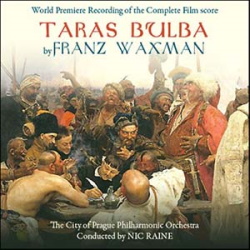
TARAS BULBA – Franz Waxman
 GREATEST SCORES OF THE TWENTIETH CENTURY
Original Review by Craig Lysy
Robert Aldrich, a producer, director and screenwriter had for many years been crafting a script for his dream project, adapting the 1895 novella Taras Bulba by Nikolai Gogol for the big screen. After five scripts he believe he had at last created a “sensational” screenplay. The project moved forward in 1959, but foundered when financing failed. Aldrich fell into debt, and was forced to sell the script to Joseph Kaufman, an agent for producer Harold Hecht for $100,000. Harold Hecht Productions would finance the film with United Artists distributing. A budget of $6 million was provided and J. Lee Thompson was brought in to direct. A fine cast was assembled, which included Tony Curtis as Andrei Bulba, Yul Brynner as Taras Bulba, Christine Kaufman as Natalie Dubrov, and Perry Lopez as Ostap Bulba. Read more…
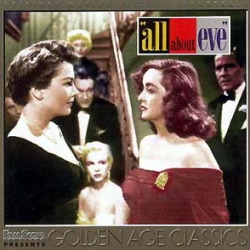
ALL ABOUT EVE – Alfred Newman
 GREATEST SCORES OF THE TWENTIETH CENTURY
Original Review by Craig Lysy
In 1949 renowned director Joseph Mankiewicz envisioned for his next project a story about an aging actress. By chance he came upon a short story “The Wisdom of Eve” by actress Mary Orr, published in the May 1946 issue of Cosmopolitan, which piqued his interest. He contacted 20th Century Fox studio executive Darryl Zanuck who was receptive, and was given the green light to proceed with the project. Zanuck agreed to produce the film and provided a generous $1.4 million budget. Mankiewicz would not only direct, but also write the screenplay, which was significantly edited to incorporate numerous suggestions for improvement offered by Zanuck. Casting the lead role was challenging to fill with Susan Hayward, Marlene Dietrich, Gertrude Lawrence and Claudette Colbert all considered before Mankiewicz finally selected Bette Davis. Joining her would be Anne Baxter as Eve Harington, Gary Merrill as Bill Sampson, George Sanders as Addison DeWitt, Celeste Holm as Karen Richards, and Hugh Marlowe as Lloyd Richards. Read more…
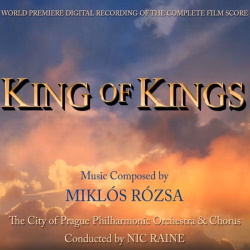
KING OF KINGS – Miklós Rózsa
 GREATEST SCORES OF THE TWENTIETH CENTURY
Original Review by Craig Lysy
Producer Samuel Bronston related that the most impactful event in human history was the birth, life and death of Jesus Christ. He had long nurtured the dream to bring this remarkable tale to the big screen. His conception, which was presented to Metro-Goldwyn-Mayer Studios was to make Jesus more accessible, by presenting Him as a flesh and blood man living during tumultuous times. Given the stunning success of Ben-Hur in 1959 MGM decided to cash in on the public’s love of biblical epics and gave Bronston permission to proceed. He hired writers Philip Yordan and Ray Bradbury to write the screenplay, and brought in veteran director Nicholas Ray to direct. A splendid cast was assembled, which included Jefferey Hunter as Jesus, Siobhán McKenna as Mary, Robert Ryan as John the Baptist, Ron Randell as Lucius, Hurd Hatfield as Pontius Pilate, Frank Thring as Herod Antipas, Rip Torn as Judas Iscariot, Harry Guardino as Barabbas, Carmen Sevilla as Mary Magdalene, Brigid Balzen as Salomé, and Guy Rolfe as Caiaphas. Read more…
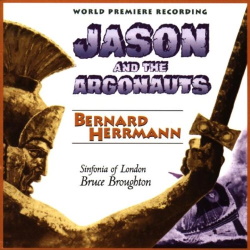
JASON AND THE ARGONAUTS – Bernard Herrmann
 GREATEST SCORES OF THE TWENTIETH CENTURY
Original Review by Craig Lysy
Producer Charles Schneer and famed stop-motion photography master Ray Harryhausen decided that their fourth collaboration would take them to the realm of the ancient Greek myths. They chose the epic hero’s quest tale of Jason and his Argonaut crew who sail to the ends of the earth in search of the Golden Fleece, born from a winged ram and a symbol of divine sanction and kingship. Schneer would produce the film using his Morningside Productions company in partnership with Columbia pictures. A very generous budget of $3 million was provided and Don Chaffey was tasked with directing. Beverly Cross and Jan Read were hired to write the screenplay and a fine cast was assembled, which included Todd Armstrong in the titular role, joined by Nancy Kovack as Medea, Gary Raymond as the villain Acastus, Laurence Naismith as Argus, Niall MacGinnis as Zeus, Honor Blackman as Hera, Jack Gwillim as King Aeetes, John Carey as Hylas, and Nigel Green as Hercules. Read more…

Shop at the Movie Music UK Store

Member of the

 MOVIE MUSIC UK