Archive
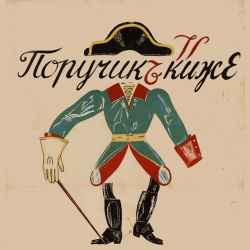
LIEUTENANT KIJÉ – Sergei Prokofiev
 GREATEST SCORES OF THE TWENTIETH CENTURY
Original Review by Craig Lysy
In 1932 the People’s Commissariat for Education approved director Aleksandr Faintsimmer’s latest request to proceed with a film based on screenwriter Yuri Tynyanov’s story of Lieutenant Kijé. The Commissariat believed that its barbed, sardonic humor of Russia’s former Tsar Paul I would denigrate the idiocy and incompetence of the Tsars, while reinforcing the superiority of the new socialist order. The Belgoskino production company located in Belarus would produce the film, and Arkadi Koltsaty was hired to manage the cinematography. A fine cast was assembled which included Mikhail Yanshin as Tsar Pavel I, Boris Gorin-Goryainov as Count von Pahlen, Nina Shaternikova as Princess Gagagrina, and Erast Garin as Adjudant Kobulov. Read more…
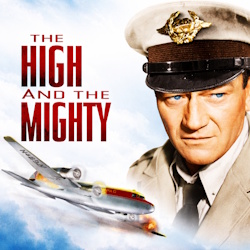
THE HIGH AND THE MIGHTY – Dimitri Tiomkin
 GREATEST SCORES OF THE TWENTIETH CENTURY
Original Review by Craig Lysy
In 1952 John Wayne partnered with producer Robert Fellows to create Wayne-Fellows Productions. Director William Wellman pitched an aviation suspense drama titled “The High and the Mighty” written by Ernest Gann to Wayne who immediately purchased the film rights and Gann’s services writing the screenplay for $55,000. Wellman was tasked with directing and provided a budget of $1.47 million. A cast was assembled with Spenser Tracy offered the lead role, but he withdrew just before filming unwilling to suffer Wellman’s authoritarianism. As such, Wayne stepped in and took the role of First Officer Dan Roman to save the project. Today his performance is believed by critics to be one of the finest of his career. Joining him were; Claire Trevor as May Holst, Laraine Day as Lydia Rice, Robert Stack as Captain John Sullivan, Jan Sterling as Sally McKee and Sidney Blackmer as Humphrey Agnew. Read more…
FOREVER AMBER – David Raksin
 GREATEST SCORES OF THE TWENTIETH CENTURY
Original Review by Craig Lysy
Kathleen Winsor’s novel Forever Amber proved to be a sensational success with the public, one fully noticed by the major movie studios. 20th Century Fox executive Darryl F. Zanuck moved quickly to secure the film rights paying an astounding $200,000 to Winsor. Writing the screenplay proved to be torturous with Winsor and then Jerome Cady failing to adapt the massive novel in a way that would gain approval by the National League of Decency. Ultimately the team of Philip Dunne and Ring Lardner Jr. succeeded. William Perlberg was assigned to produce the film with a budget of $3 million and John M. Stahl was tasked with directing. The project went off the rails immediately when star Peggy Cummins collapsed on the set. After a three-month delay, she was pulled from the lead role, Stahl was assigned to another project and the studio found itself $1 million in the hole. Otto Preminger was brought in to direct and salvage the project and a new cast assembled, which included Linda Darnell as Amber St. Clair, Cornel Wilde as Bruce Carlton, Richard Greene as Lord Harry Almsbury, and George Sanders as King Charles II of England. Read more…
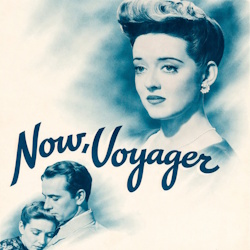
NOW VOYAGER – Max Steiner
 GREATEST SCORES OF THE TWENTIETH CENTURY
Original Review by Craig Lysy
In 1942 producer Hal B. Wallis signed a four-year contract with Warner Brothers Studios tasking him to produce four films a year. He decided that adapting Olive Higgins Prouty’s 1941 novel Now Voyager to the big screen would serve as his inaugural effort. Screen rights were purchased, Casey Robinson was hired to write the screenplay, and a budget of $877,000 was provided. Irving Rapper was given the reins to direct the film, and a stellar cast was assembled, which included Bette Davis as Charlotte Vale, Paul Henreid as Jerry Duvaux Durrance, Claude Rains a Dr. Jaquith, Gladys Cooper as Mrs. Windle Vale, Ilka Chase as Lisa Vale and Janis Wilson as Tina Durrance. Read more…
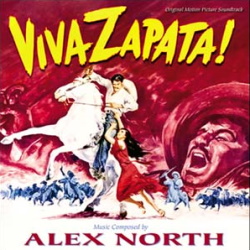
VIVA ZAPATA! – Alex North
 GREATEST SCORES OF THE TWENTIETH CENTURY
Original Review by Craig Lysy
Director Elia Kazan and author John Steinbeck had long been friends and shared an interest in Mexican hero Emiliano Zapata, a champion of the peons who did what few men in history have done – achieved power and walked away from it, wary of its corrupting influence. In 1949 they decided to collaborate and bring the tale of this Mexican legend to the big screen. Steinbeck was tasked with writing the screenplay and he referenced Edgcomb Pinchon’s Zapata The Unconquerable (1941) as a guide. Kazan used his clout to obtain backing from Darryl F. Zanuck who agreed to produce the film for 20th Century Fox, providing a budget of $1.8 million. A fine cast was hired which included Marlon Brando in the titular role, Jean Peters as Josefa Zapata, Anthony Quinn as Eufemio Zapata, Alan Reed as Pancho Villa, and Fay Roope as Porfirio Diaz. Read more…
THE KEYS OF THE KINGDOM – Alfred Newman
 GREATEST SCORES OF THE TWENTIETH CENTURY
Original Review by Craig Lysy
After the critical success of translating two novels to the screen with Gone with the Wind in 1939 and Rebecca in 1940, producer David O. Selznick decided to roll the dice again with A. J. Cronin’s latest novel, The Keys of the Kingdom. He purchased the film rights for $100,000, with Cronin assisting with writing the screenplay. However, he could not secure the cast he desired and so sold the film rights to Darryl F. Zanuck of 20th Century Fox. Zanuck tasked director Joseph Mankiewicz with the project, providing a budget of $3 million. A new screenplay was provided by Nunnally Johnson and Mankiewicz, and a fine cast was assembled including Gregory Peck as Father Francis Chisholm, Thomas Mitchell as Dr. Willie Tulloch, Vincent Price as Angus Mealey, Rose Stradner as Reverend Mother Maria-Veronica, Edmund Gwenn as Reverend Hamish MacNabb, Benson Fong as Joseph, Roddy McDowell as Francis Chisholm as a boy, and Sir Cedric Hardwicke as Monsignor Sleeth. Read more…
SYMPHONY OF SIX MILLION – Max Steiner
 GREATEST SCORES OF THE TWENTIETH CENTURY
Original Review by Craig Lysy
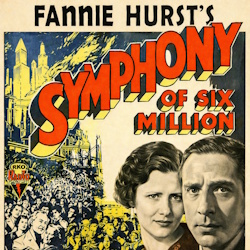
In late 1931 legendary David O. Selznick became RKO Studio’s Production Chief. He decided that his inaugural film would be the melodrama “Night Bell”, which would be adapted from the story of the same name by Fannie Hurst. He first changed the film title to “Symphony of Six Million” – a reference to the population of New York City – and then rejected the first screenplay, demanding that it reclaim the cultural sensibilities offered in the original story. He wanted his film to offer a mirror to the life of Jewish immigrants in America and the challenges created by the cultural assimilation of their children. Selznick and Pandro S. Berman would produce the film, Gregory La Cava was hired to direct, and a budget of $270,000 was provided. The cast would include Ricardo Cortez as Dr. Felix Klauber, and his family, Gregory Ratoff as his father Meyer Klauber, Anna Appel as his mother Hannah Klauber, Noel Madison as his brother Magnus Klauber, and Lita Chevret as his sister Birdie Klauber. Irene Dunne would play love interest Jessica, and John St. Polis his colleague Dr. Schifflen. Read more…
THE INFORMER – Max Steiner
 GREATEST SCORES OF THE TWENTIETH CENTURY
Original Review by Craig Lysy
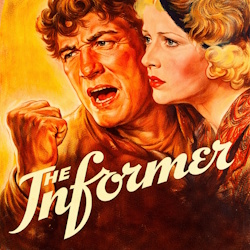
Director John Ford came across a 1925 novel, The Informer by Liam O’Flaherty, which explored the dark underside of the Irish War of Independence. He felt that the story provided suspense, drama, betrayal, and tragedy, which would translate well to the big screen. RKO Studios however was reticent to proceed with the project due to its depressing subject matter and unsympathetic lead, but they relented following Ford’s great success with his prior film The Lost Patrol, which earned their trust and permission to proceed with a budget of $250,000. Dudley Nichols was hired to write the screenplay and a fine cast was assembled which included Victor McLaglen as Gypo Nolan, Heather Angel as Mary McPhillip, Preston Foster as Dan Gallagher, Margot Grahame as Katie Madden, Wallace Ford as Frankie McPhillip, and Una O’Connor as Mrs. McPhillip. Read more…
JUAREZ – Erich Wolfgang Korngold
 GREATEST SCORES OF THE TWENTIETH CENTURY
Original Review by Craig Lysy
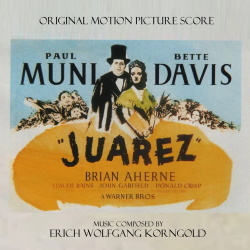
In 1935 producer Hal Wallis sought out director Max Reinhardt’s assistance in his next project; bringing the tale of Maximilian and Juárez to the big screen. He believed that Bertita Harding’s 1934 novel The Phantom Crown was a tragic tale, which needed its story told. Jack L. Warner agreed and purchased the film rights to the novel, as well as the play “Juárez and Maximilian” by Franz Werfel. He tasked Aeneas McKenzie in writing the screenplay, and to ensure historical accuracy three hundred books were acquired on the subject and two historians were hired to assist with the script. The initial script was too massive to present in a single film, so John Huston and Wolfgang Reinhardt were hired to make the necessary edits. Progress was made and in 1938 the studio gave the green light for production with William Dieterle was given the director reins. A stellar cast was hired, with Paul Muni as Benito Juárez, Bette Davis as Carlotta of Mexico, Brian Aherne as Maximilian I of Mexico, Claude Rains as Emperor Napoleon III of France, and John Garfield as Porfirio Diaz. Read more…
THE QUIET MAN – Victor Young
 GREATEST SCORES OF THE TWENTIETH CENTURY
Original Review by Craig Lysy
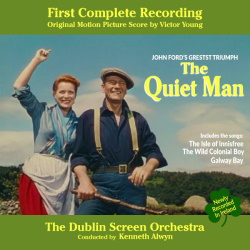
Director John Ford read the story “The Quiet Man” by Maurice Walsh in the Saturday Evening Post, liked it, and purchased the film rights for $6,260 In 1944 he approached actor John Wayne and made a gentlemen’s agreement to make a film, which would be set in Ireland. However, to their dismay, every studio turned them down saying their idea was “a silly Irish story that won’t make a penny”. Undeterred they went to Republic Pictures studio executive Herbert J. Yates and negotiated a deal; if he would fund the film Wayne and co-star Maureen O’Hara would agree to first make a Western for Republic. Yates agreed and they made the successful film “Rio Grande” in 1950. They got the green light to proceed and Ford would produce and direct the film with a generous $1. 75 million budget. John Wayne would star as Sean Thornton and Maureen O’Hara would play Mary Kate Danaher. Joining them would be Barry Fitzgerald as Michaleen “Óge” Flynn, Ward Bond as Father Peter Lonergan, and Victor McLaglen as Squire “Red” Will Danaher. Read more…
THE NUN’S STORY – Franz Waxman
 GREATEST SCORES OF THE TWENTIETH CENTURY
Original Review by Craig Lysy
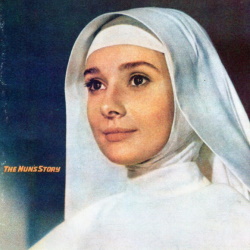
Director Fred Zinnemann was intrigued by Kathryn Hulme’s best-selling novel “The Nun’s Story (1956) and purchased the film rights. To his dismay, he could not obtain financial backing from any studio as they all felt that the lack of action would not resonate with audiences. All this changed dramatically when Audrey Hepburn decided she wanted to take on the role of Gaby Van der Mal. A bidding war ensued with Warner Brothers prevailing. Henry Blanke was hired to produce the film with a 3.5 million budget. Robert Anderson was tasked with adapting the novel and writing the screenplay. Zinnemann would direct and he assembled a fine cast. Joining Hepburn would be Peter Finch as Dr. Fortunati, Dame Edith Evans as Mother Emmanuel and Dame Peggy Ashcroft as Mother Mathilde. Read more…
FOR WHOM THE BELL TOLLS – Victor Young
 GREATEST SCORES OF THE TWENTIETH CENTURY
Original Review by Craig Lysy
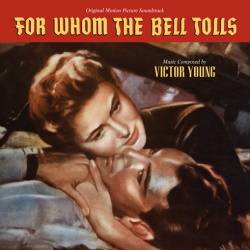
American novelist Ernest Hemmingway’s latest novel “For Whom The Bell Tolls” (1940) offered a potent commentary on the Spanish Civil War, which many studios believed could be adapted to the big screen. However, Hemmingway’s demand of $100,000 for the film rights, and control of selecting the principal actors was a non-starter. Paramount however, thought differently having successfully produced his earlier novel “A Farewell to Arms” (1932), which agreed to pay an astounding $150,000 for the film rights and acceded to Hemmingway’s demand that he would choose the two leads – Gary Cooper and Ingrid Bergman. After Cecil B. DeMille dropped out of producing and directing the film, Sam Wood took over the reins, and would produce and direct the film with a budget of $3 million. He brought in Louis Bromfield to rework the existing script, with Dudley Nichols finally completing the screen play. An exceptional cast was assembled including Gary Cooper as Robert Jordan, Ingrid Bergman as Maria, Akim Tamiroff as Pablo, Katina Paxinou as Pilar, and Joseph Calleia as El Sordo. Read more…
RED RIVER – Dimitri Tiomkin
 GREATEST SCORES OF THE TWENTIETH CENTURY
Original Review by Craig Lysy
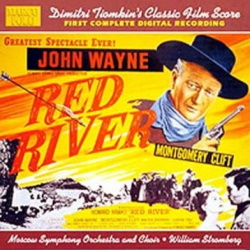
Producer-Director Howard Hawks had long desired to make a Western and finally found his vehicle after reading “The Chisolm Trail” (1946) by Borden Chase in the Saturday Evening post. He secured Monterey Productions to fund the project, providing a generous budget of $2.7 million. This was a passion project, and so Hawks decided to both produce and direct the film. He tasked Chase to adapt his novel and Charles Schnee assisted in writing the screenplay. A stellar cast was hired, which included John Wayne as Thomas Dunson, Montgomery Clift making his acting debut as Matt Garth, Walter Brennan as Nadine Groot, Joane Dru as Tess Millay, and John Ireland as Cherry Valance. Read more…
MOBY DICK – Philip Sainton
 GREATEST SCORES OF THE TWENTIETH CENTURY
Original Review by Craig Lysy
For three years director John Huston had long sought to bring Herman Melville’s classic 1851 novel Moby Dick to the big screen. Studios were resistant because the story was depressing, had no female roles, nor romance, which they believed would not resonate with the public. Ever tenacious, Huston finally secured backing by United Artists, the Mirsch brothers and Moulin Productions with the caveat that a big-name actor had to play Captain Ahab. A budget of $2.0 million was provided, which would include shooting in the Irish Sea. Huston would direct and tasked Ray Bradbury with adapting the novel, with some edits provided by Huston. To fill the “Big-name stipulation, Huston cast Gregory Peck as Captain Ahab, a decision criticized as a miscast by critics and later, Peck himself. Joining him would be Richard Basehart as Ishmael, Leo Genn as Starbuck, Orson Welles as Father Mapple, and Friedrich von Ledebur as Queequeg. Read more…
JULIUS CAESAR – Miklós Rózsa
 GREATEST SCORES OF THE TWENTIETH CENTURY
Original Review by Craig Lysy
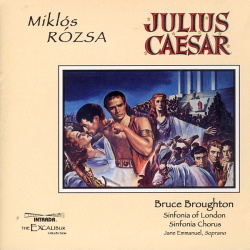
Metro-Goldwyn-Mayer studio executives were impressed by the commercial success of Henry V in 1944 and sought to adapt another of William Shakespeare’s plays for the big screen. They chose his 1599 work Julius Caesar and tasked producer John Houseman with the project with a generous budget of $2.0 million. Houseman had a vision for the film and hired Joseph Mankiewicz to direct, as the story would be dialogue driven, which was the type of film in which Mankiewicz excelled. Once attached to the project Mankiewicz made the creative decision to personally adapt the play and write the screenplay. Houseman did not want another lavish epic, but rather a small more intimate production, which explored the drama of ambition and power politics. Second, he insisted that the film be shot in black and white because “we wanted people to relate to the newsreels, to the Fascist movements in Europe, which were still relevant”. A cast for the ages was assembled, which included Marlon Brando as Marc Anthony, James Mason as Brutus, John Gielgud as Cassius, Louis Calhern as Julius Caesar, Edmund O’Brien as Casca, Greer Garson as Calpurnia, and Deborah Kerr as Portia. Read more…

Shop at the Movie Music UK Store

Member of the

 MOVIE MUSIC UK