X-MEN: DAYS OF FUTURE PAST – John Ottman
 Original Review by Jonathan Broxton
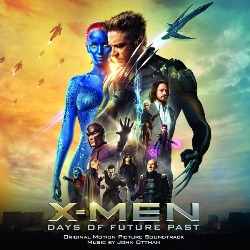
X-Men: Days of Future Past is the seventh film in Marvel’s “other” long-running super franchise, set in the world of mutants. The film begins in the future, long after the events of X-Men: The Last Stand and The Wolverine, in a world where civilization – both human and mutant – has been decimated almost to the point of extinction by massive machines known as Sentinels, which were initially created to combat ‘evil’ mutants, but eventually took it upon themselves to destroy all humanity. In a last, desperate attempt to literally save the world, the remaining mutants led by Professor Charles Xavier (Patrick Stewart) and Erik Lehnsherr/Magneto (Ian McKellen) devise a complicated plan to send the consciousness of Logan/Wolverine (Hugh Jackman) back in time to inhabit the body of his younger self in 1973; once there, he will locate the younger versions of Xavier and Magneto (James McAvoy and Michael Fassbender), and task them with helping him avert the individual event they believe triggered the creation of the Sentinels: the assassination of industrial scientist Bolivar Trask (Peter Dinklage) by their fellow mutant Raven/Mystique (Jennifer Lawrence). The film is based on the extremely popular X-Men comic storyline by Chris Claremont and John Byrne, co-stars Halle Berry, Ellen Page, Nicholas Hoult, Evan Peters and Shawn Ashmore, and is directed by Bryan Singer, returning to the X-Men director’s chair for the first time since 2003. Read more…
GODZILLA – Alexandre Desplat
 Original Review by Jonathan Broxton
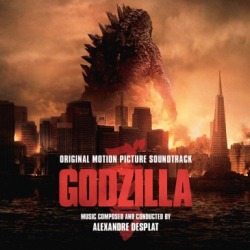
American film makers have been trying to do justice to Godzilla ever since he first appeared in director Ishiro Honda’s classic Japanese monster movie in 1954; although Godzilla is considered to be a significant icon of Japanese culture, Honda was himself inspired to create the King of the Monsters by watching Schoedsack and Cooper’s King Kong, and as such he has his roots in classic Hollywood. There have been 28 official Godzilla films released in Japan, the most recent coming in 2004, but only two American movies (three, if you count Cloverfield): the ill-fated Roland Emmerich directed disaster epic from 1998, which was scored by David Arnold, and this one, which is significantly superior to its predecessor, but still fails to capture the character’s essence according to the purists. Read more…
THE BLUE MAX – Jerry Goldsmith
 GREATEST SCORES OF THE TWENTIETH CENTURY
Original Review by Craig Lysy
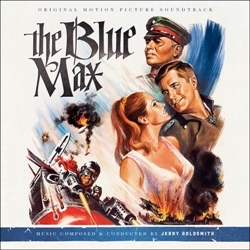
Director John Guillermin was inspired by the Jack Hunter novel “The Blue Max” and so adapted it for film. He assembled a stellar cast, which included George Peppard as Bruno Stachel, James Mason as General Count von Klugermann, Ursula Andress as Countess Kaeti von Klugermann and Jeremy Kemp as Willi von Klugermann. Set in the waning year of World War I on the Western front, it tells the story of a young man’s rise to glory and his tragic end. Stachel, is a classic anti-hero, a member of the lower cast who is driven by blind ambition. As such he leaves the Wehrmacht to join the Luftwaffe in search of personal glory – Germany’s most prestigious medal, Pour le Mérite, or the Blue Max. The prized medal is bestowed upon pilots for meritorious service and requires 20 dog fight kills. Driven with a grim, and relentless determination Stachel will allow nothing to stand in his way. His raw and unchivalrous demeanor offends his fellow pilots who hail from the German aristocracy and disdain this commoner among their ranks. Stachel’s rise is noticed by General von Klugermann, who seeks to exploit him as a national symbol in an effort to rally a weary public tiring of war. A tryst with the General’s wife only adds to Stachel’s ego and notoriety. While he ultimately succeeds in gaining the coveted prize, he does so by defiantly disobeying orders to defend ground troops. Von Klugermann does not wish to disgrace his ‘hero’ with a court marshal and so selects him to fly a proto-type mono-wing plane whose support struts he knows will not hold up. When Stachel dies in a crash von Klugermann’s dilemma is solved, he gains his “man of the people” hero and his air corps is not disgraced by scandal. The film was both a critical and commercial success. Read more…
THE AMAZING SPIDER-MAN 2 – Hans Zimmer
 Original Review by Jonathan Broxton
As the second movie in Sony’s “reboot” of the Spider-Man franchise, The Amazing Spider-Man 2 sees Andrew Garfield returning as the teenage web-slinging super hero Peter Parker, still attending high school by day, while battling super-villains at night. The plot this time round sees young Peter in a healthy relationship with the lovely Gwen Stacey (Emma Stone) as they prepare to graduate from Midtown Science, although he is haunted by the promise he made to Gwen’s late father to keep her safe, as well as the memory of the death of his parents several years earlier, and the mystery surrounding their work and legacy. Peter’s world is shattered further, however, with the emergence of a new threat: Electro (Jamie Foxx), a mild-mannered engineer working for the multinational conglomerate Oscorp, who develops the capacity to manipulate and control electricity – and a deep hatred of Spider-Man – following an industrial accident. Not only that, but Peter’s childhood friend Harry Osborn (Dane DeHaan) returns to the city following the death of his father Norman Osborn (Chris Cooper), the head of Oscorp, only to discover that the illness that killed his father is hereditary, and that the only cure may be inside Spider-Man’s blood. The film is again directed by the appropriately-named Marc Webb, and has an original score by Hans Zimmer, replacing the first film’s composer James Horner. Read more…
DIVERGENT – Tom Holkenborg
 Original Review by Jonathan Broxton
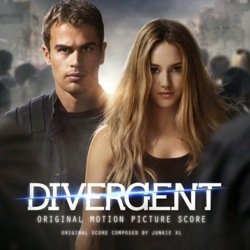
Divergent is the latest “young adult” fantasy-action novel to be translated to the big screen, hoping to follow in the financially successful footsteps of The Hunger Games, and avoid the relative disaster that befell The Mortal Instruments. Directed by Neil Burger from the novel by Veronica Roth, it stars Shailene Woodley Tris, a young girl born into a post-apocalyptic society that defines and controls its citizens by their social and personality-related affiliation with five different factions representing selflessness, peacefulness, honesty, bravery and intelligence. When she comes of age, Tris discovers that she is a ‘divergent’ whose personality does not fit in with any one of the pre-determined factions, and is therefore a threat to the established order. Hiding her secret, Tris chooses to join the Dauntless faction associated with bravery, which is charged with the security of the city, but while she undergoes her training and initiation, Tris discovers a troubling plot which threatens to destabilize the world. The film co-stars Theo James, Ashley Judd, Jai Courtney, Ray Stevenson, Zoë Kravitz and Kate Winslet, and has a score by Dutch composer Tom Holkenborg, aka Junkie XL. Read more…
NOAH – Clint Mansell
 Original Review by Jonathan Broxton
The story of Noah, in terms of the Christian bible, is a fairly simple one: having become displeased with the corruption and cruelty of mankind, God makes the decision to essentially ‘wipe the slate clean’ and destroy humanity by way of a great flood. In order to preserve some semblance of life, God tasks Noah with building an enormous wooden ark into which he can fit a male and female specimen of every animal and bird on the planet – every creeping thing that creeps – so that life may begin again once the flood subsides. According to the story, which originally appears in the book of Genesis, it rains for forty days and forty nights, all of the evil of the world of washed away, and humanity began again anew. Darren Aronofsky’s visually staggering, theologically progressive film builds on the original biblical story and adds more action and fantasy elements, including a vicious antagonist who rebels against God and wants to take the ark for himself, and featuring a race of beings known as The Watchers, fallen angels cursed to be bound in a stony prison. Russell Crowe headlines the cast as Noah himself, with support from Jennifer Connelly, Anthony Hopkins, Ray Winstone and Emma Watson. Read more…
MAX STEINER – Fathers of Film Music, Part 1
 Article by Craig Lysy
Born: 10 May 1888, Vienna, Austria.
Died: 28 December 1971
Maximilian Raoul Walter Steiner stands as one of the greatest film score composers of all time, and has earned the great honor of being referred to as “the father of film music”. He was born in the late 19th century in Vienna, capital of the Austro-Hungarian Empire. Steiner was the only child of a wealthy Jewish theatrical family whose upbringing nurtured his nascent talent for music. It suffices to say that his innate musical gifts were nothing short of remarkable and he quickly gained renown as a child prodigy, conducting his first operetta at twelve years of age. As such, his parents wisely sent him to the venerable Imperial Academy of Music in Vienna where he was privately tutored by Robert Fuchs and Gustav Mahler with courses in composition, orchestral instruments, counterpoint and harmony. Most remarkable was his completion of a four-year course in only one year, an achievement for which he was awarded a gold medal by the academy. Read more…
Introducing the Fathers of Film Music series
As you all may be aware, I have an unabashed passion for Golden Age film scores. I was very happy to join Movie Music UK in 2010 and be given the opportunity to review the wonderful scores from this era. Sometime ago I had an idea to enhance the MMUK experience by providing our readers with more insight and knowledge of this era. I offered to provide a new series where I would explore the biographies, style, filmography, masterworks, awards and legacy of the great film score composers of the past.
It seemed to me from my discussions at different film score community sites that for many members, while there was an understanding and appreciation of modern film scores, much of its earlier history and works for the most part remained unexplored, the proverbial terra incognita. As a student of film score history, I believe that to better understand and appreciate the present, you must first understand the past. As any archeologist can attest, there are great treasures of the past just waiting to be discovered. It is my sincere hope that I can serve as a your guide on a personal quest of discovery of some of the greatest composers and scores ever written.
I am very pleased to launch this series with an exploration of how it all began, with none other than the true Father of Film Scores, a film score Titan, and one of my favorite composers, the legendary Max Steiner. The first article will go live on Tuesday April 1st, and will continue with a new article on the first of each month from now on.
All the best!
THE GRAND BUDAPEST HOTEL – Alexandre Desplat
 Original Review by Jonathan Broxton
The latest film from the polarizing hipster director Wes Anderson is The Grand Budapest Hotel, a slightly farcical comedy-drama set 100 years ago in the fictional country of Zubrowka – a place Anderson describes as “part Czech, part Hungarian, part Polish, part Russian, part German, and a little bit 1930’s movie-studio in Culver City”. Ralph Fiennes stars as Gustave H, a legendary concierge at the famous European hotel of the title, and Tony Revolori as Zero Moustafa, the lobby boy who becomes his most trusted friend. Following the death of a wealthy elderly female guest Gustave and Zero become embroiled in a plot concerning the theft and recovery of a priceless Renaissance painting and the battle for an enormous family fortune. The film features an enormous supporting cast drawn from Anderson’s ever-increasing roster of repertory players – F. Murray Abraham, Adrien Brody, Willem Dafoe, Jeff Goldblum, Jude Law, Harvey Keitel, Bill Murray, Edward Norton, Saoirse Ronan, Jason Schwartzman, Tilda Swinton, Tom Wilkinson, and Owen Wilson among them – and has an original score by composer Alexandre Desplat, working with Anderson for the third time.
Read more…
CAPTAIN AMERICA: THE WINTER SOLDIER – Henry Jackman
 Original Review by Jonathan Broxton
Once upon a time there was a director who, along with some friends – a writer, a cameraman, some actors – made a movie. It doesn’t matter what the movie was about. It could have been about aliens, or cowboys and indians, or a young couple suffering through a rocky relationship, or a bank robbery gone wrong. Whatever it was about, the director wanted to make the best movie he could make, and for the audience who saw that movie to care about the characters, and to empathize with the emotions they felt. At some point, he approached a composer, in order to give that film a musical voice. The composer – who was well-versed in musical theory and composition – was as much of a storyteller as the director was, and wanted to enhance the film with his music; to bring out subtle emotions so the audience could feel them, to highlight subtexts that acting alone could not convey, to make it a better film than it would be without the music being there. Read more…
DEMETRIUS AND THE GLADIATORS – Franz Waxman
 MOVIE MUSIC UK CLASSICS
Original Review by Craig Lysy
Demetrius and the Gladiators was the sequel to the first CinemaScope picture, “The Robe”. Twentieth Century Fox chief, Darryl F. Zanuck, decided that there was money to be made with the new revolutionary format and so production was already under way as “The Robe” premiered. Of the original cast, Victor Mature (Demetrius), Michael Rennie (Peter), and Jay Robinson (Caligula) returned to reprise their roles and were joined by newcomers Susan Hayward (Messalina) and Debra Paget (Lucia). The story unfolds as a classic tale of faith and personal redemption. Demetrius, the guardian of the Robe of Christ loses his faith when his love Lucia, is ravaged by Roman gladiators and apparently dies. When his fervent prayers fail to revive her he becomes bitter and angry with God. Demetrius abandons his faith and embarks upon a life of violence, indulgence and lust. But when he later discovers that Lucia had not died due to the grace of God he regains his faith and lives to see the day of the emperor Caligula’s death, when the long suffering Praetorian Guard at last turns on him. This sequel outperformed The Robe and was both a commercial and critical success. Read more…
GRAND PIANO – Víctor Reyes
 Original Review by Jonathan Broxton
Grand Piano is an ingenious thriller directed by Eugenio Mira, starring Elijah Wood as Tom Selznick, a brilliant but reclusive concert pianist whose career was shattered by terrible stage fright. After finally agreeing to return to the concert hall for the first time in years, Selznick begins to play a brand new piano concerto, but discovers a terrifying note on the sheet music: there is a sniper with his gun trained on him, and if he stops playing, or if he plays a wrong note, he will be killed. The film, which also stars John Cusack, has an astonishing original score by composer Víctor Reyes, who wrote a brand new piano concerto for the film, which pulls double duty both as the piece performed on-screen, AND acts as the film’s score – the ultimate diegetic cinematic experience. Read more…
THE LEGO MOVIE – Mark Mothersbaugh
 Original Review by Jonathan Broxton
Possibly the most unexpected box office smash of the last several years, The Lego Movie took cinemas by storm in the early months of 2014 with its combination of wild and wacky animation, knowingly self-referential pseudo-adult comedy, and some unexpected pathos towards the end which touches on themes of individuality and self-expression. The film is set in a fictionalized Lego universe, and follows the adventures of Emmett, an ordinary Lego mini figure who is mistakenly thought to be the extraordinary Master Builder, and is recruited by the sassy and spunky Wyldestyle and the blind wizard Vitrivius to help them in their quest to stop the evil tyrant Lord Business from destroying the universe. The film is directed by Phil Lord and Christopher Miller – the directors of Cloudy With a Chance of Meatballs – and features an astonishing voice cast that includes Chris Pratt, Will Ferrell, Morgan Freeman, Liam Neeson, Will Arnett, Elizabeth Banks, Channing Tatum, and even Anthony Daniels and Billy Dee Williams as Lego versions of C-3PO and Lando Calrissian from Star Wars. It’s an anarchic, chaotic mess of a movie that works as pure entertainment in spite of itself by throwing as many rapid fire verbal jokes and visual gags at you as it possibly can, in the hope that if at least half of them stick they’ll have a decent ratio of laughs to groans. Read more…
POMPEII – Clinton Shorter
 Original Review by Jonathan Broxton
The Roman city of Pompeii, near Naples in what is now Italy, was almost entirely destroyed in the year 79 AD following the volcanic eruption of the nearby Mount Vesuvius. The city was drowned in up to 20 feet of rock and ash, which killed a large portion of its 20,000 inhabitants, but also preserved many of the objects it buried, leaving an archeological treasure trove which is now a UNESCO World Heritage Site. The movie Pompeii is a fictionalized re-telling of the story of the city’s destruction, told through the eyes of a slave named Milo, a Celtic tribesman who was captured in ancient Britain as a child and brought back to Rome to train as a gladiator. When Milo begins to catch the eye of Cassia, the daughter of a Roman senator, their forbidden love affair begins to cause ripples in the hierarchical circles in which Cassia moves, but before long they begin to have even more pressing problems when Mount Vesuvius begins to show signs of life… The movie stars Kit Harington from Game of Thrones, Carrie-Anne Moss, Emily Browning, Adewale Akinnuoye-Agbaje and Kiefer Sutherland, and is directed by Paul W. S. Anderson. Read more…
Academy Award Winners 2013
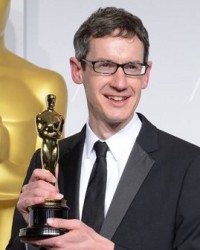 The Academy of Motion Picture Arts and Sciences (AMPAS) have announced the winners of the 86th Academy Awards, honoring the best in film in 2013.
In the Best Original Score category British composer Steven Price won the award for his score for the critically acclaimed action/science fiction/drama Gravity. In his acceptance speech, Price said:
“Thank you, thank you Academy, thank you so very much. Alfonso [Cuarón], I share this with you, you inspired every frame of this film, and certainly every note that I ever wrote. Thank you for this remarkable opportunity. To all the musicians and friends who lent their talents to this score, thank you. I get to stand here but this really belongs to all of us. Thank you to all at Warner Brothers, thank you to GSA, everyone on this film for their incredible support. One of the most amazing things about working on this film is that, in telling the story of Ryan Stone, we got to ultimately bring her home and celebrate life, and this is dedicated to the people with whom I share my life – my family. Thank you Mum, Dad, Jenny, sorry I made so much noise when I was growing up. My wife Gemma, our lovely children Amy and Eva, thank you so much, everyone.”
The other nominees were William Butler and Owen Pallett for Her, Alexandre Desplat for Philomena, Thomas Newman for Saving Mr. Banks, and John Williams for The Book Thief.
In the Best Original Song category, the winners were Kristen Anderson-Lopez and Robert Lopez for the massively popular “Let It Go” from the hit Disney animated film Frozen, performed by Idina Menzel.
The other nominees were Paul Hewson (Bono), David Evans (The Edge), Adam Clayton and Larry Mullen Jr. for “Ordinary Love” from Mandela: Long Walk to Freedom; Karen Orzolek and Spike Jonze for “Moon Song” from Her; and Pharrell Williams for “Happy” from Despicable Me 2.

Shop at the Movie Music UK Store

Member of the

 MOVIE MUSIC UK