Archive
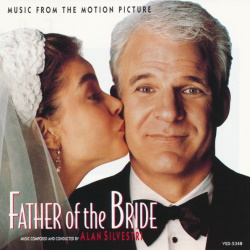
FATHER OF THE BRIDE – Alan Silvestri
 THROWBACK THIRTY
Original Review by Jonathan Broxton
Father of the Bride is charming remake of the classic 1950 Spencer Tracy-Elizabeth Taylor comedy, written by Nancy Meyers and directed by Charles Shyer. Steve Martin takes over the Tracy role as George Banks, a middle-aged father who finds himself suffering both a midlife crisis and a nervous breakdown when his only daughter Anne (Kimberly Williams) announces she is getting married. What follows is a comedy of errors as George – who is reluctant to see his daughter as a grown-up woman – suffers all manner of mishaps, mixed messages, and physical pratfalls as he supervises the organization of the wedding he does not want to happen. The film co-stars Diane Keaton and George Newbern, and features a hilarious cameo from Martin Short as Franck the wedding planner, and is one of those feelgood movies that is funny and heartwarming all at the same time. Read more…
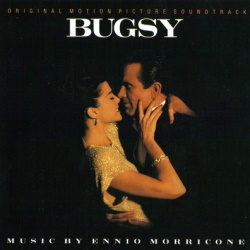
BUGSY – Ennio Morricone
 THROWBACK THIRTY
Original Review by Jonathan Broxton
Looking at the city of Las Vegas today, it’s difficult to see past its opulent hotels, gourmet restaurants, popular shows, beautiful weather, and frivolous excess, and remember that this world center of entertainment has its origins in organized crime. Director Barry Levinson’s film Bugsy explores these origins, specifically looking at the life and death of New York gangster Benjamin ‘Bugsy’ Siegel, who travels to Los Angeles in the early 1940s, gets involved with tough-talking Hollywood actress Virginia Hill, and makes a lot of friends and a lot of enemies in California’s criminal underworld, before he has the world-changing idea of building a luxury casino – the Flamingo – in the sun-baked Nevada town of Las Vegas as a way to launder money. The film is a fascinating look at the birth of one of the world’s most popular vacation spots; it stars Warren Beatty as Bugsy, Annette Bening as Hill, and features a supporting cast including Harvey Keitel, Ben Kingsley, and Elliott Gould. The film was also a critical success, picking up ten Academy Award nominations – including Best Picture – and eventually winning for Art Direction and Costume Design. Read more…
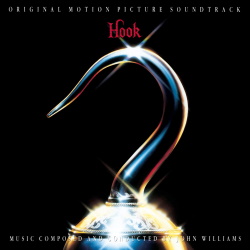
HOOK – John Williams
 THROWBACK THIRTY
GREATEST SCORES OF THE TWENTIETH CENTURY
Original Review by Jonathan Broxton
There have been dozens of theatrical and cinematic adaptations of J. M. Barrie’s classic fairy tale Peter Pan in the years since it was first published in the early 1900s, but it wasn’t until Steven Spielberg came along that there was a sequel. Hook was written by Jim Hart, Nick Castle, and Malia Scotch Marmo, and is set many years after the original story. Peter Pan has grown up and forgotten all about his adventurous childhood; he is now Peter Banning, and a successful lawyer in San Francisco, but he neglects his wife Moira and his children Jack and Maggie. In a last ditch attempt to save his marriage he agrees to a family vacation in London with Moira’s grandmother Wendy – the same Wendy who loved Peter when she was a girl, and who is now an old woman. However, everything changes when Peter’s old nemesis Captain Hook kidnaps his children, and Peter is forced to return to Neverland, reunite with Tinker Bell and the Lost Boys, and remember his birthright, in order to save them. Read more…
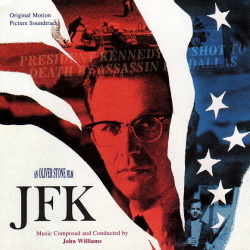
JFK – John Williams
 THROWBACK THIRTY
Original Review by Jonathan Broxton
The assassination of US president John F. Kennedy in Dallas, Texas, in November 1963 was one of the defining moments of twentieth century American history. History books state that he was killed by a lone gunman, Lee Harvey Oswald, who was himself murdered by local Dallas businessman Jack Ruby while in custody just a day or so later. Oswald’s true motive has never been categorically established, and in the years since the event a series of conspiracy theories have emerged – that Oswald was a ‘patsy’ working for the Russians, that there were additional shooters who have never been identified located on a nearby ‘grassy knoll,’ and even that Kennedy’s vice president Lyndon Johnson was somehow involved as part of a coup for him to seize power. Many of these theories are examined in great detail in director Oliver Stone’s film JFK, which looks at the events leading up to, during, and after the assassination, and then focuses deeply on the subsequent investigation by former district attorney Jim Garrison, as well as the official congressional commission led by chief justice Earl Warren. The film is a dense, complicated, intricate film that offers plenty of theories, conjecture, and opinion, but never really settles on a decision as to what really happened, although Stone heavily implies that he believes that the conspiracy goes much deeper than the official investigation concluded. Read more…
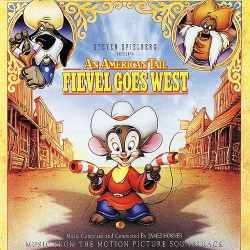
AN AMERICAN TAIL: FIEVEL GOES WEST – James Horner, Will Jennings
 THROWBACK THIRTY
Original Review by Jonathan Broxton
A fun, undemanding sequel to the 1986 original, An American Tail: Fievel Goes West continues the animated adventures of the immigrant mouse Fievel Mousekewitz and his family. Having successfully reunited at the end of the first film and settled in New York, this new film sees the Mousekewitzes making the decision to head west to start a new life, prompted by the fact that their neighborhood is being terrorized by a new gang of felines led by a British aristocratic cat named Cat R. Waul. Desperate for safety and security the family boards a train bound for Utah; Fievel has aspirations of meeting the famed lawman Wylie Burp, while his sister Tanya wants to be a singer in a burlesque show. However, the Mousekewitzes are unaware that they are falling into a trap set by the unscrupulous Waul, and must find a way to defeat him before his nefarious plan comes to fruition. The film is directed by Phil Nibbelink and Simon Wells, taking over from Don Bluth; it features the voices of Philip Glasser, Cathy Cavadini, Dom DeLuise, John Cleese, and James Stewart in his final film role, and has a score by James Horner. Read more…
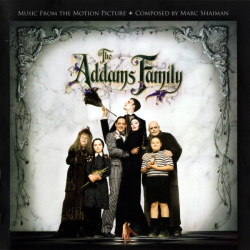
THE ADDAMS FAMILY – Marc Shaiman
 THROWBACK THIRTY
Original Review by Jonathan Broxton
They’re creepy and their kooky, mysterious and spooky, they’re all together ooky, the Addams family.
A big-screen reboot of the classic 1960s TV sitcom, which itself was based on a popular newspaper cartoon by Charles Addams, The Addams Family is a comedy with a twist. Led by patriarch Gomez Addams and his aristocratic wife Morticia, the Addamses are a macabre group who demonstrate some supernatural abilities, but nevertheless live a comparatively normal life in suburban America with their children Wednesday and Pugsley, their manservant Lurch, and a disembodied hand named Thing which acts as the family pet. The film picks up the story many years after the TV show ended, and follows the family as it tries to re-connect with Gomez’s long-lost brother Fester, who has unexpectedly reappeared in their lives after being missing for a long time. However, unbeknownst to the Addamses, ‘Fester’ is actually a conman working with a loan shark, who wants the family fortune. The plot is really just an excuse for the cast to engage in a series of deliciously dark and ghoulishly comedic set-pieces, near-the-knuckle jokes, and verbal witticisms. The cast is led wonderfully by the late Raul Julia as the flamboyant Gomez, Anjelica Huston as the sultry Morticia, and Christopher Lloyd as Fester, and features a breakthrough performance from the then 11-year-old Christina Ricci as the proto-goth kid Wednesday. It was directed by Barry Sonnenfeld, and was mostly a critical and commercial success, eventually receiving an Oscar nomination for costume design. Read more…
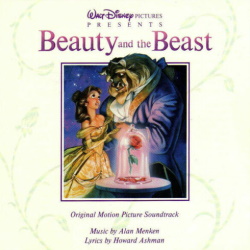
BEAUTY AND THE BEAST – Alan Menken, Howard Ashman
 THROWBACK THIRTY
Original Review by Jonathan Broxton
When looking back at the period now, considering their enormous success and influence, it’s easy to forget that Disney was a film studio in trouble in the 1980s. Their first four animated films during the decade – The Fox and the Hound, The Black Cauldron, The Great Mouse Detective, and Oliver & Company – had not been particularly well-received, while the success of the fifth, The Little Mermaid in 1989, was certainly not seen as a guarantor of future achievement. Everything changed with the 1991 release of Beauty and the Beast, which became the first animated film ever to be nominated for an Oscar for Best Picture, and subsequently set in motion a decade of almost unparalleled cinematic dominance for the house that Walt built. Read more…
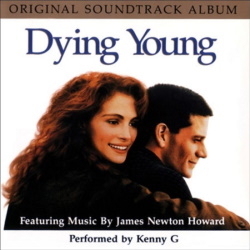
DYING YOUNG – James Newton Howard
 THROWBACK THIRTY
Original Review by Jonathan Broxton
Dying Young is a romantic drama directed by Joel Schumacher, based on the novel by Marti Leimbach, starring Julia Roberts and Campbell Scott. Roberts stars as Hilary, a young woman who is hired to be a live-in nurse for Victor (Scott), a wealthy and well educated young man who is dying of leukemia. Of the course of a summer Hilary and Victor slowly fall in love – much to the disapproval of her mother (Ellen Burstyn) and his father (David Selby), neither of whom want to see their children get hurt – and decide to make the best out of life in whatever short period they may have together. The whole thing was designed to be a three-hanky weepie for incurable romantics who revel in tragic love stories, and it helped push Julia Roberts’s star even further into the stratosphere, considering that this was her fourth starring role in two years after Pretty Woman, Flatliners, and Sleeping With the Enemy, but it was not a hit with the critics – Roger Ebert said it was “a long, slow slog of a movie, up to its knees in drippy self-pity as it marches wearily toward its inevitable ending,” while Janet Maslin in Variety wrote simply said “Julia’s hot; Dying Young is lukewarm”. Read more…
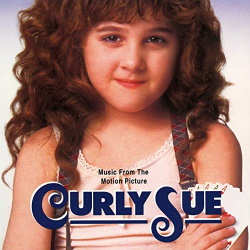
CURLY SUE – Georges Delerue
 THROWBACK THIRTY
Original Review by Jonathan Broxton
Curly Sue is a warm-hearted family comedy written and directed by John Hughes – the last film Hughes directed prior to his death in 2009, although he did write and produce others. The film stars James Belushi as Bill, a drifter and scammer who swindles strangers out of money to support himself and his partner in crime, a cute moppet orphan girl he calls Curly Sue (Alisan Porter). After moving from Detroit to Chicago, Bill and Curly Sue find their next target in Grey Ellison (Kelly Lynch), a yuppie lawyer. However, things take an unexpected turn when Grey learns about the con, but falls in love with Bill anyway when she learns the truth about their past, and how much he genuinely cares for Curly Sue. Grey asks Bill and Curly Sue to move in with her – a decision which sparks the ire of Grey’s jealous, vindictive ex-boyfriend Walker (John Getz), who plots revenge against the man who he believes broke up his relationship. Read more…
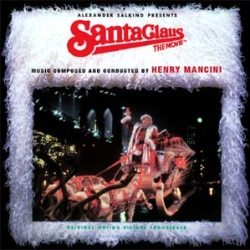
SANTA CLAUS: THE MOVIE – Henry Mancini
 THROWBACK THIRTY
Original Review by Jonathan Broxton
The winter of 1985 saw the release of one of the strangest holiday films of all time: Santa Claus: The Movie, which purportedly told the ‘real’ story of the origin of the Santa Claus legend. However, instead of actually going into the history of the Turkish bishop Saint Nicholas, the Sinterklaas story from traditional Dutch folklore, and how the two were blended with elements of Norse and Pagan mythology, and Clement Clarke Moore’s classic poem ‘The Night Before Christmas,’ to create the contemporary Christmas icon – a movie I would actually like to see, for real! – the film invents an original story about a kind-hearted 14th century woodcutter and his wife, who are caught in a blizzard while delivering toys to local children. Magically transported to the North Pole, the woodcutter and his wife are greeted by elves, who convince the man that it is his destiny to deliver toys to the children of the world every Christmas Eve, which the elves will make in their large workshops. At the same time, the film also tells a contemporary story set in modern day New York, in which Patch – one of Santa’s elves – decides to strike out on his own and set up his own toy-making business, but unwittingly joins forces with an unscrupulous millionaire who wants to “take over” Christmas for himself. Read more…
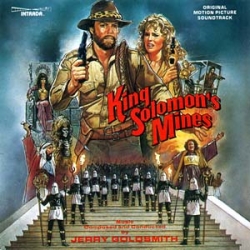
KING SOLOMON’S MINES – Jerry Goldsmith
 THROWBACK THIRTY
Original Review by Jonathan Broxton
With the massive box office success of the two Indiana Jones films, Raiders of the Lost Ark and The Temple of Doom, several film producers sought to bring to the silver screen a ‘rugged historical adventurer’ of their own. Cannon Films had acquired the rights to H. Rider Haggard’s classic novel King Solomon’s Mines and its main character Allan Quatermain, and put into production a light, family-friendly version of the tale, with J. Lee Thompson directing, and Richard Chamberlain in the lead role. The film is set in the early 1900s and follows Quatermain, who is hired by the beautiful Jesse Huston (Sharon Stone) to find her father, who has disappeared in central Africa while searching for the fabled mines of the title. The expedition brings Quatermain in contact with numerous dangers and enemies, not least of which is a rival expedition led by the ruthless Colonel Bockner (Herbert Lom), who will stop at nothing to find the mines himself. Read more…
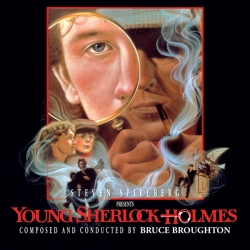
YOUNG SHERLOCK HOLMES – Bruce Broughton
 THROWBACK THIRTY
Original Review by Jonathan Broxton
The fascination with Sir Arthur Conan Doyle’s great fictional detective Sherlock Holmes has often been such that people have ventured beyond the realms of the original 60 stories, and written extrapolations investigating both Holmes’s childhood and his life after his career ended, as well as re-imaginings of the character in more contemporary settings. The 1985 film Young Sherlock Holmes is one such tale, an original story chronicling the supposed first meeting between Sherlock Holmes and his long-suffering friend John Watson, and their first adventure together. Written by Chris Columbus and directed by Barry Sonnenfeld, the film stars Nicholas Rowe as Holmes and Alan Cox as Watson, who meet as teenagers at London’s Brompton Academy in the 1870s. After a series of murders in which the victims – one of whom is Holmes’s mentor and former professor Rupert Waxflatter – experience terrifying hallucinations before they die, and after having his suspicions rebuffed by an incompetent police chief, Holmes and Watson begin to investigate the case themselves, and uncover a secret cult of Egyptian god worshippers who appear to be responsible for the deaths. The film co-stars Anthony Higgins, Sophie Ward, and Nigel Stock, and received generally positive reviews, especially for its special effects: the film is notable for including the first fully computer-generated animated character in the shape of a knight made of stained glass, and was one of the first films worked on by pioneering animator John Lasseter, who would later go on to found Pixar. Read more…
A NIGHTMARE ON ELM STREET 2: FREDDY’S REVENGE – Christopher Young
 THROWBACK THIRTY
Original Review by Jonathan Broxton
In the wake of the massive, and unexpected, success of A Nightmare on Elm Street in 1984, New Line Cinema realized they had a potential franchise on their hands. Audiences had responded very positively to Freddy Krueger, the wisecracking maniac with a striped sweater and a gloved hand full of knives who kills people in their dreams. Despite him having apparently been vanquished at the end of the first film, they found a way to bring him back for a sequel, and A Nightmare on Elm Street 2: Freddy’s Revenge got the green light for release on Halloween weekend, 1985, under the direction of veteran Jack Sholder. With the exception of Robert Englund as Freddy, the film featured an all-new cast, focusing on Jesse Walsh (Mark Patton), a teenage boy who moves into a new house with his family, without realizing that it is the same house where Nancy Thompson (Heather Langenkamp) fought Freddy years previously. Before long, Jesse is having nightmares about being stranded on a school bus with two girls and being stalked by a deformed killer; Jesse and his friends soon uncover information regarding Freddy’s legacy, but things quickly turn violent, and it becomes apparent that, instead of Freddy murdering people in their dreams, he is actually possessing Jesse’s body so that he can carry out murders in the real world. Read more…
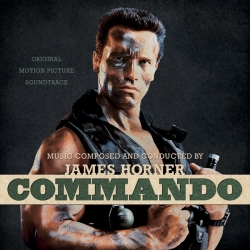
COMMANDO – James Horner
 THROWBACK THIRTY
Original Review by Jonathan Broxton
Arnold Schwarzenegger and Sylvester Stallone were cinematic rivals throughout the 1980s, going toe-to-toe through a series of increasingly spectacular action movies, as they tried to out-shoot, out-fight, and out-muscle each other to the top of the box office charts. 1985 was arguably the year their battle commenced, as it saw the release of Stallone’s Rambo: First Blood Part II, and Schwarzenegger’s Commando, the first movie in which the Austrian Oak starred as a contemporary human being, after playing a fantasy warrior in the Conan series, and an unstoppable cyborg in The Terminator. Directed by journeyman Mark L. Lester, Commando saw Schwarzenegger playing John Matrix, a retired elite Black Ops commando who is forced back into action when Arius, the exiled South American dictator he helped depose, kidnaps his daughter, intending to blackmail Matrix into restoring Arius to power. The film, which also starred Rae Dawn Chong, Dan Hedaya, Vernon Wells, and an 8-year-old Alyssa Milano, was critically lambasted, but was a commercial success, and helped initiate Schwarzenegger’s career as a heroic leading man. Read more…
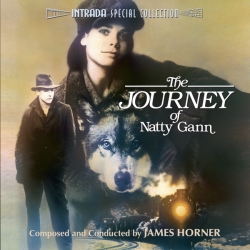
THE JOURNEY OF NATTY GANN – James Horner
 THROWBACK THIRTY
Original Review by Jonathan Broxton
Following his breakout year in 1982, when he wrote music for the box-office smashes Star Trek II and 48 HRS., James Horner spent the next several years solidly entrenched as one of the newest, most exciting young members of the Hollywood studio system, scoring several successful and popular features. After he proved his reliability when asked to replace Georges Delerue on Something Wicked This Way Comes in 1983, the executives at Walt Disney turned to Horner again in the fall of 1985, when they asked him to write a last-minute replacement for Elmer Bernstein’ score for the film The Journey of Natty Gann. Directed by Jeremy Kagan from an original screenplay by Jeanne Rosenberg, and set during the darkest days of the Great Depression in 1935, the film starred 12-year old Meredith Salenger as the eponymous Natty, a tomboy who sets off on a cross-country trek to find her father Sol (Ray Wise) after he leaves their Pacific Northwest home for Chicago in a desperate attempt to find work. En route she is befriended by a wolf, who travels with and protects her for much of her voyage, and even has a brief, innocent romance with another young traveler named Harry, played by a young John Cusack. Read more…

Shop at the Movie Music UK Store

Member of the


