SONG OF THE FISHERMEN – Guang Ren
 GREATEST SCORES OF THE TWENTIETH CENTURY
Original Review by Craig Lysy
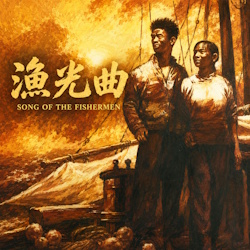
The impetus for making Song of the Fishermen was the desire of 1930s Chinese filmmakers to highlight the struggles of the working class and expose social inequality. Against a backdrop of profound national and economic crises, director Chusheng Cai aimed to create a realistic, emotional story that would awaken public sympathy as China faced severe economic depression, foreign imperialism, and natural disasters. Cai secured funding from the United Photoplay Service, the Lianhua Film Company, and its Second Studio in Shanghai. Lo Ming-yau managed production, while Cai directed and wrote the screenplay. Wang Renmei starred as Kitty, with Han Langen as Monkey, Tang Tianxiu as Xu Fu’s wife, Luo Peng as He Ziying, and Yuan Congmei as Liang Yuezhou.
The film is set in China prior to the Second Sino-Japanese War, which began in 1937. The story centers on an impoverished family desperately trying to survive. Xu Fu, a fisherman, and his wife have twins, a boy and a girl. Tragedy strikes when Xu Fu dies at sea, forcing his wife to work as a nursemaid for He Ziying, the son of a wealthy fishing magnate. The twins grow up alongside Ziying, who comes to love them as siblings. Further hardship follows when Mrs. Xu is fired for breaking an expensive vase belonging to the He family. She and the twins are forced to leave their village in search of work. They end up in the bustling city of Shanghai, living with their uncle; their situation worsens when their mother and uncle die in a house fire. To survive, the twins sing on the streets to earn money, illustrating the severe hardships endured by China’s poor. The film was a massive commercial success, with a record-breaking run of 84 consecutive days in Shanghai, setting a box-office record at the time. It was also widely praised by critics for its storytelling. The production made history as the first Chinese film to win a prize at a major international film festival, receiving an honorary award at the 1935 Moscow Film Festival, but it received no Academy Award nominations.
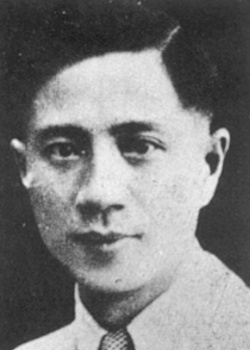 Director Cai hired composers Nie Er and Ren Guang to manage the film’s incidental score; however, Nie was dismissed early in the project because his radical leftist activities aroused the ire of Nationalist government censors. Consequently, Ren assumed full creative control, although some sources still list Nie as the main composer. Cai selected Ren because of his prominent role as director of the music department at Pathé Records in Shanghai, as well as his advanced training in Western composition at the University of Lyon, where he studied music theory and composition in 1919. Moreover, Ren was part of the leftist arts movement in China and shared its commitment to creating art that highlighted the struggles of the working class. Upon viewing the film, Ren chose to prioritize emotional authenticity and cultural resonance by blending Western harmonic theory with traditional Chinese folk elements to capture the struggles of impoverished fishermen.
Director Cai wanted a titular song, so Ren and lyricist An E wrote an elegantly stylized piece titled “Song of the Fishing Village.” Cai acknowledged its beauty but believed it was too lighthearted and romanticized for the movie’s grim reality. Ren and Cai visited Wusongkou, where the Yangtze River meets the East China Sea, seeking the appropriate tone and hoping to ground the score in real-world experience. They observed the daily hardships of local fishermen and were moved by the harsh reality of men working themselves to exhaustion yet still going hungry. This inspired Ren and An to write the now-iconic titular song, “Song of the Fishermen.” This new incarnation intentionally rejects romantic grandeur, opting instead for a haunting simplicity that speaks directly to the struggles of the working class. Ren kept the vocal melody highly accessible because he wanted ordinary working-class listeners to easily sing the theme. The song strongly resonated with the public and became a nationwide hit. The film was also among the first Chinese productions to release a tie-in soundtrack on records, and people throughout China could be heard singing the tune on the streets. To understand the song, and its melody, you need to understand its poignant lyrics;
“Clouds drift across the sea and sky,
Fish hide in the water.
Fishing nets dry in the morning sun,
A sea breeze blows in their faces.
The tide rises, waves surge,
Fishing boats drift east and west.
Cast the net lightly, pull the rope tight,
They wait anxiously for fish in the mist.
Fish are hard to catch, boat fares are heavy,
Fishermen are poor generation after generation.
The tattered fishing net left by Grandpa,
They carefully rely on it to get through another winter.
The east begins to lighten,
Stars hide in the sky.
The fishing boats return in the morning,
A tide breeze blows in their faces.
Daylight has broken, strength is exhausted,
Eyes gaze upon the long road to the fishing village.
Back aches, hands are swollen,
The fish caught are empty inside.
The baskets are full of fish,
The east sun rises red again.
The tattered fishing net left by Grandpa,
They carefully rely on it to get through another winter.”
The lyrics flow from peaceful images of nature into deep sadness, capturing a bitter mix of hope, daily survival, and a sorrowful patriotic cry against poverty and lost land. The song opens with a calm, tranquil, and happy scene, describing white clouds, blue water, and the sun drying the fishing nets. This creates an atmosphere of peace and natural beauty. The fishermen use the wind and tides to guide their boats. Yet the mood shifts toward hardship and anxiety as the men describe how difficult it is to catch fish when the weather is bad. The lyrics portray a harsh reality in which fishing families remain impoverished for generations. They struggle to pay rent and rely on old, patched nets to survive the winter. The emotional nexus of the song is a cry for a better life. The lyrics move from the daily struggle of fishing to a deeper sadness over lost land and suffering. The song concludes on a powerful patriotic note, reflecting the heavy burden of the era and evoking grief, longing, and quiet strength in the face of injustice.
In composing his soundscape, Ren uses musical counterpoint to juxtapose the film’s harsh, tragic reality—the unending struggle of the working class—with haunting musical beauty. He infuses the traditionally styled score with a lush, sorrowful, and symphonic depth. He draws upon Western symphonic sensibilities while employing traditional Chinese pentatonic scales to provide the requisite cultural identity. Two primary themes are provided.
Foremost among them is the Main Theme, which is built upon the melody of the titular song, “Song of the Fishermen.” Ren wanted the piece to possess a traditional folk-song sensibility, and therefore adapted the traditional folk song “Meng Jiangnü” as the structural and melodic foundation for “Song of the Fishermen.” “Meng Jiangnü” recounts the tragic legend of a loyal wife seeking her husband, who was drafted to build the Great Wall of China. When she arrives, she learns that he has died of exhaustion. She weeps so bitterly that a section of the Great Wall collapses, revealing his bones so that she can bury him. This song of mourning unfolds at an adagio pace with a slow, gentle, and deeply melancholic melody imbued with an unassuageable sadness.
Ren adopts the standard four-phrase, rise-and-fall form (qǐ chéng zhuǎn hé) of “Meng Jiangnü” to give the melody a familiar, folk-rooted shape. He also uses alternating phrase lengths to evoke the gentle, rolling rise and fall of ocean waves. In addition, he employs traditional transitional techniques to make the sorrowful pentatonic tune flow smoothly from line to line. The resultant “Song of the Fishermen” features a gentle, swaying rhythm that mimics the physical rocking of a fishing boat on ocean waves. The melody is graceful, beautifully simple, and poignant, as it carries a profound undercurrent of sadness. It fully captures the “grim reality” of the fishermen’s lives: back-breaking labor, aching hands, and empty bellies, even after a successful catch.
This theme is pervasive and interwoven throughout the entire soundscape. At times, it develops into a dynamic, ever-shifting lyrical expression of the beauty and wonder of the natural world. Its musical character alternates between a calm, vast expanse depicting quiet waters and a setting sun and rapid, rhythmic motifs that imitate the motion of rowing and the rise of dangerous, wind-driven waves.
The second theme is an instrumental rendering of Franz Schubert’s “Ave Maria” from Ellens Gesang III, Op. 52, No. 6. Ren interpolates this classical piece, and I perceive brilliance in his choice, as it evokes a profound sense of tender solace and fragile hope nurtured within a quiet sanctuary amid profound worldly despair. In the film, it is heard during intimate scenes in which the family struggles to endure the trials and tribulations of life while retaining hope for better days.
There is no commercial release of the score, and so as such I will use film time indices and scene descriptors to provide film narrative context to the music. 0:00 “Main Titles” offers a score highlight where Ren establishes the tone of the film. It opens with the film title and commencement of the opening credits, which display as white Chinese characters against a black background. The opening credits utilize an instrumental rendition of the film’s famous titular theme song. It emotes with a melancholic, plodding-paced, and somber tone to prepare audiences for the hardships faced by the fishing community. Ren grounded the music in a traditional Chinese pentatonic scale, in Gōng mode or first degree of the pentatonic scale; gōng (do), shāng (re), jué (mi), zhǐ (so), yǔ (la). With gōng serving as the primary tonal center, the music unfolds as graceful and free flowing, with a serene melodicism, which contrasts with the pathos of the fishermen’s daily hardships. At 1:07 we encounter a surprise as the music shifts to an instrumental rendering of “Ave Maria” from Franz Schubert’s Ellens Gesang 3, Op. 52/6. I perceive brilliance in Ren’s choice of this classical piece as it evokes a profound sense of solace, fragile hope, nurtured in a quiet sanctuary, a fleeting respite from deep despair of a cruel, brutal and unjust world. This confluence perfectly aligns Ren’s musical narrative with Cai’s film narrative. 2:41 “Prologue” offers a score highlight with a slow panorama of Wusongkou supported by poetic narrative script.Ren supports gently, with a lyrical, soft, and deeply mournful, minor-modal melody that establishes the hardships and melancholic atmosphere of rural fishing communities. As the camera pans, Ren evokes a quiet, sympathetic sadness, capturing the quiet luminescent moonlight on the sea paired with bitter generational poverty. 3:09 “Shuang Bao Tai (Twins)” offers a score highlight. It reveals Xu Fu retrieving water from an icey river and bringing it home to heat. Afterwards it is used to help grandma and mama during childbirth. Ren chooses to speak to conflicting emotions of the scene with it opening melancholia, reflecting the difficulty of their impoverished existence. Twins are born, first a boy Xiao Hou (little monkey) and then a girl Xiao Mao (little cat), which is widely viewed in Chinese culture as a symbol of double blessings, good fortune, and great joy. As such, at 5:00 a paean of joy swells to express this blessing from Heaven. Yet at 5:07 the Main Theme bears melancholia as grandma asks papa if they can still afford to rent Boss Hu’s boat with two new mouths to feed? Papa become ponderous and Ren evokes burden and sadness as he relates that if he cannot figure something out, that he will have to risk putting out to deep sea for bigger catches.
The film advances in time several months and we discover that Xu Fu has drowned at sea. His widow, Aunt Xu has taken a job as a live-in wet nurse and maid for Ziying, the son of the wealthy family of the local fishing magnate. 6:20 “Aunty Xu’s Dilemma” opens with Mrs. He admonishing Aunty Xu; “You’re so worried about your son being sick that you just abandon mine! Aren’t you worried that something may happen to my son?” Aunty needs the job to house, clothe and feed her twins, however when her children take ill, she risks termination if she neglects, He’s son Ziying. Chai uses the scene to graphically display Xu’s frustration and grief over the cruel reality of her situation. Her survival depends on keeping a rich child alive, while the cost is that she is forced to compromise the safety of her own flesh and blood. Ren supports the aching pathos of the scene with the Main Theme rendered as a string borne Pathetique with contrapuntal piano. At 8:10 “The Children Play” offers a tender score highlight. It reveals Xiao Hou and Xiao Mao fishing by a stream. Ziying joins and they ask him to share what he learned in school today. We see there is great affection among the three as the Xu kids have grown up with Ziying. Ren initially sustains the musical pathos of the previous scene, but at 8:40 he shifts gears and offers an exuberant and playful musical narrative, which fits the childhood scene like a glove. Ziying says he will not share what he learned until Xiao Mao sings “The Song of The Fisherman”.
9:37 “Song of The Fisherman” reveals Xiao Mao singing the titular song. She sings the song with a child-like sensibility, with an unhurried, flowing rhythm, that speaks to the beauty of the sea. At 10:04 “Grandma Dies” offers a heart-breaking score highlight. It reveals an abrupt scene shift to the village teacher tending to grandma Xu on her deathbed. She summons the kids who come running and tells them that grandma cannot hang on much longer. They all begin to weep and Ren supports with a plaintive musical narrative. Ziying decides to run home and bring Aunty home and runs off. At 11:35 a crescendo of urgency brings Ziying home where Aunty is dusting statues. He tells her that her mother is dying and to go home right away. She becomes delirious, faints, and while falling knocks over a vase, which shatters. The Mr. He is furious and yells that it was a 400-year-old antique, which she could not pay for in a life time! Ziying tries to intercede to no avail. Mr. He orders her belongs brought out and fires her. Up until this point Ren has supported tempestuously with a dramatic agitato. At 13:37 we shift to an aching instrumental rendering of “Ave Maria” as Aunty is forced to leave. The melody carries her home where she kneels bedside as neighbors pour into the house. Grandma tells her daughter that if she works hard to bring up these two children, she can die without regrets. At 14:47 the music is sustained as the scene shifts to a tree where nestled birds take wing – a metaphor for grandma’s spirit departing. The musical narrative is sustained as we return bedside where mama weeps over her mother’s dead body.
15:15 “Work to Live” offers a shift of ten years into the future carried by “Ave Maria” as we see a shore beset by crashing waves. Life has changed as the camera shifts now to the bay where fishing boats are seen. Xiao Hou and Xiao Mao are standing in shallow water pulling up fish nets as they need to work to support the family. Ziying approaches and calls to them from the shore. They join and it is a happy reunion, but we see Xiao Hou appears to have not developed mentally. They ask; “School’s out young master? When did you get back?” Ziying corrects them, reminding them to not call him Young Master. At 16:57 we shift to the Main Theme as Ziying relates sad news. He says he is leaving tomorrow as his father wants him to study advanced fishing methods abroad. Xiao Mao begins to cry. Ziying tells her that he feels guilty when ever he sees Xiao Hou as he became a simpleton from a fever because your mother was forced to care for me or lose her job. He asks that she take care of him. Ziying laments that fisherman lives are so hard, and he hopes that while he is abroad that he can gain new knowledge to improve your lives. He asks her to not be sad, but to embrace happiness. In18:08 “Ziying Departs” we shift to Shanghai harbor as a ship’s horn blasts and the family, and Xiao Hou and Xiao Mao wave goodbye to Ziying. At 18:44 the Main Theme enters as Ziying dad confides to a friend that a clever man keeps up with the times.19:00 “Tough Times” reveals narrative script;
“Fishermen along the coast make such a precarious living, that many choose a dangerous path. And during the past two months Mama’s Xu’s family has struggled more than most to make ends meet in an unforgiving environment.”
Ren supports the passage with the Main Theme rendered by a violin triste, which also supports the following scene.19:21 “Time For Bed” reveals Mama telling the kids that it is time to go to bed, and they all turn in. After the kids fall asleep Mama gets up and weaves closed holes in fishing nets by candle light, but later we see evidence that she is losing her eyesight as her vision keeps blurring. At 20:28 “Pirates!” we are jarred as we see hundreds of terrified townsfolk, many with swords charging towards the harbor. Mama blows out the light and the three cower as the stampede passes by. The next day we find that the small village has been destroyed, which will make life even harder for the family to survive. Ren propels the scene with a charging rendering of the Main Theme. In 20:55 “He Dreams Big” we shift to the He Rhenzhai residence where he watches the auctioning off of his estate. He is bankrupt because his corporate manager embezzled company funds, and to add insult to injury, fled with his second wife. He retains portraits of his dead first wife, and brother, who appears with him in a flashback during happier times. Rhenzhai decided that to grow and modernize, that he needed to partner with foreign investors and create a large mechanized trawler fleet, which would dramatically increase daily catches. A contract document displays; “The Whayang Fishery Company Business Plan”, followed by a new business plaque displaying the new company name. A montage of the fleet follows with pullies lift massive nets full of fish. Ren has supported the extended scene with a vibrant Main Theme full of confidence.
In 23:48 “Bad Times” the Main Theme becomes sad and full of woe as we see the twins in a small boat still performing artisanal fishing. This musical narrative will carry the entire extended scene. They are dismayed as they pull up an empty net. We shift to “Shipping Accounts Rende Hall” as a man pounds his fist on an abacus. He meets with the local fisherman and says many will be fired for lack of fish. When Xiao Hou protests, he is punched in the nose and falls to the ground. Back home Xiao Hou and Xiao Mao advise their bedridden and blind mother that they cannot keep suffering like this in the country, and will not survive unless we move to Shanghai. At 24:55 we shift to Shanghai and a large crowd of people seeking work at the Weilun Silk Factory. A poster dated August 21, 1933 displays; “Machine room hiring 15 men, Textile Spinning room hiring 20 women”. Uncle Xu coaches the twins to get in the men and women’s lines. Xiao Mao begs to cut in, pleading that her family is very poor to no avail as the other girl’s retort that all our families are poor! Uncle Xu tries to help Xiao Hou, but again to no avail. Both kids end up at the end of the line with newcomers trying to cut in pleading for their poor families. Xiao Hou makes it to the interview desk and the manager says this is hard work, do you think a weakling like you is cut out for it? He says; “You bet!” The manager squeezes his little arms, and tells him to get out and Xiao Hou runs weeping to uncle Xu. As Xiao Mao reaches the interview desk, the manager lifts, and then posts outside a poster saying all positions have been filled.
For 29:00 “Xiao Mao Lies”, the same plaintive rendering of the Main Theme continues. We see the twins returning with uncle Xu to his house. Mama asks if they got jobs? Xiao Mao hits Xiao Hou to shut him up, and then lies, saying they did and will report to work tomorrow. The music brightens as mama says that here mind is at ease now that you both have jobs. Uncle Xu is however displeased at the deception and turns his back. The next day at 29:55 “First Day at Work” offers a score highlight. We find the twins sorting through garbage supported by an aggrieved Main Theme. One worker says that these two new country kids sure look mighty clean! They are forced to run away for their safety. A montage unfolds shifting between the kids dirtying their faces, and a couple arguing above them. The woman throws a champagne bottle out the window, which hits Xiao Hou on the head and stuns him. Xiao Mao and another kid then fight over ownership of the bottle. The Main Theme becomes pathetic as she begs, as she has a blind mother to support at home. The boy counters that he is worse off saying that his mom is paralyzed and that his dad’s leg got cut off. Xiao Hou wakes up, fights the boy for the bottle, which ends up shattering on the brick road. The twins then depart to seek work elsewhere.
32:38 “Free Stage” reveals the twins discovering a Free Stage on a street corner, where people can perform. The Main Theme perks up with their discovery and animates the scene. A middle-aged man performs, and says he will sing a Shaoxing-style song for the crowd. Xiao Hou gets accidentally pushed onto the stage and the man makes fun of his appearance. But the crowd says we want him to perform as he will be funnier! Script displays; “A sharp-eyed businessman hooks the blind man who is none the wiser.” The man begins training Xiao Hou as a slapstick street performer with an animated Main Theme. 34:55 “Mama is Content” reveals a shift home to mama and Xiao Mao at home where they share an intimate mother-daughter moment. “Ave Maria” again evokes a quiet sanctuary found in the face of deep worldly despair. Mother feels contented, saying that Shanghai is a fine place and that Xiao Hou seems so much happier here. Uncle and Xiao Hou returns home and Mama relates that she has been a wonderful singer since she was a child, and that she can sing the “Song of the Fisherman” better than anyone. She adds that it is a pity she is blind and cannot see her performances each day. 36:14 “Song of the Fisherman” offers a heartfelt score highlight. It reveals Xiao Mao singing the song as a lyrical, melancholic folk-style piece, which supports a montage of the crushing day-to-day hardships of the fishermen and their families struggling to survive.
Afterwards Xiao Hou relates to Uncle that his sis is such a good singer, that he wished he could sing like her, but he is not good. 37:59 reveals narrative script; “Shanghai is a fine place indeed. Everyone is so happy.” A happy Main Theme supports a montage of street performers, culminating with Xiao Hou’ slapstick clown performance. Yet the happiness is transitory as police arrive and break up the street performance and disperse the crowd. 39:18 “He Entertains” reveals He Rhenzhai entertaining dignitaries at his palatial estate with a confident Main Theme supporting. We shift and see a door; “Engineer Office”, where Ziying examines some ship blueprints and design schematics as he is convinced that technological modernization and wester engineering can save, and improve the lives of impoverished Chinese fishermen and their families. 40:45 “Rhenzhai’s World Collapses” reveals that in the morning Rhenzhai advises his servant that last night his wife said she was going over to the Wang s place. Why isn’t she back yet? A somber rendering of the Main Theme supports as he then finds an envelope addressed to him from his wife Yun. He opens it, and it says; “Goodbye forever. Forget about me! Yours, Yun”. Rhenzhai calls the office and is told by the assistant manager that there is a letter from Manager Liang saying he is gone! He adds that he has emptied three of our bank accounts! His business partner grabs the phone and tell Rhenzhai that he has to take complete responsibility for the affair! Rhenzhai is devastated, drops the phone, and then drops his drink that shatters on the floor.
42:25 “Good Versus Evil” reveals people appearing before a panel of judges and sentenced with a busy and forthright Main Theme supporting. The twins appear, and Xiao Hou asks sis that he does not understand a word, and to please explain later. The judge reads; “The true perpetrator having been apprehended, Xiao Hou and Xia Mao are cleared of suspicion. The evidence exonerates both of them.” They are happy and buy pork from a street merchant, with Xiao Mao saying that Mama has not had anything good to eat in a long time. A happy racing version of the Main Theme carries their eager run home. 43:50 “Devastation” offers a score highlight of great pathos. the music crashes with despair as they arrive and see the burned down ruins of Uncle Xu’s house. They run up, and at 44:06 a lamenting Ave Maria Theme joins as they are told that their mother and uncle died in the fire. Each twin drops their pork, and begin sobbing, both unable to bear the horrible news. The music is sustained as we see Ziying disembarking from a steam ship. Xiao Mao collapses and is held by her brother, while Ziying arrives and joins his two childhood friends. He too is devastated and offers them money, but Xiao Mao thanks him, but declines. He invites them to his house, saying we will figure out a path forward there. He adds that he will send people here to deal with this. We shift to their arrival at Ziying’s home, still supported by the Ave Maria Theme. Inside, Ziying asks the twins to sit in the parlor why he goes up to inform his father. Rhenzhai come home, sees the twins, becomes enraged, and beats them with his cane as he orders them out. They flee as Ziying comes back and explains that their mother just died in a fire. He says if you drive them away, like this will you not be driving them to suicide? Rhenzhai refuses, becomes dizzy, and goes upstairs.
47:55 “Rhenzhai Comits Suicide” reveals the music shifting to an aggrieved Main Theme as Rhenzhai looks in the mirror, and a split screen shows his wife Yun and his Manager giggling with all his stolen money. He grabs a photo of him and Yun and throws it into the mirror, smashing it. Downstairs, Ziying has brought the twins back, and hears a gunshot. He runs upstairs, finds his father dead, and collapses in tears over him. 49:32 “Xiao Hou Dies” serves as the film’s emotional apogee, offering a heart wrenching cinematic confluence of acting, song, and music. It reveals Ziying commanding a fishing trawler with the twins aboard with a forthright, march version of the Main Theme. Xiao Hou is on deck and part of a team pulling up a heavily loaded net. He collapses from a heart attack and Ziying summons the ship doctor. At 50:42 the Ave Maria Theme joins as the doctor tells Ziying that there is nothing he can do. Ziao Hou tells sis that it is nothing, and to just let him rest a moment and he will be fine. He smiles and asks Xiao Mao why she is crying? He then turns and ask Ziying why he is crying as he wipes the tears from his face? The camera pans the concerned faces of the crew, and Xiao Hou asks Ziying, why is everyone surrounding him like this? Adding that he is afraid… Ziying dismisses the crew, and remains with them, Xiao Hou asks Ziao Mao to sing once more the “Song of the Fisherman” that she often she tried to teach him. She tearfully begins at 52:50, what she knows will be a threnody, struggling to sing as she holds him close. He joins and Ziying turns away to look out at the sea, which displays in a panorama dozens of fishing boats, as he prepares for the loss of his boyhood friend. We shift back and we see his life ebbing with each line she sings. She is devastated and the camera pans out from the deck and offers a panorama of the bay, which concludes with “Farewell”.
I believe Guang Ren’s work on The Song of the Fisherman was a groundbreaking masterpiece that transformed early Chinese film music as it transitioned from silent cinema to sound cinema. For me, it was largely responsible for the film achieving a milestone by becoming the first Chinese production to win a major award at an international film festival; the 1935 Moscow International Film Festival. Ren, who was classically trained, brilliantly gave the score a traditional, nostalgic, “folk” feel while using a simple, Western-influenced chord structure. This made it catchy and easy for the public to sing along. Because the titular song was so simple, emotional, and easy to sing, it became a massive catalyst for the leftist Mass Song Movement. Songs shifted from complex art pieces to communal music that regular people could learn instantly. During times of war, it was widely sung by the public to show they would stay strong. The song remains one of the most popular and arranged pieces in Chinese musical history. Recently it was famously arranged by composer Qigang Chen and performed by superstar pianist Lang Lang for the soundtrack to Zhang Yimou’s 2014 film “Coming Home”. In 2005, the song was officially selected as one of the “100 Golden Songs of Chinese Cinema in 100 Years” by the China Film Association.
The score, and its iconic titular song, offer a masterclass in how music can drive a film’s narrative, while capturing a nation’s socio-political zeitgeist. I also believe this may be the earliest film, and most successful example, of a single song acting as the essential thread that holds a movie’s narrative tapestry together. This now immortal song functioned as a dramatic anchor, reappearing in three distinct renditions during crucial emotional turning points in the arc of the Xu family’s tragic life journey, where five of the six family members die. It is first heard sung in an idealized form sung by the main character, Xiao Mao, as an innocent child, later as an adolescent Xiao Mao uses it as a tool for survival when she and her twin brother are forced to perform as desperate street musicians in Shanghai, and lastly, in its third and final incarnation, the song offers a molto tragico farewell threnody during the film’s heart wrenching and devastating climax where Xiao Mao’s beloved twin brother Xiao Hou dies in her arms. Ren also fashioned a soundscape in which he drew inspiration from rhythmic and melodic inspiration from Jiangnan folk music, and traditional folk tunes like “Meng Jiangnü” Indeed, his inclusion of native folk elements, such as recruiting musicians proficient in the indigenous Chinese instruments, including; Erhu, Pipa, Sheng and Yangqin, served to imbue his soundscape with an authentic, cultural sensibility. Ren’s emotional score is brilliantly conceived, masterfully executed, and ultimately transcendent, with its titular song forever, and indelibly embedded in the collective consciousness of the Chinese people. It is a shame that the film video, (with its unsophisticated editing), and poor audio quality, that there is no commercial release of the score so one can truly appreciate Ren’s handiwork. For me, the restoration of the film and score remains a holy grail.
Sadly, both Guang Ren and original composer Er Nie died shortly after the film was released, with both men having never really worked in cinema again. Nie famously wrote the melody for what would eventually become the national anthem of the People’s Republic of China, but then died in 1935 while swimming in Japan, at the age of just 23. Some suspect that he was killed by the Japanese, while others believe that he was killed by Chinese Nationalists. Ren was then also killed in 1941 during the so-called Wannan Incident of the Second Sino-Japanese War.
For those of you unfamiliar with the score, I have embedded a YouTube link to a performance of the main theme by the Singapore Symphony Orchestra: https://www.youtube.com/watch?v=qg8GPXIQkjM&list=OLAK5uy_k517bejh5_vY3pYGsjSSayR0Gf1HCyNWA&index=3
Track Listing:
NOT AVAILABLE
Music composed by Guang Ren. Conducted by XXXX. Orchestrations by XXXX. Score produced by Guang Ren.

Shop at the Movie Music UK Store

Member of the


