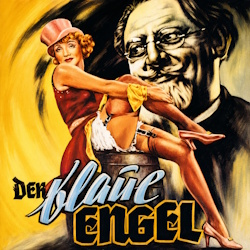
DER BLAUE ENGEL/THE BLUE ANGEL – Friedrich Hollaender
 GREATEST SCORES OF THE TWENTIETH CENTURY
Original Review by Craig Lysy
Following the success of The Jazz Singer in 1927, Hollywood, by 1929, was rapidly dominating global cinema with its new synchronized sound technology. Germany’s leading film studio, Universum Film AG (UFA), sought to create a massive, high-profile project to demonstrate that German cinema could compete internationally. To that end, Der Blaue Engel (The Blue Angel) was chosen. The studio also sought to capitalize on the career achievements of iconic silent movie actor Emil Jannings, who in 1928 had become the first recipient of the Academy Award for Best Actor in Hollywood. However, with the arrival of sound, his thick German accent made him unsuitable for American talking pictures, and it was hoped that The Blue Angel would provide Jannings with a prestigious film through which he could demonstrate a successful transition to German talkies. Erich Pommer was placed in charge of production and, at Jannings’ request, secured Hollywood director Josef von Sternberg on loan from Paramount Pictures. Carl Zuckmayer and Karl Vollmöller led a team that adapted Heinrich Mann’s 1905 novel, Professor Unrat (Professor Filth). While the novel was a sharp, satirical attack on the bourgeois hypocrisy and rigid authoritarianism of Imperial Germany, Sternberg heavily altered the story. He shifted the focus away from political satire to create a more intimate psychological tragedy about romantic obsession and personal degradation. Jannings starred as Professor Immanuel Rath, joined by Marlene Dietrich as Lola and Kurt Gerron as Kiepert.
Set in Germany, the film centers on Immanuel Rath, a rigid, authoritarian, and puritanical literature professor. He discovers that his students are enamored with a cabaret singer and goes to The Blue Angel nightclub to reprimand both them and the performer, Lola. Instead, he becomes lovestruck and finds himself seduced by her. He gives up his prestigious career to travel with her, but over time she tires of him and returns to her promiscuous ways, forcing him to endure repeated public humiliation. He eventually abandons her and returns to his former classroom, where he dies heartbroken and ruined. The film, which was shot in both English and German, was a massive commercial success and launched Marlene Dietrich to global superstardom. Critics praised Dietrich’s and Jannings’ acting performances, but the film received no Academy Award nominations.
Director Josef von Sternberg wanted the film to be infused with an authentic, gritty sensibility reflecting Weimar Berlin’s cabaret culture. According to industry lore and historical accounts, Friedrich Hollaender was not initially the studio’s top choice for the film’s official composer. In a classic tale of happenstance, an actress hired him as her personal piano accompanist for her Blue Angel audition. She did not get the part; however, Hollaender’s exceptional piano playing and musical versatility greatly impressed the production team. He was immediately hired when they learned that he was already a leading composer, lyricist, and pianist who had created popular avant-garde revue shows for theater legend Max Reinhardt.
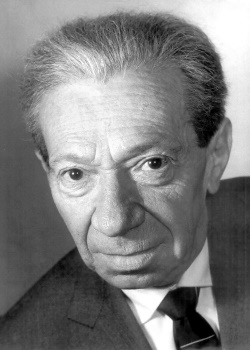 Hollaender understood that this was Dietrich’s film and that she would be performing several cabaret acts. He discovered that she had a very limited vocal range, with her contralto voice spanning approximately 1.5–1.7 octaves (A3–F5), and that she compensated for this by singing in a sultry, speech-like style enhanced by expressive, charismatic phrasing. As such, he composed songs that allowed Dietrich to sing comfortably within her range, employing a languid, throaty delivery that was both aloof and alluring. His approach proved so successful that Dietrich became an international sensation virtually overnight.
During the film, she performs the following four songs: “Falling in Love Again,” “A Man, Just a Regular Man,” “Beware of Blonde Women,” and “They Call Me Naughty Lola,” the latter a lively cabaret number and one of the film’s most famous songs. Melodies from two of these songs become leitmotifs for Lola. Foremost, the melody of “Falling in Love Again” personifies her femme fatale identity, portraying her as a woman who brings ruin to the men who love her. This melody acts as a musical siren song. It signals to the audience that Professor Rath is already being hopelessly ensnared by Lola’s charm and foreshadows his ruin. As the lyrics say: “Men swarm all about me like moths around a flame, and if they burn: well, you can’t blame me for it.”
Immanuel ends up being destroyed by his obsession, like a moth drawn to a flame and ultimately consumed by it. Yet in the finale on stage, Lola simply carries on, moving to her next lover and potential victim. Her second theme is derived from the song “I Am the Naughty Lola.” The melody is bouncy and catchy, yet also seductive and provocative. It personifies her as a woman fully in charge of her sexuality, one who understands the transactional nature of desire and is willing to throw the dice. Both songs synergistically reinforce her persona as a femme fatale.
Immanuel’s Theme is interpolated from the classical piece “Die Zauberflöte: Ein Mädchen Oder Weibchen” by Wolfgang Amadeus Mozart. In Germany, this specific Mozart melody was widely recognized as the chime tune of the Potsdam Garnisonkirche clock tower, paired with Ludwig Hölty’s poem, which praised the strict and traditional Prussian virtues of bourgeois morality, fidelity, honesty, rigidity, discipline, and a penchant for absolute order. As such, by weaving this instrumental version into his musical narrative as Immanuel’s Theme, Hollaender explicitly highlights a tragic irony. His theme offers musical commentary on Immanuel’s life, which is brought to ruin once he surrenders to temptation. By abandoning bourgeois order, moral rectitude, and his insular, highly structured existence, Immanuel brings upon himself disgrace and alienation from the respectable world he once exemplified. During the film’s tragic ending, he reaches his desk, sits, and dies clutching the lectern from which he once taught.
For the cabaret soundscape, Hollaender infuses the music with the energy of Weimar jazz, supporting the cabaret acts with the rhythmically jaunty and energetic playing of the Weintraub Syncopators. This syncopated, theatrical jazz sound grounds the raucous atmosphere of the nightclub. Finally, Hollaender hired 23-year-old Franz Waxman, still credited under his original last name, Wachsmann, who arranged, conducted, and skillfully orchestrated his core melodies. As a side note, Waxman was Jewish, and four years after the film’s release, in 1934, he changed his name to Waxman and fled with his wife to Paris after being severely beaten by Nazi thugs, before eventually making his way to Hollywood.
While there are several vinyl releases of the songs from the film, there is no commercial release of the score. As such, I will use film scene descriptors and film time indices to review in film context. 0:00 “Logo” reveals the film opening with silence supporting the display of “A film by F.W. Murnau Foundation”, “Global Division TF, Transit Film”, which is a company that restores and preserves German cinema, and “Die UFA Zeigt”, the Universum Film A.G. logos. 0:26 “Main Title” offers a score highlight where Hollaender masterfully sets the tone of the film. The music commences with the flow of the opening credits, beginning with the display of the film’s star – Emil Jannings. Hollaender opens the film with a musical narrative that is slow, mournful, with a tragic, seductive, and shadowy Weimar-era tone. For me the opening offers an overture, which introduces us to the central conflict of the film’s narrative, a collision of two irreconcilable worlds. It juxtaposes the dignified, insular, and traditional world of Professor Rath with the festive, modern, and seductive world of Lola ‘s cabaret life. This juxtaposition is expressed by their respective themes. For Lola, a slightly dissonant horn and string arrangement of her alluring “Falling in Love Again” song melody conveys a fatalistic, and bittersweet resignation to passion, that paints love as a beautiful but inevitable trap. While Immanuel’s Theme offers a heavy, rhythmic reference to the famous carillon melody of the Potsdam Garrison Church, “Üb’ Immer Treu Und Redlichkeit (Always Be True and Faithful),” which is emblematic of his strict Prussian bourgeois morality, rigidity, discipline, and penchant for absolute order. For me Hollaender brilliantly presages this thematic collision with the tale of ‘a moth to the flame’. We bear witness to Immanuel’s strict and dignified schoolmaster’s life dismantled piece by piece, a painful self-inflicted dissolution, in which he is utterly destroyed by his obsession with Lola, left eventually bereft of dignity, and reduced to a pathetic and humiliated cabaret clown.
2:46 “Annie of Tharaw” We enter the film proper with the loud cackling of chickens and geese as people prepare to open a farmer’s market. A wood panel is pulled up to reveal a seductive poster of Cabaret sensation Lola. We shift to a building with a call button displaying “Prof Dr. Rath”. Inside his house maid bring his breakfast service and complains under her breath of the smell of his room, and its disorder. He is deeply saddened when he discovers his pet bird has died. We shift to his classroom where the students chatter, with one drawing a caricature of the professor on his notebook. Professor Rath makes his way to class and arrives as the automaton clock bell chimes 8 am. He opens the window and we hear a children’s choir singing Henry Wadsworth Longfellow’s famous poem.
The song ends when Rath shuts the window after finding a student cheating with a crip note. He reprimands him and the scene ends. The poem offers a testament to the enduring power of love, a steadfast, and unwavering love, which withstands the many travails of life. In a pivotal scene, a student is tripped as he exits school and Rath sees photos of Lola among his spilled books. He brings him home and his interrogation reveals the photos were planted to embarrass him because he refuses to join the other boys to watch women at the Blue Angel cabaret. He dismisses the boy, and is enraptured by three photos of Lola. 18:31 “Naughty Lola” reveals a shift to The Blue Angel with Lola on stage. She begins singing “Ich Bin Die Fesche Lola (They Call Me Naughty Lola)”. The song is bouncy, catchy yet also, very provocative. Dietrich sings in a smoky, rich contralto vocal relying on Sprechstimme – a theatrical, conversational style of vocalizing that drips with irony, seduction, and wit. Lola presents here as the archetypal femme fatale persona, coming across as a woman fully in charge of her sexuality. She understands the transactional nature of desire, and in the song communicates with cheeky double entendres, a blend of playful, confident provocation, and worldly cynicism. 19:22 “Rath Visits The Blue Angel” reveals him walking through the red light harbor district to the Blue Angel cabaret. The traditional folksong “Es War Einmal Ein Liebespaar (Once Upon a Time There Was a Pair of Lovers”) wafts out from a house as he makes his very first fateful walk to The Blue Angel nightclub.
The choice of the song was brilliantly conceived to express a bitter and tragic irony. Musically and narratively, the song offers fairy-tale-like description of a pure, utopian romance between a hussar and a young girl, which stands in stark, tragic contrast to the sedacious reality of the nightclub, which will ignite the ruinous obsession that will destroy Professor Rath’s life. 19:48 “The Students Watch” reveals a cabaret singer singing “Kinder, Heut’ Abend, Da Such’ Ich Mir Was Aus (A Man, Just a Regular Man)” song as the students watch in the audience. Its risqué lyrics, speak of sexual dominance and lust. This music is jaunty, and carried by ragtime-influenced piano, rhythmic horns, and syncopated percussion that perfectly aligns with the lively, smoke-filled nightclub atmosphere. 20:50 “Lola Warms up the Audience” reveals a performance by Lola, who warms up the audience, capturing her lighthearted, teasing nature of her stage performance before she begins her main numbers. 21:43 “Rath Arrives” reveals his arrival, which causes the students to bolt. On stage, Lola sings “Those Charming Alibis”, another jaunty song of enticement. She is interrupted by several men calling out to her that they have the money. She turns a stage light into the audience, and it illuminates Rath, and resumes singing. Rath see two student fleeing and he yells Stop! Stop! Rath keeps looking, searching room by room as the performance shifts to the chorus, with her entreating for “a real man, just a regular man!”
23:21 “Belly Dancer” reveals a belly dancer sequence, which Hollaender supports with an exotic musical passage borne by sinuous woodwinds, pulsating percussion, rapid woodwind trills, and soft horns. The music is hypnotic, with its undulating rhythm evoking sultry auras of the Levant. 24:05 “Rath Meets Lola” reveals him stumbling into her bedroom, where she is changing for her next act. The introduction is awkward, as Rath is stiff, formal and clearly uncomfortable. He accuses her of corrupting his students. She undresses nonchalantly in front of him as one of his students is seen hiding behind her change screen. He is clearly taken in by her beauty, but at 25:48 he is distracted when the door opens and cabaret music wafts in as showgirls enter. She tells him, that since he is on his best behavior, that he may stay. She goes upstairs, changes, and drops down to him her panties. He examines theme and at 26:47 a housekeeper enters carried by Cabaret music and catches him. She wags her finger, and tosses the panties on the floor as she enters the showgirls dressing room. The young student hiding behind the screen grabs the panties. The music is played by the Weintraubs Syncopators real-life German jazz band. Hollaender however cleverly has them maintain a slow, swing-inflected, and heavily rhythmic pulse, which informs us of the professor’s nervous anticipation and agonizing discomfort as he sits in Lola’s intimate boudoir. Why he is waiting, the student places her panties in his jacket pocket. She returns in performance panties and a bodice and asks him how she looks. She then slips into her Tootoo and hat. Kiepert, the magician and troupe manager enter, cordially introduces himself to Rath, whom he calls, a respected dignitary. He the brusquely orders Lola out to perform and once more as the door opens, the music from the Weintraubs Syncopators real-life German jazz band is heard. Pandemonium erupts when the professor discovers the hiding student, accuses Kiepert of corrupting the youth, and runs out of the cabaret after him.
Back home, an exhausted Rath goes to wipe his brow and glasses, only to discover Lola’s panties. He smiles, ponders, and the scene goes to black. The next morning, he departs with another hat as he left the other at the cabaret. The automaton clock bell chimes 8 am. In the classroom, Rath, one by one looks at the four students he saw at the cabaret, with each averting their eyes. That night, Rath again visits the Blue Angel cabaret 37:26 “A Man, Just a Regular Man” reveals two students fawning over Lola as she applies her makeup. Kiepert enters, and music from the Weintraubs Syncopators real-life German jazz band is again heard. They are alerted that Rath approaches and Kiepert sends them to hide in the cellar. In the cabaret, the highly satirical and ribald verse from the song is heard. The song is full of Weimar-era cabaret double entendres and pitch-black humor, mocking a woman who accidentally rubbed a body enhancement or cream a bit “too hard” and ended up completely covered in breasts. The song continues as Kiepert greets Rath and escorts him into Lola’s dressing room. She welcomes him in, saying she is happy he came. He sheepishly returns her panties, and inquiries about his hat as a new stanza of the song unfolds on stage.
He assists her with her makeup as the boy’s peer from the cellar door. We see her slowly breaking down his rigid Prussian veneer with compliments as she tidies up his unkempt hair. 43:00 “Rath’s Growing Infatuation” reveals Kiepert entering demanding she sit with a sea captain who wants to order champagne for her. She refuses, saying she is an artist. Captain von Guetersloh now visits Lola in her dressing room. He presents her with champagne, and a gift from India – a pineapple. She brushes him off, he persists, and Rath comes to her defense with a rousing performance, which leads to him pushing out the captain. Kiepert is outraged, and Rath slaps him, and insults him as the captain rages outside. The instrumental music playing in the background is a mechanical carillon and orchestral version of his theme. Hollaender weaves this instrumental version into his musical narrative purposely to explicitly highlight a tragic irony, which contrasts the professor’s stiff, buttoned-up morals, with his sudden, ruinous infatuation with Lola.
Lola is stunned and appreciative that for the first time in her life that someone defended her, offering Rath a toast. Outside there is pandemonium as the captain on stage stops the performance as he rages against his treatment. A policeman enters and Kiepert goes and warns the professor. He sends him down into the cellar so a man of his status is not discovered. The policeman and the captain enter and search the room for the man he accuses of assault. The cellar door flips open and Rath shouts that he at last caught them as the students and he emerges. The policeman defers to the professor and escorts the raving captain out. Then Rath dresses down the three boys as hooligans. When he asks why they come here, they say for the same reason you do. Rath is outraged at their impertinence, slaps them, and orders them out. They return and from an open window taunt Rath, who chases them away. He suffers angina, sits down and is cared for by Lola. 51:06 “Lola Sings” offers a poignant musical highlight. It reveals the door opening and the bar tender complaining that people are leaving for lack of entertainment, and so Kiepert orders Lola out to perform. We open with an instrumental prelude for “Falling in Love Again” as she affectionately invites Rath out. Kiepert prepares Rath an alcoholic medicinal and then invites him out for the performance. On stage she now sings From Head to Toe I’m Ready for Love. The song finds a perfect confluence with Dietrich’s sultry, contralto vocal, and her character Lola, offers a seductive convergence of cool detachment, cynical allure, and fatalistic resignation.
59:19 “A New Life” reveals the next morning, and Rath’s house maid is surprised to discover that he did not return home last night. We shift to Rath waking up in Lola’s bed with a doll. He lowers its arm, and it plays a music box like melody of ” :They Call Me Naughty Lola”. There is nuanced symbolism in the grass-skirted African Lenci doll, as it serves as an eerie, fetishistic emblem for the alluring and seductive power of Lola. A caged bird sings and a happy Lola calls him to breakfast. She is attentive and loving, as they eat. She surprises him when she says that he could have this every day. He agrees, as he is single, but then is unsettled when the town clock chimes 8 am. He becomes frantic, and says he must get to school. In the classroom, a student chalks the image of Rath as a cupid figure singing Lola. Lola helps him with his coat, gives him a boutonnière and asks if he loves her? He says yes and she kisses him goodbye. He arrives and finds the chalkboard images. As he erases the images the boys mock him with his own words; “It smells of garbage here!” The uproar causes the principle and faculty to assemble outside the door. The principle enters, orders the boys to the practice field outside and say he will deal with them later. The principle confronts Rath regarding associating with women like this, but is rebuffed, when Rath defends her and says she is to be his wife. The principle departs, saying that he will have to report this to his superiors. Rath sits and ponders his now uncertain future as the scene fade to black.
At the Blaue Engel Kiepert barks at his staff to finish packing, as their contract is concluded and they go on the road for a new gig in another city. Rath arrives with a bouquet of flowers and Kiepert dismisses the staff. Rath goes upstairs and Lola says it was nice for him to come and say goodbye. She thanks him for the flowers, kisses him on the cheek, and nonchalantly returns to packing. She then realizes what is happening as he stands there unable to say the words. She tells him to cheer up as she will be back in a year. With that, he presents here with a ring and asks that she marry him. She responds with uncontrollable laughter and says that he is cute. He pulls her into his arms, and says she must accept the gravity of this moment as he kisses her. She accepts and at 1:10:39 “Marriage” we shift atop a piano played rendering of Mendelssohn’s Wedding March from A Midsummer’s Night Dream as we see Immanuel and Lola enjoying their wedding reception. Kiepert leads the group in singing “Lang Zal Ze Leven” song where the toast “Long may they live, three times up!” is repeated three times.” The toast offers a blessing for the newlyweds. Kiepert stands over Immanuel and performs two magic tricks – producing an egg out of thin air, with each creation punctuated with a chord. Lola begins playfully cooing as a hen, Immanuel responds in good fun with three rooster cock-a-doodle-doos’, crowned with a kiss. That night Immanuel accidentally spills the contents of a suitcase that reveals dozens of seductive photos of Lola. He asks why, and she says they sell them at every stop for income. He says this practice will stop as long as I have money to my name. She smiles, and says; “Who would have known? We better keep them.” 1:14:45 “Nimm Dich In Acht Vor Blonden Frauen” reveals Immanuel seated in the audience as Lola sings a new song, “Beware of Blonde Women”.
The song is yet another perfectly conceived song for Dietrich’s persona, and sung with a calm, and self-assured confidence. It offers a playful, and yet mocking warning to men of the irresistible danger that comes with possessing her. After the performance, we find Immanuel reduced to dutifully canvassing the crowd offering photos of Lola supported by the raucous cabaret music of the Weintraubs Syncopators. He returns to Lola’s dressing room and we see he is despondent. Kiepert smokes on a sofa as she asks how is business? He replies only two post cards from this uneducated pack. As Kiepert departs he admonishes him for being unkempt and not cleanly shaven. She adds he is right, you should be clean shaven, and remember we make a living off this uneducated pack. He snaps, and erupts in anger of how he hates this life and cannot go on as he storms out. She seems unaffected and proceeds to casually undress as he returns. She asks for her stockings, and he kneels and places them on her. She asks for her curling iron, he fetches it, and she says it is too hot. He cools it by pulling off date sheet on a wall calendar. A montage follows of date after date being pulled off to reflect the passage of time from 1924 – 1929. We next see Immanuel seated at a makeup table applying clown nose and makeup to his face. As he dresses a jolly Kiepert arrives, gives him a cigar, and relates that he is going to be my top act. Lola defends her man to no avail. Then Kiepert drops a bombshell – they have a contract to perform at The Blue Angel with posters in your home town saying “Starring Professor Immanuel Rath”. Immanuel is appalled and refuses to ever return home. Kiepert is adamant and reproaches him for living off of your woman for five years. Lola comforts him as Kiepert departs.
In town posters go up displaying Lola and a Personal Appearance by Professor Immanuel Rath. Kiepert reacquaints with the Blue Angel director and his staff. The handsome Mazeppa, passes by an earns a rebuke from the director for his failed strongman act. As he passes by Lola he is lustful, and drops his luggage. She also notices him, and relates to Kiepert, so many beautiful men here. Mazeppa turns about and pursues her. After an introduction he tries to kiss her, but she rebuffs him saying “Too fast”, but then adds as she goes upstairs; “You have time, right?” That night a policeman bars the cabaret door saying it is sold out and to go home. 1:26:01 “Lola Returns” reveals her receiving a bouquet of flowers from Mazeppa. Later, a chorus line on stage performs, and she joins them and sings the provocative “Beware of Blonde Women”. The crowd erupts afterwards yelling Bravo! Back stage Kiepert applies Immanuel’s clown makeup saying if he performs well, that all the grand stages of the world will be his. Immanuel is stuporous as he contemplates his humiliation and tragic fall from grace in front of the people of his home town. The Director bursts in looking for a chair, saying the mayor who just arrived. He adds everyone is here including your colleagues and your students! Immanuel remains, stuporous as the bell rings calling them to the stage. Lola joins with the flirtatious Mazeppa. She admonishes Immanuel for his long face and moping every time she has some fun. Mazeppa pours him some champagne and then goes up with Lola to her bedroom, where she repeatedly giggles. Kiepert arrives and orders him on stage. Lola comes down, and coldly orders him to don his wig and go on stage. Immanuel stares at her transfixed like a man being dragged to the gallows.
1:31:30 “Immanuel’s Humiliation” reveals Kiepert arriving on stage to faux heraldic fanfare. He introduces their next act, to be performed by Professor Immanuel Rath. With trepidation, Immanuel emerges from behind the curtains to a roaring crowd. Kiepert announces Rath as his apprentice as carnivalesque music joins. Off stage Mazeppa begins kissing Lola’s shoulder. Kiepert’s stunt with Immanuel’s hat ends with a bird flying out – “From his bird brain!” which elicits mocking laughter from the crowd. Next comes an egg act. Kiepert conjures up an egg and then humiliates Immanuel by smashing it on his forehead. Rath’s former professor colleagues are outraged, the crowd roars its approval, and off stage Mazeppa forces Lola into a kiss. Kiepert smashes a second egg and repeatedly yells at Immanuel to cock-a-doodle-doos. But Immanuel instead turns, looks off stage and sees Mazeppa and Lola kissing. He suffers a psychotic break, begins agonal screaming and runs to Lola like a madman and begins strangling her. She manages to escape and Immanuel is finally forcibly subdued and placed in a straitjacket. Later that night, Immanuel wakes and is released by Kiepert who tells him that he asked for it! He does not understand how an educated man like him could fall for a dame. He grabs his shoulder and tells Immanuel to get some rest and he’ll get things back to normal tomorrow. Kiepert departs, and Immanuel dons a jacket and hat. 1:42:23 “The Final Dagger” reveals Immanuel sneaking out, yet when he opens the door, he hears Lola singing “Falling In Love Again”. The song choice reaffirms her as a femme fatale persona, who brings ruin to men who love her.
This was the final dagger. Immanuel has been destroyed by his obsession ‘Like a moth around a flame who burned’ and on stage, for Lola, life goes on, and she simply moves on to her next lover (victim). Outside, Immanuel wanders the streets heartbroken, humiliated, and destitute, carried by two forlorn train horn blasts. He staggers up to his old school, rings the bell, and awakens the caretaker who lets him in. 1:45:00 “Finale” reveals Immanuel laboring with the last of his strength up the stairs to his beloved classroom (Eden), from which he was cast out. Hollaender empowers his final tortured steps with a reprise of the solemn melody from Mozart’s opera The Magic Flute. The music offers a final commentary on Rath’s life, which has been brought to ruin, once he surrendered to temptation. By abandoning the bourgeois order, moral rectitude, and his structured life, Immanuel brought disgrace, and alienation from the respectable world he once exemplified. He reaches his desk, sits, and dies clutching the altar from which he once taught.
As Germany’s first major feature-length sound film, The Blue Angel served as yet another testimonial affirming the utility, versatility, and capacity of how a musical score could enhance, and drive a film’s narrative rather than just serve as a background track. The success of the film established Friedrich Hollaender as a premier composer for Germany’s UFA studio, and eventually allowed him to transition into a successful Hollywood career, where he scored over a hundred films. In the final analysis, The Blue Angel was a seminal event of The Weimar Republic’s “Golden Twenties”. Hollaender was a cornerstone of the Berlin cabaret scene, and his audacious score served to successfully cross-pollinate global cinema. By showcasing traditional German chanson, ironic street wit, and early American jazz rhythms played by the Weintraub Syncopators, Hollaender demonstrated that musical storytelling was not restricted to classical music, and that Jazz, Cabaret, and songs were also alternatives. In the final analysis, I believe the musical legacy of Friedrich Hollaender’s score to Der Blaue Engel (The Blue Angel), 1930) lies in its revolutionary role in bridging the sensibilities of Weimar cabaret culture, and early Hollywood sound cinema. He composed some of the most enduring and popular songs of the 20th century. Indeed, his now iconic song “Falling in Love Again (Can’t Help It)” propelled Marlene Dietrich to international stardom, with the song becoming a massive cultural touchstone, which has been reimagined for decades across nearly every genre, with notable versions by: The Beatles, Billie Holiday, Count Basie, Sammy Davis Jr. and Bryan Ferry. I also believe Hollaender musically created the archetypal femme fatale personified by songs like ” They Call Me Naughty Lola” and ” Beware of Blonde Women “. His music synergistically amplified Dietrich’s arousal of the male members of the audience with the use of heavy horns, and slow syncopated rhythms, which infused raw seduction, and overt eroticism while she performed. This affirmed that Weimar Cabaret sensibilities, which were marked by psychological tension, social satire, and forthright melody, offered a blueprint for future Hollywood film scoring.
For those of you unfamiliar with the score, I have embedded a YouTube link to Marlene singing her immortal song Falling in Love Again (Can’t Help It)”: https://www.youtube.com/watch?v=FESm49iCmgg
Track Listing:
- Falling In Love Again (Can’t Help It) (written by Friedrich Hollaender, performed by Marlene Dietrich) (3:19)
- Beware of Blonde Women (written by Friedrich Hollaender and Richard Rillo, performed by Marlene Dietrich) (3:22)
- A Man, Just a Regular Man (written by Friedrich Hollaender and Robert Liebmann, performed by Marlene Dietrich) (2:47)
- They Call Me Naughty Lola (written by Friedrich Hollaender and Robert Liebmann, performed by Marlene Dietrich) (2:35)
His Master’s Voice 7EG 8257 (1930/1954)
Running Time: 12 minutes 03 seconds
Music composed by Friedrich Hollaender. Conducted by Franz Waxman. Orchestrations by Franz Waxman. Score produced by Friedrich Hollaender.
Leave a comment

Shop at the Movie Music UK Store

Member of the


Wonderful review! I love seeing these unusual international picks! would love to see a review of something by Riz Ortolani, such as Mondo Cane!