Under-the-Radar Round Up 2026, Part 2
 Original Reviews by Jonathan Broxton
I’m pleased to present the latest installment in my on-going series of articles looking at the best under-the-radar scores from around the world.
This article, the second of 2026, explores six outstanding scores from recent months, including an Italian comedy-mystery about an eccentric criminologist investigating a murder at an isolated Alpine mansion, an Italian romantic melodrama involving murder, family secrets, and rekindled passions, a French World War II adventure about three children secretly fighting against the Nazi occupation, the second season of a hugely acclaimed Japanese fantasy anime about an immortal elven mage coming to terms with the passage of time, an Italian sports drama telling the inspirational true story of Olympic bobsleigh legend Eugenio Monti, and a Chinese historical mystery series involving murder and conspiracy within the imperial court of the Tang Dynasty.
AGATA CHRISTIAN: DELITTO SULLE NEVI – Francesco Cerasi
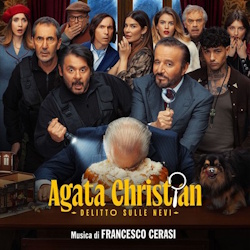 Agata Christian: Delitto Sulle Nevi is a comedy-mystery directed by Eros Puglielli, a cheerful contemporary riff on the classic country-house whodunit – essentially an Italian version of the Knives Out series. Christian De Sica plays Christian Agata, a celebrated criminologist whose sharp tongue is matched by an apparently infallible instinct for detection. He is invited to the luxurious Valle d’Aosta home of the wealthy Gullmar family to help relaunch Crime Castle, the board game on which their fortune was built; inevitably, the publicity weekend turns murderous when patriarch Carlo Gullmar is found dead and an avalanche cuts the guests off from the outside world.
The score for Agata Christian: Delitto Sulle Nevi is by Francesco Cerasi, who has been a fixture of Italian film and television music for roughly two decades. His recent output has been especially prolific, and Agata Christian demonstrates why he remains such a useful composer for projects that require sophistication, humor, and dramatic flexibility. Cerasi approaches the film in exactly the right spirit. Rather than treating the murder mystery as grim crime drama, he embraces its stylized, faintly theatrical quality, writing music that evokes the mechanics of an old-fashioned whodunit while retaining a light, distinctly Italian personality.
The brief “Delitto Sulle Nevi Ouverture” establishes this immediately: it is a prancing piece for plucked strings, rich brass, and subtle harpsichord, behaving almost like the raising of a curtain, while “Tramonto Nella Valle” adds a welcome level of mystery and intrigue. “Mountain’s March” is one of the album’s most entertaining ideas, a bulbous mock-serious piece for energetic strings and low-register piano, capturing the imposing Alpine surroundings.
Character writing is equally important. The spiky “Agata Christian” gives the detective a memorably quirky musical identity, poised somewhere between confidence and eccentricity, while “Christian Agata Misterioso” recasts his theme in a more suspicious guise. The Grieg-esque comic stylings of “Cuozzo” and “Cuozzo Pt.2” provide a lighter counterweight to Agata’s self-assurance. The moodily elegant and sometimes seductively jazzy “Miranda” pieces similarly help give the score a pleasing sense of continuity, with each variation changing the dramatic temperature without abandoning the overall musical language. Elsewhere, the pizzicato strings and hooting woodwinds of “Famiglia Gullmar” and the longer “Famiglia Gullmar Pt. 2” suggest the duplicity of the complicated personalities at the heart of the story.
The mystery material is especially enjoyable, with cues such as “Honey,” the darker and more intimidating “Il Colpevole,” “La Vittima,” and the vaguely circus-like “Un Mistero” giving Cerasi the opportunity to indulge the conventions of detective scoring with obvious affection. “Passaggio Segreto,” the longest cue on the album, is a particular highlight, sustaining intrigue and slowly turning into the score’s main action sequence. The album closes with a thrilling reprise of the main theme in “Delitto Sulle Nevi,” a compact summation that brings the musical game to an appropriately neat conclusion.
Agata Christian: Delitto Sulle Nevi is a hugely enjoyable little score: stylish, witty, tuneful, and consistently aware that a good comic mystery needs both genuine suspense and a twinkle in its eye. Cerasi balances those demands beautifully. Anyone with a fondness for elegant European comedy scores, playful murder-mystery music, or simply smart thematic writing should find plenty to enjoy here. It may be modest in scale, but it is full of personality and stands as another excellent entry in Francesco Cerasi’s filmography. The score is available to stream and download from all the major online sources via the CAM label.
Track Listing: 1. Delitto Sulle Nevi Ouverture (0:53), 2. Tramonto Nella Valle (1:06), 3. Mountain’s March (1:43), 4. Miranda Pt.1 (1:12), 5. Famiglia Gullmar Pt.2 (2:14), 6. Honey (1:28), 7. Agata Christian (1:48), 8. Cuozzo Pt.2 (1:54), 9. Famiglia Gullmar (1:11), 10. Il Colpevole (2:06), 11. Miranda Pt.2 (1:05), 12. La Vittima (2:05), 13. Miranda Pt.3 (1:08), 14. Passaggio Segreto (2:34), 15. Christian Agata Misterioso (1:09), 16. Un Mistero (2:01), 17. Dolce Amaro V1 (1:06), 18. Cuozzo (1:06), 19. Cacciatore Vegano Pt.1 (1:11), 20. La Valanga Tensivo (1:15), 21. Mountain’s March Pt.2 (1:17), 22. B 52 (0:52), 23. Delitto Sulle Nevi (1:00). CAM Records, 33 minutes 37 seconds.
COLPA DEI SENSI – Paolo Vivaldi
Colpa dei Sensi is an Italian TV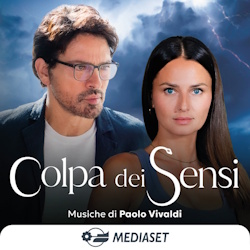 miniseries directed by Simona Izzo and Ricky Tognazzi. It is a glossy mixture of romantic melodrama, family secrets, and murder mystery, centered on Davide d’Amico, a military colonel who returns to his hometown where his father Vittorio is dying. Years earlier Vittorio was convicted of murdering his wife Adele, but Davide has never been entirely convinced of his guilt, and his return prompts him to begin looking into the case again. Complicating matters is Laura Mariani, Davide’s former great love, now married to his old friend Enrico Tebaldi; old passions quickly resurface, while the wealthy Tebaldi family proves to be sitting on more than one dangerous secret. Gabriel Garko and Anna Safroncik star as Davide and Laura, with Tommaso Basili as Enrico and Lina Sastri as the formidable Lidia Tebaldi, plus Ricky Tognazzi himself in a major supporting role.
The music is by veteran Italian composer Paolo Vivaldi, who remains largely unknown outside his domestic film industry. I previously reviewed Vivaldi’s excellent scores for Permette? Alberto Sordi in 2020, and Se Potessi Dirti Addio last year, the latter of which was also directed by Izzo and Tognazzi. Colpa dei Sensi is very much in the tradition of Vivaldi’s strongest dramatic writing: unabashedly melodic, emotionally direct, and willing to treat television drama with genuine symphonic seriousness.
The album opens with the darkly elegant “A Perfect Murderer,” immediately establishing the murder-mystery component with a rich theme for strings and piano, before the more intimate “Adele’s Secret Jewel Box” begins digging into the past with a theme clearly based on Nino Rota’s theme from Romeo and Juliet. The four-minute “Colpa dei Sensi Main Theme” is the score’s centerpiece, a nervous flurry of strings that again references the chord progressions of Romeo and Juliet. “Davide and Laura’s Investigation” revisits some of the sounds of the opening cue, while “Davide and Laura’s Love Theme” contains the emotional heart of the series and adds a contemporary edge through its use of electric guitars.
Some of the most effective material is associated with the darker corners of the story; I especially like cues such as “Davide at the Mansion,” “Devil’s Peak,” “Secret Hideaway,” and especially “The Cursed Mansion,” which create a potent atmosphere of intrigue and danger. The latter also receives a strings-only variation, an excellent example of Vivaldi taking a dramatic idea and changing its character through a more concentrated orchestral treatment. “Laura’s Tears,” “Laura Is Free,” and the lush “Someday” are emotionally poignant; “Led by the Senses” has a cello line which reminds me of Wojciech Kilar, and both the gentle “Memories from the Grapevine” and “Memories from the Rose Yard” have a wistful quality. I also really like the “Ominous Aria” and its related string version, as well as the thrilling “Riccardo’s Fury,” which take the Rota-Romeo and Juliet ideas to some unexpectedly dark places.
Colpa dei Sensi is an excellent example of Paolo Vivaldi’s mature television writing. It has romance, suspense, mystery, and old-fashioned dramatic sweep, but what makes it especially satisfying is its commitment to melody and recurring musical identities. It is polished, thematic, and consistently engaging, and stands as another reminder of how much excellent dramatic music Vivaldi has contributed to Italian screens over the course of his career. The score is available to stream and download from all the major online sources via RTI Records.
Track Listing: 1. A Perfect Murderer (1:33), 2. Adele’s Secret Jewel Box (3:21), 3. Colpa dei Sensi Main Theme (3:59), 4. Davide and Laura’s Investigation (3:51), 5. Davide and Laura’s Love Theme (1:25), 6. Davide at the Mansion (2:08), 7. Devil’s Peak (2:30), 8. Laura and Riccardo’s Crisis (2:53), 9. Laura Is Free (1:10), 10. Laura’s Tears (1:05), 11. Led by the Senses (1:41), 12. Lidia Tebaldi’s Burden (2:32), 13. Memories from the Grapevine (2:39), 14. Memories from the Rose Yard (2:30), 15. Ominous Aria (5:43), 16. Ominous Aria – Strings Version (2:09), 17. Riccardo’s Fury (1:12), 18. Secret Hideaway (3:04), 19. Someday (1:41), 20. Tebaldi Family’s Secrets (1:55), 21. The Cursed Mansion (2:15), 22. The Cursed Mansion – Strings Version (2:12), 23. The Final Menace (2:52), 24. The Soldier Is Back (1:50). RTI Mediaset, 58 minutes 21 seconds.
LES ENFANTS DE LA RÉSISTANCE – Philippe Rombi
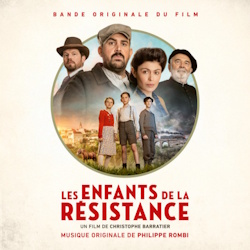 Les Enfants de la Résistance is a French historical family adventure directed by Christophe Barratier, adapted by Barratier and Stéphane Keller from the successful Belgian comic-book series by Vincent Dugomier and Benoît Ers. Set during the German occupation of France in World War II, it follows François, Eusèbe, and Lisa, three children who refuse to accept the injustice unfolding around them and begin carrying out clandestine acts of resistance: distributing messages, sabotaging the occupiers, and helping fugitives evade capture. Lucas Hector, Octave Gerbi, and Nina Filbrandt play the three young heroes, with Gérard Jugnot, Pierre Deladonchamps, Leslie Medina, and Vanessa Guide among the adult cast.
The score is by Philippe Rombi, who has been one of the most consistently elegant voices in French film music for more than two decades. I first discovered Rombi in the late 1990s through his scores for director François Ozon, notably Swimming Pool, Angel, and Ricky, while Rombi’s wider filmography encompasses excellent works such as Joyeux Noël, Bienvenue Chez les Ch’tis, and several previous films for Barratier, including La Nouvelle Guerre des Boutons and Le Temps des Secrets. His music has always combined traditional symphonic craft with an unusually strong melodic instinct, and Les Enfants de la Résistance is a particularly satisfying example of both qualities.
The album presents almost an hour of unabashedly melodic and sweeping orchestral writing. The main “Les Enfants de la Résistance (Thème)” is immediately impressive: broad, noble, and emotionally open, with lyrical orchestra and children’s choir giving the children’s courage an almost timeless quality. It is not a theme of militaristic heroism so much as one of idealism, friendship, and hope, and that distinction gives the entire score its heart. The subsequent “Ouverture” develops the material with greater sweep, while also introducing some of the darker, militaristic suspense material, which features more prominent use of brass and snare drum riffs. Further prominent statements of the main theme come in the expressive “Lisa,” the more intense “François et Lisa,” the tender “Les Tracts du Lynx/Les Pluies,” and the deeply emotional “In Memoriam,” giving the album greater depth and a strong sense of thematic identity.
Darker cues such as “Les Réfugiés,” “Mort de Martin/Arrivée des Allemands,” “On Passe à l’Action!,” the outstanding “Éboulement,” and “La Péniche Mystérieuse” use a more dramatic musical language, combining troubled strings, piano lines, and heavier percussion with elements of the main theme to suggest the menace of the occupation and its impact on the children’s lives. There is an occasional hint of John Williams in some of the textures Rombi uses here, especially from films where child protagonists are caught up in distinctly adult dangers.
“L’Enquête de la Gestapo” expands that material into one of the album’s most sustained suspense and light horror sequences. This is counterbalanced by the adventure music, which is tremendous fun. Cues like the whimsical “Une Belle Complicité” are full of motion and youthful ingenuity, with lively orchestral figures that emphasize the children’s innocence and cleverness in the face of the horrors of war, and the ebullient “Le Match de Foot” provides welcome levity.
“L’Attaque du Train” is a substantial four-minute action and suspense cue in which Rombi allows the orchestra to surge with genuine cinematic boldness. “Abandonné” and “L’Exécution” bring real gravity, with Rombi using haunting cellos to excellent effect, before the emotional payoff arrives in the superb “Final et Générique de Fin,” nearly seven minutes of thematic summation in which the score’s main musical ideas come together. Rombi has never been afraid of sincere, dramatic orchestral writing; here that quality is both invaluable and deeply engaging.
Les Enfants de la Résistance is one of Philippe Rombi’s most appealing recent scores: richly thematic, beautifully orchestrated, exciting when required, but above all heartfelt. Admirers of old-fashioned symphonic film music should find an enormous amount to enjoy, especially listeners who appreciate the lyricism of Rombi’s own finest work. The score is available as a physical CD from Music Box Records, and to stream and download from all the usual major online sources.
Track Listing: 1. Les Enfants de la Résistance (Thème) (2:46), 2. Ouverture (3:30), 3. Martin (2:47), 4. Les Réfugiés (1:01), 5. Lisa (3:00), 6. Mort de Martin/Arrivée des Allemands (2:20), 7. Sabotage (2:46), 8. François et Lisa (1:57), 9. On Passe à l’Action! (2:00), 10. La Révélation de Lisa (1:19), 11. Les Tracts du Lynx/Les Pluies (3:02), 12. Éboulement (2:24), 13. La Péniche Mystérieuse (3:24), 14. Une Belle Complicité (1:30), 15. L’Enquête de la Gestapo (4:56), 16. Le Match de Foot (1:47), 17. Marcel Fait Passer le Prisonnier (2:38), 18. In Memoriam (1:40), 19. L’Attaque du Train (4:05), 20. Abandonné (1:11), 21. L’Exécution (2:37), 22. Final et Générique de Fin – Version Film (6:53). Music Box Records, 55 minutes 19 seconds.
FRIEREN: BEYOND JOURNEY’S END, SEASON 2 – Evan Call
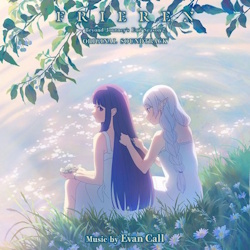 Frieren: Beyond Journey’s End is an acclaimed Japanese fantasy anime TV series adapted from the popular manga by Kanehito Yamada and Tsukasa Abe. It debuted with Season 1 in 2023, and now Season 2 of the series continues the deceptively gentle odyssey of Frieren, an elven mage whose lifespan stretches across centuries. Following the death of Himmel, the human hero with whom she once defeated the Demon King, Frieren sets out to better understand the fleeting lives and emotions of the people around her. She continues north with her young companions Fern and Stark, encountering new towns, old memories, dangerous monsters, and figures whose heroism echoes across history.
The music for Frieren is again by Evan Call, the California-born composer who has lived and worked in Japan since 2012. Call first became widely known internationally through his magnificent music for Violet Evergarden, and he has subsequently written excellent scores for My Happy Marriage, Gold Kingdom and Water Kingdom, and the NHK historical epic The 13 Lords of the Shogun, to the point where I consider him one of the finest composers working in the Japanese industry. His first-season Frieren score was arguably one of his career-defining achievements, blending large-scale orchestral writing with Celtic and European folk colors to create a musical world that felt ancient, pastoral, magical, and profoundly nostalgic. Season 2 continues that sound.
Call recorded a large orchestra and choir in Hungary, and the resulting score is exceptionally rich. “The Journey Continues” immediately returns listeners to Frieren’s world with warmth and open-hearted wonder, while the lovely “Ripples in a River of Time” explores folk-music textures including fiddles, dulcimers, flutes, and an occasional bagpipe. “The Winding Road,” the playful “Villages and Vagabonds,” the dance-like “Walk the Good Path,” the energetic and vivacious “Ready Your Weapon,” and “Tune for a Traveller” continue in a similar vein, and are especially delightful, full of rustic instrumental colors, lively rhythms, and appealing melodic gestures that make the landscape itself feel alive.
The more orchestral works are no less impressive. “Reflections” and “Castles and Cobblestone” both have a tender Irish-like lilt in the strings that reminds me somewhat of classic James Horner or, oddly, Carter Burwell’s theme from Miller’s Crossing. “Memories – Wayfarers of Time” is beguilingly romantic, especially when Call layers a female vocalist against the instruments. “Happiness for Fern” and “An Afternoon Date” have a gently joyous, unexpectedly French sound that perfectly suits the understated relationship between Fern and Stark.
The quirky “Spells and Spoils” channels the fluttering woodwind sound from John Williams’s score for Harry Potter and the Prisoner of Azkaban. “Heart of a Hero” brings out a sense of horn-led warmth and choral nobility that is enormously attractive. “Hero of the South” is purposeful and initially blends pennywhistles and guitars within the orchestra, before emerging into a superb piece of sweeping heroism for the full ensemble and choir, while “From One Hero to Another” continues that emotional thread with tremendous dignity and several references to the score’s emergent main theme.
“Four Swords of Despair” is one of the few cues that has a heavier, darker tone, and makes excellent use of moody woodwind textures. “First-Class Mage” is upbeat and celebratory and features vocalist Alina Lesnik, whose engaging presence immediately recalls some of the stirring vocal writing from the first season. The concluding “The Golden Land” is gorgeous, shimmering with mystery and anticipation and seeming to point toward adventures still to come.
Season 2 of Frieren: Beyond Journey’s End is another exceptional score from Evan Call. It preserves everything that made the original music so special – melody, atmosphere, orchestral richness, folk color, and tender nostalgia – and anyone who loved the first season’s soundtrack will find this indispensable, while listeners who admire lyrical, old-fashioned fantasy scoring should seek it out immediately. The score is available to stream and download from all the major online sources via Milan Records. There is a short six-cue ‘Select Version’ that serves as a useful sampler, alongside a full hour-long album containing the expanded score reviewed here.
Track Listing: 1. The Journey Continues (3:09), 2. Ripples in a River of Time (2:32), 3. The Winding Road (2:48), 4. Villages and Vagabonds (2:06), 5. Walk the Good Path (2:19), 6. Reflections (2:48), 7. Memories – Wayfarers of Time (2:52), 8. Ready Your Weapon (2:21), 9. Castles and Cobblestone (2:04), 10. Tune for a Traveller (2:18), 11. Happiness for Fern (2:00), 12. Spells and Spoils (2:26), 13. An Afternoon Date (2:12), 14. Kind-Hearted Warrior (2:18), 15. Heart of a Hero (2:48), 16. Hero of the South (3:22), 17. From One Hero to Another (2:43), 18. Under Heavy Wings (2:56), 19. Four Swords of Despair (2:39), 20. Divine Revolte (2:44), 21. First-Class Mage (2:34), 22. The Golden Land (2:59). Milan Records, 57 minutes 14 seconds.
ROSSO VOLANTE – Fabrizio Mancinelli
 Rosso Volante is an Italian TV movie directed by Alessandro Angelini, inspired by the life of legendary bobsleigh racer Eugenio Monti and, specifically, the four crucial years between the 1964 Winter Olympics in Innsbruck and the 1968 Games in Grenoble. Giorgio Pasotti stars as Monti, a gifted but fiercely driven sportsman who has already won almost everything except Olympic gold. At Innsbruck, however, his defining moment is not victory but sportsmanship: when British rivals Tony Nash and Robin Dixon suffer equipment trouble, Monti lends them a replacement bolt, allowing them to continue and ultimately win. The film follows Monti through disappointment, injury, self-doubt, romance, and finally redemption at Grenoble.
The score is by Italian composer Fabrizio Mancinelli, who over the past few years has been quietly assembling an increasingly impressive résumé on both sides of the Atlantic. Raised in L’Aquila, his individual credits include The Land of Dreams (2022), Here After (2024), Out of the Nest (2025), and short films such as Mushka and Go for Grandma, while as a conductor he has also worked on several Kris Bowers scores, including Green Book, King Richard, and the Oscar-nominated Wild Robot.
Rosso Volante is a wonderful showcase for Mancinelli’s traditionally cinematic instincts. Recorded with the Roma Film Orchestra, it is a sports drama score built around lyrical character writing, propulsive string ostinatos, and a strong sense of emotional uplift. The opening “Il Rosso Volante” immediately establishes the score’s primary dramatic voice, combining determination with a touch of nobility through its energetic string passages.
This energy and enthusiasm are counterbalanced by a number of smaller, more introverted pieces for strings, piano, and subtle synths, notably pieces like “Brera e Monti,” “Non Preoccuparti, Sergio,” the downbeat “Una Sconfitta Molto Amara,” “Eugenio, Solo Con i Suoi Pensieri,” and the agitated “Incubi in Ospedale,” all of which speak to the difficulties and setbacks in Monti’s life. There is also some romance in cues like “Leonida e Le Sue Passioni,” “Linda Visita Eugenio,” and “In Moto con Linda,” which use quirky pizzicato strings and piano with lightly comedic effect, but also at times sound genuinely endearing. The excellent “In Montagna” is one of the album’s most expansive reflective cues, and features some especially fine cello writing, while “Eugenio Decide di Tornare” is unexpectedly emotional.
One of the big musical set-pieces is “La Discesa di Innsbruck,” where the score gathers momentum through fast-moving strings and rhythmic orchestral writing, beautifully conveying the speed and exhilaration of bobsled racing. This momentum builds throughout the second half of the score, until the climax at the Grenoble Olympics. “Le Olimpiadi di Grenoble” has the anticipation and ceremonial sweep the title demands, while “Prima Prova con Romoletto” and “Bob a Due” prepare the ground for the outstanding “La Discesa di Grenoble.” Here the rhythmic string writing returns with renewed urgency, and the music sometimes incorporates more contemporary guitar-led rock sounds, but it all carries the accumulated emotional weight of everything Monti has endured, and when he celebrates his double gold medal, the music celebrates with him.
At just over an hour, Rosso Volante is a substantial album, but its combination of energetic sports writing and sensitive personal drama sustains it beautifully. Mancinelli understands that Monti’s story is not simply about going fast or winning medals; it is about resilience, friendship, generosity, and the courage to return after defeat. The score captures all of that with warmth and sincerity. For listeners who enjoy richly orchestral, thematic sports scores with an old-fashioned dramatic heart, Rosso Volante is an easy recommendation and one of Fabrizio Mancinelli’s most satisfying works to date. The score is available to stream and download from all the major online sources via Rai Com.
Track Listing: 1. Il Rosso Volante (2:10), 2. Brera e Monti (1:14), 3. Non Preoccuparti, Sergio (1:26), 4. Un Inusuale Primo Incontro (0:42), 5. Attesa e Preparazione (0:59), 6. La Discesa di Innsbruck (1:50), 7. Una Sconfitta Molto Amara (1:46), 8. Eugenio, Solo Con i Suoi Pensieri (1:49), 9. Non Piu’ un Eroe (0:32), 10. Il Trofeo de Coubertin (1:37), 11. Incubi in Ospedale (1:43), 12. A Cuore Aperto Con la Mamma (2:10), 13. Eugenio Rassicura la Mamma (2:24), 14. Il Signor Leonida (0:43), 15. La Dottoressa Linda (1:02), 16. Leonida e Le Sue Passioni (1:57), 17. Linda Visita Eugenio (1:39), 18. In Moto con Linda (2:03), 19. Una Diagnosi Difficile da Accettare (2:42), 20. In Montagna (4:32), 21. Sergio va a Trovare Eugenio (3:32), 22. Eugenio Decide di Tornare (1:40), 23. Barba e Moto (1:22), 24. Eugenio va da Sergio (1:56), 25. Le Olimpiadi di Grenoble (3:56), 26. Prima Prova con Romoletto (0:56), 27. Bob a Due (0:45), 28. Non Mi E’ Mai Piaciuto il Dottor Roberto (2:19), 29. La Discesa di Grenoble (3:54), 30. Linda e Eugenio (1:51), 31. Miss Dolomiti (0:42), 32. Incubi Ricorrenti (0:59), 33. Prove in Autodromo (1:16). Rai Com, 60 minutes 26 seconds.
UNVEIL: JADEWIND – Hu Xiaoou
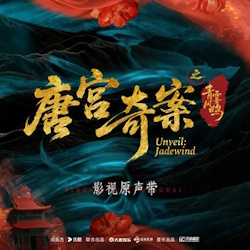 Unveil: Jadewind is a 34-episode historical mystery drama directed by Yin Tao and Xie Yihang, and adapted from the acclaimed novel by Sen Lin Lu. Set amid the splendour and danger of the Tang imperial court, the story begins when Princess Ningyuan dies mysteriously during a Lantern Festival banquet. The investigation falls to Li Peiyi (played by Bai Lu), the formidable Princess of Fuchang County, and Xiao Huaijin (played by Wang Xingyue), the brilliant deputy director of the Astronomical Bureau, who must uncover the reason for her death. Their inquiries gradually expand into a series of strange palace cases involving corruption, murder, and the often-tragic fates of women trapped within the imperial system, while also exposing the truth behind the massacre of Peiyi’s family years earlier.
The score for Unveil: Jadewind is by Hu Xiaoou, one of the busiest and most versatile composers working in contemporary Chinese film and television. A graduate of the Sichuan Conservatory of Music, Hu subsequently studied in the United States and earned a doctorate in composition from the University of Missouri-Kansas City, accumulating numerous international composition awards along the way. His extensive screen career includes titles such as The Ordinary World, Detective Chinatown, My People My Homeland, and the enormously successful crime drama The Knockout, while more recently his work has included Detective Chinatown 1900, The Prisoner of Beauty, and The Legend of Zang Hai, among numerous others.
Unveil: Jadewind is exactly the sort of project that allows Hu to exploit his strengths. The score combines the elegance expected of a lavish Tang Dynasty drama with the darker colors of a murder mystery, creating music that is simultaneously refined, melancholic, suspenseful, occasionally aggressive, and grand. “Murder Hidden Behind Vermilion Gates” opens the album with immediate dramatic purpose, establishing the sense that violence and secrets lurk beneath the beauty of the imperial court with an unusual combination of orchestra, shrill voices, and electronics.
“Heart of Longing” is much more lyrical, a gorgeous piece for piano and what sounds like a guzheng zither backed by strings, allowing Hu’s gift for expressive melody to emerge; later cues like the deeply romantic “Adding Incense,” “Old Dream, Hard to Find,” the majestic “Soliloquy Beneath the Moon,” “As Though an Old Friend Has Returned,” the tender and delicate “Enduring Sorrow in the Deep Palace,” and the hauntingly evocative “Palace Maidens Beneath the Moon” build on this sound, and allow the relationship between Princess Li and Xiao to blossom. In many of these cues Hu layers more regional specialty instruments, including an erhu and a pipa flute, plus various vocalists, into the orchestra to outstanding effect.
“Shadow Lantern” is the first of several cues to blend eerie electronic textures, dissonant orchestral lines, and choral sounds that combine elements of Chinese opera with throat singing to a fascinating, disturbing effect. Later cues like “Secrets Must Not Be Heard” continue this distinct, unsettling sound with even more unusual instrumental textures, including what sounds like a bagpipe and a jaw harp. The choral/vocal textures Hu uses are equally striking – sometimes the vocalist is making sharp inhalations, like the sound you make when you stub your toe, while sometimes they are gasping and breathing in a harsh, guttural manner.
There is unexpectedly contemporary-sounding action in cues like “Ears Beyond the Wall,” which uses modern rhythmic tropes and electronic pulses to move things along, but even here the sense of historical authenticity remains through Hu’s fascinating use of metallic percussion sounds and wordless female vocals. Other action cues include the upbeat and energetic “Distant Aspiration,” the propulsive and dramatic “In Peril,” “The Wind Settles, Suspicions Rise,” the stylish “So Near, Yet Worlds Apart,” and “The Purple Palace Looms.” Many of these cues have a distinct sound redolent of modern anime scores, and will immediately appeal to fans of that genre, while at other times the use of a zither gives the whole thing a vibe that can only be described as ‘what if John Barry was Chinese?’
Unveil: Jadewind is a terrific score: elegant, atmospheric, melodic, and steeped in a convincing sense of historical mystery. Hu Xiaoou balances beauty and menace exceptionally well, ensuring that the music can evoke the grandeur of the Tang court without ever forgetting the sadness, danger, and human suffering concealed within it. Listeners who enjoy sophisticated Chinese period-drama scoring, especially music that blends traditional sensibilities with modern cinematic suspense, should find this enormously rewarding. The score is available to stream and download from all the major online sources via Whale Sound Music, and as a physical album from Asian import specialists like YesAsia.
Track Listing: 1. Murder Hidden Behind Vermilion Gates (1:40), 2. Heart of Longing (3:44), 3. Shadow Lantern (1:57), 4. Adding Incense (3:55), 5. Ears Beyond the Wall (2:01), 6. An Old Dream, Hard to Find (3:03), 7. Soliloquy Beneath the Moon (2:59), 8. Distant Aspiration (1:59), 9. In Peril (1:34), 10. Secrets Must Not Be Heard (1:58), 11. As Though an Old Friend Has Returned (3:12), 12. The Wind Settles, Suspicions Rise (3:08), 13. So Near, Yet Worlds Apart (3:17), 14. Enduring Sorrow in the Deep Palace (3:10), 15. The Lonely Palace (2:21), 16. Imperial Blade (1:36), 17. The Purple Palace Looms (1:31), 18. Palace Maidens Beneath the Moon (2:18), 19. Palace Flowers Bloom Alone (1:13), 20. Thoughts of the Phoenix (2:25), 21. Secrets Hidden on the Imperial Steps (2:52), 22. Traces Along the Palace Walls (1:39). Whale Sound Music, 53 minutes 42 seconds.
Note: the track listings from this album have been translated from Chinese into English and may not be 100% accurate.
Leave a comment

Shop at the Movie Music UK Store

Member of the


I really enjoy your “Under-the-Radar” series — it’s the best way for me to discover scores that would otherwise completely pass me by.
Speaking of Philippe Rombi, have you had a chance to listen to his Adventure Way symphonic suite for Disney Adventure World in Paris? I really think it’s worth checking out — it’s an absolute treat to listen to.
Really interesting mix of reactions here. I particularly liked the comments about the film’s portrayal of 1950s France, harsh parenting, and the balance between humour and tragedy. The fact that viewers had such different interpretations of the ending also makes it a film worth discussing further. I recently came across some additional thoughts on films from this period here: https://www.themanual.com. Thanks for sharing the audience feedback — it’s fascinating to see how differently people responded to the same film.