THE PHANTOM – David Newman
 THROWBACK THIRTY
Original Review by Jonathan Broxton
The Phantom is a superhero adventure film directed by Simon Wincer, based on the classic comic-strip character created by Lee Falk in 1936. The film stars Billy Zane as the masked hero known as “The Ghost Who Walks.” The story follows Kit Walker, the latest in a centuries-long line of heroes who assume the identity of the Phantom to fight piracy, crime, and corruption. Operating from the fictional African nation of Bengalla, the Phantom battles ruthless businessman and criminal mastermind Xander Drax (Treat Williams) and his seductive femme fatale henchwoman Sala (Catherine Zeta-Jones), who are searching for three mystical skulls said to grant immense destructive power. Alongside his former love Diana Palmer (Kristy Swanson), Kit races across jungles, oceans, and New York City to stop Drax from unleashing chaos.
The Phantom was part of the 1990s wave of pulp-inspired comic-book adaptations that arrived before the modern superhero boom, alongside films such as The Rocketeer and The Shadow. Unlike the darker comic-book films of the modern era, The Phantom embraced a colorful, old-fashioned adventure style inspired by 1930s serials and swashbuckling matinees. Joe Dante was originally attached to direct a Phantom film in the early 1990s, and he developed a draft of the script, but when Paramount pushed the film back a year, Dante left for other commitments and eventually received an executive producer credit, with Wincer stepping into the director’s chair.
The character itself is historically important: the Phantom is often considered one of the earliest costumed superheroes, predating characters like Batman and Superman in some key genre conventions, including the skintight costume, secret identity, and masked vigilantism. Although the film underperformed at the box office, it later gained a cult following for its sincerity, production design, practical stunt work, and faithful comic-book aesthetic. Fans especially appreciate Billy Zane’s enthusiastic performance, which fully commits to the pulp-hero tone without irony.
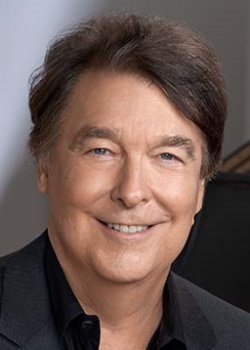 The musical score was composed by David Newman, reuniting with director Wincer after Operation Dumbo Drop the previous year (it remains unclear why Wincer’s frequent collaborator Basil Poledouris was not involved). In the mid-1990s, Newman was still scoring three or four major studio films per year; however, most of those projects were broad comedies, which is why The Phantom feels like such a breath of fresh air. The film gave the composer a rare opportunity to embrace a more mature, dramatic, and action-oriented musical voice. His music is energetic, heroic, and heavily orchestral, drawing inspiration from classic Golden Age adventure scores. Newman used bold brass fanfares, sweeping strings, and propulsive action writing to evoke the feeling of vintage jungle adventures and serialized cliffhangers.
The score’s greatest strength is undoubtedly its central theme for the Phantom himself, which is triumphant, romantic, and earnest in a way that perfectly matches the film’s old-school tone. Newman crafted a sweeping, brass-driven idea that feels rooted in the tradition of classic adventure music, occasionally recalling the influence of his old friend and mentor Jerry Goldsmith while still maintaining its own identity. It first appears with thrilling ferocity in the titular third cue, “The Phantom,” and features prominently throughout the rest of the score.
For the most part, it is boldly brassy and heroic, backed by flashy string counterpoint, although it occasionally takes on a darker, more menacing aspect, featuring gruff chanted vocals, howling exotic woodwinds, and other unusual textures. There are also some electronic tonalities interspersed throughout that oddly resemble punches landing, giving portions of the score an old-fashioned and slightly goofy vibe reminiscent of the 1960s Batman series. Most notably, the theme is unusual because of its exceptional length, and it is fascinating how Newman, rather than simply repeating the melody in predictable fashion, fragments and reshapes it throughout the score, weaving different portions of the theme into action passages, moments of mystery, and romantic interludes. The result gives the music a constant sense of momentum and cohesion, even if some listeners may wish the individual motifs had been developed more distinctly.
Where the score also excels is in its action material, which is simply sensational. There is a distinct Jerry Goldsmith influence in some of the action writing, especially in the brass passages, which is hardly a criticism considering Goldsmith’s mastery of this style. To Newman’s credit, however, he also draws from his own musical sensibilities, allowing the score to echo the structure and energy of some of his earlier action works. The second half of “The Phantom,” along with later cues such as “The Escape,” “The Museum,” “Flying to the Island,” and especially the climactic “Escaping the Island,” explode with pounding percussion, aggressive brass writing, florid string passages, and relentless rhythmic drive. Newman throws enormous energy into these sequences, delivering the kind of muscular orchestral adventure scoring that became increasingly rare as the decade progressed. The music often feels oversized in exactly the right way for a film involving jungle temples, secret legacies, and mystical skulls, and the moments where Newman allows his main theme to emerge simply soar. The huge, staggering brass clusters at the beginning of “Escaping the Island” are especially breathtaking.
There is also an appealing variety to the score, from the exotic woodwind colors and jungle percussion representing Bengalla and the Phantom’s island mythology in cues like the opening “For Those Who Came In Late” and the distinctly Horner-esque “Diana Must Leave,” to warmly romantic passages like “Must Be the Humidity,” written for the relationship between Kit and Diana. The superb, sweeping statement of their love theme toward the end of “Escaping the Island” is especially satisfying. Unfortunately, the music for the villains, Drax and Sala, is comparatively underwhelming, amounting to little more than a brief ostinato that never evolves into a particularly memorable musical identity for either character. It is also somewhat disappointing that the whispered “phantom” chants heard in the opening cue are not explored more consistently throughout the score, although these are relatively minor criticisms in a work that is otherwise thrilling and enormously entertaining.
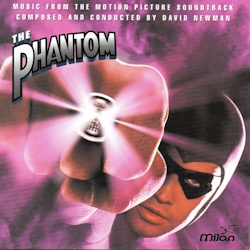
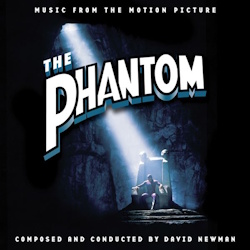 The original 1996 Milan Records release of The Phantom was an enjoyable 45-minute presentation that captured the score’s major highlights and proved more than sufficient for most listeners. The expanded La-La Land Records release from 2012 offers a deeper exploration of the material, including several additional action cues omitted from the original album. Among them, “Fighting the Pirates,” which Newman co-wrote with lead orchestrator Randy Miller, is especially terrific.
Even so, the score succeeds far more often than it stumbles. Newman’s enthusiasm for the material is unmistakable, and the music consistently elevates the film’s sense of adventure beyond what appears on screen. While it may never have achieved the cult status of Goldsmith’s The Shadow or Elfman’s Batman, The Phantom remains one of the composer’s most entertaining and ambitious action scores, standing as both a fascinating relic of pre-modern superhero cinema and a reminder of what David Newman could accomplish when given the freedom to write large-scale orchestral adventure music. Imperfect though it may be, the score radiates a genuine love for old-school escapism – qualities that make it far more memorable than the film’s muted reputation might suggest.
Buy the Phantom soundtrack from the Movie Music UK Store
Track Listing:
- ORIGINAL 1996 RELEASE
- For Those Who Came In Late (1:21)
- The Tomb (2:57)
- The Phantom (5:39)
- Anything’s Possible (1:33)
- The Rescue (4:32)
- The Escape (5:44)
- Must be the Humidity (2:06)
- Diana Must Leave/New York (:59)
- Ray Gets the Point (1:22)
- The Museum (2:40)
- Flying to the Island (6:09)
- Quill is Destroyed (2:27)
- Escaping the Island (8:48)
- EXPANDED 2012 RELEASE
- For Those Who Came in Late/The Bridge/Truck on Bridge (2:32)
- The Tomb (2:55)
- The Phantom (5:45)
- Anything’s Possible (1:32)
- Conversation with Dad/Sengh Symbol (1:59)
- Microscope/Drax Theme (1:58)
- Sala/Phantom to the Rescue (2:34)
- The Rescue/The Escape (10:09)
- More Escape/Escape Continued (1:42)
- Must Be the Humidity/I Already Killed Him/Kit Arrives/Horton Sees the Symbol/Diana Must Leave/New York (4:24)
- I Never Kid/The Skull of Tuganda (1:02)
- Ray Gets the Point/Sengh Brothers Symbol/Jade Perhaps (2:39)
- Always Were a Mystery/Jade Skull/The Museum/Kit Gets Beat Up (4:50)
- Drax/Kit (The Phantom Fights Back) (2:15)
- Elevator Shaft (3:55)
- Flying to the Island-Part 1/Inside Drax’s Car/Inside Taxi/Diana Sees Kit (1:57)
- Flying to the Island-Part 2/Quill is Destroyed/Silence (9:59)
- Fighting the Pirates (5:30)
- Escaping the Island (8:48)
Running Time: 46 minutes 17 seconds — Original
Running Time: 76 minutes 52 seconds — Expanded
Milan 7313835756-2 (1996) — Original
La-La Land Records LLLCD-1220 (1996/2012) — Expanded
Music composed and conducted by David Newman. Performed by the London Metropolitan Orchestra. Orchestrations by David Newman, Xandy Janko, Steven Scott Smalley, Randy Miller, Conrad Pope, Jeff Atmajian, and Brad Dechter. Recorded and mixed by Robert Fernandez. Edited by Tom Villano and George A, Martin. Album produced by David Newman. Expanded album produced by Dan Goldwasser, Neil S. Bulk, MV Gerhard and Matt Verboys.

Shop at the Movie Music UK Store

Member of the

 MOVIE MUSIC UK