Archive
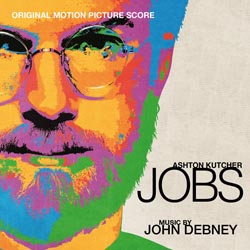
JOBS – John Debney, Josh Debney
 Original Review by Jonathan Broxton
Steve Jobs, who died of cancer in 2011 at the age of 56, has been called by some the greatest American inventor since Thomas Edison. As the head of the Apple corporation, Jobs and his team of genius engineers gave the world not only the Apple Macintosh computer, which helped kick start the personal computer, but by the early 2000s has begun the personal entertainment revolution through his series of “I” devices, the iPod, the iPhone, and the iPad, as well as the various retail outlets designed to facilitate the peripheral software and hardware for use on his devices. It’s safe to say that over the last decade or so Jobs and Apple – alongside the likes of Microsoft’s Bill Gates, Facebook’s Mark Zuckerberg, and Google’s Larry Page and Sergey Brin – literally changed the way the entire world connects with each other and stores its information; it will be interesting to see how future generations view their contribution to humanity, and whether they are seen as equals with other such communication pioneers as Johannes Gutenberg, William Caxton, Guglielmo Marconi, John Logie Baird and Alexander Graham Bell. Read more…
RUSH – Hans Zimmer
 Original Review by Jonathan Broxton
I’ve been a fan of Formula One motor racing for over twenty years; my grandfather, who was also a big fan, introduced me to it in the late 1980s, and since then I’ve followed every season, cheering on a succession of great British drivers – Nigel Mansell, Damon Hill, Jenson Button – and getting caught up in the intrigue, drama, excitement, adrenaline and masterful engineering each new season brings. It takes a certain kind of personality to hurtle down a straight towards a blind hairpin bend at 200mph with a machine as powerful as an F1 car under your right foot – the very next corner could, literally, be their last – and so the drivers who do this for a living tend to be larger-than-life themselves, prone to a certain sense of eccentricity and egotism. When I first started watching the sport, the biggest rivalry was between Ayrton Senna and Alain Prost, but a decade previously the two dominant personalities were the flamboyant and brilliant Englishman James Hunt, and the equally mercurial but slightly taciturn Austrian Niki Lauda. Read more…
ISABEL – Federico Jusid
 Original Review by Jonathan Broxton
Isabel is an epic Spanish-language TV series broadcast on the Televisión Española network about the life of Queen Isabella I of Castille. One of the most beloved and revered figures of Spanish history, in the 1450s she was instrumental in unifying various warring kingdoms under one crown – essentially creating the modern country of Spain – and funded the voyages of Christopher Columbus, leading to the discovery of the New World and the foundation of America. The show, which has just completed its second season, stars Michelle Jenner as Isabel, co-stars Ramon Madaula, Rodolfo Sancho and Ainhoa Santamaria, and boasts an astonishing score by the young Argentine composer Federico Jusid. Read more…
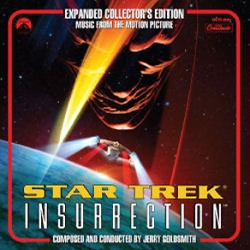
STAR TREK: INSURRECTION – Jerry Goldsmith
 MOVIE MUSIC UK CLASSICS
Original Review by Craig Lysy
The Next Generation crew returned for their third film with the addition of villain J. Murray Abraham (Ru’afo) and Picard’s love interest Donna Murphy (Anij). This 9th installment of the franchise offers in the finest Star Trek tradition another classic morality play. The story explores Machiavellianism, which espouses that “Might Makes Right” and that evil means may be used to achieve a “Greater Good”. The story is set on the planet Ba’ku, which is located in isolation in Sector 441. Ba’ku’s planetary rings emit a unique metaphasic radiation, which are both regenerative to health and life prolonging. We see a Federation team collaborating with the So’na, later to be revealed as disaffected Ba’ku ex-patriots, covertly seeking to remove the Ba’ku so that they may harvest the planet’s ring matter for ‘the betterment of all’. When Data malfunctions and exposes the sordid plan to the Ba’ku a crisis is precipitated. Picard and his crew choose to violate the direct orders of the mission commander Admiral Dougherty and defend the Ba’ku, believing that his mission violates the Prime Directive. This elicits war with the So’na who begin the forced removal of the Ba’ku and the harvesting of the planet’s rings. Our heroes succeed in defeating Ru’afo and in reuniting the Ba’ku with their estranged children, the So’na. The film was a commercial success, doubling its production costs and achieved some critical acclaim with both Hugo and Saturn Award nominations. Read more…
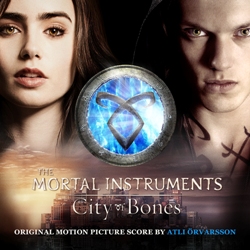
THE MORTAL INSTRUMENTS: CITY OF BONES – Atli Örvarsson
 Original Review by Jonathan Broxton
The Mortal Instruments is a series of “young adult” fantasy novels written by Cassandra Clare, following the adventures of teenager Clary Fray. After her mother mysteriously disappears, Clary discovers that she is part of a line of Shadowhunters, a secret force of young half-angel warriors locked in an ancient battle to protect our world from demons. Teaming up with a larger group of shadow hunters, all of whom are invisible to regular humans (“mundanes”), Clary heads into a dangerous alternate version of New York called Downworld, where she and her cohorts attempt to rescue her mother, and stop the demons from spilling over into the real world. Read more…
PASSION – Pino Donaggio
 Original Review by Jonathan Broxton
The career of Brian De Palma confounds me. From his early-career highs crafting masterpiece movies such as Carrie, Dressed to Kill, Blow-Out and Scarface, in recent years his output has consisted mainly of a series of tawdry sex thrillers that either bomb at the box office, or go straight to video – The Black Dahlia, Femme Fatale, Redacted, and so on. His technical mastery remains unmatched however, as his latest film, Passion, attests. It’s a tawdry sexy thriller (of course), a remake of the 2010 French language film Crime d’Amour, and stars Noomi Rapace as Isabelle, an ambitious up-and-coming executive at an international company, who constantly suffers a series of professional and personal humiliations at the hands of her boss, Christine, played by Rachel McAdams. The tables begin to turn when Isabelle – who is secretly sleeping with Christine’s boyfriend Dirk (Paul Anderson) – hatches a plot to finally seek revenge on the manipulative Christine, one of the key parts of which is to seduce Christine herself… Read more…
CZAS HONORU/TIME OF HONOR – Bartosz Chajdecki
 Original Review by Jonathan Broxton
One of the most celebrated and popular Polish television series of all time, Czas Honoru (A Time of Honor) tells the story of a group of friends, their lives and loves, as they struggle to survive in Nazi-occupied Poland during World War II. Starring Maciej Zakoscielny, Jakub Wesolowski and Jan Wieczorkowski, the show has been a smash hit in its native country since it first began airing on the TVP network in 2008; now in its sixth season, it continues to attract large domestic audiences, has made stars of its lead actors, and helped launch the career of its composer, Bartosz Chajdecki. Read more…
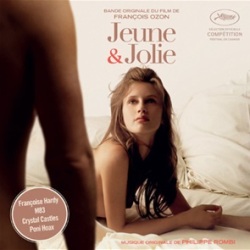
JEUNE ET JOLIE/YOUNG AND BEAUTIFUL – Philippe Rombi
 Original Review by Jonathan Broxton
The latest film from French director François Ozon, Jeune et Jolie (Young & Beautiful) is a powerful drama about a young girl discovering her sexuality. Marine Vacth plays Isabelle, a teenage girl on summer holidays with her family in the in the south of France. After a brief sexual encounter with a tourist leaves her cold, Isabelle decides she needs more experience – and soon starts working as a prostitute named ‘Lea’, meeting all kinds of clients and seeing her world of sexuality opening before her. The film co-stars Ozon’s regular muse Charlotte Rampling, as well as Géraldine Pailhas and Frédéric Pierrot, and has an original score by Ozon’s regular collaborator Philippe Rombi. Read more…
ELYSIUM – Ryan Amon
 Original Review by Jonathan Broxton
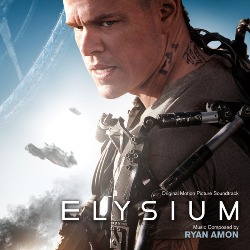
Elysium is the sophomore theatrical film from South African director Neill Blomkamp, who made such a splash and received such critical acclaim following his debut effort, District 9, in 2009. The film is set in a post-apocalyptic future where 99% of the world’s population lives in overcrowded slums on the planet’s surface, eking out a meager existence as best they can despite desperate poverty and a lack of adequate healthcare. Meanwhile, the wealthiest 1% live in an orbiting space station, named Elysium, in lavish comfort, with access to the best of everything that money can buy. Matt Damon plays Max, an ex-con working in a factory, dreaming of a better life, but whose dreams are shattered when he is involved in an industrial accident and exposed to massive amounts of radiation, giving him just days to live. Desperate to find a way out of his dilemma, Max decides that his only possible salvation is to somehow make his way off the planet and up to Elysium, where their state-of-the-art medical facilities will easily cure his problems. However, when news of Max’s plan of action starts to spread around future Los Angeles, it causes stirrings of civil unrest and rebellion in the population, attracting the attention of Elysium’s harsh governess Delacourt (Jodie Foster), who will stop at nothing to enforce Elysium’s draconian anti-immigration laws which ensure that her utopian paradise remains isolated and protected from the masses below. To this end, Delacourt activates a sleeper assassin, Kruger (Sharlto Copley) to deal with the troublemakers – and Max is the first one in his sights. Read more…
MURDER ON THE ORIENT EXPRESS – Richard Rodney Bennett
 GREATEST SCORES OF THE TWENTIETH CENTURY
Original Review by Craig Lysy
Producer Richard Goodwin secured film rights for Murder on the Orient Express from author Agatha Cristie, determined to create a “glamorous star-studded film that was gay in spirit… a soufflé.” He recruited some of the finest stars of the day, which included Albert Finney (Hercule Poirot), Lauren Bacall (Mrs. Hubbard), Ingrid Bergman (Greta), Sir John Gielgud (Beddoes), Sean Connery (Col. Arbuthnot) and Venessa Redgrave as Mary Debenham. The famous Orient Express was a train that ran from Istanbul to Calais and provided transit from Europe to the Middle East. Set in 1935, the story finds renowned and fastidious Belgian detective, Hercule Poirot, as a late addition passenger who needs to get back to London immediately. As fate would have it a fellow passenger is found murdered in his stateroom. As Poirot questions the train’s valet, the victim’s accompanying staff, and the first class passengers he finds that many have both opportunity and motive. He soon realizes that several passengers have a connection to the Armstrong family kidnapping and thus he begins to solve a very complex crime. The film had sensational success commercially and received critical acclaim. Richard Rodney Bennett’s score was nominated for both Academy and BAFTA awards, and secured the BAFTA Anthony Asquith Award for Film Music award. Read more…
WHITE HOUSE DOWN – Thomas Wander, Harald Kloser
 Original Review by Jonathan Broxton
Honestly, you wait around forever for a movie about terrorists blowing up the White House, and then two come along at once. Hot on the heels of Olympus Has Fallen is the second of 2013’s big screen demolitions in DC, White House Down, directed by the master of worldwide destruction, Roland Emmerich. Actually, White House Down was the first of the two films in pre-production, but Olympus Has Fallen was rushed out first, stealing some of this film’s thunder and potentially some of its box office spoils too. The film stars Channing Tatum as John Cale, a US Capitol police office and wannabe Presidential secret service agent, who is forced into action when a paramilitary group storms the White House, attacking the incumbent president James Sawyer (Jamie Foxx). The film also stars Maggie Gyllenhaal, Jason Clarke, Richard Jenkins and James Woods, and is by far the better of the two similar films, containing a better and more plausible plot, an underpinning of prescient political ideology, and some truly spectacular action. Read more…
THE CONJURING – Joseph Bishara
 Original Review by Jonathan Broxton
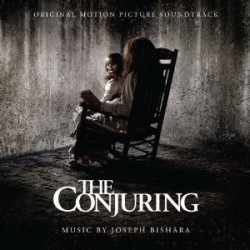
The Conjuring is the latest in a series of high profile ‘demonic possession’ movies, following on from such recent successful theatrical efforts as The Exorcism of Emily Rose, The Devil Inside, The Possession, and the Last Exorcism series. Based on the supposedly true experiences of two paranormal investigators from the 1970s, the film stars Patrick Wilson and Vera Farmiga and Ed and Lorraine Warren, who are called to help a married couple, Carolyn and Roger Perron (Lili Taylor and Ron Livingston), and their daughters, who have recently moved into an old farmhouse in rural Rhode Island, and who have since been terrorized by a malevolent spirit who appears in the form of an old woman. The film is directed by James Wan, who directed the first (and best) Saw movie, and has opened to generally favorable reviews and good box office returns. Read more…
COPPERHEAD – Laurent Eyquem
 Original Review by Jonathan Broxton
Copperhead is the third of director Ronald F. Maxwell’s ongoing series of films examining various elements and aspects of the American Civil War, the first two being the epic Gettysburg (1993) and its sequel Gods and Generals (2003). Based on the novel by Harold Frederic, Copperhead is the story of Abner Beech, a stubborn and righteous farmer from Upstate New York, who defies his neighbors and his government in the bloody and contentious autumn of 1862 by joining the Copperhead movement. For those who are unfamiliar with the term, “Copperheads” were Democrats located in the Northern United States of the Union who opposed Abraham Lincoln and the American Civil War, and wanted an immediate peace settlement with the Confederates; they were so named because many saw them as similar to their “poisonous snake” namesakes. The film stars Bill Campbell, Angus MacFadyen and Peter Fonda, and has opened in a small number of theatres in the United States to – unfortunately – generally negative reviews. Read more…
THE LONE RANGER – Hans Zimmer
 Original Review by Jonathan Broxton
The character of The Lone Ranger first appeared on WYXZ radio in Detroit, Michigan in 1933, the brainchild of station owner George Trendle and writer Fran Striker. Over the course of the next 70 years the character appeared in almost 3,000 radio shows, countless books and comics, in a much-loved 1950s TV series starring Clayton Moore and Jay Silverheels, and in several theatrical movies, the most of recent of which – The Legend of the Lone Ranger – was released in 1981. Following the adventures of a former Texas ranger, morally forthright and unfailingly just, battling bad guys in the Wild West with the aid of his trusty Indian guide Tonto and his horse Silver, The Lone Ranger was massively popular during the early part of the 20s century, but has become something of an old fashioned cliché in recent years, despite numerous attempts to resurrect the character for modern audiences. Sadly, Disney’s $250 million blockbuster seems to be following the trend on the back of appalling reviews and disappointing box office returns, possibly consigning the masked man to the annals of history forever. Read more…
STAR TREK: GENERATIONS – Dennis McCarthy
 MOVIE MUSIC UK CLASSICS
Original Review by Craig Lysy
This seventh film in the franchise was conceived as a vehicle to pass the baton from the original series cast to the Next Generation cast. Set in the late 23rd century, we witness the maiden voyage of the Starship Enterprise B. Members of the original crew, Pavel Chekov, Montgomery Scott and James Kirk attend as honored guests. The maiden voyage quickly turns to disaster as an unseasoned captain and not fully functional ship are forced to rescue two transport ships from a destructive energy ribbon. The Enterprise B manages to save a handful of the ships’ passengers, including a scientist called Soran, but with heavy costs as Captain Kirk is lost when a destructive bolt breeches the hull. Seventy-eight years later, Captain Jean-Luc Picard and the crew of the Enterprise-D seek to defeat a now obsessed scientist Soran who is destroying entire star systems in an effort to regain the alternative reality of the Nexus energy ribbon. In a truly heroic battle, Picard and Kirk join forces to stop Soran before he destroys yet another civilization. The film was a commercial success, earning three time its production costs. Read more…

Shop at the Movie Music UK Store

Member of the


