Archive
THE BRIDGE ON THE RIVER KWAI – Malcolm Arnold
 GREATEST SCORES OF THE TWENTIETH CENTURY
Original Review by Craig Lysy
One day, out of curiosity, producer Sam Spiegel happened to purchase the novel “Le Pont de la Rivière Kwaï” by Pierre Boulle, which was, at the time, the talk of the day. He read the novel on a plane flight and by the time he arrived in London, he was determined to bring the story to the big screen. Complications arose immediately as his trusted screenwriters, Michael Wilson and Carl Foreman, were on the infamous McCarthy blacklist of people accused of Communist sympathies, and were forced to ghost-write, while Boulle, who could not speak, let alone write in English, was assigned the sole writing credit. Spiegel brought in David Lean to direct the film and they assembled a stellar cast for the project, including Alec Guinness as Colonel Nicholson, Jack Hawkins as Major Warden, William Holden as Captain Shears and Sessue Hayakawa as the brutal Colonel Saito. Read more…
Malcolm Arnold, 1921-2006
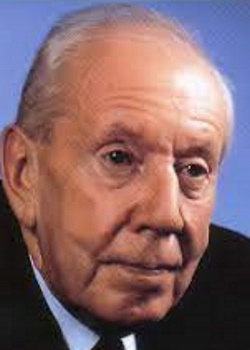 Composer and conductor Sir Malcolm Arnold died at his home in Norwich, England, on September 23, 2006, at the age of 84, following a short illness.
One of the most prolific and distinctive British composers of the twentieth century, Arnold wrote nine symphonies, numerous concertos and orchestral works, and more than 100 scores for films and documentaries. His music for David Lean’s The Bridge on the River Kwai won the Academy Award for Best Original Score in 1958.
Arnold was born in Northampton on October 21, 1921. Inspired by jazz and especially by hearing Louis Armstrong, he took up the trumpet and studied at the Royal College of Music with Ernest Hall while learning composition from Gordon Jacob. He joined the London Philharmonic Orchestra in 1940 and eventually became its principal trumpet before abandoning orchestral playing in 1948 to concentrate entirely on composition.
Film music quickly became an important part of Arnold’s career. His ability to write rapidly, his instinctive command of the orchestra and his gift for direct, memorable melody made him exceptionally well suited to the demands of British cinema. During the 1950s he scored such films as The Captain’s Paradise (1953), The Belles of St Trinian’s (1954), The Sea Shall Not Have Them (1954), The Night My Number Came Up (1955), 1984 (1956), Trapeze (1956) and A Hill in Korea (1956). Read more…

Shop at the Movie Music UK Store

Member of the


