THE WIND THAT SHAKES THE BARLEY – George Fenton
 Original Review by Jonathan Broxton
The winner of the Palme D’Or at the 2006 Cannes Film Festival, The Wind that Shakes the Barley is a film from left-wing director Ken Loach, about the Republican movement in early 20th century Ireland, prior to the separation of the country under British and Irish rule, which eventually led to the long-lasting bloody conflict known as ‘The Troubles’ between Catholics and Protestants. Cillian Murphy and Padraic Delaney star as brothers Damien and Teddy, whose lives are torn apart by the increasing sectarian violence, and the political struggles which taint their formerly peaceful lives. Read more…
PREMONITION – Klaus Badelt
 Original Review by Clark Douglas
Let’s just be upfront about things. “Premonition”, the latest Sandra Bullock vehicle, is a pretty ridiculous time-bending film, as almost every time-bending film is. Let’s face it, very few movies have been able to pull off a “time warp” theory convincingly… but some of them work in spite of it. I have been unusually kind to these movies in recent days. I gave Bullock’s previous time-bending romance “The Lake House” a kind review, and also tossed some generous comments in the direction of Tony Scott’s “Déjà Vu”. However, I will not show such mercy to “Premonition”, and as with all of those other films, my opinion has very little to do with the time warp element. Read more…
NOMAD – Carlo Siliotto
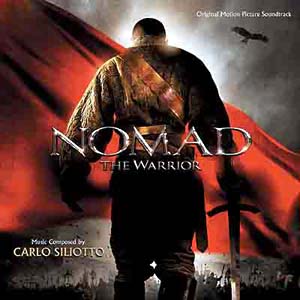 Original Review by Jonathan Broxton
When Italian composer Carlo Siliotto was nominated for a Golden Globe for his score for Nomad, the film music world let out a collective “huh?” The film had not yet played in cinemas in the United States; a large majority had not even HEARD of the film, let alone seen it or heard its score; and Carlo Siliotto is not a composer many people would list as being a regular awards contender. The utterly amazing thing, though, is that the Hollywood Foreign Press got it absolutely right. Nomad is stunningly good score, full of rich themes and ethnic mystery, which undoubtedly would have gone on to greater acclaim had its accompanying movie not been so comparatively obscure. Read more…
LA MÔME/LA VIE EN ROSE – Christopher Gunning
 Original Review by Jonathan Broxton
The legendary singer Edith Piaf, who died in 1963, remains a national icon of French musical culture to this day, whose razor-blade voice was unmistakable, and whose massive stage presence belied her diminutive stature. Director Olivier Dahan’s biography of Piaf, La Môme (released internationally as “La Vie en Rose”, after one of her most famous songs), stars Marion Cotillard in an extraordinary performance as the Little Sparrow, and features supporting turns from such respected Gallic actors as Sylvie Testud, Pascal Greggory, Emmanuelle Seigner and Gérard Depardieu. Read more…
DEAD SILENCE – Charlie Clouser
 Original Review by Jonathan Broxton
The popularity of the Saw and Hostel franchises, and the subsequent arrival of the so-called ‘torture porn’ sub-genre, has spawned a number of imitations, one of which is this film: Dead Silence. Directed by James Wan and starring Ryan Kwanten, Amber Valletta, Donnie Wahlberg and Bob Gunton, the film is a mean-spirited horror flick about a man who, having endured his wife’s ghastly and unexplained death, returns to his home town, to try to find the connection between a series of grisly murders and the old ghost tale of Mary Shaw and her vengeful ventriloquists dummies. Read more…
Herman Stein, 1915-2007
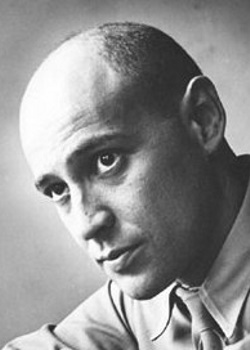 Composer and arranger Herman Stein died at his home in Los Angeles on March 15, 2007, at the age of 91, from congestive heart failure.
One of the largely unsung architects of Universal’s science-fiction and horror sound of the 1950s, Stein contributed music to nearly 200 films and shorts, including It Came from Outer Space, Creature from the Black Lagoon, This Island Earth, Tarantula and The Incredible Shrinking Man. Much of his work went uncredited under the studio system, but his music became inseparable from a generation of monsters, aliens and atomic-age nightmares.
Stein was born in Philadelphia on August 19, 1915. A child prodigy, he began playing piano at three and was performing publicly by six. By his teens he was arranging professionally, eventually working in radio and with musicians including Count Basie, Bob Crosby and Fred Waring. After military service during World War II he moved to Los Angeles in 1948 and studied composition with Mario Castelnuovo-Tedesco before entering the film industry.
Universal-International hired Stein as an arranger in 1950 and promoted him to staff composer the following year. He worked alongside musicians including Henry Mancini, Hans J. Salter, Frank Skinner and Irving Gertz, often dividing individual films between several composers. Studio music supervisor Joseph Gershenson generally received the principal screen credit, leaving Stein and his colleagues anonymous even when they had written substantial portions of a score. Read more…
THE ULTIMATE GIFT – Mark McKenzie
 Original Review by Jonathan Broxton
Based on the best-selling book by Jim Stovall, The Ultimate Gift is the story of man being forced to find out what life if all about. When his impossibly rich grandfather Red Stevens (James Garner) dies, selfish layabout Jason Stevens (Drew Fuller) thinks he’s in for the financial windfall of his life; however, Red ha other ideas. Before he can receive his inheritance, Jason must successfully complete twelve tasks – “gifts” – which Red devised in order for his ungrateful, distant grandson to experience the reality of life, each challenging Jason in an improbable way. Read more…
300 – Tyler Bates
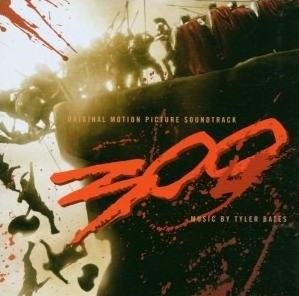 Original Review by Clark Douglas
You know, I’ve been rather critical lately of the way movies are advertised. “Bridge to Terabithia” and “Stranger than Fiction” are pretty notable examples. The first was billed as a “Narnia”-like fantasy, the second as a goofy concept comedy. If you’ve seen either of those films, you know just how ridiculous that is. But I must give credit to “300” for delivering pretty much exactly what it advertises: Half-naked men in boots and red capes shouting a lot and killing each other on various copper-toned computer-generated sets.
The film is based quite faithfully on the graphic novel by Frank Miller (“Sin City”), who based his story quite loosely on the famous historical tale of the 300 Spartans (I’m too lazy to re-tell it here, but it’s a lot like “The Alamo”). This story was originally put to film in the 1960’s under the title of “The 300 Spartans”, and indeed, it was Miller’s love for that film that inspired him to create this interpretation of the story. Read more…
ZODIAC – David Shire
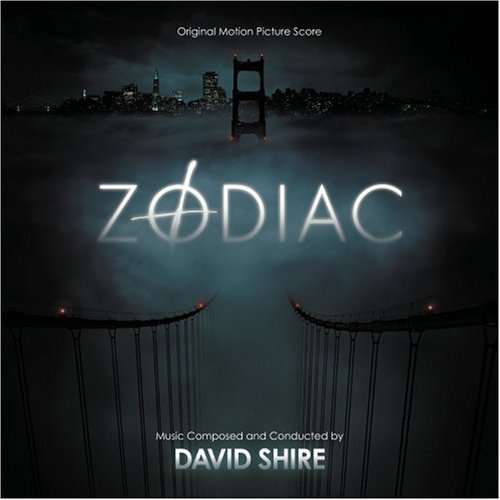 Original Review by Jonathan Broxton
The last time David Shire had a film in the top ten at the American Box Office was in July 1988, when director George Romero’s horror-thriller Monkey Shines became a moderate success. It’s been a long road back to the top for the composer of Saturday Night Fever, All the President’s Men, The Hindenburg, 2010 and Short Circuit, but here he is, nineteen years later, writing the score for David Fincher’s dark thriller, Zodiac.
San Francisco in the late 1960s was a scary place. A serial killer, known by members of the press as the Zodiac Killer, murdered five people between December 1968 and October 1969 in the most brutal of circumstances, but gained a great deal of wider notoriety after he sent a series letters and bizarre cryptograms to the offices of the San Francisco Examiner newspaper, taunting those who sought to stop his killing spree. Read more…
WILD HOGS – Teddy Castellucci
 Original Review by Jonathan Broxton
A silly, but warm-hearted and enjoyable comedy road movie starring Tim Allen, John Travolta, Martin Lawrence and William H. Macy, Wild Hogs follows the fortunes of four suburban husbands – each obsessed with motorbikes – who find themselves having a mid-life crisis. Eager to capture their youth, and yearning for life on the open road, the hapless quartet set out on a road trip from the Midwest to California – but get more than they bargained for when they fall afoul of the ruthless New Mexican biker gang the Del Fuegos, and their psychotic leader, Jack (Ray Liotta).
Teddy Castellucci, finally beginning to shake of the shackles of being Adam Sandler’s in-house composer, provides the film with an inoffensive country-themed score Read more…
BLACK SNAKE MOAN – Scott Bomar
 Original Review by Jonathan Broxton
An extremely peculiar film from Craig Brewer, the director of Hustle & Flow, Black Snake Moan is a deep-South drama covering topics as diverse as promiscuity, religion, redemption, love, and Blues music. Samuel L. Jackson plays farmer and part-time blues musician Lazarus, who wakes up one morning to find a young woman named Rae (Christina Ricci), badly beaten and unconscious, lying half-naked in his yard. A childhood victim of sexual abuse, Rae had developed into the town tramp, using her sex addiction as a replacement for the love she has never felt in her life. Lazarus, however, seeing a chance to redeem both himself and Rae, takes it upon himself to ‘cure’ Rae of her illness – and proceeds to chain her to the radiator of his remote farmhouse, forcing her to endure sexual cold turkey. And so begins a truly unusual friendship between the pair – and, as always happens in these things, they learn more about life from each other than they ever expected. Read more…
Academy Award Winners 2006
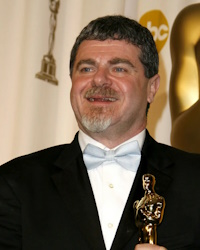 The Academy of Motion Picture Arts and Sciences (AMPAS) have announced the winners of the 79th Academy Awards, honoring the best in film in 2006.
In the Best Original Score category, Argentine composer Gustavo Santaolalla won the Academy Award for his score for Alejandro González Iñárritu’s Babel. It was Santaolalla’s second consecutive Oscar win in the category. In his acceptance speech Santaolalla said:
Thank you so much, members of the Academy. In our soul rests, I think, our own true identity beyond languages, countries, races and religions. I’m so proud to work in “Babel,” a film that helped us understand better who we are and why and what are we here for. A few thanks: I want to thank John Lesher, Brad Grey, Jon Kilik, Steve Golin, Robert Messinger, Lynn Fainchtein, Anibal Kerpel, my wife Alejandra, my kids Anna, Luna, Don Juan, my mother. The man, my mentor, director and friend, mi amigo, Alejandro González Iñárritu. And last but not least, I want to dedicate this to my dad, para vos viejo, para Argentina, and once again, para todos Latinos. Gracias. Thank you.
The other nominees for Best Original Score were Thomas Newman for The Good German, Philip Glass for Notes on a Scandal, Javier Navarrete for Pan’s Labyrinth, and Alexandre Desplat for The Queen.
In the Best Original Song category, American singer-songwriter Melissa Etheridge won the Academy Award for “I Need to Wake Up” from Davis Guggenheim’s environmentally-themed documentary An Inconvenient Truth. The victory was significant because it marked the first time a song written for a documentary had won the Academy Award for Best Original Song.
The other nominees for Best Original Song were Henry Krieger, Scott Cutler and Anne Preven for “Listen” from Dreamgirls; Henry Krieger and Siedah Garrett for “Love You I Do” from Dreamgirls; Randy Newman for “Our Town” from Cars; and Henry Krieger and Willie Reale for “Patience” from Dreamgirls.
THE NUMBER 23 – Harry Gregson-Williams
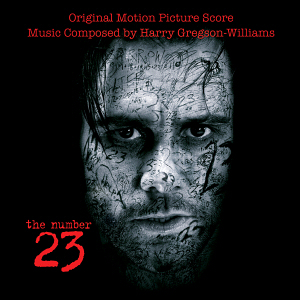 Original Review by Jonathan Broxton
I’m always excited when Jim Carrey plays is straight, having witnessed his superb performances in films like The Truman Show, Man on the Moon, and The Majestic; however, his run of dramatic successes had to end eventually – and end it did, with director Joel Schumacher’s paranoiac thriller The Number 23. Carrey plays oridinary family man Walter Sparrow, a dog catcher for the Department of Animal Control, with a loving wife Agatha (Virginia Madsen), and a teenage. However, after Agatha buys an odd novel with the central premise concerning the number 23 as a birthday gift for Walter, his life quickly unravels: he becomes obsessed with the story, believing the mystery about the number 23 to be true, and finding many coincidences and parallels between the book and his own life. Read more…
THE ASTRONAUT FARMER – Stuart Matthewman
 Original Review by Clark Douglas
The opening image of “The Astronaut Farmer” presents a challenge to the audience… almost a dare. It’s an image of a man in a spacesuit riding a horse across the plains, a bizarre thing that will either inspire curiosity, derision, or laughter from an audience. It’s the film’s way of saying, “get on or get off right now, because you’re in for something pretty unbelievable.” Some will (and have) labeled the film as a ridiculous piece of nonsense, which is understandable. It’s one of those stories that can “only happen in the movies”. Twenty years ago, that might have been a complaint on my end, but these days… I don’t think that’s so bad. Read more…
AMAZING GRACE – David Arnold
 Original Review by Jonathan Broxton
One of the least worthy aspects of the British Empire was their involvement in and implicit support of the international slave trade in the 1700s. For over one hundred years, thousands upon thousands of west African tribesmen were forcibly removed from their homes and shipped overseas to work as slaves, on sugar plantations in the Caribbean, and in the cotton fields of what would eventually become the United States. This heinous activity, in Britain at least, was eventually abolished due to the tireless activity of one man: William Wilberforce. Amazing Grace, directed by Michael Apted and starring Ioan Gruffudd, tells the life story of Wilberforce: his first hesitant steps into British government as the young member of Parliament from Yorkshire in 1780, his friendship with future Prime Minister William Pitt the Younger (Benedict Cumberbatch), his conversion to evangelical Christianity in 1785, his subsequent encounters with Anglican clergyman John Newton (Albert Finney) – the writer of the eponymous hymn Amazing Grace – and his eventual immersion into and leadership of the abolition movement which eventually led to the slave trade being successfully abolished in 1807. In addition to the lead actors, the film boasts a starry supporting cast including Romola Garai, Rufus Sewell, Michael Gambon, Ciaran Hinds, and Senegalese singer/songwriter Youssou N’Dour as Oloudaqh Equiano, the slave who first inspired Wilberforce to act. Read more…

Shop at the Movie Music UK Store

Member of the


