Under-the-Radar Round Up 2013, Part 4
 Original Reviews by Jonathan Broxton
I’m pleased to present the fourth installment in my on-going series of articles looking at the best under-the-radar scores from around the world.
This article, the fourth of 2013, explores seven outstanding scores from recent months, including a raucous horror-comedy about a pair of bumbling bank robbers who run afoul of a coven of cannibalistic witches in the Basque country, an ingenious thriller about a concert pianist who discovers that a sniper will kill him if he plays a wrong note during his comeback performance, an epic historical television series chronicling the life and reign of Queen Isabella I of Castile, a bittersweet drama about a soldier and the mule he adopts during the Spanish Civil War, a sweeping television drama about a Madrid seamstress whose life is transformed by war, espionage, and political intrigue, an apocalyptic science-fiction thriller in which a mysterious epidemic leaves humanity terrified of venturing outdoors, and a boisterous family adventure about mischievous twin brothers who form a secret gang at summer camp and embark on a hunt for hidden treasure. Read more…
IFMCA Award Nominations 2013
 INTERNATIONAL FILM MUSIC CRITICS AWARD NOMINATIONS ANNOUNCED; POLISH COMPOSER ABEL KORZENIOWSKI LEADS FIELD
The International Film Music Critics Association (IFMCA) announces its list of nominees for excellence in musical scoring in 2013. In this 10th Anniversary year of the IFMCA’s creation, the most nominated composer is Abel Korzeniowski, who received six nominations: Score of the Year, Best Drama Score and Film Music Composition of the Year for his work on director Carlo Carlei’s new screen version of the classic Shakespeare romance “Romeo and Juliet”; Best Fantasy/Sci-Fi/Horror Score and Film Music Composition of the Year for his work on director Randy Moore’s unusual satirical fantasy-horror set in a nightmarish Disney theme park, “Escape From Tomorrow”; and a personal nomination as Composer of the Year. Kraków, Poland-born Korzeniowski has previously been nominated for three IFMCA Awards, winning the award for Best Drama Score for “A Single Man” in 2009. Read more…
Under-the-Radar Round Up 2013, Part 3
Original Reviews by Jonathan Broxton
I’m pleased to present the third installment in my on-going series of articles looking at the best under-the-radar scores from around the world.
This article, the third of 2013, explores eight outstanding scores from recent months, including a Polish science fiction comedy about a young couple who discover a time-travelling elevator and find themselves face-to-face with Adolf Hitler, a biographical drama about celebrated Polish poet and wartime resistance fighter Krzysztof Kamil Baczyński, a hugely popular Polish television series following a group of friends struggling to survive in Nazi-occupied Warsaw, a Russian biographical drama telling the story of pioneering cosmonaut Yuri Gagarin and his historic journey into space, a nature documentary about brown bears living in the Carpathian Mountains, a Polish family drama about two teenage girls who discover that they are twin sisters separated at birth, an epic historical drama about a Polish family deported to Siberia during World War II, and Roman Polanski’s French-Polish adaptation of Venus in Fur, an erotic comedy-drama about the shifting balance of power between a theater director and an actress during an unusual audition.
John Cacavas, 1930-2014
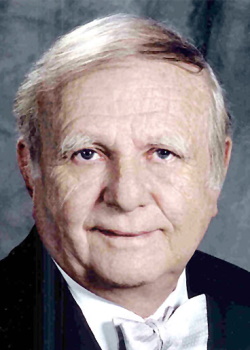 Composer, arranger and conductor John Cacavas died at his home in Beverly Hills, California, on January 28, 2014, at the age of 83, following a period of declining health.
A prolific figure in American film and television music, Cacavas scored hundreds of television episodes, numerous television movies and a smaller but memorable group of feature films, including Horror Express, Airport 1975 and Airport ’77. He remains especially associated with Kojak, for which he composed music for more than 100 episodes.
Cacavas was born in Aberdeen, South Dakota, on August 13, 1930, into a Greek-American family. He became interested in music as a teenager, taught himself saxophone and was leading his own dance band by the age of 14. After studying at Northern State College, he transferred to Northwestern University, where he studied composition and theory. Military service subsequently took him to Washington, D.C., where he worked as an arranger for the United States Army Band.
After leaving the Army, Cacavas moved to New York and worked as an arranger, songwriter and conductor, eventually joining CBS. During this period he collaborated frequently with broadcaster Charles Osgood. Among their projects was Senator Everett Dirksen’s spoken-word recording Gallant Men, which became a major success and won the Grammy Award for Best Spoken Word Recording in 1967. Read more…
Riz Ortolani, 1926-2014
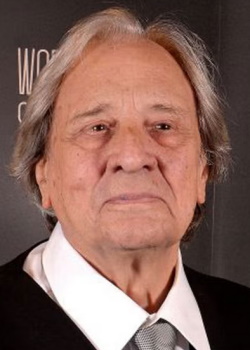 Composer, arranger and conductor Riz Ortolani died in Rome on January 23, 2014, at the age of 87, following complications from bronchitis.
One of the most prolific figures in Italian film music, Ortolani scored more than 200 films and television productions during a career spanning five decades, moving effortlessly between documentaries, romantic dramas, spaghetti westerns, war films, thrillers, horror and exploitation cinema. His international breakthrough came with Mondo Cane, whose theme “More” became a worldwide standard.
Riziero Ortolani was born in Pesaro, Italy, on March 25, 1926. Encouraged by his musically inclined father, he studied at the Conservatorio Gioachino Rossini in Pesaro and subsequently worked as an orchestral musician, arranger and bandleader. He joined Italian state broadcaster RAI and during the 1950s led his own jazz orchestra, which also performed in the United States. His background in jazz, popular music and classical orchestration would become central to the remarkable stylistic versatility of his film scores.
Ortolani became a full-time film composer with the controversial documentary Mondo Cane (1962), directed by Gualtiero Jacopetti, Paolo Cavara and Franco Prosperi. Working with Nino Oliviero, he wrote a strikingly lush and melodic score whose beauty often provided an ironic contrast to the film’s deliberately shocking imagery. Its central melody became the song “More,” with English lyrics by Norman Newell, and quickly escaped the confines of the film. It was recorded by artists including Frank Sinatra, Andy Williams, Shirley Bassey and The Supremes, won a Grammy Award for Best Instrumental Theme, and received an Academy Award nomination for Best Original Song.
The success of Mondo Cane immediately opened international doors. Ortolani scored films including The 7th Dawn (1964), Old Shatterhand (1964) and Anthony Asquith’s star-studded The Yellow Rolls-Royce (1964). The latter produced another major song, “Forget Domani,” which won the Golden Globe for Best Original Song, while Ortolani’s score received a separate Golden Globe nomination. He subsequently worked on The Glory Guys (1965), The Spy with a Cold Nose (1966), Vittorio De Sica’s Woman Times Seven (1967), The Chastity Belt (1967), Anzio (1968) and Buona Sera, Mrs. Campbell (1968). Read more…
Movie Music UK Awards 2013
 Film music went from strength to strength again in 2013. In terms of it’s world wide excellence, the breadth of outstanding music coming from all corners of the globe is astonishing – some of the best scores of year emerged not only from mainstream Hollywood productions, but also from Japan, Poland, the Czech Republic, Mexico and Spain, Germany and even Russia. As such, narrowing down my choices for the best of the year has been a very difficult task – one of the most difficult in recent memory. However, I’ve finally been able to put everything into some sort of logical order – so, for your reading and listening pleasure, I present the 2013 Movie Music UK Awards! Read more…
Under-the-Radar Round Up 2013, Part 2
Original Reviews by Jonathan Broxton
I’m pleased to present the second installment in my on-going series of articles looking at the best under-the-radar scores from around the world.
This article, the second of 2013, explores five outstanding scores from recent months, including a provocative French drama about a teenage girl exploring her sexuality through a secret life as a prostitute, a psychological drama about a French psychoanalyst treating a traumatized Native American veteran in the aftermath of World War II, an animated family film about a six-year-old boy who invents elaborate stories about his absent mother’s adventures around the world, a satirical political comedy about the chaotic inner workings of the French Foreign Ministry, and an international television thriller about an ornithologist whose attempt to follow the migration of storks from Europe to Africa draws him into a deadly conspiracy.
Academy Award Nominations 2013
 The Academy of Motion Picture Arts and Sciences (AMPAS) have announced the nominations for the 86th Academy Awards, honoring the best in film in 2013.
In the Best Original Score category, the nominees are:
- WILLIAM BUTLER and OWEN PALLETT for Her
- ALEXANDRE DESPLAT for Philomena
- THOMAS NEWMAN for Saving Mr. Banks
- STEVEN PRICE for Gravity
- JOHN WILLIAMS for The Book Thief
These are the first Oscar nominations for Butler, Pallett and Price, although Price was nominated for a Golden Globe earlier this year for Gravity, and Butler and Pallett have been nominated for 7 Grammy awards for their work as members of the rock group Arcade Fire. This is the 6th Oscar nomination for Desplat, the 12th Oscar nomination for Newman, and the 49th Oscar nomination for Williams, who previously won in 1971 for Fiddler on the Roof, 1975 for Jaws, 1977 for Star Wars, 1982 for E.T. The Extra-Terrestrial, and 1993 for Schindler’s List.
In the Best Original Song category, the nominees are:
- KRISTEN ANDERSON-LOPEZ and ROBERT LOPEZ for “Let It Go” from Frozen
- PAUL HEWSON (BONO), DAVID EVANS (THE EDGE), ADAM CLAYTON and LARRY MULLEN Jr. for “Ordinary Love” from Mandela: Long Walk to Freedom
- KAREN ORZOLEK and SPIKE JONZE for “Moon Song” from Her
- PHARRELL WILLIAMS for “Happy” from Despicable Me 2
A fifth nomination, “Alone Yet Not Alone” from the film Alone Yet Not Alone by Bruce Broughton and Dennis Spiegel, was issued, but later rescinded when it was discovered that Broughton had breached Academy campaign rules
The winners of the 86th Academy Awards will be announced on March 2, 2014.
Golden Globe Winners 2013
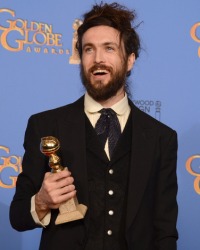 The Hollywood Foreign Press Association (HFPA) have announced the winners of the 71st Golden Globe Awards, honoring the best in film and American television of 2013.
In the Best Original Score category composer Alex Ebert, from the band Edward Sharpe and the Magnetic Zeroes, won the award for his score for All is Lost. In his acceptance speech, after a brief and humorous aside with award presenter Sean “Puffy” Combs, Ebert said:
“Thank you, and thank you guys here. JC [Chandor], thank you, for having the faith to see into what I had done before and see that you thought that I could do this. You know, even the most deft pen is a clumsy tool, and yet we still try for magic. Thanks for letting me try, all over your movie. Thanks to the Hollywood Foreign Press. I cannot believe this, this is crazy. Thanks to Brian Ling, and Linnie, and I’ll wrap it up. That’s it. Thanks, thanks to everybody, thank you, thank you, thank you!”
The other nominees were Alex Heffes for Mandela: Long Walk to Freedom, Steven Price for Gravity, John Williams for The Book Thief, and Hans Zimmer for 12 Years a Slave.
In the Best Original Song category, the winners were Paul Hewson (Bono), David Evans (The Edge), Adam Clayton, Larry Mullen Jr. of the Irish rock band U2, and Brian Burton (Danger Mouse), for the song “Ordinary Love” from Mandela: Long Walk to Freedom.
The other nominees were Kristen Anderson-Lopez and Robert Lopez for “Let It Go” from Frozen; Chris Martin, Jonny Buckland, Guy Berryman and Will Champion from Coldplay for “Atlas” from The Hunger Games: Catching Fire; Ed Rush, George Cromarty, T-Bone Burnett, Justin Timberlake, Joel Coen and Ethan Coen for “Please Mr. Kennedy” from Inside Llewyn Davis; and Taylor Swift and Jack Antonoff for “Sweeter Than Fiction” from One Chance.
BAFTA Nominations 2013
 The British Academy of Film and Television Arts (BAFTA) has announced the nominations for the 67th British Academy Film Awards, honoring the best in film in 2013.
In the Best Original Music category, which is named in memory of the film director Anthony Asquith, the nominees are:
- HENRY JACKMAN for Captain Phillips
- THOMAS NEWMAN for Saving Mr. Banks
- STEVEN PRICE for Gravity
- JOHN WILLIAMS for The Book Thief
- HANS ZIMMER for 12 Years a Slave
These are the first BAFTA nominations for Jackman and Price. It is the 4th BAFTA nomination for Newman, who won the award in 2000 for American Beauty and again in 2013 for Skyfall. It is the 15th nomination for Williams, who has won on seven previous occasions: for Jaws in 1975, Star Wars in 1977, The Empire Strikes Back in 1980, E.T. The Extra-Terrestrial in 1983, Empire of the Sun in 1987, Schindler’s List in 1993, and Memoirs of a Geisha in 2006. It is the 6th BAFTA film nomination for Zimmer.
The winners of the 67th BAFTA Awards will be announced on February 16, 2014.
Under-the-Radar Round Up 2013, Part 1
Original Reviews by Jonathan Broxton
I’m pleased to present the first installment in what will become an on-going series of articles looking at some of the best under-the-radar scores from around the world – music from films and television projects which, for one reason or another, may not receive the international attention they deserve.
This first article looks at eleven scores from 2013, primarily drawn from the German and wider European film music scene. They include an epic German historical drama about dreams of emigration to America, a Czech Holocaust romance, a bittersweet comedy-drama about a young woman living with cancer, a German western about settlers in 19th-century America, a lyrical Turkish period drama about two poets in love, an intellectual journey into the dark history of Portugal’s Salazar dictatorship, a spectacular nature documentary exploring the North Sea, a family drama about the bond between a rebellious teenager and a horse, an orchestral fantasy adventure involving time travel, an ambitious World War II television drama following five young German friends, and an intimate documentary examining one family’s experience with Alzheimer’s disease. The composers featured include Michael Riessler, Atli Örvarsson, Johan Hoogewijs, Karim Sebastian Elias, Rahman Altin, Annette Focks, Oliver Heuss, Philipp F. Kölmel, Fabian Römer, and Jessica de Rooij.
GUNSHI KANBEE – Yugo Kanno
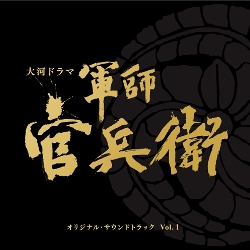 Original Review by Jonathan Broxton
The annual NHK Taiga drama is a year-long television series broadcast on Japan’s main television network, NHK, and has been a staple of Japanese television since the first one was broadcast in 1963. It is widely considered to be one of the most prestigious television events of the Japanese calendar, attracting the dream of Japan’s dramatic talent, actors, writers, directors and composers – recent previous Taiga dramas have included Clouds on the Slope scored by Joe Hisaishi, Yae No Sakura scored by Ryuichi Sakamoto, and Ryōmaden scored by Naoki Sato. The 2014 NHK Taiga drama is Gunshi Kanbee, an epic story of a young man finding his way through the war-like and feudal Japanese society of the 16th century. Directed by Kenji Yanaka, it stars Junichi Okada in the title role, and has an original score by 37-year-old Japanese composer Yugo Kanno. Read more…
WYATT EARP – James Newton Howard
 MOVIE MUSIC UK CLASSICS
Original Review by Craig Lysy
Kevin Costner’s original vision for a biopic on Wyatt Earp was a six-part TV mini series. Director Lawrence Kasdan, who had previously directed Costner in Silverado, convinced him that his story was best presented on the big screen. Costner trusted Kasdan and so gave him the reigns to bring forth his vision. Kasdan rewrote much of the Dan Gordon’s original screenplay and fashioned it into an epic American journey of a complex man, an anti-hero whose love of family and kin defined his life and kept him true as he struggled to find his destiny. Set in the years following the Civil War through the Alaskan gold rush, we see Earp in many guises; as a family man, outlaw, U.S. Marshall and finally a prospector. Western folklore reveals Earp to be one of the most iconic men of the old American West, a man who fully embodied its fierce independence and nobility, but also its cruelty, violence and brutality. For the film Kasdan assembled a stellar cast, which included Costner in the title role, Dennis Quaid (Doc Holliday) and Gene Hackman (Nicholas Earp). Regretfully an earlier release of “Tombstone”, a very similar film, diminished “Wyatt Earp’s” impact. The overly long and plodding pace of the film failed to resonate with the public, which viewed it as a bloated “copy cat”, that resulted in both a much-derided critical and commercial failure. Read more…
Wojciech Kilar, 1932-2013
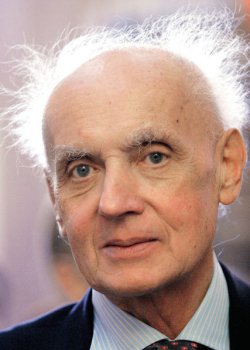 Composer Wojciech Kilar died on December 29, 2013 at his home in Katowice, Poland, after a battle with cancer. He was 81.
Kilar was born in Lvov, Ukraine, when it was still part of Poland, in July 1932, but moved to Katowice in Silesia in 1948 with his father, a gynecologist, and his mother, an actress. Kilar studied at the State Higher School of Music in Katowice under composer and pianist Władysława Markiewiczówna, at the State Higher School of Music in Kraków under composer and pianist Bolesław Woytowicz, and in Paris with the legendary Nadia Boulanger in the late 1950s. Upon his return to Poland, Kilar and fellow composers Henryk Górecki and Krzysztof Penderecki led an avant-garde music movement in the 1960s, during which time he wrote several acclaimed classical works.
Kilar scored his first film in 1959, and went gone on to write music from some of Poland’s most acclaimed directors, including Krzysztof Kieślowski, Krzysztof Zanussi, Kazimierz Kutz and Andrzej Wajda. He worked on over 100 titles in his home country, including internationally recognized titles such as Bilans Kwartalny (1975), Ziemia Obiecana (1975), Rok Spokojnego Słońca (1984), Życie Za Życie (1991) and Pan Tadeusz (1999), plus several others in France and across other parts of Europe. Read more…
12 YEARS A SLAVE – Hans Zimmer
 Original Review by Jonathan Broxton
One of the most important and acclaimed films of 2013, 12 Years a Slave tells the true story of Solomon Northup, a free black man from upstate New York in the pre-Civil War United States, who is tricked, abducted and sold into slavery. Arriving in the South, the story chronicles the next twelve years of his life as he faces cruelty after cruelty, indignity after indignity, relentlessly barbaric treatment at the hands of a malevolent slave owner, and his struggle to maintain some semblance of dignity and humanity as he strives to find a way back home to his family. The film is directed by British filmmaker Steve McQueen, stars Chiwetel Ejiofor as Northup, and features an outstanding supporting cast including Michael Fassbender, Benedict Cumberbatch, Sarah Paulson, Paul Giamatti, Paul Dano, Alfre Woodard, Brad Pitt, and newcomer Lupita Nyong’o, who is destined for an Academy Award nomination for her soulful performance as Solomon’s fellow slave, Patsey. A brutal, difficult, and at times excruciatingly raw film, 12 Years a Slave is clearly one of the year’s best films, in that it examines in unflinching detail one of the most heinous periods in American history, and features a powerhouse central performance from Ejiofor as the man who refuses to be beaten down by the wrongs done to him. Read more…

Shop at the Movie Music UK Store

Member of the


