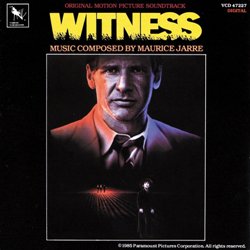
WITNESS – Maurice Jarre
 THROWBACK THIRTY
Original Review by Jonathan Broxton
Witness is a thriller set in Pennsylvania’s Amish community. The film stars Harrison Ford as John Book, an honest cop, who is forced to travel to rural Pennsylvania to protect a young Amish boy named Samuel, played by Lukas Haas, who unintentionally witnesses a murder while visiting the big city with his mother Rachel, played by Kelly McGillis. To keep his witness safe, Book tries to maintain a low profile within the community, which shuns modern conveniences and technology, but unexpectedly begins to develop romantic feelings for Rachel, causing friction among the elders, who view Book as an interloper and outsider. Worse still, the murder suspects have discovered the whereabouts of the one eyewitness to their crime, and are coming after the young boy. The film was directed by Peter Weir, and was one of the major cinematic successes of 1985, receiving critical acclaim and eight Oscar nominations, including nods for Best Picture, Best Actor for Ford, and Best Score for the film’s composer, Maurice Jarre. Read more…
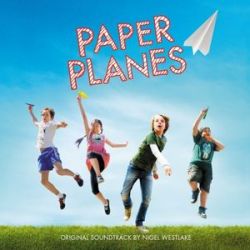
PAPER PLANES – Nigel Westlake
 Original Review by Jonathan Broxton
Paper Planes is an Australian family film, directed by Robert Connolly, about a young Australian boy named Dylan, whose passion for flight inspires him to compete in the World Paper Plane Championships in Japan, while simultaneously re-connecting with his father Jack, who is severely depressed following the death of his wife – Dylan’s mother – in a car accident. The film stars Ed Oxenbould as Dylan, Avatar’s Sam Worthington as Jack, has a supporting cast that includes David Wenham and Terry Norris, and has a score by one of Australia’s leading film composers, Nigel Westlake. Read more…
BAFTA Winners 2014
 The British Academy of Film and Television Arts (BAFTA) have announced the winners of the 68th British Academy Film Awards, honoring the best in film in 2014.
In the Best Original Score category composer Alexandre Desplat won the award for his score for director Wes Anderson’s critically acclaimed quirky comedy The Grand Budapest Hotel. In his acceptance speech, Desplat said:
“Thank you. Merci beaucoup, I am very moved and honored to be here. It all goes back to Wes [Anderson]. Wes is unique. His world looks like nobody else’s. He is not here tonight but I am sure he is watching TV. I am not sure actually. But we will send him a video. There are many people involved, of course, the great musicians, Mark Graham, my agent Laura Engel, but I would like to share it with the best musician I have ever met, Solrey [Lemonnier], this is for you.”
The other nominees were Jóhann Jóhannsson for The Theory of Everything, Mica Levi for Under the Skin, Antonio Sanchez for Birdman, and Hans Zimmer for Interstellar.
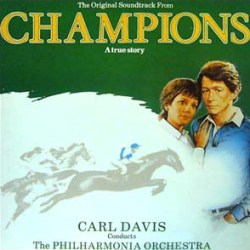
CHAMPIONS – Carl Davis
 THROWBACK THIRTY
Original Review by Jonathan Broxton
When I was a kid, Grand National day was one of my favorite days of the British sporting calendar. I had, and continue to have, a very personal connection with it, as it was something I shared with my late grandfather, who had a passion for the sport of kings, and my childhood memories of spending those Saturdays with him in the 1980s are some of my fondest. For those who don’t know what it is – which is probably every American reading this – the Grand National is a steeplechase horse race, in which 40 brave and gallant horses and their equally brave and gallant jockeys test themselves by negotiating 30 daunting fences over two 2-mile circuits of the challenging Aintree racecourse in Liverpool. The race has been run every year since 1839, and has grown to become a major television event in the UK, watched by millions across the country. The winning horses, winning jockeys, and the race’s controversies go down in history and become part of the nation’s sporting lexicon – speak to pretty much any Englishman of my generation, and he will know what you’re talking about if you mention Devon Loch or Red Rum, Ginger McCain or Jenny Pitman. However, by far the most famous Grand National in terms of human and equine drama was the race run in 1981. Read more…
IFMCA Award Nominations 2014
 INTERNATIONAL FILM MUSIC CRITICS ASSOCIATION AWARD NOMINATIONS ANNOUNCED; COMPOSERS JAMES NEWTON HOWARD AND ALEXANDRE DESPLAT DOMINATE
The International Film Music Critics Association (IFMCA) announces its list of nominees for excellence in musical scoring in 2014, for the 11th annual IFMCA Awards. The most nominated composers are American James Newton Howard and Frenchman Alexandre Desplat.
Howard received seven nominations, including nods for Score of the Year, Composer of the Year, Best Action/Adventure/Thriller score, and Best Fantasy/Sci-Fi/Horror score, all of which were split between his two main works of 2014: the action adventure sequel “The Hunger Games: Mockingjay, Part I,” and Disney’s reimagining of the Sleeping Beauty story, “Maleficent”. Howard also received an unprecedented three nominations in the Film Music Composition of the Year category, including one for the song “The Hanging Tree,” which he co-wrote with Jeremiah Fraites and Wesley Schultz of The Lumineers, and Hunger Games book series author Suzanne Collins, and which was performed by the film’s lead actress, Jennifer Lawrence. Howard has previously been nominated for a total of 23 IFMCA Awards, winning six of them, including Score of the Year in 2006 for “Lady in the Water”. Read more…
VICTOR YOUNG – Fathers of Film Music, Part 8
 Article by Craig Lysy
Born: 8 August 1899, Chicago, Illinois
Died: 10 November 1956
Victor Young’s early life was not an ordinary one by any measure. He was born of Jewish heritage into a family with musical talent; his father William being a successful tenor in Joseph Sheehan’s touring Opera Company. Sadly, following the untimely death of his mother in 1909, Young and his sister Helen were abandoned by their father. Undeterred, he and his sister embarked on a truly remarkable journey that would take them back to their family’s ancestral homeland of Poland, then a dominion of the Russian Empire, where their grandparents lived. Young’s grandparents were ecstatic at their return and lovingly raised them as their own. Victor’s musical gift was recognized quickly and his grandfather provided him with a violin, which he began playing in earnest at the age of ten. Young quickly mastered the instrument by the age of thirteen and gained acclaim as a prodigy. His grandfather fostered his education, enrolling him in the prestigious Warsaw Imperial Conservatory where he would study the violin under Isador Lotto, achieving the Diploma of Merit. Additional studies in Paris included study of the piano under the tutelage of Isidor Philipp. Read more…
Under-the-Radar Round Up 2014, Part 5
 Original Reviews by Jonathan Broxton
My fifth article in my Review of the Year 2014 looks at the Best Scores from Scandinavia. Scandinavian movies and scores get pretty short shrift from the majority of mainstream audiences, and that needs to change, because the level of talent and craftsmanship at work in those countries is superb. While composers like Johan Söderqvist from Sweden, Jóhann Jóhannsson from Iceland, and Tuomas Kantelinen and Panu Aaltio from Finland have developed an international profile over the past few years, there are still a number of domestic composers doing excellent work within their own industry; as such, this year’s choices from the frozen north contain music by both established names and promising newcomers, and include a Danish TV mini-series, a Swedish comedy, and three scores from Norway: a children’s adventure, a historical thriller, and a wonderful classical documentary.
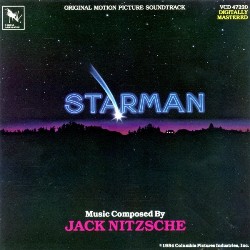
STARMAN – Jack Nitzsche
 THROWBACK THIRTY
Original Review by Jonathan Broxton
Starman is a science fiction romance movie, directed by John Carpenter at the height of his studio powers, from a screenplay by Bruce A. Evans and Raynold Gideon, who would later collaborate on the classic coming-of-age drama Stand By Me. The film stars Jeff Bridges as an alien who, in response to the message of peace from the Voyager II probe, is sent to Earth on a scouting mission prior to a planned ‘first contact’ meeting between humanity and the rest of his species. Unfortunately, the alien’s craft is shot down by the military and it crash lands in rural Wisconsin, next to a farm owned by the recently-widowed Jenny Hayden (Karen Allen). The alien takes the form of Jenny’s late husband, and convinces her to drive him to Arizona to rendezvous with his mothership; on the journey, Jenny and the alien bond, initially due to his physical resemblance to her husband, but later due to the alien’s child-like curiosity regarding Earth, and his genuine goodness and compassion. Unfortunately, the US government – personified by NSA colonel Fox (Richard Jaeckel) and a compassionate scientist named Shermin (Charles Martin Smith) – has found out about the alien, and wants to capture him for their own ends. Read more…
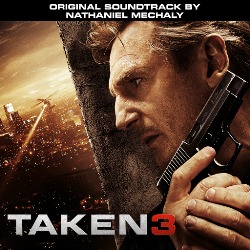
TAKEN 3 – Nathaniel Méchaly
 Original Review by Jonathan Broxton
Taken 3 (styled ‘Tak3n’) is the third and, likely, final installment of writer/producer Luc Besson’s series of modern revenge action-thrillers starring Liam Neeson in what is quickly becoming one of his iconic screen roles. After taking on Albanian human traffickers in Paris in the first film, and virtually the entire Albanian mafia in Istanbul in the second, Neeson’s character Bryan Mills is back home in Los Angeles for the third film, still doting on his daughter Kim (Maggie Grace), and hesitantly re-kindling his relationship with his ex-wife Lenore (Famke Janssen), who is becoming increasingly estranged from her current husband Stuart (Dougray Scott). Bryan’s world falls apart when he discovers Lenore’s dead body in his own apartment, and soon he is running for his life, accused of a murder he did not commit, pursued by a dogged LAPD detective (Forest Whitaker), and trying to find the real killers, who appear to have something to do with a vicious band of Russian gangsters terrorizing the city. The film is directed by French action specialist Olivier Megaton, and has a score by the similarly Gallic Nathaniel Méchaly, who has scored all three Taken films to date. Read more…
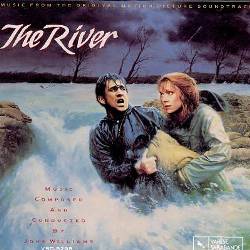
THE RIVER – John Williams
 THROWBACK THIRTY
Original Review by Jonathan Broxton
The River is a contemporary drama film directed by Mark Rydell, starring Mel Gibson and Sissy Spacek as Tom and Mae Garvey, a married couple trying to make ends meet on their farm in rural Tennessee. Over the course of several years, Tom and his family battle desperately to save and hold on to their home, despite the threats they face when a bank threatens to repossess their farm, when severe storms threaten to make the nearby river burst its banks and ruin their crops, and when a ruthless hydroelectric developer (played by Scott Glenn) threatens to cut off their power supply for his own ends. The film was a moderate critical success when it opened in cinemas in December 1984, and picked up four Academy Award nominations, with nods for Spacek as Best Actress, cinematography, sound, and John Williams’s folksy original score. Williams wrote The River at a time when he was still regularly working with multiple directors, and this was the last of his five collaborations with director Rydell, which previously encompassed similarly Americana-heavy films such as The Reivers, The Cowboys, The Long Goodbye, and Cinderella Liberty. Read more…
MR. TURNER – Gary Yershon
 Original Review by Jonathan Broxton
Joseph Mallord William “JMW” Turner is one of the greatest and most respected British painters, a mercurial figure in British society in the mid-1800s who hobnobbed with royalty, frequented brothels, and famously had himself strapped to the mast of a ship so he could accurately paint an approaching storm. Some of his works, notably masterpieces such as ‘Modern Rome-Campo Vaccino’, ‘Dutch Boats in a Gale’, ‘Ivy Bridge’, and ‘Calais Pier’, elevated the art of landscape painting to new heights, and his legacy lives on today through the Turner Prize, the most prestigious British art award, which is granted annually by the Tate Gallery in London. Director Mike Leigh’s film Mr. Turner is a fairly straightforward biopic of Turner’s life, starring Timothy Spall in the title role, and featuring supporting performances from Dorothy Atkinson, Marion Bailey, Paul Jesson and Lesley Manville. Read more…
Movie Music UK Awards 2014
 It’s been an outstanding year for film music in 2014. I managed to get experience over 350 scores this year, both by watching movies and listening to their soundtracks independently,and I strongly feel that the soundtrack industry is thriving. Looking at the big picture, on a global scale, outstanding music is coming from all corners of the globe: this year, I have nominated works from China, Italy, Japan, Mexico, Norway, Poland, South Korea, Spain, and Venezuela, as well the USA and the UK. If you look outside the mainstream, you can still find a lot of outstanding work being written for under-the-radar projects that demand our attention.
As such, narrowing down my choices for the best of the year has been a very difficult task – one of the most difficult in recent memory. However, I’ve finally been able to put everything into some sort of logical order – so, for your reading and listening pleasure, I present the 2014 Movie Music UK Awards!
Academy Award Nominations 2014
 The Academy of Motion Picture Arts and Sciences (AMPAS) have announced the nominations for the 87th Academy Awards, honoring the best in film in 2014.
In the Best Original Score category, the nominees are:
- ALEXANDRE DESPLAT for The Grand Budapest Hotel
- ALEXANDRE DESPLAT for The Imitation Game
- JÓHANN JÓHANNSSON for The Theory of Everything
- GARY YERSHON for Mr. Turner
- HANS ZIMMER for Interstellar
These are the first Oscar nominations for Jóhannsson and Yershon, although Jóhannsson won the Golden Globe earlier this year for The Theory of Everything. These are the 7th and 8th Oscar nominations for Desplat, and the 10th Oscar nomination for Zimmer, who previously won in 1994 for The Lion King.
In the Best Original Song category, the nominees are:
- GREGG ALEXANDER and DANIELLE BRISEBOIS for “Lost Stars” from Begin Again
- GLEN CAMPBELL and JULIAN RAYMOND for “I’m Not Gonna Miss You” from Glen Campbell… I’ll Be Me
- JOHN LEGEND and LONNIE LYNN (COMMON) for “Glory” from Selma
- SHAWN PATTERSON for “Everything Is Awesome” from The Lego Movie
- DIANE WARREN for “Grateful” from Beyond the Lights
The winners of the 87th Academy Awards will be announced on February 22, 2015.
Under-the-Radar Round Up 2014, Part 4
Original Reviews by Jonathan Broxton
My fourth article in my Review of the Year 2014 looks at the Best Scores from Spain. It’s pretty common knowledge that I consider Spain to be one of the world’s great hotbeds of excellent film scoring, and 2014 continues to affirm that this is the case. This year’s group of scores from the Iberian peninsula runs the gamut of genres, from dramas to comedies to horror scores to contemporary thrillers, and features music from some of from the best regional composers working today, including Roque Baños, Arnau Bataller, Zacarías M. de la Riva, and Federico Jusid.
Golden Globe Winners 2014
 The Hollywood Foreign Press Association (HFPA) have announced the winners of the 72nd Golden Globe Awards, honoring the best in film and American television of 2014.
In the Best Original Score category Icelandic composer Jóhann Jóhannsson won the award for his score for The Theory of Everything. In his acceptance speech, Jóhannsson said:
“Well, this is a great honor. When you’re given material like The Theory of Everything to work with it feels like my job is very easy. A great script, wonderful performances, and all expertly directed by James Marsh who I want to thank especially for inviting me to be a part of his team. I want to thank the Hollywood Foreign Press, I want to thank Eric Fellner and Tim Bevan, Working Title, Universal, Focus Features, my wonderful team, Tim Hughes, and Kevin Korn and all at GSA, my family in Iceland and Denmark, and I want to share this with the musicians and technicians who helped create the score. Thank you so much.”
The other nominees were Alexandre Desplat for The Imitation Game, Trent Reznor and Atticus Ross for Gone Girl, Antonio Sánchez for Birdman, and Hans Zimmer for Interstellar.
In the Best Original Song category, the winners were John Legend and Lonnie Rashid Lynn Jr. (aka Common) for their song “Glory” from the civil right drama Selma.
The other nominees were Elizabeth Grant (aka Lana Del Rey) for “Big Eyes” from Big Eyes, Greg Kurstin, Sia Furler and Will Gluck for “Opportunity” from Annie, Patti Smith and Lenny Kaye for “Mercy Is” from Noah, and Ella Yelich-O’connor (aka Lorde) for “Yellow Flicker Beat” from The Hunger Games: Mockingjay, Part I.

Shop at the Movie Music UK Store

Member of the

 MOVIE MUSIC UK