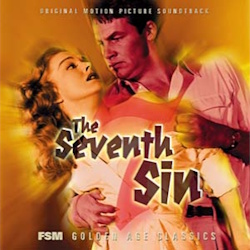
THE SEVENTH SIN – Miklós Rózsa
 GREATEST SCORES OF THE TWENTIETH CENTURY
Original Review by Craig Lysy
MGM decided to remake the 1934 film “The Painted Veil,” updating the story’s 1930s setting to 1949 to showcase studio star Ava Gardner. David Lewis was assigned as producer with a $1.577 million budget, Ronald Neame was tasked with directing, and Arthur Laurents was engaged to adapt W. Somerset Maugham’s 1925 novel “The Painted Veil” for the screenplay, retitled The Seventh Sin. Things went south quickly, with Neame rejecting Laurents’ script and hiring Karl Tunberg to rewrite it. Producer Lewis soon lost faith in Neame, believing the film was pedestrian and insufficiently updated. He fired Neame mid-production, and Vincente Minnelli was brought in to complete the film. For the cast, Ava Gardner, for reasons unknown, was replaced by Eleanor Parker, who would star as Carol Carwin. She was joined by Bill Travers as Walter Carwin and George Sanders as Tim Waddington.
The story is set in post-World War II Hong Kong, where Carol, who dwells in a loveless marriage, has an affair with French entrepreneur Paul, himself a married man. Her physician husband Walter discovers the affair and presents her with a fateful choice: travel with him to a remote mainland village, where he will treat victims of a cholera epidemic, or face the scandal of a very public divorce. She resists, and so he offers an alternative: if Paul’s wife agrees to a divorce and if he marries Carol within one week, Walter will obtain a quiet divorce. Paul declines the offer, citing respect for his wife and children, so Carol acquiesces and agrees to accompany Walter. Once there, Carol becomes acquainted with nuns at the local hospital-convent, who catalyze within her a spiritual epiphany. Yet new complications arise when she informs Walter that she is pregnant and unsure who the father is. He is displeased but unable to act, as he soon succumbs to cholera. Now widowed, Carol returns to Hong Kong, transformed and seeking a new life. The film was a commercial disaster, losing over $725,000, and critical reception was decidedly negative. The film received no Academy Award nominations.
MGM Director of Music Johnny Green was very pleased with Miklós Rózsa’s recent success with “Lust for Life,” as well as his stellar record in scoring psychological dramas. As such, he believed this track record made Rózsa the perfect choice for the project. After viewing the film, Rózsa was intrigued by the assignment, as it would allow a convergence of three distinct musical styles that he believed he had mastered: epic, film noir, and exotic. His approach was to infuse the score with epic grandiosity to provide the film with gravitas, film noir elements to express the marital tension stemming from Carol’s infidelity, and exotic orientalism to support the settings of Hong Kong and Mei-tan-fu on the Chinese mainland. Compositionally, he blended his sumptuous Western sensibilities with Asian fanfares and shimmering Chinese melodies.
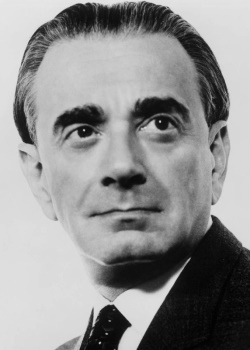 For his soundscape, Rózsa composed two primary themes. He recognized that this was Carol’s story, offering a turbulent and poignant developmental arc, and thus conceived two themes for her. Carol is self-centered, selfish, and a shameless adulteress, and so Rózsa devised a bold, questing Main Theme, much as he had done in “Lust for Life” for Vincent van Gogh. This theme combines romanticism with a darker, more brooding film noir tone appropriate to the story’s marital infidelities, reflecting Carol’s emotional turmoil. Indeed, Rózsa effectively conveys this through unsettling chromatic harmonies that evoke longing, anxiety, and moral ambiguity. This idée fixe permeates the film, often creating tension as it resists resolution, mirroring the turmoil and lack of fulfillment in Carol’s life. Ultimately, the theme undergoes a transformation reflecting the spiritual awakening catalyzed by her interaction with the Mother Superior.
Carol’s second theme, the Romantic Theme, expresses her desperate yearning for love, intimacy, and fulfillment. Her marriage to Walter has left her like a flower rooted in a desert, longing for water, and this theme animates her desire to feel loved through her adulterous relationship with Paul. Because of the film’s setting, Rózsa embraced orientalism and composed colorful, exotic music using an ensemble of indigenous instruments, including the pipa (Chinese lute), erhu (two-stringed fiddle), yangqin (hammered dulcimer), zheng (zither), dizi (bamboo flute), sheng (mouth organ), and Chinese percussion such as woodblocks and small gongs. “Fanfare Orientale” was also used as a recurring heraldic element throughout the film. Lastly, Rózsa re-recorded the waltz from his 1953 score “The Story of Three Loves,” which he used as source music during the Chamberlain party.
Note: Cue 15 “Chinese Montage” is a sixteen-minute compilation of several original Chinese pieces Rózsa composed for the film. As such it will appear several times in the review, with various start and end times to identify the part of the cue being used.
“Prelude” offers a bold and dramatic score highlight where Rózsa masterfully sets the tone and setting of the film. It opens with dramatic declarations of fanfare orientale, which support the display of the Warner Brothers studio logo, and establish the Hong Kong setting. At 0:08 the questing Main Theme unfolds to support the display of the film title and flow of the opening credits, which unfold against vistas of the Chinese countryside. The music offers quintessential Rózsian melodrama with the string borne Main Theme, draped in dark and brooding tresses, unfolding against contrapuntal horns. At 0:40 the theme surges on an ascent crescendo by strings appassionato At 1:15 declarations by horns orientale reprise, as script displays “Hong Kong 1949” against the backdrop of Hong Kong harbor. At 1:25 a diminuendo orientale takes us into the film proper with Carol’s Romantic Theme supporting a camera slowly moving through an apartment and revealing shed clothes on the floor. As we approach a closed louver door, the music shifts to a solo violin delicato, which dissipates into a misterioso.
“Briefcase” reveals a tryst by Carol and Paul, who is married. She is startled, believing someone is at the door, as the camera shows the door handle moving. Her anxiety is palpable, as she fears that her infidelity has been discovered by Walter. She combs her hair frantically and dismisses Paul’s suggestion that it was only her maid. Yet when he asks if Walter has ever come home this early, she answers, no. He convinces her that she needs to go out and verify if anyone is home, and music joins with her Romantic Theme borne by low register woodwinds and pizzicato strings as she opens the door. Rózsa sow an escalating tension full of dread as she walks along the balcony, enters the main living space, and then descends the stairs to the front door. At 0:59 a sunny oboe voices her relief as she runs back upstairs. She kisses Paul and the Romantic Theme resumes its carefree narrative flow, reflecting that they have been, unburdened. As he prepares to leave, they hold hands and she relates how they often laugh, and that she never laughs with Walter. At 1:48 the music evokes fear, and a diminuendo of uncertainty follows as she sees Paul suitcase laying on chair in the living room, and wonders if Walter was here and saw it. Paul calls the Medical School and their worst fears are realized – Walter left earlier in the day. She expresses her disdain for Walter, and they kiss and part ways.
“Alibi” opens with pensive woodwinds as Carol goes in and meets her Chinese servant, who is supported with orientalism. He presents her with books dropped off this afternoon by Walter. After he departs, Rózsa uses the Main Theme to sow anxiety and dread as she contemplates an alibi to explain the brief case. At 0:28 we shift to evening as Carol awaits Walter’s return, with Rózsa again sowing a musical narrative of anxiety and dread, wedded to the Romantic Theme. She practices trying to present a credible alibi to explain the brief case. He arrives home and the air fills with tension as he is controlled, reserved, and yet we, and Carol see a façade hiding a terrible secret, which Rózsa masterfully articulates in his music. At 1:59 we segue into “Mystery Story”, which reveals them having dinner, and then retiring for coffee. Walter remains stoic, and controlled, and again we, and Carol see a façade hiding a terrible secret, which Rózsa masterfully articulates in his music. Carol seems anxious to depart for an evening with the Chamberlains. They depart, arrive, and again complain that they remain relegated to the after-dinner guests. As Walter departs to get her a drink, she joins a quartet, which include Paul and his wife, playing cards. Carol gets Paul’s attention by mentioning how Walter brought her over some books this afternoon, which includes a mystery novel. This catches Paul’s attention, as he becomes distracted.
A we shift back to the party in “Waltz”, Rozsa sets the ambiance by offering a re-recording of the valzer gentile used in his score to “A Story of Three Loves” (1953). Paul joins Carol and she insists he knows, and asks for him to join her tomorrow at their usual rendezvous. Walter returns, Paul makes a discreet exit, and Carol excuses herself to talk to Mrs. Neville. “Teahouse” reveals the next day with Paul and Carol rendezvous at an obscure Chinese tea house with private rooms. Carol knows that Walter knows, and cannot stand that he does not act. She tries in vain to convince Paul to join her for a new life together, but he says he cannot leave his family. They part with a kissing embrace, and Paul saying that she can always count on him. Rózsa supports with the first piece of the “Chinese Montage”, “teahouse” 0:00 – 2:42 rendered by a small Chinese ensemble. It offers a graceful, lyrical piece animated by orientalism, which belies the sadness of our two lovers parting.
“Homecoming” reveals Carol napping at home, where she is awakened by Walter. He asks her to join him in his study, and informs her that he has volunteered to take a post on the mainland to treat cholera patients. She tries to dissuade him, and then says she is worried something may happen to him. He responds with clear derision that he is truly touched by her concern for his welfare. He then drops all pretenses and exposes her infidelity. Rózsa withholds music as the riveting conversation is just brutal, as each with malice, impugns, degrades and mocks the others personal failings. He refuses a clean, quiet divorce insisting she accompany him. If she refuses, he will destroy her reputation by publicly exposing here sordid infidelity. Well, she refuses, and so Walter pivots and offers a new proposal; if Paul’s wife agrees to a divorce and if he marries her within one week, he will petition for a discreet and quiet divorce. This defuses her, and she says she is grateful. Carol goes to Paul’s office with the offer, but he says he cannot as his children are very important, and while he does not love his wife, he is deeply committed to her. She accepts this with bitterness, and departs, compelled to the worst-case scenario. Rózsa scores the aftermath as she returns home carried by a solo English horn triste and brooding low register strings full of resignation, which express a broken Romantic Theme. Carol informs Walter she is going, and he says stoically, good, adding that he already had her suitcase packed as they depart at 10:00 am in the morning. At 1:04 a crescendo romantico of unbearable heartache supports her informing Walter that despite all that has happened, she still loves Paul.
“Boat Trip” reveals their arrival at the port and as they board and travel Rózsa empowers with a dramatic exposition of the Main Theme, replete with flute trill embellishment, and crowned by fanfare grandioso as they arrive. “Cortege” reveals that they must travel overland to the town of Mei-tan-fu. A chair liter is provided for Carol, and as they travel the countryside Rózsa blends occidental and oriental sensibilities to empower with a marcia maestoso with oriental embellishment. At 0:50 the music darkens on a diminuendo as Walter explains to Carol that they will reside outside of town at this residence, which was once a missionary. The march then resumes, as she is taken to the hilltop estate. A diminuendo at 1:25 marks her arrival, and we shift to the Main Theme rendered fully with delicate orientalism. As she inspects the house, she is joined by Tim Waddington, a local Englishman who comports himself with the air of an aristocratic and cynic. He brings scotch as a housewarming gift, says that he has arranged dinner, and of course, invited himself. Walter joins, and directs the coolies to delver his and Carol’s luggage to their respective bedrooms. Carol excuses herself to freshen up, and is told not to drink the water. Tim and Walter acquaint over scotch and Walter is informed that the convent has been converted into a hospital. Carol joins and they dine. Tim is taken aback when Carol, and then Walter eats the salad course, as water rinsed vegetables are dangerous. He quickly notices the prickly repartee between Carol and Walter and inquires if all is well. Both deflect his probing, which leaves him, curious.
“Alone” reveals a bored Carol alone the next day. She is listening to a trumpet led blues piece on a radio, turns the channel to get Chinese music, and finally turns off the radio. A cork pops, and she turns to see Tim imbibing a morning drink. He informs her of Walter’s dedication and laudable efforts with the villagers. The conversation turns south when he speaks of his friend Paul, and offers some criticism, which makes her defensive. He advises that she confirms his suspicions of a tryst with Paul, the separate bedrooms, and the fact that she was unaware Walter received a knife cut from an unruly father. She becomes more aggrieved and orders him out. He says he sees that he struck a nerve and departs. Yet she runs out, apologizes, and asks that he return. She says he is quite a snoop, but extends her hand and they shake and make up. He then asks her to join him on a walk tomorrow, and she agrees, as Walter returns home. Tim turns down a drink offer, and departs, as a conflicted Carol decides to join Walter inside. The Main Theme opens tentatively as she decides to enter, and gains force as she goes inside. She tidies up, and finally asks, why he did not disclose he was injured, to which he replies, because he felt she would not care. He goes into his bedroom, and we close on a grim diminuendo.
(*) “Walter and Carol’s Walk” reveals him escorting her on a walking tour through the town, taking in the local color. Rózsa draws from the “Chinese Montage” cue from 2:43 – 4:32, which offers a gentle strolling tune rendered by a small Chinese instrument ensemble. She is taken aback when she comes across a dead old man who succumbed to cholera. He brings her to Walter’s clinic, but she declines to visit. Then then arrive at the Convent Des Bonnes Socurs, to which she objects. He convinces her that they are sweet, and courteous, and sad that she has not paid a visit. She relents and we segue into “Nursery” where Walter and are warmly received by a sister, who escorts them to a waiting room while she informs Mother Superior. While they wait, he informs her that two nuns have died and that they are short-handed. He adds that he believes it would be good for her to assist them and get out of the house. Mother Superior arrives and warmly welcomes Carol. She extols the wonderful work Walter is doing as they take tea and tea cakes. She surprises Carol when she says they pay for babies, and then takes Carol on a tour, of their nursery. Carol is informed that they buy the girls, for if they did not, the parents would kill them. Rózsa supports with a small Chinese instrument ensemble, which offers a child-like musical narrative full of a sense of wonderment. When Mother informs Carol of how well Walter is with children, she admits she did not know of this quality. When a toddler falls and starts crying, Carol picks her up, but is rejected. As Mother takes the child, she apologizes for be so scary. Mother corrects her, saying not scary, just an unknown face. At 1:25 we segue into “Turmoil” as a we see Carol now tormented by the revelations of just how good and decent a man Walter is. This torment, is expressed in Rózsa’s rendering of the Main Theme, which offers one of its most emotional iterations.
At 2:53 we segue into “Reminiscences” a score highlight, where Rózsa composes an aching Pathetique. We see a contemplative Carol waiting at night for Walter to return. A pensive Main Theme led by solo flute supports as Walter comes home. For this powerful scene Rózsa supports with a dark, brooding, and deeply troubled exposition of the Main Theme as Carol unearths, and releases the pent-up, long-simmering fury of betrayal felt by Walter. She engages him in conversation, informing him of her visit to the convent, and of all the nice things they said about him. As he heads to bed, she says she prepared sandwiches, and he says thank you. In the kitchen, she has a catharsis where she says she is sorry she has caused him pain, that she wants to end the bitterness, sniping, and discord. She then asks, can we at least be friends? He erupts with fury, throws his sandwich to the ground and shouts that he did not marry her to be just friends! He storms out, and she follows and asks him why did he you force me to come here? He replies that he could not leave her there with him, wallowing in passion, so I decided to take you away from him, even if it meant killing you. A stunned Carol asks, you despise me, don’t you? We segue int “Rape” as he replies, no, I despise myself – for loving you and storms into his bedroom. Carol follows and says if you want, we could separate, or if willing give her a second chance? He pulls away, and she asks can you not forgive me? To which he answers how could he unless he is born again without a memory. When she says she cannot go on living this way, he turns and says how can he go on living with you, seeing you, unable to touch you. . . He grabs her, and forces her into a passionate hugging embrace, and then despite her desperate pleas, the camera pulls away revealing a mirror silhouette of them, and fades to black conveying rape implicitly. The musical narrative of the prior scene shifts to a molto tragico iteration, which begins at 0:30 on a tortured, crescendo appassionato, which crests and dissipates with the implicit rape. At 0:47 a sad Main Theme supports her laying alone at night, and then we shift to morning with her sitting by the window and refusing coffee. At 1:21 Carol emerges from her bedroom and departs for the convent, empowered by a reinvigorated Main Theme. She walks forthrightly with determination through the town and arrives at the convent, where she asks Mother Superior for a meeting. The music closes on a diminuendo solenne draped with religioso auras.
Carol asks for a job, and Mother is reluctant, as she has no skills, no understanding of Chinese, and says it seems like she is seeking refuge to escape a problem. Undeterred, she asks if Walter makes a request that she work here, would that suffice? Mother answers that she could not refuse his request. As she departs Mother counsels you can seek peace in the outer world, or here in a convent, but you will only find it in yourself. In the clinic, we see Walter ministering to patients as Carol arrives. She asks to meet, and he grudgingly consents. She advises of her desire to work at the convent as she wants to do something with her life. He is not receptive, but relents when she implores him, saying he will meet with Mother Superior. The next day, Walter visits the convent and finds Carol bathing toddlers and making the kids laugh as she struggles to learn Chinese. He commends her on her mastery of Chinese and invites her to tea at his place. She will not leave early, so he waits, and then escorts her to his home in town. As soon as they enter, we flow into “East Meets West” where she enters a Chinese house with a beautiful outer garden and ornate residence. He asks her to wait as he passes through some curtains. Rózsa supports with a serene, and tranquil musical narrative, which plays over a bass pedal, and offers a perfect blending of occidental and oriental sensibilities. At 0:59 we flow with a sense of wonderment into “Tea Party” a score highlight of serene beauty. Tim returns, and escorts Carol in, where she beholds a beautiful Chinese woman is a resplendent traditional Chinese gown. He introduces her as his wife, and translates her introduction and greeting as she speaks no English. After Carol compliments her on her beauty, she is asked to please sit for tea. He relates that her relatives were appalled she married a white man, and although he left her many times, she always found him, and so he surrendered to her and no longer strays. She again compliments Tim on her beauty, and after his wife believes she was looking at her bracelet, she gifts it to her. When it does not fit, she leaves to obtain another gift, and returns with a beautiful pair of traditional Chinese shoes. The scene closes with a thankful Carol, who tells Tim she really did not know him, until now.
“New Life” offers an inspiring score highlight where Rózsa offers a stirring crescendo religioso that ascends from the depths of sadness into the light. It reveals a very happy Carol overseeing playtime with the children. She kneels and they dance in a linked circle around her. Music enters from Carol’s visual perspective as Rózsa creates a spiraling effect with distortion, which perfectly expresses her growing disorientation and dizziness. At 0:11 dire horn declarations unleash a grave descent motif to mark her passing out as the frightened children stop a look down. Mother Superior and others come to her aid and transport her into her office. At 0:31 foreboding, and weakened Main Theme struggles as two nuns whisper to each other as they leave the room with a tea serving tray. At 0:44 the theme shifts to a calming, and solemn iteration. We commence a stirring, slowly developing crescendo religioso, which ascends with hope as Mother enters the room and closes the door. She counsels that this is a time of happiness, not sadness as she bears within her, a blessed new life. The crescendo dissipates at 1:24, with the Main Theme again offered with solemnity as we see Carol is lost in thought. Mother sends her home for today, but adds that she can continue her duties tomorrow. Mother departs and says she will have someone escort her home. At 1:44 pensive woodwinds offer the Main Theme as a misterioso to support the sight of Walter returning home. He joins Carol in her room and we end on a diminuendo of uncertainty.
“Home” reveals Walter advising that he heard she was ill, and pulling out a thermometer to begin his assessment. She says it is not necessary, that there is nothing wrong, and that she is pregnant. She says she is however uncertain whether he or Paul is the father. He callously says it might have been better if you lied, and she apologies for discovering honesty late in life. He informs her that he will be sending her back to Hong Kong. She says that she does not want to go back as this is the first time in her life that she has felt she had a home. Music enters with this revelation, with Rózsa offering the Main Theme woven within a sad, yet tender musical narrative. He fetches boiled water to give her a sedative and at 0:40 the music commences an ascent, which speaks of hope as we see the barriers separating them slowly breaking.
“Bad News” reveals Carol and Mother have a very frank discussion about abandoning selfishness to find the correct life path. Mother relates her less than holy past, disputing Carol’s assertion that she does not understand the world or people like her. Music enters as Mother faces and grabs Carol saying that in time Walter will come to view the child as his, and both forgive and forget. Rózsa offers an exquisite rendering of the Main Theme, which expresses vulnerability, yearning, yet also, uncertainty about the future, achieving a perfect confluence with the scene’s emotional dynamics. At 0:53 we segue with unsettling urgency into “Rough Passage” as soldiers arrive at the residence and wakes Carol with frantic knocking on the door. She is frightened and Rózsa sows a distressed Main Theme and a mounting fear as she sees Walter is not home, and hesitates to answer. She opens and finds two Chinese soldiers. They keep repeating “You come Quick”. Rózsa escalates the musical narrative, and uses a distressed Main Theme to increase tension and propel her on a crescendo dramatico buttressed by repeating dire horn declarations as she is being taken into town. At 2:28 dire fanfare supports her arrival at the clinic where she is greeted by Tim. A grim musical narrative unfolds as Tim informs that Walter fell ill yesterday afternoon, and will soon succumb to the disease. She wants to see him, but Tim says he is delirious and would not recognize her. At 3:03 she goes in and is supported by a lamentation borne by strings affanato. The Chinese doctor says he has done all he can, and it is not enough to save him. At 4:06 a tender Main Theme, draped in unbearable sadness joins as she sits next to him and calls to him. A desperate, crescendo of desperation rises, but is severed by dire horn declarations at 5:02 as we segue into “Forgiveness” and the camera reveals his sunken, near lifeless face. He opens his eyes and she asks the others to leave so she may have some privacy. At 5:19 the Mian Theme shifts to a weeping solo violin, as she kneels, and begs him to forgive her. She says she is desperately sorry for the wrong she did him, and that she bitterly regrets it. She begs him for his sake as well as hers, to forgive her. He utters; “The dog it was, that died”, which she does not understand. Walter appears to die, and she calls the doctor to confirm. He confirms death and we close mournfully.
“Finale” reveals Carol meeting with Mother Superior in her office. She is sad that he could not find it in himself to forgive her, so he could die in peace. She tells Mother that she does not understand Walter’s final words; “The dog it was, that died”. She informs Carol that it is the final line of Oliver Goldsmith’s poem “An Elegy on the Death of a Mad Dog”. In the poem, a mad dog bites his beloved owner, but it is not the man who dies, but the mad dog who dies of remorse. She adds, I believe Walter did forgive you and died in peace. Music enters with a cello tenero with a tender Main Theme draped with relief as Carol’s realizes that Walter did forgive her. At 0:22 we shift to the port where Carol meets Tim. Rózsa supports opens with the Main Theme rendered gently. At 0:57 it gains a renewed sense of purpose as he says she was quite a girl; you just did not know it before. He kisses her hand goodbye and she says I glad you thought so Tim. To which he replies. Lots of people thought so. He did too. She confides that in the end, she did not think their marriage was a failure, and that for the first time in her life she begins to like herself. She kisses him goodbye on the cheek and heads to the boat. At 1:27 the Main Theme regains purpose, and confidence, rising on a crescendo of hope as we see that in life’s crucible of pain, Carol has been transformed and now departs to a new life. As the coolies paddle the music swells and culminates in a grand flourish as “The End” displays.
Because of budgetary constraints, the score was recorded on monaural 17.5 mm magnetic film. As such the recording and mastering team encountered technical challenges with drop-outs and audio anomalies. I credit the team with producing a fine monaural rerecording that offers the energy of the original performance and Rózsa’s sumptuous and rich, and melodramatic sound. It is well accepted in the film score community that Miklós Rózsa was peerless in scoring ancient, biblical and medieval epics. Yet I would argue, that in the Film Noir genre his performance is equally spectacular. Rózsa had an instinctual talent for perceiving the sordid and often occult emotional drivers of the character in this genre, and then masterfully fleshing out these emotions musically. I believe “The Seventh Sin” serves as yet another testament of Rózsa’s mastery of this genre. Carol’s primary theme, offers a dark, brooding, and questing identity, which expresses emotional turbulence, and an unsettling narrative flow, that seeks, but cannot find resolution. This idée fixe is the essential thread woven throughout Rózsa musical narrative and masterful is how it mirrors Carol’s transformation from a selfish, narcissistic, and shallow socialite, to a compassionate and selfless humanitarian. The theme’s transformation is fully revealed with grandeur in the Finale, as it embraces hope, and concludes the film with a grand flourish. In scene after scene, we see riveting dialogue between Carol and Walter, which is just brutal, and filled with malice, that impugns, degrades and mocks the others personal failings. As I watched the film, it is clear that what I was feeling comes from witnessing a perfect cinematic confluence of acting, dialogue and Rózsa music, as he masterfully expresses in the notes Carol and Walter’s searing pain, sadness, rage, and betrayal. Also important is for the composer to speak to setting, and as we heard in “The Thief of Bagdad” (1940), and “The Jungle Book” (1942), where Rózsa masterfully infuses his score with indigenous and exotic non-western instruments. His use of a small ensemble using traditional Chinese instruments draped the film with the requisite cultural sensibilities and orientalism. Indeed, his musical joining of occidental and oriental sensibilities in the score is exquisite. Folks, this score offers another testament to Rózsa’s mastery of his craft, and I highly recommend it as essential for both Rózsa and Film Noir lovers.
For those of you unfamiliar with the score, I have embedded a YouTube link to a suite of the cues Nursery – Turmoil – Reminiscences:
https://www.youtube.com/watch?v=j_PMclztOG8&list=RDj_PMclztOG8&start_radio=1
Buy the Seventh Sin soundtrack from the Movie Music UK Store
Track Listing:
- Prelude (2:15)
- Briefcase (1:55)
- Alibi/Mystery (4:26)
- Homecoming (1:21)
- Boat Trip (0:51)
- Cortege (2:16)
- Alone (0:49)
- Nursery/Turmoil/Reminiscences (5:38)
- Rape (2:07)
- East Meets West/Tea Party (5:25)
- New Life (2:20)
- Home (1:15)
- Bad News/Rough Passage/Forgiveness (7:17)
- Finale (2:01)
- Chinese Montage (16:27) Source Music
- Waltz (2:23) Source Music
Film Score Monthly FSMCD Vol. 5 No. 17 (1957/2002)
Running Time: 58 minutes 46 seconds
Music composed and conducted by Miklós Rózsa. Orchestrations by Eugene Zador. Recorded and mixed by XXXX. Edited by XXXX. Score produced by Miklós Rózsa and Johnny Green. Album produced by Lukas Kendall.

Shop at the Movie Music UK Store

Member of the


