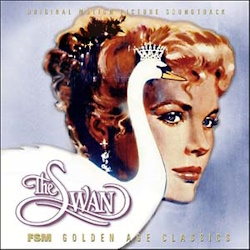
THE SWAN – Bronislau Kaper
 GREATEST SCORES OF THE TWENTIETH CENTURY
Original Review by Craig Lysy
In May of 1955 Don Schary, MGM’s Executive for Film Production, was seeking a film to showcase the studio’s marquee star, Grace Kelly. He believed he found the story and so bought the film rights to a Hungarian play entitled “A Hattyú, Vígjáték Három Felvonásban” (The Swan, A Comedy in Three Acts) written in 1914 by Ferenc Molnár. Schary took personal charge of production, allocating a budget of $3.094 million. John Dighton was hired to write the screenplay and Charles Vidor was tasked with directing. Joining Grace Kelly in the starring role of Princess Alexandra would be Alec Guiness as Crown Prince Albert, Louis Jourdan as Dr. Nicholas Agi, Jessie Royce Landis as Princess Beatrix, Brian Aheme as Father Carl Hyacinth, and Agnes Moorehead as Queen Maria Dominika.
The story is set in Europe, in a minor undisclosed royal house circa 1910. Princess Alexandra is urged by her mother to take her cousin Prince Albert as her husband as the union would restore to the family the throne taken by Napoleon. The problem is that Albert is a very happy bachelor who enjoys playing sports, hunting and carousing with her brothers more than courting her. Her mother encourages Alexandra to flirt and ask Nicholas to escort her to the ball, in hopes of arousing his jealousy. Well, it fails and when Nicholas declares his feelings, Alexandra reveals hers are mutual, but then is forced to inform him that she was using him as a ploy to arouse the prince. Nicholas storms off, Alexandra is distraught and seeks to leave with him the next day with Albert’s blessing, only to be rejected by Nicholas. We conclude with Albert and Alexandra reconciled as they walk arm in arm into the palace. The film was a commercial failure, achieving a $798,000. The film was warmly received by critics who praised its production values and unorthodox ending. However, it failed to earn any Academy Award nominations.
Miklós Rózsa was initially assigned to the project and he had already selected source music, and personally conducted and recorded the Rákóczy March performance in the movie. His request to leave the project to score “Tribute For a Bad Man” for longtime friend producer Sam Zimbalist was granted. Rózsa in his autobiography “a Double Life” relates that he had sought to gain favor as he had his eyes on Zimbalist’s next film, the biblical epic Ben-Hur. As such, Bronislau Kaper was assigned to the project by Director of Music Johnny Green. Kaper was ecstatic to take on the project and in an interview with Tony Thomas for “Music For The Movies” he related;
“I get terribly attached to some films and this was one. There were tears in my eyes at the end, and I knew I was going to write good music. The story was delicate and stylish and elegant… I had to treat the first part as a pantomime, and not give away the romantic feeling. Then Jourdan tells Kelly he loves her and the music takes over, so to speak. The End scene is one of the most delightful I ever scored”.
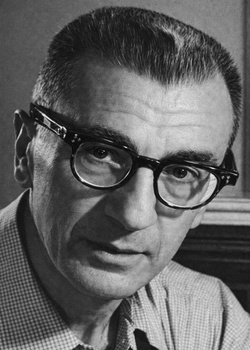 An assessment of the film revealed a trio of narratives, for which Kaper would have to support. The first is an understanding that the film does not take itself seriously. Set in a palace, the usual regality and fanfares would be needed, but joined with a more light-hearted, and comedic sensibility. The second involves the emotional awakening and epiphany of Alexandra triggered by a romance with Nicholas. The third narrative involved Albert’s journey from indifference to jealous suitor. To support his soundscape, Kaper composed five themes. Alexandra has two themes as the film is her story. The first serves as the score’s primary theme, to which Kaper composed an elegant valzer romantico, often featuring a solo cello. The waltz can stand up to anything offered by the Viennese School and offers one of the finest themes in his canon. Her second theme is the forthright Resolute Theme, which speaks to her willfulness, independence, and determination to live life on her own terms. Borne by strings forte with shifting chords it reveals that beneath her beautiful feminine veneer beats the heart of a lioness. Juxtaposed is Prince Albert’s Theme, a marcia imperioso, which is both martial and masculine. Since Rózsa had already recorded for the film the Rákóczy March (1809) by János Bihari, Kaper decided to interpolate it as Albert’s Theme. Father’s Hyacinth’s Theme supports Beatrix’s brother Karl, a humble and devout man who gave up a life of royal luxury to become a man of faith. His theme perfectly captures his humility, and affable nature, offering gentility and warmth by woodwinds tenero. The Palace Theme supports both the palace and the activities of the hundreds of staff necessary to maintain it. It is a ‘busy’ theme, vibrant, buoyant, and animated. It’s articulation widely ranges from formal, to frenetic. The Fairytale Theme supports Alexandra’s reminiscences to her childhood, which Kaper supports with celeste and woodwinds delicato and child-like innocence. Lastly, Kaper embraced the traditions of the Viennese School and composed two original waltzes for the grand ball.
“Main Title” opens opulently atop the Rákóczy March, Prince Albert’s Theme, a marcia imperiosa which replaces the usual MGM logo fanfare. It is sustained as the opening credits commence and display against a purple curtain. An elegant transition launches at 0:20 Alexandra’s Theme, a sumptuous valzer romantico, which supports the display of the film’s title. We segue at 1:08 atop diminuendo carried by a violin tenero with sparkling metallic refulgence into “Europe 1900” where narrative script displays; The Place – Central Europe. The Time – 1910”. We enter the film proper as we see a delivery man’s wagon traveling along a lake side road. A swan glides across a lake as an imposing castle is seen in the background. Alexandra’s Waltz embellished with bubbling woodwinds pastorale supports the wagon’s travel, joined at 1:45 by trumpets regale declarations draped with strings eleganti as it traverses the sculptured palace grounds. At 1:24 we segue into “Telegram” as the delivery man rings the bell and slides a basket of bread rolls down a wood slide into the royal kitchen. Kaper supports with Palace Theme, an ornately embellished, playful, buoyant, and balletic musical narrative as we see the rolls first added to a breakfast tray, and then making their way with many servant hand-offs through the elegant palace corridors. Elsa, the privy maid, sets the tray down on the bedroom’s royal breakfast table and informs her highness, Princess Beatrix, that breakfast is served, with a telegram. She reads the telegram, becomes flustered darting back and forth in her bedroom. In this opening sequence, Kaper does a wonderful job setting the regal, yet light-hearted tone of the film.
In “Hurry” Princess Beatrix issues orders for Elsa and head butler Caesar to begin immediate preparations to receive Prince Albert, whom she desires to be a suitor for her daughter Princess Alexandra. She then runs into Aunt Symphorosa’s bed chamber, wakes her, and informs her that Prince Albert arrives today for a four-day visit. Kaper supports the scene with an animated and spritely rendering of the buoyant Palace Theme. We segue at 0:39 into “Instructions” as Princess Beatrix issues orders to Caesar, the head maid, head chef, head gardener and stable master to make all the necessary preparations to receive Prince Albert. A puffed up, yet still light-hearted Palace Theme supports her imperious orders. In an intervening unscored scene, she meets Alexandra and takes her into a private room where she informs her of Prince Albert’s imminent arrival. We see that Alexandra is unenthused as Beatrix relates her lifelong dream for her to become a queen, adding that a marriage to Prince Albert would restore their House and kingdom, which was taken away by Napoleon Bonaparte. At 1:15 we segue wearily into “En Garde” atop the Palace Theme as Alexandra excuses herself for her fencing lesson. At 1:25 Kaper introduces Alexandra’s second and more forthright Resolute Theme, which speaks to her willfulness, independence, and determination to live life on her own terms. Borne by strings forte with shifting chords it reveals that beneath her beautiful feminine veneer beats the heart of a lioness. Dr. Nicholas Agi arrives carried by a more reserved Palace Theme as she tells him that her fencing lessons will not be interrupted by the prince’s visit. At 2:15 muted trumpets regale sound as he takes position and declares, en guard! At 2:17 we segue into “Father Hyacinth”, which reveals a bustling palace staff preparing the grounds and interior for the prince’s visit. A vibrant and spritely Palace Theme propels the activities. A diminuendo usher in Father Hyacinth’s Theme rendered with gentility by woodwinds tenero as he arrives at the palace in the monastery’s humble cart. He is greeted by Caesar, whom he gently reminds should no longer address him as your highness, but instead, father. At 3:18 the vibrant Palace Theme resumes as they enter the palace and we see the staff scrubbing and cleaning. Beatrix and Symphorosa join and they retreat to a private room where they reacquaint.
At 3:29 we segue into “Vega”, which reveals Nicholas guiding a viewing of the star Vega on the balcony for princes George and Arsene. Hyacinth and Alexandra join, with Alexandra taking her turn viewing the star. Kaper deftly scores the scene with an impressionist composition, which offers a twinkling ethereal wonderment. At 4:03 Alexandra’s Waltz emerges delicately borne by a flute d’amore’s as Hyacinth deduces Nicholas’s affectionate attraction to Alexandra. Beatrix arrives and orders Nicholas to take the boys to bed. At 4:46 we segue into “Inspection Bugle Call” atop declarations by trumpets regale, which resound to support the prince’s arrival at the train station where cavalry royale stand ready. The prince and his adjutant Captain Wunderlich then depart in an open-air carriage.
“Arrival” opens with silly woodwinds comici (dialed out of the film) as the reception staff place the red carpet at the wrong train car exit door. At 0:14 music-film synchrony is reestablished with the Palace Theme joined with Albert’s trumpeting fanfare rendered with royal formality as the prince arrives at the palace. There is interplay with Alexandra’s Waltz as she gazes out her window to observe the prince’s arrival. At 0:47 a comic interludes supports Alexandra’s embarrassment as her loud sneeze captures the prince’s attention. Inside he remarks to Wunderlich his extreme fatigue and desire to go to bed. At 1:11 we segue into “Asleep” where the breakfast service staff stand waiting as the prince sleeps in. Beatrix and the others are impatient to eat as it is 3:30 pm. Kaper supports the prince’s slumber and the household vigil with a celeste offering an ethereal and somnolent rendering of his theme. Everyone is frustrated and we flow comically at 2:14 into “Eat” when Hyacinth asks Caesar what he would do, and he curtly says, eat! The family enters the dining room supported by interplay of Albert’s and the Palace Themes. Beatrix is beside herself an says she may not be able to contain her anger. At 3:00 we segue into “Auntie” where Captain Wunderlich arrives, is mistaken by Beatrix as Albert, and given kisses on each cheek. He advises her that he is Captain Wunderlich, that the prince will arrive shortly, and then departs. Beatrix is mortified and Kaper supports the awkward moment comically, with a playful flourish ending the cue as Hyacinth tosses a roll to his famished auntie.
In an unscored scene Albert diverts from going to the dining room to reacquaint with cousins George and Arsene who are playing a paddle game. He decides to give it a try but is interrupted by the arrival of Beatrix. She escorts him to the parlor where he reacquaints with Karl (Hyacinth), Symphorosa, and Alexandra. Beatrix seeks private time for Alexandra and Albert and so prods Hyacinth and auntie to leave. She then departs to check up on the princes, giving Alexandra her moment with Albert. He tries to make conversation, but she is clearly uncomfortable and the there is an awkward tension. In “Shall we try” he perseveres and tries to change the setting by inviting her to join him on the balcony to take in the evening air. As he escorts her out, Kaper weaves a soft romanza for strings. Outside, a tête-à-tête unfolds between a demur Alexandra’s Theme and an uncomfortable and at times comic Albert’s Theme. He comments on the full moon and stars, yet she responds with an analytical assessment. His efforts at romance and humor flounder and the music sours on his theme. At 1:07 we segue into “Hand” as he moves his hand and accidently places it over hers. She recoils, and he becomes frustrated at her wooden responses, declaring his intention to retire. As he retires his theme rendered by woodwinds comici support his departure.
The next day in “Rákóczy March”, Beatrix reveals her ‘Round 2’ plot to Hyacinth and auntie. She has organized the day to structure over thirteen hours of time for Albert and Alexandra to be together. To get the day off and running on time, she positions a band on the grounds outside his bedroom and tasks them to play a rousing version of the Rákóczy March. This version was popularized by Franz Listz and conducted by fellow MGM studio composer Miklós Rózsa. Her scheme succeeds as Caesar informs her that the prince has requested his breakfast tray, and she gleefully signals the band to cease playing. “Theme from The Swan” is not a score cue, but an album highlight. It is a recording of Kaper’s elegant valzer romantico conducted by MGM Director of Music Johnny Green for inclusion on the LP album the studio was releasing.
“Foils” reveals a flummoxed Beatrix and disappointed Alexandra when Albert declines a guided tour by Alexandra of her rose garden, preferring to see the automated milking machines at the palace dairy. A comic Albert’s Theme carries his departure, followed by a sad Alexandra’s Waltz as she also departs to join Nicholas for her fencing lesson. At 0:17 her Resolute Theme supports her unscheduled entry in full fencing attire, which surprises Nicholas. Her theme’s usual determination is now infused with a simmering anger as she takes several swings of her foil. She attacks aggressively and secures three consecutive touchés. Later, in an unscored scene, Albert plays soccer with his cousins George, Arsene and Nicholas as Beatrix frets over why Albert refuses to spend time with Alexandra. She muses to Hyacinth that her last chance remains, the ball tonight. Auntie however suggests seeking to create jealousy in Albert by having Alexandra and Nicholas spend more time together. Beatrix accepts the plan, and heads up at 0:45 to Alexandra’s room in “Reading”, where we see her reading a book in bed supported by a sad rendering of her theme. Beatrix reveals her plan and Alexandra reluctantly agrees to play along. She heads down to Dr. Nicholas’s quarters where he uses non-lexical vocables to voice Albert’s Theme. At 1:07 we segue into “Smile” where Alexandra invites him to join her at the ball, and he accepts graciously. She is sad that she is using him in this way and Kaper speaks to this with a forlorn string borne rendering of her theme as she departs. At 1:12 we segue into “National Anthem of Swanovia”, which supports the formal arrival of Prince Albert in the reception room, which is attended by dignitaries of the Kingdom of Swanovia. Kaper supports with a horn empowered anthem reale.
“Ballroom Waltz” reveals Albert, Beatrix, Symphorosa, Alexandra, Hyacinth, and Nicholas taking their seats as the entertainment begins. Kaper supports with a sumptuous original valzer elegante written in the finest of Viennese traditions. After a few minutes Albert rises and asks Beatrix to dance with him. Other guests join as Alexandra and Nicholas sit down awkwardly. She queries about the stars, but as he begins his discussion, he sees that her eyes are transfixed on Albert. Nicholas then says that he may ask her to dance, and she accommodates as Beatrix asks Albert to return to her chair. Beatrix points out to Albert that Alexandra is dancing with the professor, but he seems singularly uninterested. On the dance floor Alexandra is clearly distracted, avoids eye contact and does not seem to be enjoying the dance. Beatrix’s hopes rise when Albert gets up and walks into the dance floor, but when he reaches Alexandra, he walks past her to the musicians. Beatrix is flummoxed as he relieves the bass player and begins playing. She locks eyes with Albert who smiles, and she tells Nicholas that she is ending the dance and then departs the ballroom. Outside she takes a carriage and decides to go on a night ride, but Nicholas joins, saying that she cannot go alone. She stops lakeside when she sees a solitary swan paddling. She turns to him and asks why he has been so quiet, and he says he was afraid if he spoke, the mirage would disappear. He is clearly making the allusion of his feeling towards her, and she realizes this, becomes emotional, and says she needs to go back.
Back at the palace, the guests are dancing in “The Return”, once again supported by an original waltz, this one a more vibrant valzer vivace. Beatrix continues to fret and advises Hyacinth that she is about to faint as Albert departs to attend to a memorandum. In “Confession” he shares a cordial with Wunderlich and asks him where does he believe they went? When Wunderlich replies that Nicholas has overreached beyond his station, Albert curtly dismisses him, and as he departs a chagrined rendering of Albert’s Theme is heard as his veneer of aloofness shatters to reveal his jealousy. At 0:13 we segue into “Why Then?” where Nicholas and Alexandra drop all pretenses. He reveals that his feelings for her are not a mirage, but real, and she painfully reveals her shameful duplicity, that she, at the bequest of her mother, was using him as a means to elicit Albert’s jealousy. He is clearly wounded, but says he hopes the decoy served her purposes. When she asks for his forgiveness, he answers no, which cause her to flee into the study where Albert is seated. Kaper masterfully offers a Pathetique within which are woven Alexandra’s Theme, Albert’s Theme and aching strings of unrequited love. In an unscored scene Albert and Nicholas engage in repartee as they now contest for Alexandra’s affections. Beatrix’s efforts to get Nicholas to retire flounder, as his bitterness loses containment. Beatrix nearly faints, and coaxes Albert to escort her to find some smelling salts.
In “Man in Love” offer an achingly beautiful romantic score highlight. Hyacinth suggests that Nicholas and Alexandra need to resolve their feelings. She again admits her shame, and he admits his audacity for falling in love with someone who is, unobtainable. Nicholas then walks out onto the balcony as Hyacinth consoles Alexandra. Nicholas eventually returns, and Hyacinth counsels that they must resolve this matter, forgive, and move on with their lives. Hyacinth departs and the two, now alone, discuss their feelings. Kaper introduces their aching and sad Love Theme, which yearns unrequited as Alexandra understands that it can never be consummated. At 1:04 we shift to the child-like Fairytale Theme borne by celeste as she recalls her dreams of love as a child. Nicholas persists amorously, yet Alexandra refuses to surrender herself, begging him not to kiss her. This tension, sadness and disappointment are masterfully woven by Kaper into the fabric of the Love Theme, which strives to blossom, only to dissipate on a diminuendo of futility as Caesar coughs loudly, to signal his approach with Albert. The cue ends with a music box rendering of the Love Theme, which was unused in the film.
“Wing” reveals the return of Albert, who, discloses that Beatrix has revealed their plot and deception. He then wastes no time expressing his displeasure at Nicholas’s arrogance and presumption that he could drag a star down from the heavens to his peasant cart. Nicholas moves forward in anger. Alexandra intervenes, stopping Nicholas with a kiss, in an effort to prove his innocence. The passion of her kiss is illuminating and a wounded Albert now realizes where Alexandra’s affection lay. He apologizes to Nicholas and departs graciously. Music enters as Hyacinth returns to console Alexandra as everything has unraveled. Kaper supports the pathos with a forlorn musical narrative as Nicholas accepts his fate, and departs. At 0:27 a harp glissando and bell chime support a morning external view of the palace. At 0:32 a sad refrain of the Love Theme supports Alexandra lying in bed and declining breakfast. At 0:51 a playful Palace Theme supports Alexandra worming from her servant Lisa, the location of Dr. Nicholas’s quarters. At 1:16 we segue into “Under Arrest” (1:16 – 1:28 was dialed out of the film) carried by a martial drum empowered Rákóczy March as Alexandra and Albert both look out their windows and sees two royal limousines approaching with the Queen. At 1:29 a frenetic Palace Theme supports Father Hyacinth running down the corridor trying to slip his habit over his pajamas, while upstairs a frantic Beatrix readies her escape to avoid seeing Queen Maria. We conclude at 1:48 in “The Emperor” with fanfare by trumpets regale as the imperious Queen Maria Dominka enters the palace.
In “Indisposed” Beatrix is unable to escape and so jumps into bed fully dressed, covers herself, and feigns an illness. A comic rendering of the Palace Theme supports the silliness as Maria arrives and swallows Beatrix’s illness story. Albert arrives and at 0:27 we segue into “I’m packed”. He escorts his mother out to the adjoining room where he creates a tale that elicits the queen’s sympathy for Alexandra and the professor. She orders them fetched and a tender Palace Theme supports Albert and Hyacinth’s departure. At 0:50 we segue with sadness into “Too Large a Gift” as Alexandra arrives to find Nicholas packing. He spurns Alexandra’s plan for them to leave together to begin a new life, as he does not believe her kiss last night was one of genuine love, but instead only motivated by pity, and contempt. Music enters with anguish as this revelation devastates her. As she struggles to absorb his rejection, her waltz returns, but it is shorn of its happiness and vitality, transformed into a valzer affanato as she departs and is consoled by Father Hyacinth. He invites her to see her future, opening a door to the fencing room to reveal Albert. After 2:24 the exquisite extended exposition of her waltz is dialed out of the film, letting Albert’s and Alexandra’s dialogue carry the scene.
Albert is gracious, and advises Alexandra to follow her heart, and depart with the professor. This startles her as Nicholas comes in to retrieve his books. Alexandra’s heart is bitter from Nicholas’s callous rejection and she hurls spiteful and very hurtful words, at him. Nicholas departs without responding, and a tearful Alexandra runs out the back door. Albert follows, and finds her on the terrace. They watch the boys saying goodbye and as Nicholas’s carriage departs, we flow tenderly into “Take Me In” a poignant score highlight, and a masterpiece composition. Albert recalls the nickname her father called her as a young girl – the “Swan”; a bird of grace that glides alone atop a lake, silent, white, and majestic. Alexandra has an epiphany as she finally understands from his allusion, that like him, she must accept her destiny by placing duty to the realm, above matters of the heart. Kaper supports the scene exquisitely with her theme rendered by several shifting solo instruments with sadness, dignity and acceptance. At 2:36 she turns, and asks; “Take me in Albert”. He smiles, gently takes her hand and her now hopeful theme crests on a crescendo magnifico as “The End” appears over a swan gliding on a lake. At 3:01 we segue seamlessly into “End Cast” atop her theme that joins with Albert’s to soar on a crescendo glorioso, which crests fortissimo.
I wish to thank Lukas Kendall for this world premiere of the complete score of Bronislau Kaper’s wonderful “The Swan”. The technical team remixed and remastered the original 35mm three track stereophonic masters and some segments recorded on 17.5mm monaural film. I believe the audio restoration was successful, and the album provides a quality and enjoyable listening experience. This was one of Kaper’s most beloved scores, and I believe one of the finest in his canon. He understood that this was a light-hearted romantic comedy and so he imbued his soundscape with an elegant and whimsical score that in every way enhanced the film’s storytelling. His waltz theme for Alexandra was simple gorgeous, elegant, and very malleable, expressing a wide spectrum of emotions. Two other original waltzes written for the Grand Ball would make the Viennese School proud. The use of the Rákóczy March as Albert’s Theme was also well-conceived. Albert was a gracious, and affable man who was perplexed, and at times vexed by Alexandra’s apparently impenetrable veneer. As such the march is often rendered in a whimsical and comedic way. The playful and animated Palace Theme provided buoyancy, vibrancy, and at times the frenetic energy that assisted the film remain light-hearted, fanciful, and comedic. Masterful, and what sets this score apart, is how Kaper scores the finale where Alexandra’s emotional roller-coaster ride of self-discovery culminates with an epiphany. She watches Nicholas’ departure and finally understands the wisdom of Albert’s counsel that she must accept her royal destiny by placing duty to the realm, above matters of the heart. In one of the finest cinematic film endings, we hear rising from the aching pathos of her theme, an ascent of epiphanic liberation and self-awareness, which soars on a crescendo glorioso of hope, and crests fortissimo. Folks, this score is one of the finest of Kaper’s canon, as well as in the romantic comedy genre. If you love romantic waltzes, whimsy, light-hearted comedy and a finale for the ages, this is the score for you. I highly recommend you purchase this quality album and take in the film for enjoyment.
For those of you unfamiliar with the score, I have embedded a YouTube link to a wonderful twelve-minute suite; https://www.youtube.com/watch?v=lpyfinweuwU
Buy the Swan soundtrack from the Movie Music UK Store
Track Listing:
- Main Title/Europe 1900/Telegram (4:01)
- Hurry/Instructions/En Garde/Father Hyacinth/Vega/Inspection Bugle Call (5:07)
- Arrival/Asleep/Eat/Auntie (3:25)
- Shall We Try/Hand (2:08)
- Rákóczy March (1:52)
- Theme from The Swan (2:14)
- Foils/Reading/Smile/National Anthem of Swanovia (1:55)
- Ballroom Waltz (7:09)
- The Return (1:49)
- Confession/Why Then? (6:45)
- Man in Love (3:39)
- Wing/Under Arrest/The Emperor (1:55)
- Indisposed/I’m Packed/Too Large a Gift (4:28)
- Take Me In & End Cast (3:27)
Film Score Monthly FSMCD Vol. 7 No. 5 (1956/2004)
Running Time: 49 minutes 54 seconds
Music composed by Bronislau Kaper. Conducted by Johnny Green. Orchestrations by Robert Franklyn. Recorded and mixed by XXXX. Score produced by Bronislau Kaper. Album produced by Lukas Kendall.

Shop at the Movie Music UK Store

Member of the


