CLEAR AND PRESENT DANGER – James Horner
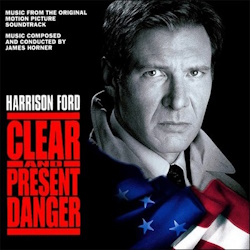 THROWBACK THIRTY
Original Review by Jonathan Broxton
After the success of Patriot Games two years previously, Paramount Pictures greenlit a third movie based on the Jack Ryan spy novels written by Tom Clancy. Clear and Present Danger is the second film to feature Harrison Ford in the lead role as Ryan; in this film, Ryan is appointed Acting Deputy Director of Intelligence for the CIA, and is asked by the President of the United States to help secure funds from congress in order to legally fight drug cartels, after one of the Presidents’ best friends is apparently murdered on the orders of drug lord Ernesto Escobedo. However, it soon becomes apparent the funds are actually being used to conduct an illegal covert war in Colombia, which leads to the deaths of several American soldiers, and that Ryan is being set up to be the ‘fall guy’ should the truth ever be revealed. With the help of a fellow CIA Operative Ryan travels to Colombia with the aim of ending the illegal war, exposing the perpetrators, and bringing home the soldiers left behind.
The film was directed by Phillip Noyce, who also directed Patriot Games, and co-starred Willem Dafoe, Anne Archer, and James Earl Jones. I liked the film, but not as much as Patriot Games, as I found the plot to be somewhat convoluted, getting lost in an overly-intricate mire of political shenanigans, double-crosses, and violent conflicts between rival drug cartels. Despite this, audiences mostly liked the film, and it grossed more than Patriot Games did. This led to pre-production on a third Clancy adaptation, The Sum of All Fears, starting almost immediately. However, script problems led to significant delays, and eventually both Ford and Noyce would drop out; The Sum of All Fears ultimately did not come out in 2002, by which time Ben Affleck had taken over the lead role.
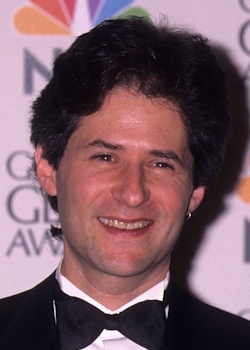 Composer James Horner returned to score Clear and Present Danger, having written the score for Patriot Games two years previously. Despite me being an enormous fan of Horner’s work – he remains my all-time favorite composer – his Jack Ryan scores had never been anywhere near the top of my list of Horner favorites. However, thirty years later, as I dig down into the intricacies of this score, I am finding myself having a much more favorable response to it than I ever did before, to the extent that I now consider it among the top tier of his works in the political action/thriller genre. The score is written for a full orchestra bolstered by smooth electronics and the familiar sound of the shakuhachi Japanese bamboo flute which – like many scores Horner wrote during the 1990s – is not intended to convey a specific geographical element, but simply adds color and texture to the orchestra.
As is always the case with Horner’s work there is a significant element of self-referencing here; Horner revisits compositional techniques, instrumental textures, rhythmic patterns, and thematic ideas he explored previously in scores ranging from Brainstorm and Red Heat to In Country, Sneakers, and The Pelican Brief, while foreshadowing things he would explore in greater depth later in scores like Legends of the Fall, Apollo 13, and many others. If you subscribe to the ‘Horner Career Symphony’ theory as I do, the references to all these scores make sense: Clear and Present Danger shares numerous intellectual and conceptual ideas with several of these films (militaristic patriotism, political corruption, deployment of advanced technology). As such, as I have repeatedly stated in previous reviews, in order to appreciate the score you simply have to acknowledge that this was something that Horner did, move past it, and enjoy the score for what it is.
The score opens with a bang in the terrific “Main Title/A Clear and Present Danger,” a resounding volley of Coplandesque brasses which then segues into the score’s main theme, a broadly patriotic piece which somehow manages to thread a fascinating tonal needle by being both uplifting and dour, heroic and reserved, all at the same time, reflecting the actions of the US government which is fighting a war on drugs on one hand, but then undermining its own agents for other more nefarious reasons at the same time. Long sequences of brooding melodrama – insistent snare drum riffs, low brass phrases, moody string passages – end the cue on a more restrained note, but it’s so full of Hornerisms and so packed with intricate details, harmonies, and interesting combinations, that it retains its strength throughout.
“Operation Reciprocity” is the codename for the illicit government operation in Colombia that Ryan uncovers, and Horner’s music for that is a tremendously dynamic action piece full of thrusting strings, relentless snare tattoos, and banks of bold, searching horns. This is also the cue that introduces the shakuhachi bamboo flute into the mix, dancing away breathlessly under the rest of the orchestra as a subtle representation of the South American locale of the film, while in the latter half of the cue Horner brings in his glassy, smooth electronic textures for the first time. Interestingly, Horner apparently chose not to use any overtly Latin musical influences in his depiction of the drug lords Escobedo and Cortez, or as a representation of the Colombian locale overall, and while I understand the decision from a narrative point of view, I have always enjoyed scores where Horner has played around with such florid instrumentation, and I would have liked to see him doing similar things here.
The subsequent “The Ambush” is a wonderful piece of action/suspense scoring, which over the course of almost ten minutes builds up layer upon layer of bold instrumental textures – shakuhachi, tapped wooden percussion, staccato strings, pulsating brass, bubbling electronics – until it releases all its tension and explodes into lively action and vivid dissonance in its second half. It’s just superb, intricately designed and tremendously effective scoring. Listen especially for the passage beginning at the 4:30 mark, which initially sees Horner revisiting the steel drum cadence that appeared in the opening titles of Commando in 1985 but re-orchestrating it for trumpets, and then following it with a variation on the throbbing, bombastic ‘Bishops Countdown’ finale from Aliens.
I really like the use of vintage electronics all throughout “The Laser-Guided Missile,” which gives the cue a throwback sound to the 1980s while also commentating on the sophisticated computerized technology of the titular weapon. The combination of synths and shakuhachi reminds me, tonally, of the music Horner wrote for Thunderheart in 1992, and this is a good thing. The subsequent “Looking For Clues” revisits some of the ideas Horner wrote for Patriot Games, especially the eerie and mysterious string adagio adapted from Aram Khachaturian’s ballet Gayane that was also used to excellent effect in Aliens. Many of these ideas are explored further in the unremittingly dark and morose “Greer’s Funeral/Betrayal,” including one excellent passage where the Patriot Games adagio is played contrapuntally against a stripped down and slightly tortured-sounding version of this score’s main title theme.
In “Deleting The Evidence” Horner adorns his nervous yet elegant suspense material with several instances of the brilliant ‘crashing piano’ technique that was used so excellently throughout The Pelican Brief, each one more intense and brutal than the last. “Escobedo’s New Friend” – which is actually three separate tracks combined into one cue for the album – sees Horner returning to the combination writing for vintage electronics and shakuhachi from earlier in the score, underscoring a deadly and high-stakes encounter between Ryan, his CIA counterpart Clark, and the eponymous drug lord, which gradually emerges into some heavy orchestral textures in the second half of the piece. In film context, the two halves of the cue are bisected by the thrilling action of the “Second Hand Copter,” reprising many of the stylistics from the earlier Ambush cue with similar raw power and intensity.
The conclusive “Truth Needs A Soldier/End Title” contains several particularly noble reprises of the main theme, including one tremendous one for the fullest complement of the orchestra where each new refrain of the theme is accompanied by the clang of tubular bells; these underscore Ryan’s patriotic defiance of the corrupt President Bennett and his subsequent refusal to take part in a governmental cover-up, and allow the score to segue into the calmer and more reflective end credits.
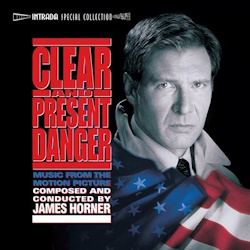 The original album for Clear and Present Danger was released by Milan Records as an enjoyable 50 minute package, but somewhat bizarrely that CD release omitted virtually all the music between the “Second Hand Copter” sequence and the end credits, meaning that a great deal of the score’s most dynamic action material was missing. In 2013 Intrada Records released a significantly expanded special edition of the score that released this music for the first time, along with several other important cues offering extrapolations and variations on the rest of the score’s central ideas. Then in 2022 La-La-Land Records released a second expanded album which added an additional 20 minutes of music to the Intrada expansion, but honestly both albums do an excellent job of presenting a fuller and more well-rounded representation of the music Horner wrote.
Interestingly, or frustratingly depending on your point of view, both Intrada and La-La Land chose to open their albums with the film recording of the main title which omits the outstanding brass fanfare from its opening moments; while this is technically the ‘correct’ version of the piece to use, I feel that it lacks the dynamism of the version that appeared on the original release, and feels lackluster by comparison.
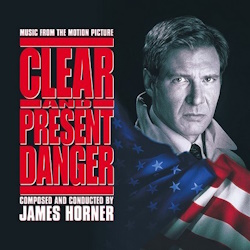 Other cues of note that appear for the first time on the expanded albums include an early appearance of the Khachaturian adagio theme in “Jack’s New Office,” and additional appearances of the vintage electronica sound in both “Cortez Arrives in US” and “Try Lindo Brand”. Most importantly, these albums also contain several additional action sequences which help flesh out the intensity of the film’s final third, including “Jack Creates Diversion,” “Cortez Kills Escobedo,” and the brilliant finale cue “Woodroom/Finale”.
I like the score for Clear and Present Danger a lot, and the expansion albums really present it in a new and more positive light, but even in its original release the score has a lot to recommend. The main title theme is a terrific piece of patriotic Americana, the action sequences are both compositionally intricate and emotionally exciting, the smooth synth tones have a cool throwback vibe, and the numerous callbacks to earlier scores make it a nostalgic deep-dive into the vintage James Horner sound.
Buy the Clear and Present Danger soundtrack from the Movie Music UK Store
Track Listing:
- ORIGINAL 1994 RELEASE
- Main Title/A Clear and Present Danger (5:24)
- Operation Reciprocity (3:25)
- The Ambush (9:50)
- The Laser-Guided Missile (3:51)
- Looking For Clues (3:32)
- Deleting The Evidence (4:41)
- Greer’s Funeral/Betrayal (6:21)
- Escobedo’s New Friend (5:28)
- Second Hand Copter (2:15)
- Truth Needs A Soldier/End Title (5:48)
- EXPANDED INTRADA 2013 RELEASE
- Main Title/Clear and Present Danger (5:24)
- President’s Mission (1:16)
- Jack’s New Office (1:40)
- Greer Signs Memo (0:47)
- Cortez Arrives In U.S. (1:13)
- Jack Briefs FBI/President (1:00)
- Operation Reciprocity (3:22)
- Blow Up Narcotics Plane (1:59)
- Try Lindo Brand (1:23)
- Fire In The Hole (1:53)
- Moira’s Fatal Phone Call (1:43)
- Ambush (9:53)
- Casket Arrival (2:46)
- The Laser-Guided Missile (3:55)
- Jack Sees Bombing (0:59)
- Looking For Clues [Film Ending] (3:39)
- Cortez Is Watched (2:46)
- Greer’s Last Hospital (1:43)
- Deleting The Evidence (4:43)
- Greer’s Funeral/Betrayal (6:22)
- Chavez Sees Prisoners (1:30)
- Escobedo’s New Friend, Part 2 (3:21)
- Second Hand Copter (2:14)
- Rebuffed (1:08)
- Escobedo’s New Friend, Part 1 (1:40)
- Cortez Kills Escobedo (2:50)
- Finding The Prisoners [Film Version] (1:27)
- Jack Creates Diversion (1:35)
- Woodroom/Finale (4:35)
- Escobedo’s New Friend, Part 3 (2:02)
- Truth Needs A Soldier/End Title (5:48)
- Main Title/Clear and Present Danger [Album Version] (5:24) BONUS
- Looking For Clues [Album Ending] (3:28) BONUS
- Finding The Prisoners [Alternate Version] (1:27) BONUS
- EXPANDED LA-LA LAND 2022 RELEASE
- Main Title/A Clear and Present Danger (5:36)
- President’s Mission (1:20)
- Jack’s New Office (1:45)
- Greer Signs Memo (0:51)
- Cortez Arrives in U.S. (1:14)
- Jack Briefs FBI/President (1:00)
- Operation Reciprocity (3:26)
- Blow Up Narcotics Plane§ (2:03)
- Try Lindo Brand (1:25)
- Fire In The Hole (1:57)
- Moira’s Fatal Phone Call (1:46)
- The Ambush (9:58)
- Jack Calls Cathy/Casket Arrival (2:52)
- The Laser-Guided Missile (3:49)
- Jack Sees Bombing (1:06)
- Looking for Clues (3:45)
- Cortez Is Watched (2:49)
- Greer’s Last Hospital (1:52)
- Deleting the Evidence (4:45)
- Greer’s Funeral/Betrayal (6:30)
- Chavez Sees Prisoners (1:35)
- Escobedo’s New Friend – Part 1 (3:34)
- Second Hand Copter (2:23)
- Rebuffed (1:18)
- Escobedo’s New Friend – Part 2 (1:48)
- Cortez Kills Escobedo (2:59)
- Finding the Prisoners (1:35)
- Jack Creates Diversion (1:39)
- Woodroom/Finale (4:37)
- Jack Argues With President (2:08)
- Truth Needs a Soldier/End Title (3:57)
- Main Title/A Clear and Present Danger [1994 Album Version] (5:30) BONUS
- The Ambush [1994 Album Version] (10:02) BONUS
- Looking for Clues [1994 Album Version] (3:42) BONUS
- Second Hand Copter (Alternate) (2:20) BONUS
- Finding the Prisoners (Alternate) (1:39) BONUS
- Woodroom/Finale (Alternate) (4:29) BONUS
- Main Title/A Clear and Present Danger (Alternate) (0:53) BONUS
Milan Records 73138 35679-2 (1994)
Intrada Special Collection Volume 247 (1994/2013)
La-La Land Records LLLCD 1596 (1994/2022)
Running Time: 50 minutes 35 seconds – Original
Running Time: 96 minutes 55 seconds – Intrada Expanded
Running Time: 115 minutes 57 seconds – La-La Land Expanded
Music composed and conducted by James Horner. Orchestrations by Don Davis and Victor Sagerquist. Recorded and mixed by Shawn Murphy. Edited by Jim Henrikson. Original album produced by James Horner. Intrada expanded album produced by Douglass Fake and Roger Feigelson. La-La Land expanded album produced by Dan Goldwasser.

Shop at the Movie Music UK Store

Member of the


