Archive
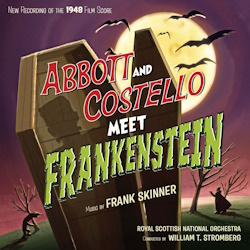
ABBOTT AND COSTELLO MEET FRANKENSTEIN – Frank Skinner
 MOVIE MUSIC UK CLASSICS
Original Review by Craig Lysy
Studio executives at Universal conceived of an audacious new film featuring their star comedians Abbott and Costello, which would bring them into contact with Frankenstein’s monster, Dracula, the Wolfman, the Mummy and the Invisible Man. Lou Costello was singularly unimpressed with the script, but relented when he was offered $50,000 and informed that his friend Charles Barton would be directing. Robert Arthur was placed in charge of production with a $759,524 budget, Charles Barton would direct, and Robert Lees, Frederic Rinaldo and John Grant were tasked with writing the screenplay. For the cast, Bud Abbott would play Chick Young and Lou Costello would play Wilbur Grey. Joining theme would be Lon Chaney as Lawrence Talbot (The Wolfman), Béla Lugosi as Dr. Lejos (Dracula), Glenn Strange as Frankenstein’s monster, and Lenore Aubert as Sandra Mornay. Read more…
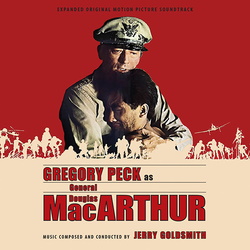
MACARTHUR – Jerry Goldsmith
 MOVIE MUSIC UK CLASSICS
Original Review by Craig Lysy
The genesis of Macarthur lay with Frank McCarthy, who served as aide to General George C. Marshall during WWII. McCarthy became a producer at 20th Century Fox Studios in 1949. He was a supreme patriot, and he sought to extol some of America’s greatest generals of WWII. His first project was the biopic Patton in 1970, which explored the life of the brilliant, irrepressible, and profane general of the 3rd Army. Following the great success of the film he selected his next project, a biopic of another iconic, brilliant and rebellious general, Douglas MacArthur. Casting and production challenges derailed McCarthy, but he rebounded and found backing from Universal Studios. He was placed in charge of production with a small $16 million budget, Joseph Sargent was tasked with directing, with Hal Barwood and Matthew Robbins hired to write the screenplay. For the cast, the titular role was turned down by George C. Scott and Marlon Brando, and Sargent eventually recruited Gregory Peck. Joining him would be Ed Flanders as President Harry S. Truman, Dan O’Herlihy as President Franklin D. Roosevelt, Ivan Bonar as Lieutenant General Richard K. Sutherland, Ward Costello as General C. Marshall, and Marj Dusay as Jean MacArthur. Read more…
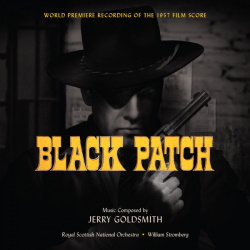
BLACK PATCH – Jerry Goldsmith
 MOVIE MUSIC UK CLASSICS
Original Review by Craig Lysy
The genesis of the film lay with producer-director-writer-actor George Montgomery best known for his work in the Western genre. In February 1957 he announced his latest project, “Decision At Sundown” based on an original screenplay by Leo Gordon. The title was later changed to “Black Patch”. His own production company Montgomery Productions would finance the project, with Allen Miller tasked with production as well as directing. A fine cast was assembled with Montgomery starring as Marshall Clay Morgan. Joining him would be Sebastian Cabot as Frenchy De Vere, Diane Brewster as Helen Danner, Tom Pittman as Flytrap (Carl), Leo Gordon as Hank Danner, House Peters Jr. as Holman Lynn Cartwright as Kitty and Jorge Trevino as Pedoline. Read more…
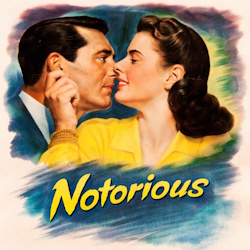
NOTORIOUS – Roy Webb
 MOVIE MUSIC UK CLASSICS
Original Review by Craig Lysy
The genesis of the film arose in 1944 from renown producer David O. Selznick and director Alfred Hitchcock who conceived a story of a woman sold into sexual enslavement for political purposes, which was based on the short story “The Song of the Dragon” (1921) by John Traintor Foote. William Dozier an RKO executive was also interested in bringing the story to the big screen and saw opportunity when he learned that Selznick’s production of “Duel in the Sun” (1946) was significantly over budget. He negotiated a purchase deal for $800,000 and 50% of the profits, which specified that Alfred Hitchcock would be the director, Ben Hecht the screenwriter, with Cary Grant and Ingrid Bergman as the starring actors. Alfred Hitchcock took on the reins to also produce the film with RKO Pictures providing a $1.0 million budget. Hitchcock assembled a cast for the ages with Cary Grant as agent T. R. Devlin, Ingrid Bergman as Alicia Huberman, Claude Rains as Alexander Alex, Louis Calhern as Captain Paul Prescott, and Leopoldine Konstantin as Madame Anna Alex. Read more…
HOW GREEN WAS MY VALLEY – Alfred Newman
 MOVIE MUSIC UK CLASSICS
Original Review by Craig Lysy
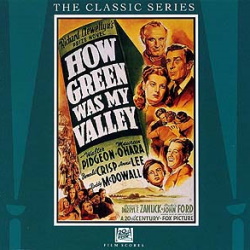
20th Century studio executive Darryl F. Zanuck was seeking an epic film in the vein of Gone With The Wind, and believed he had at last found his answer in Richard Llewellyn’s popular 1939 novel How Green Was My Valley. He purchased the screen rights and tasked William Wyler to direct with an $800,000 budget. Wyler was shortly thereafter replaced by John Ford who wanted to shoot the film live in Wales, but was overruled by the studio as the raging Nazi Blitz and the Battle of Britain made it too dangerous. A set was constructed in Malibu and the film shot in black and white as the indigenous California flowers were different colors that the Welsh flowers. A fine cast was hired, including Walter Pidgeon as Pastor Gruffydd, Maureen O’Hara as Angharad Morgan, Donald Crisp as Gwilym Morgan, Roddy McDowall in his acting debut as Huw Morgan, Sara Allgood as Beth Morgan, Patric Knowles as Ivor Morgan, John Loder as Lanto Morgan, Richard Fraser as Davy Morgan, Evan Evans as Gwilym Morgan Jr., James Monks as Owen Morgan, Anna Lee as Ivor’s wife Bronwyn, and Irving Pichel as an adult Huw Morgan, who narrates the film. Read more…
DARK VICTORY – Max Steiner
 MOVIE MUSIC UK CLASSICS
Original Review by Craig Lysy
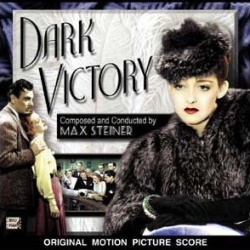
Actress Bette Davis discovered the play “Dark Victory” and was determined to play Judith Traherne in a big screen production. She convinced Warner Brothers producers Hal Wallis and David Lewis, as well as Director Edmund Goulding to take on the project. Yet they did not have the film rights, which they had to purchase from David O. Selznick for $50,000. The film would be based on the 1934 play “Dark Victory” by George Emerson Brewer Jr. and Bertram Bloch, with Casey Robinson hired to write the screenplay. A budget of $1 million was provided and a truly stellar cast assembled. Joining Davis would be George Brent as Dr. Frederick Steele, Humphrey Bogart as Michael O’Leary, Geraldine Fitzgerald as Ann King, Henry Travers as Dr. Parsons, Ronald Reagan as Alex Hamm and Cora Witherspoon as Carrie Spottswood. Read more…
NICHOLAS AND ALEXANDRA – Richard Rodney Bennett
 MOVIE MUSIC UK CLASSICS
Original Review by Craig Lysy
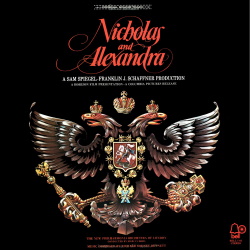
Producer Sam Spiegel had long aspired to make a film set during the Russian Revolution and decided to roll the dice after witnessing the stunning success of David Lean’s film Doctor Zhivago. His initial intent was to derive his screenplay from historical events recorded in the public domain, however he changed course and decided to adapt Robert H. Massie’s popular 1967 novel Nicholas and Alexandra. He purchased the film rights and hired James Goldman (The Lion in Winter) to write the screenplay. Yet the task was onerous with countless rewrites as four directors came and went. It was only after Franklin Schaffner came on to direct that a final screenplay was realized. Spiegel vision was to create an epic film in the tradition of Doctor Zhivago and Lawrence of Arabia, yet he was constrained by Columbia studio executives who were reluctant to offer a generous budget after terrible financial setbacks with The Chase and The Night of the Generals. As such he could not afford actors Peter O’Toole, Vanessa Redgrave and Rex Harrison. He did however manage to secure the services of Laurence Olivier as Count Witte. Joining him would be less familiar actors including Michael Jayston as Tsar Nicholas II, Janet Suzman as Tsaritna Alexandra, Tom Baker as Rasputin, Michael Redgrave as Sazonov, Jack Hawkins as Vladimir, Harry Andrews as Grand Duke Nicholas, Roderic Noble as Tsarevich Alexei, Ania Marson as Grand Duchess Olga, Lynne Frederick as Grand Duchess Tatiana, Candace Glendenning as Grand Duchess Marie, Fiona Fullerton as Grand Duchess Anastasia, and Irene Worth as the Dowager Tsaritsna Marie. Read more…
SHE – Max Steiner
 MOVIE MUSIC UK CLASSICS
Original Review by Craig Lysy
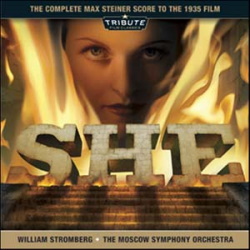
RKO studio executives were fascinated by the film prospects presented by of Henry Rider Haggard’s 1887 novel She. The tale offered a broad canvass, which featured adventure, mystery, love, magic and immortality. They purchased the screen rights in 1932 and in 1933 assigned the project to Merian Cooper, who had just assumed his new position as Vice President of Production for RKO. He brought in Dudley Nichols and Ruth Rose to write the screenplay, and they ended up creating a story, which drew upon plot elements from all four novels of the series. Cooper had a grand vision and with a $1 million budget purchased lavish costumes and fashioned magnificent architecture sets for the city of Kor in the Art Deco design, and assigned Lansing C. Holden and Irving Pichel as directors to bring it all to life. Yet they were undone when the budget was slashed and they were forced to abandon technicolor and instead shoot in black and white. For the cast Cooper recruited opera singer Helen Gahagan for the titular role. Joining her would be Randolph Scott as John Vincey and Leo Vincey, Nigel Bruce as Professor Horace Holly, Helen Mack as Tanya Dugmore, and Gustav von Seyffertitz as Governor Billali. Read more…
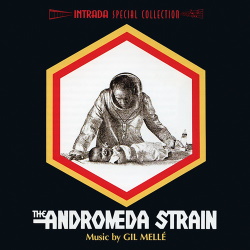
THE ANDROMEDA STRAIN – Gil Mellé
 MOVIE MUSIC UK CLASSICS
Original Review by Craig Lysy
Universal Studios executives saw opportunity to capitalize on the public fascination surrounding the best-selling 1969 techno-thriller novel The Andromeda Strain by Michael Crichton, and purchased the film rights for $250,000. Renowned academy award winning director Robert Wise was brought in to both produce and direct the film and given a generous budget of $6.5 million. He hired trusted collaborator Nelson Gidding to adapt the novel for the screen and brought in a fine cast, which included; Arthur Hill as Dr. Jeremy Stone, James Olson as Dr. Mark Hall, David Wayne as Dr. Charles Dutton, Kate Reid as Dr. Ruth Leavitt. Paula Kelly as nurse Karen Anson, and George Mitchell as Mr. Peter Jackson. Read more…
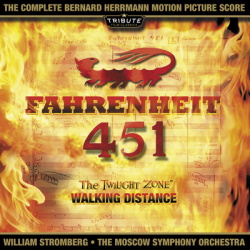
FAHRENHEIT 451 – Bernard Herrmann
 MOVIE MUSIC UK CLASSICS
Original Review by Craig Lysy
Famous French Director Francois Truffaut was fascinated by the possibilities of directing a film version of Ray Bradbury’s acclaimed 1953 dystopian novel Fahrenheit 451. He met with the author who was supportive and obtained the film rights. He then secured the backing of Universal Pictures for what would be the company’s first European production. Lewis M. Allen was tasked with producing the film and a modest budget of $1.5 million was provided. Austrian actor Oskar Werner was cast as Guy Montag, which proved a mistake as he would not accept Truffaut’s vision for his character. The conflict was so severe that Truffaut contemplated abandoning the project. Joining Werner would be Julie Christie in a dual role as Linda Montag and Clarisse – a decision later criticized. Cyril Cusack would play Captain Beatty and Anton Diffring would play Fabian. The story is set in a dystopian future where a totalitarian government rules the United States and uses a Gestapo-like force called the “Firemen” to seek out and destroy all books by fire in an effort to suppress dissent, and any idea that challenges the security of the governing order. It explores the life of Fireman Guy Montag who relentlessly finds and burns books believing they make people unhappy. By chance he makes the acquaintance of schoolteacher Clarisse who asks if he ever reads the books he burns. This spurs his curiosity and he begins to hide books, choosing David Copperfield by Charles Dickens to be his first read. Read more…
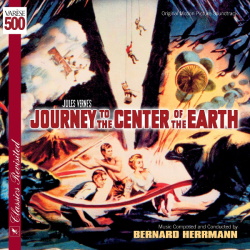
JOURNEY TO THE CENTER OF THE EARTH – Bernard Herrmann
 MOVIE MUSIC UK CLASSICS
Original Review by Craig Lysy
20th Century Fox studio executives sought to cash in on the recent commercial success of two fantasy-adventure films, 20,000 Leagues Under the Sea and Around the World in 80 Days. They envisioned a big budget CinemaScope production, which would once again draw upon a story by famous French novelist Jules Verne, in this case, his 1864 novel Journey to the Center of the Earth. Charles Brackett was given the reins to produce the film, and would collaborate with Walter Reisch to write the screenplay. Henry Levin was tasked with directing, and ultimately secured a fine cast, despite some recasting problems. James Mason would play Professor Sir Oliver Lindenbrook, with Pat Boone joining as his apprentice Alec McEwan, Diane Baker as Jenny Lindenbrook, Arlene Dahl as Carla Goteborg, Peter Ronson as Hans Bjelke and Thayer David as Count Arne Saknussemm. Read more…
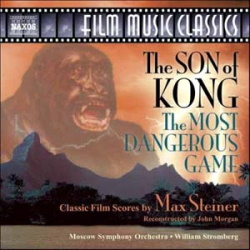
THE MOST DANGEROUS GAME – Max Steiner
 MOVIE MUSIC UK CLASSICS
Original Review by Craig Lysy
RKO Radio Pictures executives saw the popularity of the 1924 short story The Most Dangerous Game by Richard Connell, which was published by Collier’s Magazine and decided that it should be adapted to the big screen. They purchased the film rights, and assigned Merian Cooper, Ernest Schoedsack, and David O. Selznick to produce. The team of Irving Pichel and Ernest Schoedsack would direct the film with a budget of $220,000. James Ashmore Creelman was hired to write the screenplay, and a fine cast was assembled, which included Joel McCrea as Robert Rainsford, Fay Wray as Eve Trowbridge, Leslie Banks as Count Zaroff, Robert Armstrong as Ivan, Steve Clemente as Tartar, Dutch Hendrian as Servant, and William Davidson as the Captain. The story is set in 1932 off the western coast of South America. Renowned big game hunter and author Bob Rainsforth is enjoying a cruise on a luxury yacht through a channel in the remote Tierra Del Fuego. The Captain raises concerns when the channel lights vary from his charts but is ordered to proceed by the yacht’s owner. The yacht runs aground upon a shoal, sinks, and explodes, with Rainsforth the only survivor. Read more…
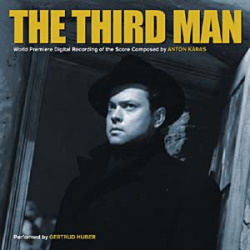
THE THIRD MAN – Anton Karas
 MOVIE MUSIC UK CLASSICS
Original Review by Craig Lysy
English novelist Graham Greene became intrigued by post war events unfolding in Europe and decided to write a suspense novella titled “The Third Man”. Unlike his previous novels, he intended for this latest effort to serve as source material for a film noir screenplay set in post WWII Vienna. As part of his research, he met Elizabeth Montagu in Vienna, who served as a tour guide for traditional landmarks, but also its renowned sewers and unsavory night clubs. She introduced him to Peter Smolka, the European correspondent for the Times, who provided him with stories of Vienna’s underbelly of black markets. The tours and tales were invaluable and inspired Greene to write one of the finest stories in his career. Well he had no problem selling his handiwork, and a legendary collaboration of talent joined together to produce the film, which included Alexander Korda, David O. Selznick and Carol Reed, who was also tasked with directing. A fine cast was assembled, which included Joseph Cotton as Holly Martins, Alida Valli as Anna Schmidt, Orson Welles as Harry Lime and Trevor Howard as Major Calloway. Reed had a vision for the film and brought in Austrian expressionist cinematographer Robert Krasker who would use harsh lighting and “Dutch Angle” camera technique to create an avant-garde atmospheric black-and-white viewing experience. Read more…
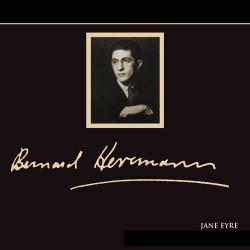
JANE EYRE – Bernard Herrmann
 MOVIE MUSIC UK CLASSICS
Original Review by Craig Lysy
In 1941 independent producer David O. Selznick hired director John Houseman to write the script for his next project, a retelling of Charlotte Bronte’s classic novel, Jane Eyre; ultimately the screenplay was realized thanks to the collaboration of fellow director Robert Stevenson and writer Aldous Huxley. However, at this point of his career, Selznick was tired and seeking a respite from producing films. As such he sold production rights for Jane Eyre and several other films to William Goetz of 20th Century Fox. Kenneth MacGowan and Orson Welles were assigned to produce the film and Robert Stevenson was tasked with directing. Welles would star as Edward Rochester with Joan Fontaine as Jane Eyre. Joining them would be a fine cast which included Margaret O’Brien as Adele Verans, Peggy Ann Garner as young Jane Eyre, John Sutton as Dr. Rivers, Sara Allgood as Bessie, Agnes Moorhead as Mrs. Reed and Elizabeth Taylor as Helen Burns. Read more…
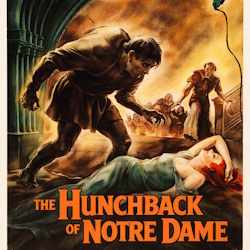
THE HUNCHBACK OF NOTRE DAME – Alfred Newman
 MOVIE MUSIC UK CLASSICS
Original Review by Craig Lysy
The dawning of the new age of film with dialogue and music had arrived and Universal Studio executives decided to explore a remake of their 1923 production of The Hunchback of Notre Dame. A favorable fan poll in 1936 added impetus to the endeavor, but the studio was never able to assemble the lead actors to launch the project and so sold the film rights to MGM, which in turn sold them to RKO. RKO was committed to the project and built a massive recreation of Paris and the cathedral on their ranch in the San Fernando Valley outside Los Angeles. Pedro Berman was hired to produce the film and provided a massive budget of $1.8 million. William Dieterle was given the reigns to direct the film, which would again be adapted from Victor Hugo’s famous 1831 novel Sonya Levien and Bruno Frank provided the screenplay and a fine cast was assembled, which included Charles Laughton as Quasimodo, Sir Cedric Hardwicke as Jehan Frollo, Thomas Mitchell as Clopin, Maureen O’Hara in her screen debut as Esmeralda, Edmund O’Brien as Pierre Gringoire, Walter Hampden as Archbishop Claude Frollo, and Harry Davenport as King Louis XI of France. Read more…

Shop at the Movie Music UK Store

Member of the

 MOVIE MUSIC UK