Archive
THE ADVENTURES OF MARK TWAIN – Max Steiner
 GREATEST SCORES OF THE TWENTIETH CENTURY
Original Review by Craig Lysy
In 1941 Warner Brothers Studios decided that they wanted to bring to the big screen a biopic film, which explored the life of one of America’s most beloved writers, Samuel Clemens, better known as Mark Twain. The project was forced to reckon with Twain’s daughter Clara Clemens Gabrilowitsch, who was fiercely protective of her father’s legacy. Research into Twain’s life was meticulous and screenwriters Alan Le May and Harold M. Sherman eventually wrote a screenplay, which satisfied all stakeholders. Jesse L. Lasky was placed in charge of production with $1.623 million provided for the budget. Irving Rapper was tasked with directing, and an exceptional cast was assembled, including Fredric March in the titular role, Alexis Smith as Olivia Langdon Clemens, Donald Crisp as J.B. Pond, and Alan Hale as Steve Gillis. Read more…
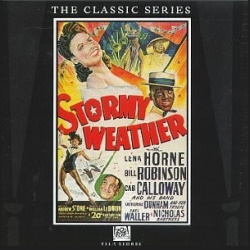
STORMY WEATHER – Cyril J. Mockridge, Alfred Newman
 GREATEST SCORES OF THE TWENTIETH CENTURY
Original Review by Craig Lysy
In 1942 Wendell Wilkie, the 1940 Republican candidate for president visited 20th Century Fox Studio executives as an advocate for the Black Movement. He successfully obtained a commitment from the studio to “Regard the Negro as an integral part of American Life”. The studio affirmed that commitment in 1943 with the production of its first musical with an all-Black cast. It purchased the story’s film rights from authors Jerry Horwin and Seymour B Robinson, hired H.S. Kraft to write the screenplay, William LeBaron was assigned production, and Andrew L. Stone was tasked with directing. For the cast, Lena Horne would star as Salina Rogers and Bill ‘Bojangles’ Robinson as Bill Williamson, as well as Cab Calloway and his Cotton Club Orchestra, Fats Waller, The Nichols Brothers, Ada Brown, Dooley Wilson, and Katherine Dunham as themselves. Read more…
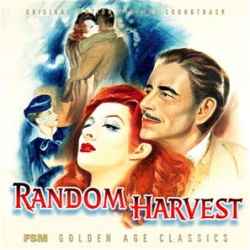
RANDOM HARVEST – Herbert Stothart
 GREATEST SCORES OF THE TWENTIETH CENTURY
Original Review by Craig Lysy
The genesis of the film arose in 1940 when MGM Head Story Editor Kenneth MacKenna was advised to evaluate renown novelist James Hilton’s latest book, “Random Harvest” for a possible film adaptation. The story resonated with MGM executives as the Battle of Britain raged and the studio purchased the film rights in November 1940 for $65,000. Sidney Franklin was placed in charge of production with a $1.21 million budget, Mervyn LeRoy was tasked with directing, and screenwriters Arthur Wimperis, George Froeschel and Claudine West were hired to adapt the novel. A fine cast was assembled, which included Ronald Coleman as Charles Rainier (Smithy), Greer Garson as Paula Ridgeway/Margaret Hanson, Philip Dorn as Dr. Jonathan Benet, and Susan Peters as Kitty Chilcet. Read more…
THE BLACK SWAN – Alfred Newman
 GREATEST SCORES OF THE TWENTIETH CENTURY
Original Review by Craig Lysy
Following the massive success of Warner Brothers The Sea Hawk in 1940, 20th Century Fox Studios decided to cash in on the 1932 Rafael Sabatini novel The Black Swan. Production chief Darryl F. Zanuck purchased the film rights as the perfect new adventure for the studio’s star actor Tyrone Power. Robert Bassler was placed in charge of production and provided a budget of $1.494 million. Henry King was tasked with directing, and Ben Hecht and Seton I. Miller hired to adapt the novel and write the screenplay. A stellar cast was assembled, which included Tyrone Power as Jaime Waring, Maureen O’Hara as Lady Margaret Denby, Laird Cregar as Henry Morgan, Thomas Mitchell as Tom Blue, George Sanders as Billy Leech, Anthony Quinn as Wogan and Edward Ashley as Roger Ingram. Read more…
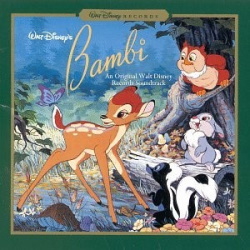
BAMBI – Frank Churchill, Edward H. Plumb, Larry Morey
 GREATEST SCORES OF THE TWENTIETH CENTURY
Original Review by Craig Lysy
Walt Disney was in dire financial straits with his last two films, Pinocchio and Fantasia, both under-performing at the box office. He needed a hit to reverse the company’s sliding fortunes when he came across the 1923 novel “Bambi, A Life in The Woods” by Felix Salten. The novel offered violence, sexual conquest, betrayal, and blood-and-guts action by cutthroats and murderers, yet after sifting out all its unsavory elements, it spawned an idea of a family film that centered on a young fawn named Bambi. Disney purchased the film rights in 1937 and personally took charge of production with an $858,000 budget. He insisted that the voices of children be used to speak for the many forest animals instead of adults speaking as children. It would take a team of six writers led by Perce Pearce, three years, with countless revisions, to finally draft a screenplay that met Disney’s expectations. David Hand was tasked with direction, and the voice cast included Bobby Stewart as Baby Bambi, Donnie Dunagan as Young Bambi, Hardie Albright as Adolescent Bambi and John Sutherland as Young Adult Bambi. Joining them would be Peter Behn as Young Thumper, Tim Davis as Adolescent Thumper and Same Edwards as Young Adult Thumper, Paula Winslowe as Bambi’s Mother, Will Wright as Friend Owl, Cammie King as Young Faline and Ann Gillis as Young Adult Faline. Read more…
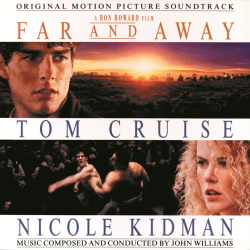
FAR AND AWAY – John Williams
 THROWBACK THIRTY
GREATEST SCORES OF THE TWENTIETH CENTURY
Original Review by Jonathan Broxton
Far and Away is a romanticized film about the American immigrant experience, specifically those who came from Ireland seeking their fortune in the new world in the 1890s, while the country was still recovering from the great potato famine several decades previously. The film stars Tom Cruise as Joseph Donnelly, a poor farmer from rural Ireland who meets Shannon Christie (Nicole Kidman), the privileged daughter of his father’s landlord, and they bond over their shared plans to emigrate to America. The film then follows the travails of the couple as they travel from Ireland to Boston, fall in with a local gang boss, and get involved in everything from bare knuckle boxing to prostitution simply to survive; the ultimate aim is for them to travel from Boston to Oklahoma to take part in a so-called ‘land race,’ the winner of which is given a plot of land and a shot at the American dream. The film co-starred Thomas Gibson, Robert Prosky, Colm Meaney, and Cyril Cusack alongside Cruise and Kidman, and was written by Bob Dolman and directed by Ron Howard – the same duo who made Willow in 1988. Read more…
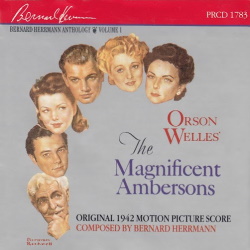
THE MAGNIFICENT AMBERSONS – Bernard Herrmann
 GREATEST SCORES OF THE TWENTIETH CENTURY
Original Review by Craig Lysy
Director Orson Welles had for some time desired to bring Booth Tarkington’s 1918 novel The Magnificent Ambersons to the big screen, a story that offered a wistful view of a dying American aristocracy. In order to gain RKO studio backing, he renegotiated his contract and granted the studio final cut rights. With their blessings, he oversaw production with a $854,000, which ballooned to over $1.18 million. He would also write the screenplay, and personally direct the film. A fine cast was assembled, which included Joseph Cotton as Eugene Morgan, Dolores Costello as Isabel Amberson Minafer, Anne Baxter as Lucy Morgan, Tim Holt as George Amberson Minafer, Agnes Moorhead as Fanny Minafer, and Orson Welles as the narrator. Read more…
YANKEE DOODLE DANDY – George M. Cohan, Ray Heindorf, Heinz Roemheld
 GREATEST SCORES OF THE TWENTIETH CENTURY
Original Review by Craig Lysy
In 1941 Warner Brothers Studios was seeking ideas for a new musical production. They finally conceived of a musical biopic film about the legendary American entertainer, playwright, composer, lyricist, actor, singer, dancer and theatrical producer George M. Cohan. They secured Cohan’s blessing and studio executives Jack L. Warner and Hal B. Wallis would manage production with a $1.5 million budget. Robert Buckner and Edmund Joseph were hired to write the screenplay and Michael Curtiz took the reins to direct. The cast included James Cagney as George M. Cohan, Joan Leslie as Mary Cohan, Walter Huston as Jerry Cohan, Richard Whorf as Sam Harris, Rosemary DeCamo as Nellie Cohan, and Irene Manning as Fay Templeton. Read more…
THEY DIED WITH THEIR BOOTS ON – Max Steiner
 GREATEST SCORES OF THE TWENTIETH CENTURY
Original Review by Craig Lysy
In 1941 MGM commissioned a heroic script by Aeneas MacKenzie, Wally Kline and Lenore J. Coffee about the life of General George Armstrong Custer, which would allow the studio to showcase their box office megastar Errol Flynn. Hal B. Wallis and Robert Fellows were placed in control of production with a $1.358 million budget. Raoul Walsh was tasked with directing after Flynn vetoed the studio’s first choice of Michael Curtiz. Flynn would star as General George Armstrong Custer, and joining him would be Olivia de Havilland as Elizabeth Bacon Custer, Arthur Kennedy as Ned Sharp, Charley Grapewin as California Joe, Gene Lockhart as Samuel Bacon, and Anthony Quinn as Crazy Horse. Read more…
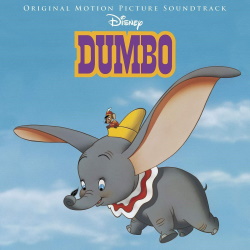
DUMBO – Oliver Wallace, Frank Churchill
 GREATEST SCORES OF THE TWENTIETH CENTURY
Original Review by Craig Lysy
The children’s story of Dumbo, written by Helen Aberson-Mayer in 1939, was presented to studio executive Walt Disney, who was inspired and so tasked screenplay writers Joe Grant and Dick Huemer, to adapt it for the big screen. After suffering loses with Pinocchio and Fantasia in 1940 Disney managed production, but was tight-fisted with company financial resources and so only budgeted $813,000, which as expected expanded ultimately to $950,000. The screenplay was written by Joe Grant, Dick Huemer and Otto Englander, while Supervising Director was assigned to Ben Sharpsteen. The voice cast would consist of Edward Brophy as Timothy Q. Mouse, Verna Felton as the Elephant Matriarch, Cliff Edwards as Dandy Crow, Herman Bing as the Ringmaster, and Sterling Holloway as Mr. Stork. Read more…
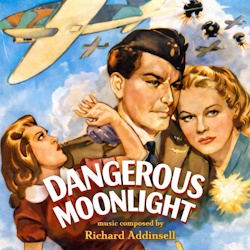
DANGEROUS MOONLIGHT – Richard Addinsell
 GREATEST SCORES OF THE TWENTIETH CENTURY
Original Review by Craig Lysy
In 1940 Great Britain was in the midst of WWII’s Blitz and the British production unit of RKO Radio Pictures conceived of a story of a classical concert pianist who joins the war effort to become a fighter pilot. Financial backing was secured, William Sistrom was assigned production, and Terrence Young (who would later go on to direct the James Bond films Dr. No, From Russia with Love, and Thunderball) was hired to write an original screenplay, with contributions by Rodney Ackland and Brian Desmond Hurst. Hurst also was tasked with directing and assembled a cast which included Anton Walbrook as Stefan Radetzky, Sally Gray as Carole Peters Radecka, John Laurie as a British Commander. Guy Middleton as Shorty, Cecil Parker as Specialist, and Derrick De Marney as Mike Carroll. Read more…
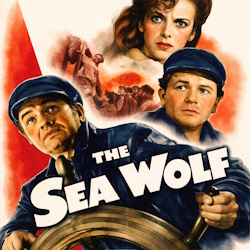
THE SEA WOLF – Erich Wolfgang Korngold
 GREATEST SCORES OF THE TWENTIETH CENTURY
Original Review by Craig Lysy
In 1940 Warner Brothers Studios decided to bring Jack London’s 1904 adventure drama novel The Sea Wolf to the big screen, only to realize that rival David O. Selznick owned the film rights. They were not deterred, negotiated purchase, and eventually paid Selznick $15,000 to obtain them. Hal B. Wallis was assigned production, provided a $1 million budget, and Robert Rossen was hired to adapt the novel and write the screenplay. Michael Curtiz was tasked with directing and a fine cast was assembled, including Edward G. Robinson as Wolf Larsen, Ida Lupino as Ruth Webster, John Garfield as George Leach, and Alexander Knox as Humphrey Van Weyden. Read more…
THE LETTER – Max Steiner
 GREATEST SCORES OF THE TWENTIETH CENTURY
Original Review by Craig Lysy
In 1924 author W. Somerset Maugham wrote a short story titled “The Letter” based on a story he heard while traveling to Singapore. Impressed with its reception, Maugham adapted the story into a stage play, which resulted in 338 performances in London, and 107 on Broadway. Paramount purchased the film rights and produced a film in 1929, which underperformed. Warner Brothers believed they could do better, and so purchased the film rights from Paramount in 1938. Hal B. Wallis was assigned production and Howard E. Koch was hired to write the screenplay, and William Wyler was given the reins to direct. A fine cast was brought in, which included Bette Davis as Leslie Crosbie, Herbert Marshall as Robert Crosbie, James Stephenson as Howard Joyce, Frieda Inescort as Dorothy Joyce, and Gale Sondergaard as Mrs. Hammond. Of note is that Mrs. Hammond was changed from a Chinese wife to an Eurasian to satisfy the Hays Code, which prohibited miscegenation. Read more…
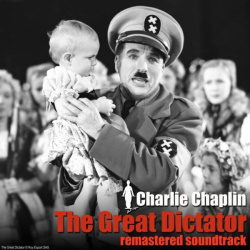
THE GREAT DICTATOR – Charles Chaplin, Meredith Willson
 GREATEST SCORES OF THE TWENTIETH CENTURY
Original Review by Craig Lysy
The genesis of The Great Dictator film arose when renowned producer-director Alexander Korda pointed out to Charlie Chaplin that he bore a striking resemblance to Adolf Hitler. Chaplin’s research revealed that they were born withing a week of each other, were approximately the same height and weight, and both emerged from poverty during their early life to achieve success. An additional stimulus to make the film came from German director Leni Riefenstahl’s 1935 film Triumph of Will, which made a comic impression on Chaplin. The film would be Chaplin’s first all-talking all-sound film and he decided to finance it with his own production company, allocating a $2 million budget. He would also direct, write the screenplay, jointly compose the score, and star in the film. For his cast, Chaplin would play the Jewish barber and Adenoid Hynkel – the Great Dictator. Joining him would be Paulette Goddard as Hannah, Jack Oakie as, Henry Daniell as Benzino Napolini, Reginald Gardiner as Commander Schultz, Billy Gilbert as Herring, and Maurice Moscovich as Mr. Jaeckel. Read more…
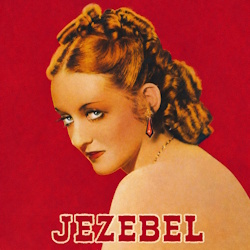
JEZEBEL – Max Steiner
 GREATEST SCORES OF THE TWENTIETH CENTURY
Original Review by Craig Lysy
Warner Brothers executives were seeking a vehicle to showcase their star Bette Davis following her 1935 Oscar win for Dangerous. They believed they found their story with the 1933 play Jezebel by Owen Davis. William Wyler was tasked with production with a $1.25 million budget, and would also direct. The team of Clements Ripley, Abem Finkel and John Huston were hired to write the screenplay and a stellar cast was assembled, including Bette Davis as Julie Marsden, Henry Fonda as Preston Dillard, George Brent as Buck Cantrell, Donald Crisp as Dr. Livingston, Fay Bainter as Aunt Belle Massey, Margaret Lindsay as Amy Bradford Dillard and Richard Cromwell as Ted Dillard. Read more…

Shop at the Movie Music UK Store

Member of the

 MOVIE MUSIC UK