OPEN RANGE – Michael Kamen
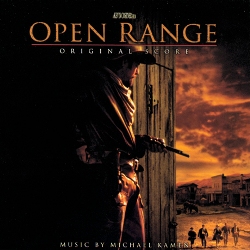 Original Review by Jonathan Broxton
As I write this review, it is now just over a week since Michael Kamen, the composer of Open Range, tragically died of a heart attack, at the age of just 55. In such circumstances, it is tempting to give in to sentimentality, and the fondness for which I held the man himself, and to allow it to cloud my judgment in giving what turned out to be his final score an impartial review. Kamen had taken something of a “sabbatical” during the years following the turn of the millennium, writing just three scores: Frequency, X-Men, and the amazing Band of Brothers. Even on Open Range he was not the first choice composer, being brought in as a replacement at short notice after the original score had been rejected by director Kevin Costner. Ultimately, Kamen wrote a gentle ballad to the old west, an evocative statement that celebrates the nobility, honor and steadfastness of the great American cowboy, a score which would have been just as lovely to listen to had its composer still been with us. Read more…
THE COOLER – Mark Isham
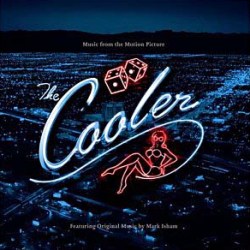 Original Review by Jonathan Broxton
For all his successful forays into the world of orchestral film music, Mark Isham will always remain, at heart, a jazzer. Having grown up with a trumpet almost permanently attached to his lips, Isham has soloed with the San Francisco Opera Orchestra, toured with The Beach Boys and Van Morrison, and performed as a “guest artist” on dozens and dozens of other records, as well as releasing many solo albums. Therefore, his jazz pedigree is in no doubt – but, in film at least, he rarely gets to show it. His work on The Cooler, therefore, is a wonderful change of pace. Read more…
THE MISSING – James Horner
 Original Review by Jonathan Broxton
After sitting out the entire summer of 2003, James Horner has exploded back onto the scene with four new scores in less than two months. The third of the four (the others being Radio, Beyond Borders and the Oscar-tipped House of Sand and Fog) is The Missing, a truly remarkable work which brings back wonderful memories of classic Horner scores from the early 1990s. And, although the stylistic elements of a dozen or so scores from his past are readily identifiable, in many ways it’s like revisiting an old friend. Yes, I have criticized other composers for doing the exact same thing in the past, but with Horner, it’s like coming home. Directed by Ron Howard and based on the novel “The Last Ride” by Thomas Eidson, The Missing stars Tommy Lee Jones as Samuel Jones, a father who returns to his home in 19th-century New Mexico, hoping to reconcile with his estranged adult daughter Maggie (Cate Blanchett). However, when Maggie’s young daughter (Evan Rachel Wood) is kidnapped by a psychopathic leader of a cult with mysterious powers, who has been kidnapping young girls all over the American south west, father and daughter must put aside their differences and work together to get her back. Read more…
Michael Small, 1939-2003
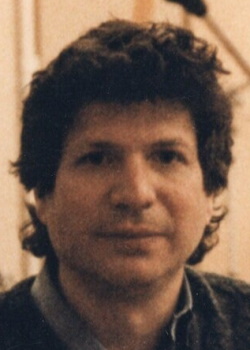 Composer Michael Small died in New York City on November 25, 2003, at the age of 64, from prostate cancer.
One of the most distinctive American film composers of the 1970s, Small became especially associated with psychological thrillers, creating unsettling, frequently unconventional scores for Klute, The Parallax View, Marathon Man, The Stepford Wives and Night Moves. Over a career lasting more than three decades he scored more than 50 films and television productions.
Small was born in New York City on May 30, 1939, and grew up in Maplewood, New Jersey. His father, Jack Small, was an actor who became general manager for the Shubert theatrical organization, and Michael initially dreamed of becoming a Broadway composer. He studied English at Williams College, where he wrote musicals and played jazz piano, and later spent a year studying at Harvard. Only after returning to New York in 1962 did he undertake formal musical training, studying orchestration privately with composer Meyer Kupferman.
Small entered films almost accidentally when producer Edward Pressman heard his work through the BMI musical-theatre workshop and hired him to score Out of It (1969), starring Jon Voight. Two years later he began the collaboration that would define his career when director Alan J. Pakula hired him for Klute (1971). Small’s sparse chamber score used unusual percussion, microtonal xylophone, electronics and a ghostly female voice to reflect both the danger surrounding Jane Fonda’s character and her complicated psychological world. Read more…
Michael Kamen, 1948-2003
 Composer Michael Kamen died on November 18, 2003 in London, England, after suffering a heart attack. He was 55.
Michael Arnold Kamen was born in New York in April 1948, where he attended The High School of Music and Art and the Juilliard School, where he specialized in composition and oboe performance. After being a part of the New York Rock & Roll Ensemble with fellow composer Mark Snow as a youth, Kamen moved to England in the 1970s and found work as ballet composer and as an arranger for pop and rock bands, notably for artists such as Kate Bush, David Bowie and Pink Floyd, for whom he arranged the album The Wall in 1979.
Having already dabbled in film music during the late 1970s, Kamen began embracing cinema fully in the early 1980s, writing the music for acclaimed films such as The Dead Zone and Brazil, and the TV mini-series Edge of Darkness, before cracking the Hollywood big-time with a trio of massively successful action scores between 1986 and 1989 – Highlander, Lethal Weapon and Die Hard. Read more…
OCTANE – Orbital
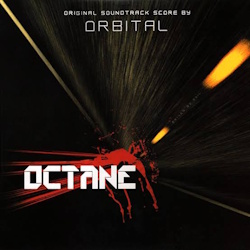 Original Review by Peter Simons
It was bound to happen and here it is. British dance act Orbital have scored their first movie. Yes, they already contributed quite a bit of music for the 1997 horror movie Event Horizon, though that was in addition to Michael Kamen’s orchestral score. Practically none of Orbital’s music ended up in the final cut of the movie, though they did dominate the soundtrack CD. They also re-mixed the title themes for The Beach, The Saint and Dr. Who. In various interviews Orbital, alias the brothers Phil and Paul Hartnoll, have expressed a love for film music. They list John Barry as one of their most important musical influences. So, no strangers to the genre, the brothers have finally gone and written their first solo film score. And it really is a true score. Not a collection of songs, or even song-like tracks – no siree, Octane is a full fledged motion picture score. Read more…
MASTER AND COMMANDER: THE FAR SIDE OF THE WORLD – Iva Davies, Christopher Gordon, Richard Tognetti
 Original Review by Peter Simons
The movies of Peter Weir have had some interesting musical choices. Throughout the 1980s and early 1990s, Maurice Jarre was his composer of choice, contributing electronic scores for films such as The Year of Living Dangerously, Witness, The Mosquito Coast and Witness. For his last major movie, The Truman Show, he combined new and old Philip Glass recordings with an original score by Burkhard Dallwitz. Weir’s latest movie, the sea-faring epic Master And Commander: The Far Side Of The World, follows a similar vein, with multiple composers credited. Iva Davies, Christopher Gordon and Richard Tognetti teamed up to write a score that is certainly atmospheric, and has a fair share of enjoyable tracks, yet for some reason is not very memorable. The soundtrack album is a mix of new music by the three composers, several tracks of traditional folk music, and a handful of classical tracks by Mozart, Bach, Vaughan-Williams and the like. The result is a mixed bag – in the negative sense of the word. Read more…
Remembering Stanley Myers, 1930-1993
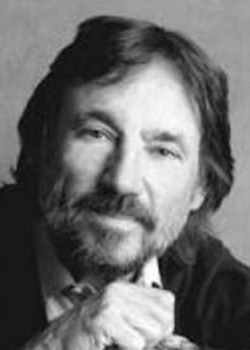 Composer Stanley Myers died ten years ago today in London on November 9, 1993, at the age of 63, following a battle with cancer.
One of Britain’s most prolific film composers, Myers wrote music for more than 100 film and television productions during a career spanning three decades, working with directors including Nicolas Roeg, Stephen Frears, Jerzy Skolimowski, Volker Schlöndorff and Michael Cimino.
Myers was born in Birmingham on October 6, 1930. By the 1960s he had established himself in cinema, with early successes including Jack Smight’s Kaleidoscope (1966) and Joseph Strick’s controversial adaptation of Ulysses (1967). Other notable scores from this period and the early 1970s included The Night of the Following Day, Michael Powell’s Age of Consent, The Walking Stick, Bryan Forbes’s The Raging Moon and the Oliver Reed thriller Sitting Target.
It was The Walking Stick (1970) that produced Myers’s most enduring composition. Its gentle guitar theme, “Cavatina,” was later expanded and recorded by classical guitarist John Williams. Eight years later Michael Cimino used Williams’s performance as the principal theme for The Deer Hunter (1978), where its delicate melancholy provided an unforgettable contrast to the film’s harrowing depiction of war and its aftermath. “Cavatina” became internationally famous and earned Myers an Ivor Novello Award.
Myers was never restricted to a single genre. During the 1970s he became closely associated with director Pete Walker’s distinctly British brand of exploitation horror, scoring House of Whipcord (1974), Frightmare (1974), House of Mortal Sin (1976) and Schizo (1976). Elsewhere he wrote for dramas, thrillers and international productions, including Ted Kotcheff’s The Apprenticeship of Duddy Kravitz and Volker Schlöndorff’s Coup de Grâce. His strongest music invariably reflected a considerable melodic gift, even when working within darker or more experimental material. Read more…
THE MATRIX REVOLUTIONS – Don Davis
 Original Review by Jonathan Broxton
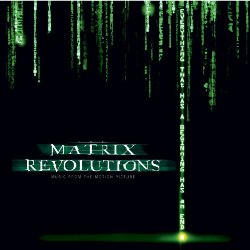
For Don Davis (and for quite a number of score and movie fans) 2003 has been the year of The Matrix. With the original 1999 movie becoming a surprising world-wide smash, and the May release of The Matrix Reloaded taking a staggering $281 million in the US alone, The Matrix Revolutions is one of the most eagerly awaited films of this, or any year. Equally, following the stunningly realized score Davis provided for Part II, his work on Revolutions has equally become one of most anticipated releases of the year. In a rare turn of events, the score actually meets – and in some cases – surpasses all the expectations, making it easily one of the best scores of 2003. With the talented Wachowski Brothers, Andy and Larry, picking up where the last movie finished, The Matrix Revolutions finds Neo (Keanu Reeves) somehow trapped in an unusual limbo world in between the real world and the Matrix, in which he must again battle the nefarious Agent Smith (Hugo Weaving), and from which he must escape before the sentinels reach the stronghold inside the last human city, Zion. Meanwhile, the human leaders and the erstwhile crew of the Nebuchadnezzar – Morpheus (Laurence Fishburne), Trinity (Carrie-Anne Moss), Link (Harold Perrineau), Niobe (Jada Pinkett Smith) and Lock (Harry Lennix) – begin making preparations for the imminent invasion…. an invasion which will surely mark the final battle between humans and machines on what remains of the Earth. Read more…
VERONICA GUERIN – Harry Gregson-Williams
 Original Review by Jonathan Broxton
Veronica Guerin was an investigative journalist who covered organized crime for Ireland’s best-selling newspaper, the Sunday Independent. A household name, she was famous not only for her fearless reporting about the murderers and drug lords of Dublin’s criminal underworld but also for her commitment to defending the public’s right to know. As a result of her work, she received numerous death threats, and was attacked numerous times. Guerin was murdered on June 26 1996, when a man on a motorcycle fired six rounds from a pistol at close range as she waited in her car at a traffic light just outside Dublin. Her death led to Ireland’s largest criminal investigation, resulting in over 150 arrests and a crackdown on organized-crime gangs that her assassins could never have foreseen. In November 1998, a man named Paul Ward, a Dublin drug dealer, was convicted of Guerin’s murder and sentenced to life in prison. Read more…
MATCHSTICK MEN – Hans Zimmer
 Original Review by Peter Simons
One of the most unexpectedly fun albums of the year undoubtedly has to be Hans Zimmer’s Matchstick Men. The sheer joy with which this score was written just oozes from its pores. That alone is worth a million bucks for me. Its snazzy, southern European feel is slightly reminiscent of As Good As It Gets, the score for which Zimmer received an Oscar nominated in 1997, but although it would be deserved, Hans won’t get that kind of recognition for Matchstick Men. The score deliberately weaves in performances of Nino Rota’s theme from La Dolce Vita, which automatically renders the score illegible for the Academy Awards. This is a shame, because this wicked little score deserves all attention and recognition it can get… but on the other hand — who gives a hoot about the Oscars? Read more…
S.W.A.T. – Elliot Goldenthal
 Original Review by Jonathan Broxton
When Elliot Goldenthal won the Best Original Score Academy Award last May, and joined the hallowed ranks of the Oscar winning composers, much interest was given to the film he would choose to score next. Goldenthal is a notoriously selective composer, rarely scoring more than two films per year, and who more often than not lends his talents to meaty dramas and weighty subjects. When S.W.A.T., an action packed cop thriller, was announced as being his next project, eyebrows were raised. But, after several quite “deep and meaningful” entries over the last couple of years, S.W.A.T. was exactly what the New Yorker needed: a chance to have fun. Read more…
Remembering Roy Budd, 1947-1993
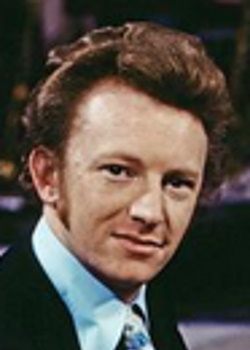 Composer Roy Budd died ten years ago today, on August 7, 1993, of a brain hemorrhage in hospital in London, UK. He was 46.
Roy Frederick Budd was born in London, England, in March 1947. A musical prodigy from a young age, Budd made his public debut on the piano at age six and was performing professionally by his teens. Deeply influenced by jazz legends such as Erroll Garner and Oscar Peterson, Budd quickly carved out a name for himself as a dynamic live performer, often appearing on British television and radio in the 1960s.
His entry into film scoring came in the late 1960s, but it was the 1971 crime thriller Get Carter that cemented his legacy, which he wrote when he was just 24 years old. The minimalist, percussive theme, composed and recorded in just a few days, went on become one of the most instantly recognizable pieces in British cinema history. Budd’s deft combination of jazz, funk, and moody atmospherics would become his signature, earning him further acclaim for scores to films such as Soldier Blue (1970), Fear Is the Key (1972), The Stone Killer (1973), The Marseille Contract (1974), Diamonds (1975), Paper Tiger (1975), Sinbad and the Eye of the Tiger (1977),The Wild Geese (1978), and The Sea Wolves (1980).
Over the course of his career, Budd scored more than 40 films, often working on films starring major British actors of the 1960s and 70s including Michael Caine, Richard Burton, and Roger Moore. In addition to his film work, he remained a passionate jazz performer, frequently recording albums and touring. Read more…
SEABISCUIT – Randy Newman
 Original Review by Jonathan Broxton
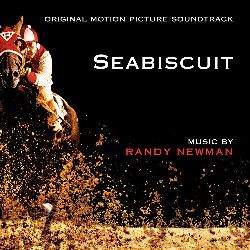
It’s been quite a while since Randy Newman scored something “serious”, having spent the last five years or so scoring either Pixar animations (A Bug’s Life, Toy Story 2, Monsters Inc.) or comedies (Meet the Parents). His last movie of real dramatic worth was Pleasantville, directed by Gary Ross, and he re-teams with the creative forces behind that film for Seabiscuit, a heart-warming true story of triumph over adversity in horse racing. Seabiscuit is based on a non-fiction book by Laura Hillenbrand. Set in Depression-era America, it stars Jeff Bridges as Charles Howard, a millionaire businessman, and owner of a racehorse named Seabiscuit, whose small size and tendency to injure itself indicates that the thing will never win a race. Sensing hidden depths in the animal, Howard hires revolutionary trainer Tom Smith (Chris Cooper), who sets about rehabilitating the poor pony with his new-fangled methods. One of these methods is to hire a new jockey, in the shape of Red Pollard (Tobey Maguire), a failed boxer who is considered too tall to be a jockey, and who has spent much of his life on the streets. However, bit by bit, Seabiscuit’s form improves – to the stage where, much to everyone’s surprise, the former failure has a shot at winning the 1938 Triple Crown. Read more…
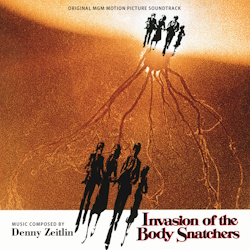
INVASION OF THE BODY SNATCHERS – Denny Zeitlin
 MOVIE MUSIC UK CLASSICS
Original Review by Jonathan Broxton
When people ask me “what is the scariest film you’ve ever seen”, my answer more often than not is this one: director Philip Kaufman’s 1978 remake of Invasion of the Body Snatchers. I distinctly remember seeing this film on television in the early hours of the morning, some time in the late 1980s (which would make me around 14-15 years of age), and being slowly terrified by the almost imperceptible sense of impending doom and creeping menace that permeates the film. By the time the final scene comes along, I was already pretty shaken. That final shot of Donald Sutherland, mouth open, with that inhuman scream, pointing at a disbelieving and hysterical Veronica Cartwright drove me over the edge. Read more…

Shop at the Movie Music UK Store

Member of the


