ELEKTRA – Christophe Beck
 Original Review by Peter Simons
A spin-off of Daredevil, Elektra is the latest entry in a long series of comic book adaptations. Starring Jennifer Garner of Alias-fame as the titular character, the movie tells the story of a warrior assassin with a heart who leads a secluded life only to spring into action when a secret order calls upon her to execute a widowing Mark Miller (Goran Visnjic) and his teen aged daughter Abby (Kirsten Prout). When she actually befriends them and refuses to kill them, she ends up protecting them from other assassins and ninjas. The movie is directed by Rob Bowman who previously directed episodes of The X-Files and its spin-off series The Lone Gunman as well as the motion picture Reign of Fire. Read more…
RACING STRIPES – Mark Isham
 Original Review by Jonathan Broxton
Considering that 2005 is just a few weeks old, it has already seen a film music landmark: the best score of Mark Isham’s career to date. Despite being best known for his jazz-inspired trumpet performances and beautiful orchestral works such as the Oscar-nominated A River Runs Through It and Fly Away Home, he had often in the past professed a desire to write a big, thematic, heroic orchestral score: his “Star Wars”, as he puts it. Obviously, Racing Stripes is in a totally different genre, but this could well be the very score he was describing. Read more…
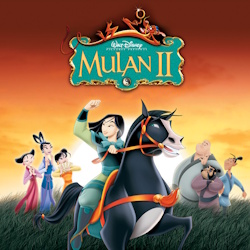
MULAN II – Joel McNeely
 Original Review by Jonathan Broxton
In recent years, the mammoth Disney corporation have been flooding the home video market with comparatively cheap ‘sequels’ to some of their high-profile theatrical animated features. In the last couple of years alone we have seen Return to Neverland (a sequel to Peter Pan), Lion King 3, Atlantis: Milo’s Return, Stitch! The Movie, and several others – and now Mulan II. However, unlike many of the other Disney DVD spin-offs, Mulan II has actually been the recipient of a great deal of praise, mainly for its intelligent storyline, uncompromising animation, and worthy score by current Disney golden boy Joel McNeely. Read more…
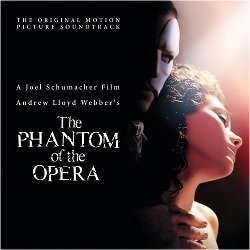
THE PHANTOM OF THE OPERA – Andrew Lloyd-Webber
 Original Review by Jonathan Broxton
One of the most beloved musicals in modern history, The Phantom of the Opera was written by British composer Andrew Lloyd-Webber in collaboration with lyricists Charles Hart and Richard Stilgoe. It premiered on the London stage with Michael Crawford and Sarah Brightman in the lead roles, and was an immediate smash hit, with its combination of lush romance, Gothic horror and classic themes of love and loss. Fifteen years later, director Joel Schumacher has finally brought this well-loved musical to the cinema screen as a lavish, large-scale costume-drama which looks set to be successful both at the box-office and at awards ceremonies in 2005. Read more…
THE AVIATOR – Howard Shore
 Original Review by Jonathan Broxton
The latest movie from acclaimed film-maker Martin Scorsese, The Aviator is an in-depth bio-pic examining the life of movie mogul, businessman and industrialist Howard Hughes who, during the 1930s and 40s was one of the richest men on the planet. Born in Texas in 1905, Hughes (played as an adult by Leonardo DiCaprio) claimed as a teenager that his ambitions in life were to “the world’s best golfer, the world’s best pilot, and the world’s best movie producer”. By the time he died in 1975 he was a recluse, having been reduced to a shadow of a man by his various mental problems, and the increasing severity of his obsessive compulsive disorder. But his life in between was nothing if not eventful: he inherited his father’s drill bit company and was a multi-millionaire by the time he was 19; he produced and directed a number of movies in Hollywood, including the famous “Hell’s Angels” (1930) and “The Outlaw” (1943); he dated many famous actresses of the day, including Jean Harlow (played in the film by Gwen Stefani), Katharine Hepburn (Cate Blanchett) and Ava Gardner (Kate Beckinsale); and most importantly (according to this film) he had a life-long fascination with aeroplanes, becoming the owner of TWA, effectively inventing Trans-Atlantic passenger air travel, and breaking numerous air-speed records before a horrific crash in 1946 put an end to it all. Read more…
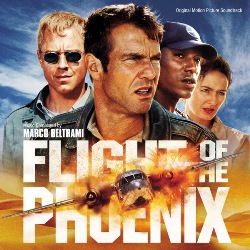
FLIGHT OF THE PHOENIX – Marco Beltrami
 Original Review by Jonathan Broxton
Marco Beltrami, by popular consensus, has enjoyed the most fruitful year of his career in 2004. Having already written excellent sci-fi scores for Hellboy and I Robot, he finishes the year with a score for director John Moore’s re-make of the classic 1965 disaster thriller Flight of the Phoenix. The original was directed by Robert Aldrich, starred Jimmy Stewart and Richard Attenborough, and featured a good score by Frank De Vol. The new version stars Dennis Quaid, Giovanni Ribisi and Miranda Otto, but the basic stories are the same: a group of contractors from an oil company are forced to make a crash landing in the Mongolian Gobi desert after the plane taking them home runs into a huge sandstorm. Hundreds of miles from civilization, and with virtually no hope of rescue, the disparate group of survivors are forced to put their trust in the least trustworthy member of the group – a mysterious and insecure man who claims to be an engineer, and who says he can rebuild their wrecked plane and return them safely home. Read more…
SPANGLISH – Hans Zimmer
 Original Review by Peter Simons
A comedy about the barrier of language, Spanglish is not exactly the most original movie out there. Newcomer Paz Vega stars a Flor, a Mexican immigrant who moves to America hoping to find a better future for herself and her daughter Christina (Victoria Luna). She finds a job as the personal housekeeper of the Clasky family (Tea Leoni and Adam Sandler). Of course, the fact that she doesn’t speak a word of English does complicate things a little. Directed by James L. Brooks who previously made As Good As It Gets and I’ll Do Anything among others, Spanglish was reasonably successful and showed the world that Adam Sandler is not that bad an actor if given half a chance. Read more…
LEMONY SNICKET’S A SERIES OF UNFORTUNATE EVENTS – Thomas Newman
 Original Review by Jonathan Broxton
In what can almost be seen as an extension of the playfulness he showed in writing Finding Nemo in 2003, Thomas Newman has written the score for Lemony Snicket’s A Series of Unfortunate Events, the first big-screen adaptation of the popular children’s stores by author Daniel Handler. Essentially a distillation of three of the Lemony Snicket books – The Bad Beginning”, “The Reptile Room”, and “The Wide Window” – director Brad Silberling’s film stars child actors Emily Browning and Liam Aiken as the Baudelaire children, made orphans in a mysterious fire and sent to live with their thespian uncle, Count Olaf (Jim Carrey). What results are – as the title suggests – a series of unfortunate events as Olaf hatches plot after plot to bump off the children and get his hands on their inheritance. With a supporting cast that includes Meryl Streep, Billy Connolly and Timothy Spall, Lemony Snicket looks set to rival Harry Potter in the coming years as the “literary franchise for children” – especially with another ten stories from which to choose future film storylines. Read more…
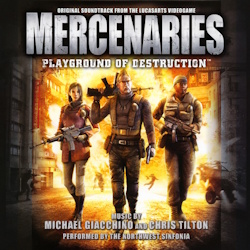
MERCENARIES: PLAYGROUND OF DESTRUCTION – Michael Giacchino, Chris Tilton
 GAME ZONE REVIEW
Original Review by Jonathan Broxton
Whereas television was once the breeding ground for aspiring composers, in the year 2005 the best place for the young and the talented to hone their craft is in the video game arena. I remember back in the 1980s when video game music consisted solely of little electronic blips and bloops; if you were lucky, you got a little synthesised melody which looped endlessly as you played. Not so today – it seems that every new ‘prestige’ game comes loaded with a full, thematic, orchestral score, many of which can rival the best of Hollywood’s output. So it is with Mercenaries: Playground of Destruction, the latest release from LucasArts and software developers Pandemic. Read more…
Golden Globe Nominations 2004
 The Hollywood Foreign Press Association (HFPA) has announced the nominations for the 62nd Golden Globe Awards, honoring the best in film and American television of 2004.
In the Best Original Score category, the nominees are:
- CLINT EASTWOOD for Million Dollar Baby
- JAN A. P. KACZMAREK for Finding Neverland
- ROLFE KENT for Sideways
- HOWARD SHORE for The Aviator
- HANS ZIMMER for Spanglish
These are the first nominations for Eastwood, Kaczmarek, and Kent, although Eastwood has been nominated three times previously as a director, winning for Bird in 1988 and Unforgiven in 1992. It is the third nomination for Shore, and the sixth nomination for Zimmer. Shore previously won for The Lord of the Rings: The Return of the King in 2003. Zimmer previously won for The Lion King in 1994 and Gladiator in 2000.
In the Best Original Song category, the nominees are:
- ADAM DURITZ, DAN VICKREY, DAVID BRYSON, MATT MALLEY, and DAVID IMMERGLÜCK (COUNTING CROWS) for “Accidentally in Love” from Shrek 2
- MICK JAGGER and DAVID A. STEWART for “Old Habits Die Hard” from Alfie
- WYCLEF JEAN, JERRY DUPLESSIS, and ANDREA GUERRA for “Million Voices” from Hotel Rwanda
- ANDREW LLOYD WEBBER and CHARLES HART for “Learn to Be Lonely” from The Phantom of the Opera
- ALAN SILVESTRI and GLEN BALLARD for “Believe” from The Polar Express
The winners of the 62nd Golden Globe Awards will be announced on January 16, 2005.
HOUSE OF FLYING DAGGERS – Shigeru Umebayashi
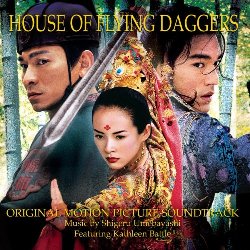 Original Review by Jonathan Broxton
In the wake of the success of the Oscar-winning 2000 film Crouching Tiger Hidden Dragon, Hollywood seems to be in love with Chinese martial arts films. It’s not difficult to see why: with their simple tales of love, honor and revenge, exotic locales and breathtaking scenery, and highly stylized action sequences (which, more often than not, feature characters performing gravity-defying stunts on wires), the genre is inherently cinematic. In 2002, revered director Zhang Yimou made the critically acclaimed Hero starring Jet Li. Having loved the experience so much, he immediately followed it with another film of a similar nature: House of Flying Daggers. Read more…
UN LONG DIMANCHE DE FIANÇAILLES/A VERY LONG ENGAGEMENT – Angelo Badalamenti
 Original Review by Jonathan Broxton
With the exception of the cult TV series Twin Peaks and the Golden Globe-nominated score for David Lynch’s poetic drama The Straight Story, the vast majority of Angelo Badalamenti’s work has been written for projects on the fringes of the mainstream. He works with offbeat, independent directors like Paul Schrader, and often writes music for films with little or no commercial potential, and often in languages other than English. I’ve been telling myself that I’m a fan of his for quite some time but, when I actually sit down and think about the numbers involved, there are really only four or five titles I actually like: Cousins, The Straight Story, The Beach and Secretary are among them. For this reason I approached his score A Very Long Engagement with a combination of anticipation and unease; on too many occasions, Badalamenti has slightly disappointed me with his final product, despite each film having great potential for excellent music. Fortunately, this is not the case here. Read more…
ALEXANDER – Vangelis
 Original Review by Peter Simons
Since the unexpected success of Ridley Scott’s 2000 sword-and-sandals hit Gladiator, historical biopics are in fashion again; showing us glimpses of the lives of Attila, Helen of Troy, Hannibal and, in this instance, Alexander the Great. Oliver Stone’s film primarily focuses on the eight years of the Macedonian king’s life during which he conquered the vast majority of the then known world. By the age of 25, Alexander (played here by Colin Farrell) had led his armies from Macedonia to India and paved the way for Greek culture to spread its influence. Somewhat controversially, the film also emphasizes Alexander’s bisexual nature and his relationship with boyhood friend Hephaestion (Jared Leto). The spectacular supporting cast Stone gathered together includes Angelina Jolie as Alexander’s mother Olympas and Anthony Hopkins as Old Ptolemy, as well as Val Kilmer, Christopher Plummer and Rosario Dawson. Read more…
EARTHSEA – Jeff Rona
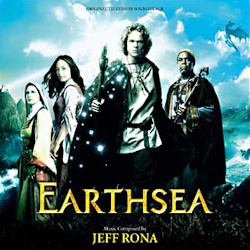 Original Review by Jonathan Broxton
Jeff Rona has had an interesting, somewhat unique career to date. The 48-year old American was one of the first composers-in-residence of the Media Ventures organisation when it first started up in the early 1990s, and scored the biggest hit of his career replacing Maurice Jarre on Ridley Scott’s White Squall in 1996, before sort of disappearing. He has contributed “additional ambiences” to occasional Zimmer outings, and written for TV productions such as the recent “Traffic” spin-off, but for some reason has never truly built on the potential he showed in the early 1990s, or capitalised on his association with Hans Zimmer the way other early-MV composers such as Mark Mancina, Trevor Rabin, Harry Gregson-Williams or John Powell have. Read more…
Remembering Irwin Kostal, 1911-1994
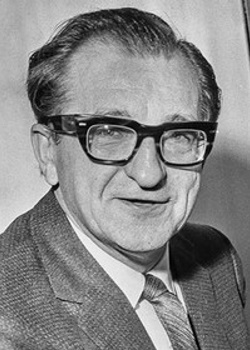 Composer, arranger, orchestrator and conductor Irwin Kostal died ten years ago today, on November 23, 1994, in Studio City, California, at the age of 83, following a heart attack.
One of the great musical craftsmen of the Hollywood musical, Kostal’s career encompassed Broadway, television and cinema, and included two Academy Awards for his work on West Side Story and The Sound of Music. He was also closely associated with Walt Disney, supervising the music for several of the studio’s most celebrated live-action musicals.
Kostal was born in Chicago, Illinois, on October 1, 1911, into a Czech-American family. He began playing piano as a child but was largely self-taught, learning orchestration by studying the scores of Beethoven, Debussy and other composers in his local library. After working as a dance-band musician in Chicago, he became an arranger for the NBC radio program Design for Listening. He moved to New York in 1946 and subsequently worked on television programs including Sid Caesar’s Your Show of Shows and The Garry Moore Show.
By the late 1950s Kostal had become one of Broadway’s leading orchestrators. His most important early assignment was Leonard Bernstein’s West Side Story (1957), whose complex mixture of jazz, Latin rhythms, symphonic writing and Broadway song was orchestrated by Kostal and Sid Ramin. He also worked on shows including Fiorello! and A Funny Thing Happened on the Way to the Forum.
When West Side Story reached the screen in 1961, Kostal joined Saul Chaplin, Johnny Green and Ramin in adapting Bernstein’s music for the much larger resources of the film orchestra. The result retained the rhythmic ferocity of the stage score while giving numbers such as “Tonight,” “America,” “Maria” and the climactic ballet sequences an enormous cinematic sweep. The four men shared the Academy Award for Best Scoring of a Musical Picture, one of ten Oscars won by the film. Read more…

Shop at the Movie Music UK Store

Member of the


