Archive
Academy Award Nominations 2005
 The Academy of Motion Picture Arts and Sciences (AMPAS) have announced the nominations for the 78th Academy Awards, honoring the best in film in 2005.
In the Best Original Score category, the nominees are:
- ALBERTO IGLESIAS for The Constant Gardener
- DARIO MARIANELLI for Pride & Prejudice
- GUSTAVO SANTAOLALLA for Brokeback Mountain
- JOHN WILLIAMS for Memoirs of a Geisha
- JOHN WILLIAMS for Munich
These are the first Oscar nominations for Iglesias, Marianelli, and Santaolalla, and are the 39th and 40th nominations for Williams. Williams previously won for Fiddler on the Roof in 1971, Jaws in 1975, Star Wars in 1977, E.T. the Extra Terrestrial in 1982, and Schindler’s List in 1993.
In the Best Original Song category, the nominees are:
- JORDAN HOUSTON, CEDRIC COLEMAN, and PAUL BEAUREGARD for “It’s Hard out Here for a Pimp” from Hustle & Flow
- DOLLY PARTON for “Travelin’ Thru” from Transamerica
- KATHLEEN ‘BIRD’ YORK and MICHAEL BECKER for “In the Deep” from Crash
The winners of the 78th Academy Awards will be announced on March 5, 2006.
BAFTA Nominations 2005
 The British Academy of Film and Television Arts (BAFTA) has announced the nominations for the 59th British Academy Film Awards, honoring the best in film in 2005.
In the Best Original Music category, which is named in memory of the film director Anthony Asquith, the nominees are:
- T-BONE BURNETT for Walk the Line
- GEORGE FENTON for Mrs. Henderson Presents
- ALBERTO IGLESIAS for The Constant Gardener
- GUSTAVO SANTAOLALLA for Brokeback Mountain
- JOHN WILLIAMS for Memoirs of a Geisha
This is the first nomination Iglesias. It is the second nomination Santaolalla, the third nomination for Burnett, the sixth nomination for Fenton, and the eleventh nomination for Williams. Santaolalla previously won for The Motorcycle Diaries in 2004. Williams previously won for Jaws and The Towering Inferno in 1975, Star Wars in 1978, The Empire Strikes Back in 1980, E.T. the Extra-Terrestrial in 1982, Empire of the Sun in 1988, and Schindler’s List in 1993.
The winners of the 59th BAFTA Awards will be announced on February 19, 2006.
Remembering Les Baxter, 1922-1996
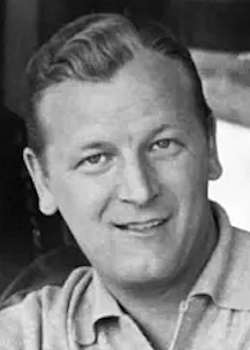 Composer, arranger and conductor Les Baxter died ten years ago today in Newport Beach, California, on January 15, 1996, at the age of 73.
One of the most prolific and colorful figures in American popular music, Baxter enjoyed parallel careers as a recording artist and film composer, becoming a pioneer of the exotica movement while writing music for well over 100 films. His screen work ranged from low-budget crime pictures and westerns to teenage comedies and some of the most memorable horror films produced by American International Pictures.
Leslie Thompson Baxter was born in Mexia, Texas, on March 14, 1922. He studied piano before moving toward composition and arranging, and began his professional career as a performer. During the 1940s he sang with Mel Tormé’s vocal group the Mel-Tones and worked as an arranger and conductor, eventually becoming closely associated with Capitol Records.
Baxter first achieved national prominence through a series of lush orchestral recordings that combined traditional popular music with unusual percussion, voices and instrumental colors. His 1951 album Ritual of the Savage became one of the foundational recordings of what would later be called exotica, with pieces such as “Quiet Village” evoking imaginary tropical landscapes through percussion, strings and wordless voices. Albums including Tamboo!, Caribbean Moonlight, Ports of Pleasure and Space Escapade further established his distinctive mixture of orchestral sophistication and unabashed escapism. Read more…
Golden Globe Nominations 2005
 The Hollywood Foreign Press Association (HFPA) has announced the nominations for the 63rd Golden Globe Awards, honoring the best in film and American television of 2005.
In the Best Original Score category, the nominees are:
- ALEXANDRE DESPLAT for Syriana
- HARRY GREGSON-WILLIAMS for The Chronicles of Narnia: The Lion, the Witch and the Wardrobe
- JAMES NEWTON HOWARD for King Kong
- GUSTAVO SANTAOLALLA for Brokeback Mountain
- JOHN WILLIAMS for Memoirs of a Geisha
These are the first nominations for Gregson-Williams, Howard, and Santaolalla. It is the second nomination for Desplat, and the 20th nomination for Williams. Williams previously won for Jaws in 1975, Star Wars in 1977, and E.T. The Extra-Terrestrial in 1982.
In the Best Original Song category, the nominees are:
- MEL BROOKS for “There’s Nothing Like a Show on Broadway” from The Producers
- ALANIS MORISSETTE for “Wunderkind” from The Chronicles of Narnia: The Lion, the Witch and the Wardrobe
- DOLLY PARTON for “Travelin’ Thru” from Transamerica
- TONY RENIS for “Christmas in Love” from Christmas in Love
- GUSTAVO SANTAOLALLA and BERNIE TAUPIN for “A Love That Will Never Grow Old” from Brokeback Mountain
The winners of the 63rd Golden Globe Awards will be announced on January 16, 2006.
Remembering Alessandro Cicognini, 1906-1995
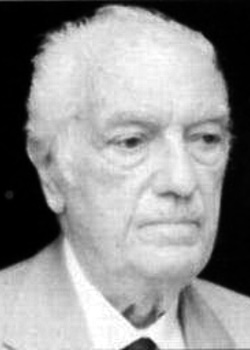 Composer Alessandro Cicognini died ten years ago today in Rome on November 9, 1995, at the age of 89.
One of the most important figures in the development of Italian film music, Cicognini was particularly associated with the great post-war neorealist films of Vittorio De Sica, including Shoeshine, Bicycle Thieves, Miracle in Milan and Umberto D. He also enjoyed significant collaborations with Alessandro Blasetti and other leading Italian directors, writing music for more than 100 feature films during a career spanning three decades.
Cicognini was born in Pescara on January 25, 1906, and spent much of his youth in nearby Francavilla al Mare. As a teenager he accompanied silent films on the piano at local cinemas, an experience that provided an unusually direct introduction to the relationship between music and moving images. Although his father encouraged him to pursue a conventional profession and he obtained a degree in law, Cicognini continued studying music, attending the Milan Conservatory under Giulio Cesare Paribeni and Renzo Bossi.
His early ambitions were in concert and operatic music. The cantata Saul appeared in 1932, followed by the three-act opera Donna Lombarda, which won recognition in a competition organized by Italian radio. Cinema soon became his principal occupation, however. His first film assignment was I Due Sergenti in 1936, followed by The Black Corsair the following year, and during the 1940s he developed an important relationship with Alessandro Blasetti on films including The Iron Crown, Four Steps in the Clouds and Prima Comunione. Read more…
Francesco De Masi, 1930-2005
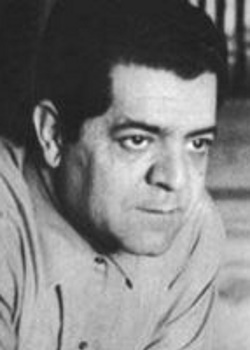 Composer and conductor Francesco De Masi died in Rome, Italy, on November 6, 2005, at the age of 75, following a battle with cancer.
One of the most prolific figures in Italian film music, De Masi wrote scores for more than 200 films and numerous television productions and documentaries, but remains best known for the distinctive music he composed for spaghetti westerns during the genre’s golden age.
De Masi was born in Rome on January 11, 1930, and studied composition at the San Pietro a Majella Conservatory in Naples with his uncle, Achille Longo. He also studied conducting with Franco Ferrara and Paul van Kempen and trained as a horn player, performing with orchestras including the RAI Symphony Orchestra in Rome. His interest in cinema began while assisting Longo on a film score, and in 1951 he composed the music for the documentary Fiat Panis. Several years of documentary work followed before he moved increasingly into feature films.
During the early 1960s De Masi worked extensively on the historical adventures and sword-and-sandal epics then dominating Italian popular cinema, including Hercules the Invincible. However, it was the explosion of the Italian western that provided him with his most characteristic body of work. Unlike many composers who entered the genre after the enormous success of Ennio Morricone’s scores for Sergio Leone, De Masi was already developing his own western sound and consequently retained a style that was distinctly his own.
Among his most notable westerns were A Coffin for the Sheriff (1965), Arizona Colt (1966), Seven Winchesters for a Massacre (1967), Any Gun Can Play (1967), and Kill Them All and Come Back Alone (1968). His music combined traditional symphonic scoring with electric guitars, percussion, whistles, choral writing and memorable title songs, while retaining a stronger orchestral foundation than many of his contemporaries. Arizona Colt was especially successful, with De Masi collaborating with guitarist and vocalist Alessandro Alessandroni on the score and its song “The Man from Nowhere.” Read more…
Remembering Brian Easdale, 1909-1995
 Composer Brian Easdale died ten years ago today, on October 30, 1995, at his home in London, England. He was 86.
A distinguished composer of concert, operatic and film music, Easdale is best remembered for his long association with directors Michael Powell and Emeric Pressburger, and especially for The Red Shoes, which made him the first British composer to win an Academy Award for a film score.
Easdale was born in Manchester on August 10, 1909, and was educated at Westminster Abbey Choir School before studying at the Royal College of Music with Gordon Jacob and Armstrong Gibbs. A precocious talent, he wrote his first opera, Rapunzel, at 17. During World War II he served with the Royal Artillery and later with the Public Relations Film Unit in India, where his experience writing music for government films helped prepare him for his subsequent career in cinema.
His breakthrough came when Powell and Pressburger hired him to score Black Narcissus in 1947. Easdale’s dramatic, sensuous music was an ideal complement to Jack Cardiff’s extraordinary Technicolor photography and the film’s atmosphere of suppressed desire and psychological tension. The success of the film led to Easdale becoming musical director for Powell and Pressburger’s Archers company, beginning one of the most important composer-director relationships in post-war British cinema.
Remembering Miklós Rózsa, 1907-1995
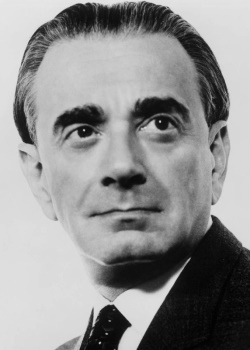 Composer Miklós Rózsa died ten years ago today, on July 27, 1995, at his home in Los Angeles, California, due to complications from a series of strokes. He was 88.
Born in Budapest in April 1907, Rózsa was a child prodigy who studied violin and composition from an early age. He completed his formal training in Leipzig, Germany, and initially made his name as a composer of concert music. In the 1930s he moved to Paris, and later London, having been encouraged by his friend, Swiss composer Arthur Honegger, to supplement his income writing music for cinema. His entry into film scoring came with Knight Without Armour (1937), produced by his fellow Hungarian Alexander Korda, and his success in British cinema led to a contract with MGM and a move to Hollywood in 1940.
Rózsa quickly distinguished himself in America with powerful, emotionally charged scores for films such as The Thief of Bagdad (1940), Lydia (1940), Sundown (1941), That Hamilton Woman (1941), Jungle Book (1942), Double Indemnity (1944), and Spellbound (1945), the latter of which earned him the the first of his three Oscar wins for Best Original Score. He was acclaimed for his ability to seamlessly blend traditional symphonic writing with dramatic storytelling, and often conducted extensive historical and ethnomusicological research to bring authenticity to his scores, resulting in a style that helped define the sound of Hollywood’s Golden Age.
He won his second Oscar for A Double Life (1947), and then a third for Ben-Hur (1959), which at time was heralded as one of the most ambitious film scores ever written, and which subsequently became a benchmark of epic film music. His other acclaimed and popular scores included such titles as The Lost Weekend (1945), The Killers (1946), The Red Danube (1949), Quo Vadis (1951), Ivanhoe (1952), Julius Caesar (1953), Knights of the Round Table (1953), Young Bess (1953), Valley of the Kings (1954), Lust for Life (1956), El Cid (1961), King of Kings (1961), Sodom and Gomorrah (1963), and The Golden Voyage of Sinbad (1974). Read more…
Joe Harnell, 1924-2005
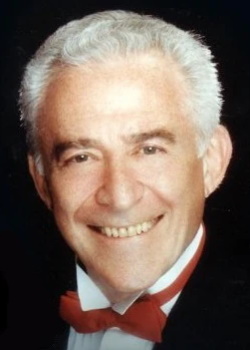 Composer, arranger, conductor and pianist Joe Harnell died in Sherman Oaks, California, on July 14, 2005, at the age of 80, from heart failure.
A musician whose career stretched from the big-band era to modern television, Harnell was best known for his haunting music for The Incredible Hulk, especially the melancholy piano piece “The Lonely Man,” which became one of the most memorable television themes of the 1970s. His other major screen credits included The Bionic Woman, V, Santa Barbara and Alien Nation.
Harnell was born Joseph Hittelman in the Bronx, New York, on August 2, 1924. His father performed in vaudeville and played in jazz and klezmer groups, and Harnell began piano lessons at six. By 14 he was already performing professionally. He studied music at the University of Miami before joining the United States Army Air Forces during World War II, where he toured with Glenn Miller’s celebrated military band.
Following the war Harnell continued his studies, including composition lessons with Aaron Copland, while establishing himself as a pianist, arranger and musical director. He worked with artists including Frank Sinatra, Judy Garland, Lena Horne, Pearl Bailey and Peggy Lee, accompanying Lee in concert and contributing to several of her recordings. Read more…
Academy Award Winners 2004
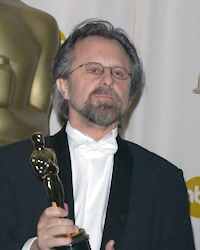 The Academy of Motion Picture Arts and Sciences (AMPAS) have announced the winners of the 77th Academy Awards, honoring the best in film in 2004.
In the Best Original Score category, Polish composer Jan A. P. Kaczmarek won the Academy Award for his score for Marc Forster’s Finding Neverland, which looked at the life of author J. M. Barrie and the creation of his character Peter Pan. In his acceptance speech Kaczmarek said:
I cannot tell you how happy I am, and thank you, Academy. “Finding Neverland” was a great adventure and I’m so proud to be part of it. Marc Forster, he should be here. Marc, thank you for your subtle mind, for your incredible talent. Also Richard is here, Richard Gladstein, a man who truly understands the power of music. I’m very thankful for this as well. And then my wife Elzbieta, who always surprises me with her intellectual passion and incredible taste. She’s responsible for many good notes I’ve written. And to my friend and agent Anita Greenspan, thank you so much.
The other nominees for Best Original Score were John Williams for Harry Potter and the Prisoner of Azkaban, Thomas Newman for Lemony Snicket’s A Series of Unfortunate Events, John Debney for The Passion of the Christ, and James Newton Howard for The Village.
In the Best Original Song category, Uruguayan singer-songwriter Jorge Drexler won the Academy Award for “Al Otro Lado del Río” from Walter Salles’s The Motorcycle Diaries. The victory was historic as “Al Otro Lado del Río” became the first song performed entirely in a language other than English to win the Academy Award for Best Original Song.
The other nominees for Best Original Song were Adam Duritz, Charles Gillingham, Jim Bogios, David Immergluck, Matthew Malley, David Bryson and Daniel Vickrey for “Accidentally in Love” from Shrek 2; Glen Ballard and Alan Silvestri for “Believe” from The Polar Express; Andrew Lloyd Webber and Charles Hart for “Learn to Be Lonely” from The Phantom of the Opera; and Bruno Coulais and Christophe Barratier for “Look to Your Path (Vois Sur Ton Chemin)” from The Chorus (Les Choristes).
Academy Award Nominations 2004
The Academy of Motion Picture Arts and Sciences (AMPAS) have announced the nominations for the 77th Academy Awards, honoring the best in film in 2004.
In the Best Original Score category, the nominees are:
- JOHN DEBNEY for The Passion of the Christ
- JAMES NEWTON HOWARD for The Village
- JAN A. P. KACZMAREK for Finding Neverland
- THOMAS NEWMAN for Lemony Snicket’s A Series of Unfortunate Events
- JOHN WILLIAMS for Harry Potter and the Prisoner of Azkaban
These are the first Oscar nominations for Debney and Kaczmarek. This is the 4th nomination for Howard, the 8th nomination for Newman, and the 38th nomination for Williams. Williams previously won for Fiddler on the Roof in 1971, Jaws in 1975, Star Wars in 1977, E.T. the Extra Terrestrial in 1982, and Schindler’s List in 1993.
In the Best Original Song category, the nominees are:
- BRUNO COULAIS and CHRISTOPHE BARRATIER for “Look to Your Path” from The Chorus
- JORGE DREXLER for “Al Otro Lado del Río” from The Motorcycle Diaries
- ADAM DURITZ, CHARLIE GILLINGHAM, JIM BOGIOS, DAVID IMMERGLÜCK, MATT MALLEY, DAVID BRYSON, and DAN VICKREY for “Accidentally in Love” from Shrek 2
- ANDREW LLOYD-WEBBER and CHARLES HART for “Learn to Be Lonely” from The Phantom of the Opera
- ALAN SILVESTRI and GLENN BALLARD for “Believe” from The Polar Express
The winners of the 77th Academy Awards will be announced on February 27, 2005.
BAFTA Nominations 2004
The British Academy of Film and Television Arts (BAFTA) has announced the nominations for the 58th British Academy Film Awards, honoring the best in film in 2004.
In the Best Original Music category, which is named in memory of the film director Anthony Asquith, the nominees are:
- CRAIG ARMSTRONG for Ray
- BRUNO COULAIS for The Chorus
- JAN A. P. KACZMAREK for Finding Neverland
- GUSTAVO SANTAOLALLA for The Motorcycle Diaries
- HOWARD SHORE for The Aviator
These are the first nominations for Coulais, Kaczmarek, and Santaolalla. It is the third nomination for Armstrong, and the fifth nomination for Shore. Armstrong previously won for William Shakespeare’s Romeo + Juliet in 1997 and Moulin Rouge! in 2001.
The winners of the 58th BAFTA Awards will be announced on February 12, 2005.
Golden Globe Nominations 2004
The Hollywood Foreign Press Association (HFPA) has announced the nominations for the 62nd Golden Globe Awards, honoring the best in film and American television of 2004.
In the Best Original Score category, the nominees are:
- CLINT EASTWOOD for Million Dollar Baby
- JAN A. P. KACZMAREK for Finding Neverland
- ROLFE KENT for Sideways
- HOWARD SHORE for The Aviator
- HANS ZIMMER for Spanglish
These are the first nominations for Eastwood, Kaczmarek, and Kent, although Eastwood has been nominated three times previously as a director, winning for Bird in 1988 and Unforgiven in 1992. It is the third nomination for Shore, and the sixth nomination for Zimmer. Shore previously won for The Lord of the Rings: The Return of the King in 2003. Zimmer previously won for The Lion King in 1994 and Gladiator in 2000.
In the Best Original Song category, the nominees are:
- ADAM DURITZ, DAN VICKREY, DAVID BRYSON, MATT MALLEY, and DAVID IMMERGLÜCK (COUNTING CROWS) for “Accidentally in Love” from Shrek 2
- MICK JAGGER and DAVID A. STEWART for “Old Habits Die Hard” from Alfie
- WYCLEF JEAN, JERRY DUPLESSIS, and ANDREA GUERRA for “Million Voices” from Hotel Rwanda
- ANDREW LLOYD WEBBER and CHARLES HART for “Learn to Be Lonely” from The Phantom of the Opera
- ALAN SILVESTRI and GLEN BALLARD for “Believe” from The Polar Express
The winners of the 62nd Golden Globe Awards will be announced on January 16, 2005.
Remembering Irwin Kostal, 1911-1994
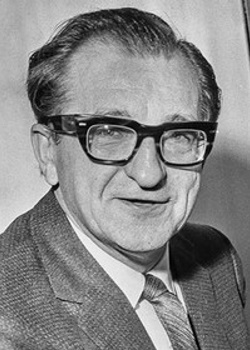 Composer, arranger, orchestrator and conductor Irwin Kostal died ten years ago today, on November 23, 1994, in Studio City, California, at the age of 83, following a heart attack.
One of the great musical craftsmen of the Hollywood musical, Kostal’s career encompassed Broadway, television and cinema, and included two Academy Awards for his work on West Side Story and The Sound of Music. He was also closely associated with Walt Disney, supervising the music for several of the studio’s most celebrated live-action musicals.
Kostal was born in Chicago, Illinois, on October 1, 1911, into a Czech-American family. He began playing piano as a child but was largely self-taught, learning orchestration by studying the scores of Beethoven, Debussy and other composers in his local library. After working as a dance-band musician in Chicago, he became an arranger for the NBC radio program Design for Listening. He moved to New York in 1946 and subsequently worked on television programs including Sid Caesar’s Your Show of Shows and The Garry Moore Show.
By the late 1950s Kostal had become one of Broadway’s leading orchestrators. His most important early assignment was Leonard Bernstein’s West Side Story (1957), whose complex mixture of jazz, Latin rhythms, symphonic writing and Broadway song was orchestrated by Kostal and Sid Ramin. He also worked on shows including Fiorello! and A Funny Thing Happened on the Way to the Forum.
When West Side Story reached the screen in 1961, Kostal joined Saul Chaplin, Johnny Green and Ramin in adapting Bernstein’s music for the much larger resources of the film orchestra. The result retained the rhythmic ferocity of the stage score while giving numbers such as “Tonight,” “America,” “Maria” and the climactic ballet sequences an enormous cinematic sweep. The four men shared the Academy Award for Best Scoring of a Musical Picture, one of ten Oscars won by the film. Read more…
Michel Colombier, 1939-2004
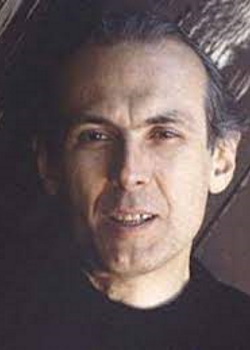 Composer, arranger, conductor and pianist Michel Colombier died at his home in Santa Monica, California, on November 14, 2004, at the age of 65, following a battle with cancer.
One of the most versatile French composers to enjoy a substantial Hollywood career, Colombier wrote music for more than 100 film and television productions while also working extensively in jazz, pop, ballet and concert music.
Colombier was born in Lyon on May 23, 1939, and grew up in Mulhouse, where his father played in the local opera orchestra. He studied piano and violin before entering the Paris Conservatoire and developed an early fascination with American jazz. In 1961 he became musical director for Barclay Records, arranging for Charles Aznavour, and later worked with artists including Serge Gainsbourg and Petula Clark.
His film career began in France during the 1960s, and he subsequently worked with directors including Claude Chabrol, Vittorio De Sica, Marcel Carné and Claude Lelouch. Particularly notable were Jean-Pierre Melville’s austere crime drama Un Flic (1972), Philippe Labro’s The Inheritor (1973), and Jacques Demy’s ambitious all-sung musical Une Chambre en Ville (1982). Colombier’s ability to combine classical technique with jazz, pop and electronic textures quickly distinguished him from more traditionally symphonic composers. Read more…

Shop at the Movie Music UK Store

Member of the


