Archive
Carlo Rustichelli, 1916-2004
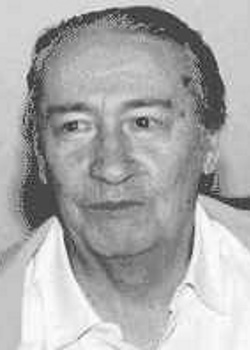 Composer Carlo Rustichelli died in Rome, Italy, on November 13, 2004, at the age of 87.
One of the most prolific and versatile composers in Italian cinema, Rustichelli wrote music for more than 250 films during a career spanning some five decades, working in virtually every genre from neorealist drama and comedy to horror, historical epics and spaghetti westerns.
Rustichelli was born in Carpi, near Modena, on December 24, 1916, into a musical family. He studied piano in Bologna before continuing his training in composition at Rome’s Santa Cecilia Academy, initially working in opera and theatre. He entered the film industry during the 1940s, but cinema became the focus of his career after meeting director Pietro Germi, beginning a collaboration that would last more than 25 years.
Their first significant collaboration was Lost Youth in 1947, followed by In the Name of the Law (1949) and The Path of Hope (1950). Rustichelli subsequently scored almost every major Germi film, including The Railroad Man (1956), A Man of Straw (1958), The Facts of Murder (1959), Divorce Italian Style (1961), Seduced and Abandoned (1964), The Birds, the Bees and the Italians (1966), and Alfredo, Alfredo (1972). His music became an essential part of Germi’s cinema, equally comfortable with intimate drama, Sicilian folk influences, sentiment and biting comic irony.
Divorce Italian Style, starring Marcello Mastroianni, was perhaps their most internationally famous collaboration. Rustichelli’s witty, deliberately exaggerated music perfectly complemented Germi’s savage satire of Sicilian morality and helped establish the composer’s reputation outside Italy. His gentler dramatic writing was equally effective, and A Man of Straw earned him his first Nastro d’Argento for Best Music in 1959.
The early 1960s were among Rustichelli’s busiest years. He scored Nanni Loy’s powerful wartime drama The Four Days of Naples (1962), Florestano Vancini’s The Long Night of ’43 (1960), Bernardo Bertolucci’s debut La commare secca (1962), and worked with Pier Paolo Pasolini on Accattone, Mamma Roma, Ro.Go.Pa.G. and The Gospel According to St. Matthew. His ability to draw on folk music, classical traditions and immediately memorable melodies made him exceptionally adaptable to the rapidly changing Italian cinema of the period. Read more…
Gil Mellé, 1931-2004
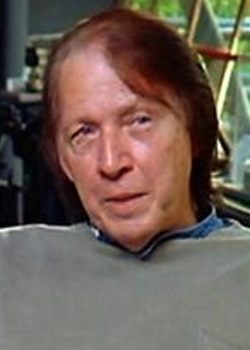 Composer, jazz musician, artist and electronic-music pioneer Gil Mellé died at his home in Malibu, California, on October 28, 2004, at the age of 72, following a heart attack.
One of the most unconventional figures in American film and television music, Mellé wrote scores for more than 125 productions, but remains best remembered for Robert Wise’s The Andromeda Strain and his groundbreaking use of electronic instruments.
Gilbert John Mellé was born in New York City on December 31, 1931. A gifted visual artist as well as a musician, he began playing saxophone as a teenager and was performing in Greenwich Village jazz clubs before he was 16. At 19 he signed with Blue Note Records, becoming the label’s first white musician, and recorded a series of albums including Patterns in Jazz and 5 Impressions of Color. He also designed album artwork for musicians including Miles Davis, Thelonious Monk and Sonny Rollins.
Mellé’s interests increasingly turned toward technology and electronic music. After moving to Los Angeles during the 1960s, he built his own synthesizers and other electronic devices and formed the Electronauts, an all-electronic jazz ensemble which performed at the Monterey Jazz Festival. His 1967 album Tome VI explored electronic jazz at a time when synthesizers were still a novelty.
His defining film assignment was The Andromeda Strain (1971), Wise’s adaptation of Michael Crichton’s science-fiction novel. Mellé created an almost entirely electronic sound world of pulses, oscillations, distorted tones and mechanical textures that perfectly complemented the film’s clinical laboratories and technological paranoia. He even recorded sounds at the Jet Propulsion Laboratory while researching the score. The result was one of the pioneering electronic scores for a major Hollywood film and earned Mellé a Golden Globe nomination for Best Original Score. Read more…
Remembering Jule Styne, 1905-1994
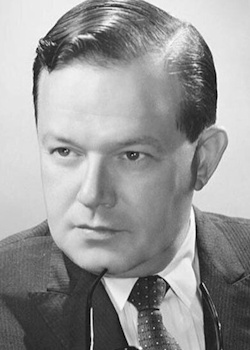 Composer and songwriter Jule Styne died at Mount Sinai Medical Center in New York City ten years ago today, on September 20, 1994, at the age of 88, following a heart attack after several weeks of ill health.
One of the towering figures of the American musical theatre, Styne composed the music for Gentlemen Prefer Blondes, Bells Are Ringing, Gypsy and Funny Girl, while his extensive Hollywood career produced songs including “It’s Magic,” “I Fall in Love Too Easily” and the Academy Award-winning “Three Coins in the Fountain.”
Julius Kerwin Stein was born in London’s East End on December 31, 1905, into a Jewish family of Ukrainian ancestry. His family emigrated to Chicago in 1912, where his exceptional talent at the piano quickly became apparent. A child prodigy, he performed with major symphony orchestras while still young, but eventually abandoned ambitions for a classical concert career and immersed himself instead in Chicago’s jazz and popular-music scene.
By the 1930s Styne was working as a pianist, bandleader and vocal coach. He eventually moved to Hollywood, where he coached performers including Shirley Temple and Alice Faye before establishing himself as a songwriter. His most important early partnership was with lyricist Sammy Cahn. Together they wrote dozens of songs for films and popular singers, including “I’ll Walk Alone,” “It’s Been a Long, Long Time,” “The Things We Did Last Summer,” “Time After Time,” “Guess I’ll Hang My Tears Out to Dry” and the seasonal standard “Let It Snow! Let It Snow! Let It Snow!” Read more…
Elmer Bernstein, 1922-2004
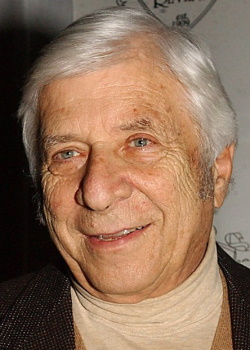 Composer Elmer Bernstein died on August 18, 2004, at his home in Ojai, California, after a lengthy battle with cancer. He was 82.
Bernstein was born in New York City in April 1922, the son of immigrants from Ukraine and Austria-Hungary. He studied piano as a child and showed early promise as a performer; during his childhood, he performed professionally as a dancer and an actor, but then switched to music and trained at the Juilliard School where he was encouraged by prominent figures such as Aaron Copland. During World War II, he served in the Army Air Forces, where he composed and arranged music for military radio programs.
Bernstein moved to California in in the early 1950s, when he was hired to score the thriller Sudden Fear in 1952. However, along with many other artists in Hollywood, Bernstein faced censure during the McCarthy era of the early 1950s, and was called by the House Un-American Activities Committee. After he refused to name names, pointing out that he had never attended a Communist Party meeting, he found himself composing music for Z-grade sci-fi movies such as Robot Monster and Cat-Women of the Moon.
His work on The Man with the Golden Arm (1955), one of the first major studio films to feature a jazz score, brought him back into the mainstream, earned him his first Oscar nomination and marked him as a daring and contemporary voice in film music. His score for The Ten Commandments (1956), an epic of biblical scale, demonstrated his facility with grand orchestration and established him as a composer of serious dramatic substance. He followed it with the heroic and unforgettable theme to The Magnificent Seven (1960), whose galloping rhythms and bold brass fanfares became one of the most enduring musical signatures in film history. Read more…
David Raksin, 1912-2004
 Composer David Raksin died on August 9, 2004, in Los Angeles, after a short illness. He was 92.
Raksin was born in Philadelphia, Pennsylvania, in August 1912. He studied at the University of Pennsylvania and the Curtis Institute of Music, and later with Isadore Freed in New York and Arnold Schoenberg in Los Angeles. He worked as an arranger for Charlie Chaplin on the score for Modern Times in 1936 when he was just 24 years old, and soon after began a long career as a composer for studio films.
With a career spanning more than six decades, Raksin composed music for over 100 films and numerous television programs, earning a reputation for melodic sophistication and dramatic sensitivity. His theme for the 1944 classic Laura is often cited as one of the most memorable in film history, and became a popular standard, with lyrics later added by Johnny Mercer. Raksin’s theme song for the 1953 film The Bad and the Beautiful (also called “Love is For the Very Young”) was also a hit.
Rakin’s other major composing credits include Forever Amber (1947), The Secret Life of Walter Mitty (1947), Force of Evil (1948), Whirlpool (1950), The Magnificent Yankee (1950), Across the Wide Missouri (1951), The Big Combo (1955), Bigger Than Life (1956), Separate Tables (1958), and Two Weeks in Another Town (1962), among many others. He received two Academy Award nominations and numerous honors for his work, which was admired for its lyrical beauty, harmonic depth, and keen dramatic sense. One of his last major scores was for the critically acclaimed nuclear holocaust-themed TV drama The Day After in 1983. Read more…
Piero Piccioni, 1921-2004
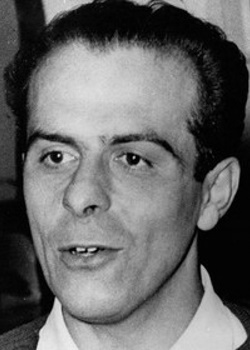 Composer, pianist and conductor Piero Piccioni died in Rome, Italy, on July 23, 2004, at the age of 82.
One of the most prolific and distinctive voices of post-war Italian cinema, Piccioni combined jazz, lush orchestral writing, pop, lounge music and the avant-garde across a career encompassing hundreds of compositions for film, television and radio.
Piccioni was born in Turin on December 6, 1921. Largely self-taught as a musician, he developed an early passion for American jazz, especially Art Tatum and Charlie Parker, and first performed on radio in 1938. Following World War II he led his own jazz ensemble, Orchestra 013, and spent time in New York, where he immersed himself further in American jazz. He initially pursued a career as a lawyer, working with film companies including Titanus and De Laurentiis, before abandoning law for music.
Piccioni entered cinema during the early 1950s, initially using the pseudonym Piero Morgan. His first feature score was Gianni Franciolini’s Il Mondo le Condanna, followed by Alberto Lattuada’s La Spiaggia. His jazz background immediately distinguished his music, with improvisation, sophisticated harmonies and rhythmic vitality becoming recurring characteristics of his work.
One of Piccioni’s most important relationships was with director Francesco Rosi, for whom he scored 13 films. Their collaboration began with I Magliari in 1959 and continued through Salvatore Giuliano (1962), Hands Over the City (1963), The Moment of Truth (1965), More Than a Miracle (1967), The Mattei Affair (1972) and Chronicle of a Death Foretold (1987). Rosi’s politically charged cinema brought out a more austere side of Piccioni, notably in the sparse music for Salvatore Giuliano and the largely electronic textures of The Mattei Affair. His work on Salvatore Giuliano earned him the Nastro d’Argento.
Piccioni was equally renowned for his long friendship and collaboration with actor-director Alberto Sordi. Scores including An Italian in America (1967), Amore Mio Aiutami (1969) and Polvere di Stelle (1973) revealed another side of his personality: warm, melodic, playful and frequently steeped in jazz, bossa nova and contemporary popular music. His ability to move between Rosi’s serious political dramas and Sordi’s bittersweet comedies demonstrated his exceptional versatility. Read more…
Remembering Hans J. Salter, 1896-1994
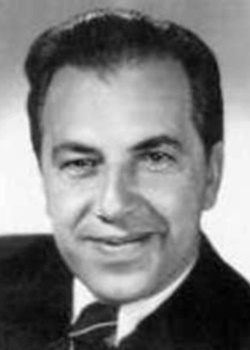 Composer, conductor and musical director Hans J. Salter died at his home in Studio City, California, ten years ago today, on July 23, 1994, at the age of 98.
An Austrian émigré who became one of the principal architects of the classic Universal horror sound, Salter worked on more than 200 films during nearly three decades at the studio. His music accompanied werewolves, vampires, Frankenstein monsters, Sherlock Holmes adventures, westerns and musicals, and brought him six Academy Award nominations.
Hans Julius Salter was born in Vienna on January 14, 1896. He studied at the University of Vienna and Vienna Music Academy with teachers including Guido Adler, Franz Schreker, Felix Weingartner and, briefly, Alban Berg. After working in opera, Salter moved into cinema during the late 1920s, first conducting in Berlin movie theatres and then composing for UFA. As a Jewish musician he was forced out of the German film industry after the Nazi rise to power and eventually emigrated to the United States in 1937.
Universal hired Salter initially as an orchestrator in 1938, but he was soon promoted to composer and became one of the studio’s busiest musical craftsmen. Working frequently with Frank Skinner and other staff composers, he supplied music for everything from Deanna Durbin musicals and Abbott and Costello comedies to serials, melodramas and horror pictures. Much of this work went uncredited or was subsequently recycled as stock music throughout Universal’s productions. Read more…
Jerry Goldsmith, 1929-2004
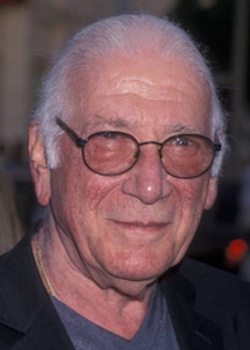 Composer Jerry Goldsmith died on July 21, 2004 at his home in Beverly Hills, California, after a battle with cancer. He was 75.
One of the most prolific, versatile and influential film composers of the twentieth century, Goldsmith wrote music for more than 200 film and television productions during a career spanning half a century. He received 18 Academy Award nominations, winning for The Omen, and created landmark scores including Planet of the Apes, Patton, Chinatown, Alien, Star Trek: The Motion Picture, Poltergeist, Total Recall, Basic Instinct and L.A. Confidential.
Jerrald King Goldsmith was born in Los Angeles on February 10, 1929. He began playing piano as a child, later studying with pianist Jakob Gimpel and composer Mario Castelnuovo-Tedesco. At the University of Southern California he attended classes taught by Miklós Rózsa, whose score for Spellbound had helped inspire Goldsmith’s ambition to write for films. He later studied at Los Angeles City College before joining CBS as a clerk-typist in its music department.
At CBS, Goldsmith progressed from selecting library music to composing for radio and live television. His early credits included Climax!, Playhouse 90, Perry Mason, Gunsmoke and The Twilight Zone, an extraordinarily demanding training ground in which music often had to be written and recorded at great speed. His first credited feature score was the western Black Patch in 1957, although television remained an important part of his career throughout the following decade.
Goldsmith’s breakthrough in cinema came during the early 1960s. Lonely Are the Brave (1962) displayed his gift for western Americana, while John Huston’s Freud (1962) brought his first Academy Award nomination with a dark, psychologically unsettling score. He followed with The List of Adrian Messenger (1963), Seven Days in May (1964), A Patch of Blue (1965), In Harm’s Way (1965), The Blue Max (1966) and The Sand Pebbles (1966), rapidly establishing himself as one of Hollywood’s most inventive dramatic composers. Read more…
Remembering Henry Mancini, 1924-1994
 Composer Henry Mancini died ten years ago today, on June 14, 1994, at his home in Los Angeles, California, after a battle with pancreatic cancer. He was 70 years old.
Enrico Nicola Mancini, nicknamed Henry or Hank, was born in April 1924 in Cleveland, Ohio, the son of Italian immigrants, and raised in a rural steelworking town in nearby Pennsylvania. He showed early musical promise and studied at the Juilliard School, but his education was interrupted by World War II, during which he served in the Army and worked with the Glenn Miller Air Force Band. After the war, Mancini joined Universal-International’s music department, where he gained experience scoring dozens of B-movies, including classics such as Creature from the Black Lagoon (1954).
Mancini’s big break came in 1958 when he collaborated with director Blake Edwards on the television series Peter Gunn, which featured a groundbreaking jazz score that became a hit in its own right. Their partnership continued through numerous films, with Mancini’s music often becoming as iconic as the films themselves. He won an Oscar for scoring Edwards’s film Breakfast at Tiffany’s in 1961, and co-wrote the iconic song “Moon River” for lead actress Audrey Hepburn. He won another Oscar in 1962 for the title song for Edwards’s film Days of Wine and Roses, received an Oscar nomination for timeless slinky jazzy main theme from The Pink Panther in 1964, and earned critical acclaim for his work on several other Edwards-directed films including The Great Race (1965), Darling Lili (1970), 10 (1979), and Victor/Victoria (1982), among many others.
Mancini had a rare ability to blend classical technique with contemporary popular styles, from swing and jazz to lush romantic ballads. Throughout the 1960s and 70s Mancini combined his scoring career with an equally successful parallel career as a songwriter, recording artist, touring conductor, and media personality, which made him one the most famous and popular American classical musicians of his era. His songs were recorded by the most popular vocalists of the day – Andy Williams, Frank Sinatra, Perry Como, Johnny Mathis, Tony Bennett, dozens of others – and many of them topped the charts. Read more…
Fred Karlin, 1936-2004
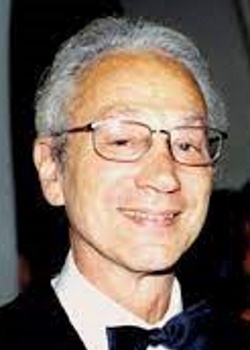 Composer, arranger and trumpeter Fred Karlin died in Culver City, California, on March 26, 2004, at the age of 67, following a battle with cancer.
An exceptionally versatile musician, Karlin wrote more than 130 scores for films and television productions, won both an Academy Award and an Emmy, and became particularly admired for his ability to move effortlessly between jazz, folk, rock, classical and electronic music.
Frederick James Karlin was born in Chicago on June 16, 1936. He began playing trumpet and studying jazz while still a teenager, learning composition with William Russo before attending Amherst College, where his honors thesis was a string quartet. After moving to New York in 1958 he worked as a composer and arranger for musicians including Benny Goodman and Harry James, while also writing for documentaries, commercials and Radio City Music Hall.
Karlin entered feature films with Robert Mulligan’s Up the Down Staircase (1967), starring Sandy Dennis. He quickly became a sought-after composer, following it with Yours, Mine and Ours (1968), Robert Mulligan’s western The Stalking Moon (1968), and Alan J. Pakula’s The Sterile Cuckoo (1969). The latter featured “Come Saturday Morning,” with music by Karlin and lyrics by Dory Previn; the song became a hit for the Sandpipers and earned an Academy Award nomination. Read more…
Academy Award Winners 2003
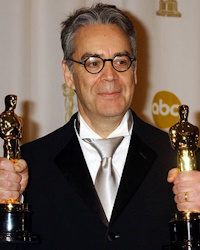 The Academy of Motion Picture Arts and Sciences (AMPAS) have announced the winners of the 76th Academy Awards, honoring the best in film in 2003.
In the Best Original Score category, Canadian composer Howard Shore won the Academy Award for his score for The Lord of the Rings: The Return of the King, the third film in Peter Jackson’s epic fantasy trilogy based on the novel by J. R. R. Tolkien. In his acceptance speech Shore said:
It’s incredible. Just breathe a bit. Many thanks to the Academy. I’d like to share this Oscar with all of the amazing musicians and great vocal artists who played on this piece. Special note to Annie Lennox, Renee Fleming, Sir James Galway, Ben del Maestro. I was incredibly inspired by Tolkien’s great work, Peter Jackson’s visionary filmmaking, the great writing of Fran Walsh, Philippa Boyens. Elizabeth, my darling, I love you. Thank you for your love and support. Mae, for your wonderful encouragement. All the people who have helped us through this making of these films: Bob and Michael, Paul and Lori, Barrie Osborne, Rick Porras, Sam and Mike, Ronald, Jean-Jacques, I thank you, Robby Kearns, Mark Willsher and, of course, Stephen Einhorn. Thanks so much. Thank you, Academy.
The other nominees for Best Original Score were Danny Elfman for Big Fish, Gabriel Yared for Cold Mountain, Thomas Newman for Finding Nemo, and James Horner for House of Sand and Fog.
In the Best Original Song category, Fran Walsh, Howard Shore and Annie Lennox won the Academy Award for “Into the West,” also from The Lord of the Rings: The Return of the King.
The other nominees for Best Original Song were Sylvain Chomet and Benoît Charest for “Belleville Rendez-vous” from The Triplets of Belleville; Michael McKean and Annette O’Toole for “A Kiss at the End of the Rainbow” from A Mighty Wind; T Bone Burnett and Elvis Costello for “The Scarlet Tide” from Cold Mountain; and Sting for “You Will Be My Ain True Love,” also from Cold Mountain.
Academy Award Nominations 2003
 The Academy of Motion Picture Arts and Sciences (AMPAS) have announced the nominations for the 76th Academy Awards, honoring the best in film in 2003.
In the Best Original Score category, the nominees are:
- DANNY ELFMAN for Big Fish
- JAMES HORNER for House of Sand and Fog
- THOMAS NEWMAN for Finding Nemo
- HOWARD SHORE The Lord of the Rings: The Return of the King
- GABRIEL YARED for Cold Mountain
This is the 3rd Oscar nomination for Elfman, the 7th nomination for Horner, the 7th nomination for Newman, the 2nd nomination for Shore, and the 3rd nomination for Yared. Horner previously won for Titanic in 1997. Shore previously won for The Lord of the Rings: The Fellowship of the Ring in 2001.
In the Best Original Song category, the nominees are:
- T-BONE BURNETT and ELVIS COSTELLO for “Scarlet Tide” from Cold Mountain
- BENOÎT CHAREST and SYLVAIN CHOMET for “Belleville Rendezvous” from The Triplets of Belleville
- MICHAEL McKEAN and ANNETTE O’TOOLE for “A Kiss at the End of the Rainbow” from A Mighty Wind
- ANNIE LENNOX, HOWARD SHORE, and FRAN WALSH for “Into the West” from The Lord of the Rings: The Return of the King
- GORDON SUMNER (STING) for “You Will Be My Ain True Love” from Cold Mountain
The winners of the 76th Academy Awards will be announced on February 29, 2004.
BAFTA Nominations 2003
 The British Academy of Film and Television Arts (BAFTA) has announced the nominations for the 57th British Academy Film Awards, honoring the best in film in 2003.
In the Best Original Music category, which is named in memory of the film director Anthony Asquith, the nominees are:
- ALEXANDRE DESPLAT for Girl with a Pearl Earring
- ROBERT DIGGS (RZA) for Kill Bill, Volume 1
- BRIAN REITZELL and KEVIN SHIELDS for Lost in Translation
- HOWARD SHORE for The Lord of the Rings: The Return of the King
- GABRIEL YARED and T-BONE BURNETT for Cold Mountain
These are the first nominations for Desplat, Diggs, Reitzell, and Shields. It is the second nomination for Burnett, the third nomination for Yared, and is the fourth nomination for Shore. Yared previously won for The English Patient in 1996.
The winners of the 57th BAFTA Awards will be announced on February 15, 2004.
Remembering Jay Blackton, 1909-1994
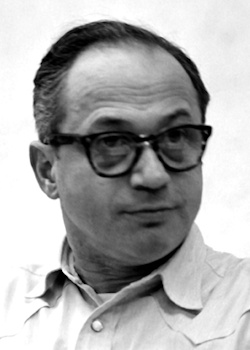 Composer, arranger, orchestrator and conductor Jay Blackton died at Granada Hills Community Hospital in Los Angeles ten years ago today, on January 8, 1994, at the age of 84, from heart failure.
One of the great behind-the-scenes figures of the American musical theatre, Blackton served as musical director, conductor or arranger on more than 25 Broadway productions, including Oklahoma!, Annie Get Your Gun, Call Me Madam, Guys and Dolls and Hello, Dolly!. His comparatively small film career nevertheless brought him an Academy Award for the screen version of Oklahoma!.
Blackton was born Jacob Schwartzdorf in New York City on March 25, 1909. He studied piano and conducting at the Juilliard School and initially intended to pursue a career in opera. In 1927 he became assistant conductor of the New York Opera Comique, and from 1937 until 1942 served as conductor at the St. Louis Municipal Opera, one of America’s most important summer musical-theatre companies.
It was in St. Louis that Blackton attracted the attention of Richard Rodgers and Oscar Hammerstein II, who brought him back to New York for their revolutionary first collaboration, Oklahoma! in 1943. Blackton conducted the original Broadway production and served as its musical director, helping shape the orchestral and vocal sound of a show that transformed American musical theatre by integrating songs, dance and drama more completely than had previously been customary. Read more…
Golden Globe Nominations 2003
 The Hollywood Foreign Press Association (HFPA) has announced the nominations for the 61st Golden Globe Awards, honoring the best in film and American television of 2003.
In the Best Original Score category, the nominees are:
- ALEXANDRE DESPLAT for Girl With a Pearl Earring
- DANNY ELFMAN for Big Fish
- HOWARD SHORE for The Lord of the Rings: The Return of the King
- GABRIEL YARED for Cold Mountain
- HANS ZIMMER for The Last Samurai
This is the first nomination for Desplat, the second nomination for Elfman, the second nomination for Shore, the third nomination for Yared, and the fifth nomination for Zimmer. Yared previously won for The English Patient in 1996. Zimmer previously won for The Lion King in 1994 and Gladiator in 2000.
In the Best Original Song category, the nominees are:
- PAUL HEWSON (BONO), GAVIN FRIDAY, and MAURICE SEEZER for “Time Enough For Tears” from In America
- ELTON JOHN and BERNIE TAUPIN for “The Heart of Every Girl” from Mona Lisa Smile
- ANNIE LENNOX, FRAN WALSH, and HOWARD SHORE for “Into the West” from The Lord of the Rings: The Return of the King
- GORDON SUMNER (STING) for “You Will Be My Ain True Love” from Cold Mountain
- EDDIE VEDDER for “Man of the Hour” from Big Fish
The winners of the 61st Golden Globe Awards will be announced on January 25, 2004.

Shop at the Movie Music UK Store

Member of the


