Archive
Michael Small, 1939-2003
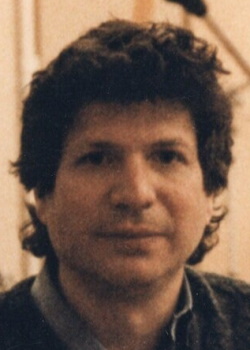 Composer Michael Small died in New York City on November 25, 2003, at the age of 64, from prostate cancer.
One of the most distinctive American film composers of the 1970s, Small became especially associated with psychological thrillers, creating unsettling, frequently unconventional scores for Klute, The Parallax View, Marathon Man, The Stepford Wives and Night Moves. Over a career lasting more than three decades he scored more than 50 films and television productions.
Small was born in New York City on May 30, 1939, and grew up in Maplewood, New Jersey. His father, Jack Small, was an actor who became general manager for the Shubert theatrical organization, and Michael initially dreamed of becoming a Broadway composer. He studied English at Williams College, where he wrote musicals and played jazz piano, and later spent a year studying at Harvard. Only after returning to New York in 1962 did he undertake formal musical training, studying orchestration privately with composer Meyer Kupferman.
Small entered films almost accidentally when producer Edward Pressman heard his work through the BMI musical-theatre workshop and hired him to score Out of It (1969), starring Jon Voight. Two years later he began the collaboration that would define his career when director Alan J. Pakula hired him for Klute (1971). Small’s sparse chamber score used unusual percussion, microtonal xylophone, electronics and a ghostly female voice to reflect both the danger surrounding Jane Fonda’s character and her complicated psychological world. Read more…
Michael Kamen, 1948-2003
 Composer Michael Kamen died on November 18, 2003 in London, England, after suffering a heart attack. He was 55.
Michael Arnold Kamen was born in New York in April 1948, where he attended The High School of Music and Art and the Juilliard School, where he specialized in composition and oboe performance. After being a part of the New York Rock & Roll Ensemble with fellow composer Mark Snow as a youth, Kamen moved to England in the 1970s and found work as ballet composer and as an arranger for pop and rock bands, notably for artists such as Kate Bush, David Bowie and Pink Floyd, for whom he arranged the album The Wall in 1979.
Having already dabbled in film music during the late 1970s, Kamen began embracing cinema fully in the early 1980s, writing the music for acclaimed films such as The Dead Zone and Brazil, and the TV mini-series Edge of Darkness, before cracking the Hollywood big-time with a trio of massively successful action scores between 1986 and 1989 – Highlander, Lethal Weapon and Die Hard. Read more…
Remembering Stanley Myers, 1930-1993
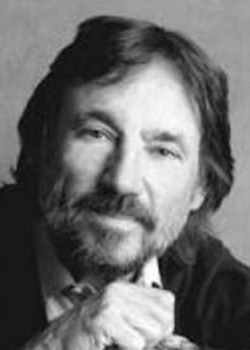 Composer Stanley Myers died ten years ago today in London on November 9, 1993, at the age of 63, following a battle with cancer.
One of Britain’s most prolific film composers, Myers wrote music for more than 100 film and television productions during a career spanning three decades, working with directors including Nicolas Roeg, Stephen Frears, Jerzy Skolimowski, Volker Schlöndorff and Michael Cimino.
Myers was born in Birmingham on October 6, 1930. By the 1960s he had established himself in cinema, with early successes including Jack Smight’s Kaleidoscope (1966) and Joseph Strick’s controversial adaptation of Ulysses (1967). Other notable scores from this period and the early 1970s included The Night of the Following Day, Michael Powell’s Age of Consent, The Walking Stick, Bryan Forbes’s The Raging Moon and the Oliver Reed thriller Sitting Target.
It was The Walking Stick (1970) that produced Myers’s most enduring composition. Its gentle guitar theme, “Cavatina,” was later expanded and recorded by classical guitarist John Williams. Eight years later Michael Cimino used Williams’s performance as the principal theme for The Deer Hunter (1978), where its delicate melancholy provided an unforgettable contrast to the film’s harrowing depiction of war and its aftermath. “Cavatina” became internationally famous and earned Myers an Ivor Novello Award.
Myers was never restricted to a single genre. During the 1970s he became closely associated with director Pete Walker’s distinctly British brand of exploitation horror, scoring House of Whipcord (1974), Frightmare (1974), House of Mortal Sin (1976) and Schizo (1976). Elsewhere he wrote for dramas, thrillers and international productions, including Ted Kotcheff’s The Apprenticeship of Duddy Kravitz and Volker Schlöndorff’s Coup de Grâce. His strongest music invariably reflected a considerable melodic gift, even when working within darker or more experimental material. Read more…
Remembering Roy Budd, 1947-1993
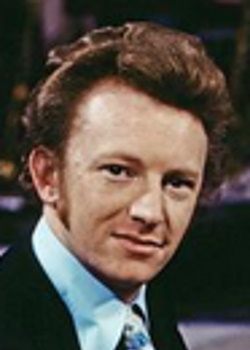 Composer Roy Budd died ten years ago today, on August 7, 1993, of a brain hemorrhage in hospital in London, UK. He was 46.
Roy Frederick Budd was born in London, England, in March 1947. A musical prodigy from a young age, Budd made his public debut on the piano at age six and was performing professionally by his teens. Deeply influenced by jazz legends such as Erroll Garner and Oscar Peterson, Budd quickly carved out a name for himself as a dynamic live performer, often appearing on British television and radio in the 1960s.
His entry into film scoring came in the late 1960s, but it was the 1971 crime thriller Get Carter that cemented his legacy, which he wrote when he was just 24 years old. The minimalist, percussive theme, composed and recorded in just a few days, went on become one of the most instantly recognizable pieces in British cinema history. Budd’s deft combination of jazz, funk, and moody atmospherics would become his signature, earning him further acclaim for scores to films such as Soldier Blue (1970), Fear Is the Key (1972), The Stone Killer (1973), The Marseille Contract (1974), Diamonds (1975), Paper Tiger (1975), Sinbad and the Eye of the Tiger (1977),The Wild Geese (1978), and The Sea Wolves (1980).
Over the course of his career, Budd scored more than 40 films, often working on films starring major British actors of the 1960s and 70s including Michael Caine, Richard Burton, and Roger Moore. In addition to his film work, he remained a passionate jazz performer, frequently recording albums and touring. Read more…
Johnny Douglas, 1920-2003
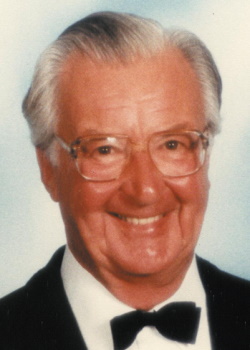 Composer, arranger and conductor Johnny Douglas died at his home in Bognor Regis, West Sussex, England, on April 20, 2003, at the age of 82, following a battle with prostate cancer.
One of the stalwarts of British light music, Douglas wrote scores for around three dozen feature films while maintaining an enormous career in radio, recordings and television. He is remembered above all for Lionel Jeffries’s The Railway Children, whose warmly nostalgic score earned him a BAFTA nomination.
John Henry Douglas was born in Hackney, London, on June 19, 1920, and grew up in Bermondsey. A musical prodigy, he began piano lessons at four and was studying arranging and orchestration before his teens. He formed a dance band while still at school and made his professional debut in 1939 with the Neville Hughes Sextet. During World War II he served in the RAF, where an arm injury temporarily prevented him from playing and encouraged him to concentrate on arranging and composition.
After the war Douglas arranged for bandleaders including Ambrose, Ted Heath and Edmundo Ros before becoming heavily involved in recording. He provided hundreds of arrangements for Decca and in 1958 began a long association with RCA’s Living Strings series, ultimately arranging and conducting more than 80 albums for the label. His polished string writing and gift for melody made him one of Britain’s busiest practitioners of easy-listening orchestral music. Read more…
Academy Award Winners 2002
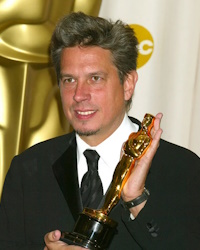 The Academy of Motion Picture Arts and Sciences (AMPAS) have announced the winners of the 75th Academy Awards, honoring the best in film in 2002.
In the Best Original Score category, American composer Elliot Goldenthal won the Academy Award for his score for Julie Taymor’s Frida, the biopic of artist Frida Kahlo. In his acceptance speech Goldenthal said:
Wow. To be around such remarkable women: Julie Taymor, Salma Hayek, Sarah Green, Margie Perenchio. Thank you, Miramax. But what I really want to say, and I’ll do it quickly, is I want to dedicate this award to the bridges that we try to build, to the people of Mexico, to the artistic tradition and legacy of personal and political art. For you, Mexico.
The other nominees for Best Original Score were John Williams for Catch Me If You Can, Elmer Bernstein for Far from Heaven, Philip Glass for The Hours, and Thomas Newman for Road to Perdition.
In the Best Original Song category, Marshall Mathers III (Eminem), Jeff Bass and Luis Resto won the Academy Award for “Lose Yourself” from the hip-hop themed drama 8 Mile. The victory made “Lose Yourself” the first rap song to win the Academy Award for Best Original Song.
The other nominees for Best Original Song were Elliot Goldenthal and Julie Taymor for “Burn It Blue” from Frida; Paul Simon for “Father and Daughter” from The Wild Thornberrys Movie; Bono, The Edge, Adam Clayton and Larry Mullen from U2 for “The Hands That Built America” from Gangs of New York; and John Kander and Fred Ebb for “I Move On” from Chicago.
Walter Scharf, 1910-2003
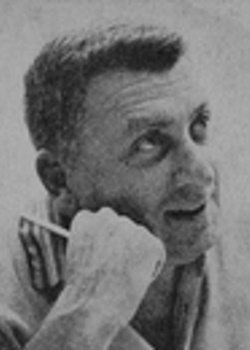 Composer, arranger and conductor Walter Scharf died at his home in Brentwood, Los Angeles, on February 24, 2003, at the age of 92, from heart failure.
One of Hollywood’s most versatile musical craftsmen, Scharf worked on more than 250 film and television productions during a career spanning more than half a century. His credits ranged from Hans Christian Andersen, Funny Girl and Willy Wonka & the Chocolate Factory to The Nutty Professor, Ben and the documentaries of Jacques Cousteau, earning him ten Academy Award nominations, an Emmy and a Golden Globe.
Walter Scharf was born in Manhattan, New York City, on August 1, 1910. His mother, Bessie Zwerling, was a performer in the Yiddish theatre, giving him an early introduction to show business. After studying at New York University he entered professional music as a pianist, arranger and orchestrator, working on Broadway productions including George Gershwin’s Girl Crazy and accompanying singer Helen Morgan. He later joined Rudy Vallée as pianist and arranger.
Scharf moved to Hollywood in 1934 and quickly became part of the studio music establishment, arranging for performers including Al Jolson, Alice Faye and Bing Crosby. He worked on numerous films without screen credit and helped orchestrate Irving Berlin’s “White Christmas” for Holiday Inn (1942). From 1942 to 1946 he served as music director at Republic Pictures, where his ability to compose, arrange and conduct made him invaluable on productions requiring large amounts of music on demanding schedules. Read more…
Academy Award Nominations 2002
 The Academy of Motion Picture Arts and Sciences (AMPAS) have announced the nominations for the 75th Academy Awards, honoring the best in film in 2002.
In the Best Original Score category, the nominees are:
- ELMER BERNSTEIN for Far from Heaven
- PHILIP GLASS for The Hours
- ELLIOT GOLDENTHAL for Frida
- THOMAS NEWMAN for Road to Perdition
- JOHN WILLIAMS for Catch Me If You Can
This is the 10th Oscar nomination for Bernstein, the 2nd nomination for Glass, the 3rd nomination for Goldenthal, the 5th nomination for Newman, and the 37th nomination for Williams, Bernstein previously won for Thoroughly Modern Millie in 1967. Williams previously won for Fiddler on the Roof in 1971, Jaws in 1975, Star Wars in 1977, E.T. the Extra Terrestrial in 1982, and Schindler’s List in 1993.
In the Best Original Song category, the nominees are:
- ELLIOT GOLDENTHAL and JULIE TAYMOR for “Burn It Blue” from Frida
- PAUL HEWSON (BONO), DAVID EVANS (THE EDGE), ADAM CLAYTON, and LARRY MULLEN for “The Hands That Built America” from Gangs of New York
- JOHN KANDER and FRED EBB for “I Move On” from Chicago
- MARSHALL MATHERS III (EMINEM), JEFF BASS, and LUIS RESTO for “Lose Yourself” from 8 Mile
- PAUL SIMON for “Father and Daughter” from The Wild Thornberrys Movie
The winners of the 75th Academy Awards will be announced on March 23, 2003.
BAFTA Nominations 2002
 The British Academy of Film and Television Arts (BAFTA) has announced the nominations for the 56th British Academy Film Awards, honoring the best in film in 2002.
In the Best Original Music category, which is named in memory of the film director Anthony Asquith, the nominees are:
- JOHN KANDER, FRED EBB, and DANNY ELFMAN for Chicago
- PHILIP GLASS for The Hours
- WOJCIECH KILAR for The Pianist
- HOWARD SHORE for Gangs of New York
- JOHN WILLIAMS for Catch Me If You Can
These are the first nominations for Ebb, Elfman, Glass, Kander, and Kilar. It is the third nomination for Shore, and the tenth nomination for Williams. Williams previously won for Jaws and The Towering Inferno in 1975, Star Wars in 1978, The Empire Strikes Back in 1980, E.T. the Extra-Terrestrial in 1982, Empire of the Sun in 1988, and Schindler’s List in 1993.
The winners of the 56th BAFTA Awards will be announced on February 23, 2003.
Remembering Sammy Cahn, 1913-1993
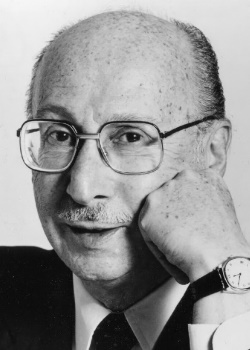 Lyricist and songwriter Sammy Cahn died in Los Angeles ten years ago today, on January 15, 1993, at the age of 79.
One of the most successful writers of popular songs in Hollywood history, Cahn supplied lyrics for hundreds of recordings, Broadway shows and motion pictures, and enjoyed especially fruitful partnerships with composers Jule Styne and Jimmy Van Heusen. He received an extraordinary 26 Academy Award nominations for Best Original Song, winning four times, and wrote many of the songs most closely associated with Frank Sinatra.
Cahn was born Samuel Cohen on New York’s Lower East Side on June 18, 1913, the son of Jewish immigrants from Eastern Europe. He studied violin as a child and initially dreamed of playing professionally, but discovered a greater talent for writing lyrics. After leaving school he teamed with Saul Chaplin, beginning a partnership that flourished during the 1930s in Tin Pan Alley.
Cahn and Chaplin’s early successes included “Rhythm Is Our Business,” “Until the Real Thing Comes Along” and the English lyrics for the Yiddish song “Bei Mir Bist Du Schoen,” which became an enormous hit for the Andrews Sisters. By the early 1940s Cahn had moved increasingly into Hollywood and formed a new partnership with composer Jule Styne. Read more…
Ron Goodwin, 1925-2003
 Composer Ron Goodwin died on January 8, 2003, at his home near Reading, England. He was 77. Earlier that evening he had completed conducting a series of Christmas concerts with the Bournemouth Symphony Orchestra, and died in his sleep that night.
Ronald Alfred Goodwin was born in Plymouth, Devon, in February 1925, and raised in London . He studied trumpet and piano, eventually attending the Guildhall School of Music. After beginning his career in the 1940s as a music copyist and arranger for music publishers, he found early success orchestrating for dance bands and providing musical direction for celebrated vocalists such as Petula Clark and Jimmy Young, including the orchestration of Young’s hit “Too Young”.
Goodwin made his feature film debut in 1958 with Whirlpool, but it was in the following decade that he rose to prominence as a film composer. He became best known for his dynamic music for war and adventure films, notably 633 Squadron (1964), Where Eagles Dare (1968), and Battle of Britain (1969). His score for 633 Squadron, with its soaring main theme and martial energy, became a classic of the genre and remains one of his most widely recognized works, especially in the UK. Read more…
Golden Globe Nominations 2002
 The Hollywood Foreign Press Association (HFPA) has announced the nominations for the 60th Golden Globe Awards, honoring the best in film and American television of 2002.
In the Best Original Score category, the nominees are:
- TERENCE BLANCHARD for 25th Hour
- ELMER BERNSTEIN for Far from Heaven
- PETER GABRIEL for Rabbit-Proof Fence
- PHILIP GLASS for The Hours
- ELLIOT GOLDENTHAL for Frida
This is the first nomination for Blanchard, the second nomination for Gabriel, the third nomination for Glass, the third nomination for Goldenthal, and the fifth nomination for Bernstein. Glass previously won for The Truman Show in 1998. Bernstein previously won for To Kill a Mockingbird in 1962 and Hawaii in 1966.
In the Best Original Song category, the nominees are:
- BRYAN ADAMS, HANS ZIMMER, and GRETCHEN PETERS for “Here I Am” from Spirit: Stallion of the Cimarron
- MADONNA CICCONE and MIRWAIS AHMADZAÏ for “Die Another Day” from Die Another Day
- PAUL HEWSON (BONO), ADAM CLAYTON, DAVID EVANS (THE EDGE), and LARRY MULLEN, JR. for “The Hands That Built America” from Gangs of New York
- MARSHALL MATHERS III (EMINEM), JEFF BASS, and LUIS RESTO for “Lose Yourself” from 8 Mile
- PAUL SIMON for “Father and Daughter” from The Wild Thornberrys Movie
The winners of the 60th Golden Globe Awards will be announced on January 19, 2003.
Buddy Baker, 1918-2002
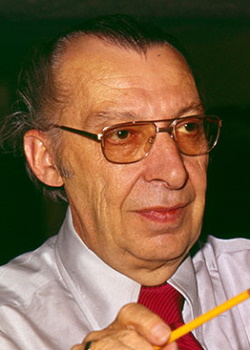 Composer, arranger and conductor Buddy Baker died at his home in Sherman Oaks, California, on July 26, 2002, at the age of 84.
One of the most prolific musicians in the history of Walt Disney Productions, Baker composed, arranged or conducted music for more than 200 films, television programs and theme-park attractions during an association with the studio that lasted almost three decades.
Norman Baker was born in Springfield, Missouri, on January 4, 1918. After studying music at Southwest Baptist College, he moved to California and began working as an arranger for radio and big bands. Among his early successes was his arrangement of “And Her Tears Flowed Like Wine” for Stan Kenton’s orchestra, and he later became musical director for Bob Hope’s radio program. Baker also taught arranging and composition at Los Angeles City College, where one of his students was future film composer Jerry Goldsmith.
Baker joined Walt Disney Productions during the mid-1950s, initially assisting composer George Bruns, and gradually became one of the studio’s principal musical figures. His early Disney work encompassed television, animated shorts and documentaries before he moved increasingly into feature films. His scores included Toby Tyler (1960), A Tiger Walks (1964), The Misadventures of Merlin Jones (1964), The Gnome-Mobile (1967), Rascal (1969), The Million Dollar Duck (1971), The Apple Dumpling Gang (1975), The Shaggy D.A. (1976) and The Apple Dumpling Gang Rides Again (1979). Read more…
Carlo Savina, 1919-2002
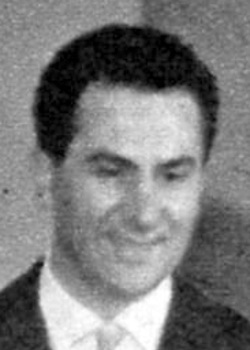 Composer, arranger and conductor Carlo Savina died in Rome on June 21, 2002, at the age of 82.
One of the most prolific and versatile figures in Italian film music, Savina worked on more than 200 films as composer, conductor or musical director. Although his own scores encompassed everything from comedy and drama to spaghetti westerns and horror, he was equally important as a trusted conductor for composers including Nino Rota, Miklós Rózsa, Philippe Sarde and Stephen Sondheim.
Savina was born in Turin on August 29, 1919, into a musical family. His father was principal clarinetist with the EIAR radio orchestra and introduced him to music at an early age. Savina studied violin, piano, composition and conducting at the Giuseppe Verdi Conservatory in Turin, and in 1944 received his diploma in composition. His early concert works included sonatas, chamber pieces and the opera Il vecchio geloso, which won a prize from the Accademia Musicale Chigiana in 1948.
After the Second World War Savina became increasingly active in radio and popular music. He formed his own orchestra, wrote songs and arrangements, and became a prominent conductor for RAI, participating in some of Italian television’s earliest experimental broadcasts. His polished orchestral style and ability to move easily between classical and popular idioms soon led him toward cinema. Read more…
Academy Award Winners 2001
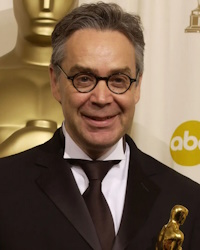 The Academy of Motion Picture Arts and Sciences (AMPAS) have announced the winners of the 74th Academy Awards, honoring the best in film in 2001.
In the Best Original Score category, Canadian composer Howard Shore won the Academy Award for his score for Peter Jackson’s epic fantasy film The Lord of the Rings: The Fellowship of the Ring, based on the novel by J. R. R. Tolkien. In his acceptance speech Shore said:
This is incredible. Thank you to the members of the Academy. I had the good fortune of having such fantastic collaborators on this project. Peter Jackson, Fran Walsh, Philippa Boyens who guided me on an amazing journey through Middle Earth. It was just a tremendously rewarding experience to translate the words of Tolkien into music and I just feel blessed to be a part of this production. I want to thank my wife Elizabeth and daughter Mae whose love and support are incredible to me and have just guided me on my journey. Thanks to Bob Shaye, Michael Lynne, Mark Ordesky, Paul Broucek, Barrie Osborne, everybody at, the crew in Tuxedo. I love you all. Thank you very much.
The other nominees for Best Original Score were John Williams for A.I. Artificial Intelligence, James Horner for A Beautiful Mind, John Williams for Harry Potter and the Sorcerer’s Stone, and Randy Newman for Monsters, Inc.
In the Best Original Song category, composer and songwriter Randy Newman won the Academy Award for “If I Didn’t Have You” from Pixar’s Monsters, Inc.
The other nominees for Best Original Song were Enya, Nicky Ryan and Roma Ryan for “May It Be” from The Lord of the Rings: The Fellowship of the Ring; Diane Warren for “There You’ll Be” from Pearl Harbor; Sting for “Until” from Kate & Leopold; and Paul McCartney for “Vanilla Sky” from Vanilla Sky.

Shop at the Movie Music UK Store

Member of the


