Archive
Golden Globe Nominations 2007
 The Hollywood Foreign Press Association (HFPA) has announced the nominations for the 65th Golden Globe Awards, honoring the best in film and American television of 2007.
In the Best Original Score category, the nominees are:
- CLINT EASTWOOD for Grace Is Gone
- ALBERTO IGLESIAS for The Kite Runner
- MICHAEL BROOK, KAKI KING, and EDDIE VEDDER for Into the Wild
- DARIO MARIANELLI for Atonement
- HOWARD SHORE for Eastern Promises
These are the first nominations for Brook, Iglesias, King, Marianelli, and Vedder. It is the second nomination for Eastwoood, and the fourth nomination for Shore. Eastwood has also been nominated three times previously as a director, winning for Bird in 1988 and Unforgiven in 1992. Shore previously won for The Lord of the Rings: The Return of the King in 2003 and The Aviator in 2004.
In the Best Original Song category, the nominees are:
- MARSHALL CRENSHAW, JUDD APATOW, JAKE KASDAN, and JOHN C. REILLY for “Walk Hard” from Walk Hard: The Dewey Cox Story
- CLINT EASTWOOD and CAROLE BAYER SAGER for “Grace Is Gone” from Grace Is Gone
- ALAN MENKEN and STEPHEN SCHWARTZ for “That’s How You Know” from Enchanted
- SHAKIRA RIPOLL and ANTONIO PINTO for “Despedida” from Love in the Time of Cholera
- EDDIE VEDDER for “Guaranteed” from Into the Wild
The winners of the 65th Golden Globe Awards will be announced on January 13, 2008.
Remembering Brian May, 1934-1997
 Composer Brian May died ten years ago today, on April 25, 1997, in his home in Melbourne, Australia, after a short respiratory illness. He was 62.
May was born in Adelaide, South Australia, in 1934. A classically trained musician and conductor, May studied at the Adelaide Elder Conservatorium and later joined the ABC (Australian Broadcasting Corporation), where he served as conductor of the ABC Showband. He made his transition to film scoring in the early 1970s and quickly became a key figure in the Australian New Wave cinema movement, alongside fellow composers such as Peter Best and Bruce Smeaton, through scores like The True Story of Eskimo Nell (1975) and Patrick (1978).
May’s most famous contributions to film came at the end of that decade, with his scores for George Miller’s Mad Max (1979) and Mad Max 2: The Road Warrior (1981). May’s propulsive, percussive orchestral style that matched those films’ raw, dystopian vision, and when they earned global acclaim and popularity, May became one of the first Australian film composers to enjoy a major international career.
Known for his dramatic orchestration and effective use of tension and rhythm, May was equally adept in the horror, action, and suspense genres. His film credits post-Mad Max include Roadgames (1981), Gallipoli (1981), The Survivor (1981), Turkey Shoot (1982), Cloak & Dagger (1984), Sky Pirates (1986), and Freddy’s Dead: The Final Nightmare (1991), among many others. Read more…
Remembering Toshiro Mayuzumi, 1929-1997
 Composer Toshiro Mayuzumi died in Kawasaki, Japan, ten years ago today, on April 10, 1997, at the age of 68.
One of the most important figures in post-war Japanese music, Mayuzumi was both an adventurous concert composer and an exceptionally prolific contributor to cinema, writing more than 100 film scores. His work ranged from Japanese art-house classics to major international productions, and in 1967 he became the first Japanese-born composer nominated for an Academy Award for Best Original Score.
Mayuzumi was born in Yokohama on February 20, 1929. He studied composition with Kunihiko Hashimoto, Tomojiro Ikenouchi and Akira Ifukube at the Tokyo Music School and Tokyo National University of Fine Arts and Music, graduating in 1951 before continuing his studies at the Paris Conservatoire. Exposure to Olivier Messiaen, Pierre Boulez and musique concrète profoundly affected him, and on returning to Japan he became one of the country’s pioneers of electronic and avant-garde music.
Cinema accompanied him almost from the beginning. His score for Hideo Oba’s Homecoming (1950) won a Mainichi music prize even before he completed his studies, and during the following decade he became one of Japan’s busiest screen composers. His credits included Kenji Mizoguchi’s The Woman in the Rumor (1954) and Street of Shame (1956), Kon Ichikawa’s Enjo (1958), Yasujirō Ozu’s Good Morning (1959), and Mikio Naruse’s When a Woman Ascends the Stairs (1960). Read more…
Herman Stein, 1915-2007
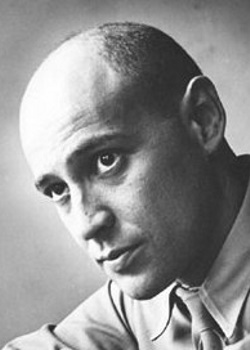 Composer and arranger Herman Stein died at his home in Los Angeles on March 15, 2007, at the age of 91, from congestive heart failure.
One of the largely unsung architects of Universal’s science-fiction and horror sound of the 1950s, Stein contributed music to nearly 200 films and shorts, including It Came from Outer Space, Creature from the Black Lagoon, This Island Earth, Tarantula and The Incredible Shrinking Man. Much of his work went uncredited under the studio system, but his music became inseparable from a generation of monsters, aliens and atomic-age nightmares.
Stein was born in Philadelphia on August 19, 1915. A child prodigy, he began playing piano at three and was performing publicly by six. By his teens he was arranging professionally, eventually working in radio and with musicians including Count Basie, Bob Crosby and Fred Waring. After military service during World War II he moved to Los Angeles in 1948 and studied composition with Mario Castelnuovo-Tedesco before entering the film industry.
Universal-International hired Stein as an arranger in 1950 and promoted him to staff composer the following year. He worked alongside musicians including Henry Mancini, Hans J. Salter, Frank Skinner and Irving Gertz, often dividing individual films between several composers. Studio music supervisor Joseph Gershenson generally received the principal screen credit, leaving Stein and his colleagues anonymous even when they had written substantial portions of a score. Read more…
Academy Award Winners 2006
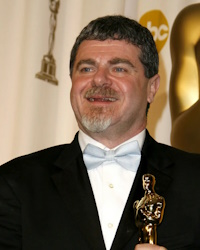 The Academy of Motion Picture Arts and Sciences (AMPAS) have announced the winners of the 79th Academy Awards, honoring the best in film in 2006.
In the Best Original Score category, Argentine composer Gustavo Santaolalla won the Academy Award for his score for Alejandro González Iñárritu’s Babel. It was Santaolalla’s second consecutive Oscar win in the category. In his acceptance speech Santaolalla said:
Thank you so much, members of the Academy. In our soul rests, I think, our own true identity beyond languages, countries, races and religions. I’m so proud to work in “Babel,” a film that helped us understand better who we are and why and what are we here for. A few thanks: I want to thank John Lesher, Brad Grey, Jon Kilik, Steve Golin, Robert Messinger, Lynn Fainchtein, Anibal Kerpel, my wife Alejandra, my kids Anna, Luna, Don Juan, my mother. The man, my mentor, director and friend, mi amigo, Alejandro González Iñárritu. And last but not least, I want to dedicate this to my dad, para vos viejo, para Argentina, and once again, para todos Latinos. Gracias. Thank you.
The other nominees for Best Original Score were Thomas Newman for The Good German, Philip Glass for Notes on a Scandal, Javier Navarrete for Pan’s Labyrinth, and Alexandre Desplat for The Queen.
In the Best Original Song category, American singer-songwriter Melissa Etheridge won the Academy Award for “I Need to Wake Up” from Davis Guggenheim’s environmentally-themed documentary An Inconvenient Truth. The victory was significant because it marked the first time a song written for a documentary had won the Academy Award for Best Original Song.
The other nominees for Best Original Song were Henry Krieger, Scott Cutler and Anne Preven for “Listen” from Dreamgirls; Henry Krieger and Siedah Garrett for “Love You I Do” from Dreamgirls; Randy Newman for “Our Town” from Cars; and Henry Krieger and Willie Reale for “Patience” from Dreamgirls.
Academy Award Nominations 2006
 The Academy of Motion Picture Arts and Sciences (AMPAS) have announced the nominations for the 79th Academy Awards, honoring the best in film in 2006.
In the Best Original Score category, the nominees are:
- ALEXANDRE DESPLAT for The Queen
- PHILIP GLASS for Notes on a Scandal
- JAVIER NAVARRETE for Pan’s Labyrinth
- THOMAS NEWMAN for The Good German
- GUSTAVO SANTAOLALLA for Babel
These are the first Oscar nominations for Desplat and Navarrete, it is the 3rd nomination for Glass, the 9th nomination for Newman, and the 2nd nomination for Santaolalla. Santaolalla previously won for Brokeback Mountain, last year, in 2005.
In the Best Original Song category, the nominees are:
- MELISSA ETHERIDGE for “I Need to Wake Up” from An Inconvenient Truth
- HENRY KRIEGER, SCOTT CUTLER, and ANNE PREVEN for “Listen” from Dreamgirls
- HENRY KRIEGER and SIEDAH GARRETT for “Love You I Do” from Dreamgirls
- HENRY KRIEGER and WILLIE REALE for “Patience” from Dreamgirls
- RANDY NEWMAN for “Our Town” from Cars
The winners of the 79th Academy Awards will be announced on February 25, 2007.
BAFTA Nominations 2006
 The British Academy of Film and Television Arts (BAFTA) has announced the nominations for the 60th British Academy Film Awards, honoring the best in film in 2006.
In the Best Original Music category, which is named in memory of the film director Anthony Asquith, the nominees are:
- DAVID ARNOLD for Casino Royale
- ALEXANDRE DESPLAT for The Queen
- HENRY KRIEGER for Dreamgirls
- JOHN POWELL for Happy Feet
- GUSTAVO SANTAOLALLA for Babel
These are the first nominations Arnold and Krieger. It is the second nomination for Desplat, the second nomination for Powell, and the third nomination Santaolalla. Santaolalla previously won for The Motorcycle Diaries in 2004
The winners of the 60th BAFTA Awards will be announced on February 11, 2007.
Golden Globe Nominations 2006
The Hollywood Foreign Press Association (HFPA) has announced the nominations for the 64th Golden Globe Awards, honoring the best in film and American television of 2006.
In the Best Original Score category, the nominees are:
- ALEXANDRE DESPLAT for The Painted Veil
- CLINT MANSELL for The Fountain
- GUSTAVO SANTAOLALLA for Babel
- CARLO SILIOTTO for Nomad
- HANS ZIMMER for The Da Vinci Code
These are the first nominations for Mansell and Silotto. It is the second nomination for Santaolalla, the third nomination for Desplat, and the seventh nomination for Zimmer. Zimmer previously won for The Lion King in 1994 and Gladiator in 2000.
In the Best Original Song category, the nominees are:
- BRYAN ADAMS, ELIOT KENNEDY, and ANDREA REMANDA for “Never Gonna Break My Faith” from Bobby
- SHERYL CROW for “Try Not to Remember” from Home of the Brave
- BEYONCÉ KNOWLES, HENRY KRIEGER, SCOTT CUTLER, and ANNE PREVEN for “Listen” from Dreamgirls
- PRINCE ROGERS NELSON for “The Song of the Heart” from Happy Feet
- HENRY SAMUEL (SEAL) and CHRISTOPHER BRUCE for “A Father’s Way” from The Pursuit of Happyness
The winners of the 64th Golden Globe Awards will be announced on January 15, 2007.
Shirley Walker, 1945-2006
 Composer Shirley Walker died on November 30, 2006, in Reno, Nevada, from complications following a stroke. She was 61.
Born Shirley Anne Rogers in April 1945, in Napa, California, Walker was a musical prodigy. She had an early start performing as a teenager at various hotels, jazz and art bands in tje 1960s, and later attended both San Francisco State University and Berkeley. She began her professional music career in the late 1970s, and for several years she wrote jingles and composed for industrial films.
Her career in film began in 1979, when she was hired to play the synthesizers on Carmine Coppola’s score for Apocalypse Now, and she quickly established herself as one of the most in-demand arrangers, conductors, and orchestrators in Hollywood, working notably with composers such as Danny Elfman, Hans Zimmer, and Brad Fiedel. Notably, she is credited for being a major influence on the symphonic style Elfman adopted on scores like Scrooged, Batman, and Edward Scissorhands.
Walker was one of the few female film score composers working in Hollywood during her career, and became one of the first female composers to earn a solo score credit on a major Hollywood motion picture when she was hired to score John Carpenter’s Memoirs of an Invisible Man in 1992. Her work on the animated super-hero film Batman: Mask of the Phantasm (1993) remains a standout achievement, praised for its operatic intensity and emotional complexity; this film also initiated her long-standing relationship with DC Animation, as over the course of the next decade she would write music for shows such as Batman: The Animated Series, Superman: The Animated Series, The Flash, The New Batman Adventures, and Batman Beyond, among many others. Read more…
Basil Poledouris, 1945-2006
 Composer Basil Poledouris died at his home in Los Angeles on November 8, 2006, at the age of 61, following a battle with cancer.
One of the most distinctive American film composers of the 1980s and 1990s, Poledouris became renowned for muscular orchestral writing, powerful choral music and an unusually direct melodic style. His scores for Conan the Barbarian, RoboCop, The Hunt for Red October, Free Willy and Starship Troopers remain among the most admired works of their respective genres.
Vassilis Konstantinos Poledouris was born in Kansas City, Missouri, on August 21, 1945, into a Greek-American family. He began playing piano as a child and moved to Los Angeles in 1964 to study filmmaking and music at the University of Southern California. There he became friends with aspiring directors including George Lucas, John Milius and Randal Kleiser, relationships that would prove important throughout his career. He briefly considered filmmaking and even appeared as an extra in an episode of Star Trek, but increasingly concentrated on composition.
After graduation Poledouris spent several years writing for educational films and television before receiving his first significant feature assignment from Milius. Big Wednesday (1978), the director’s nostalgic surfing drama, began a particularly important collaboration and allowed Poledouris to combine broad orchestral writing with music reflecting the California surfing culture of the 1960s. Randal Kleiser’s The Blue Lagoon (1980) followed, providing a very different opportunity for lush romantic and tropical music. Read more…
Malcolm Arnold, 1921-2006
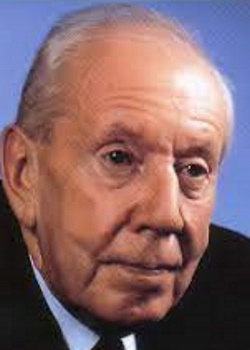 Composer and conductor Sir Malcolm Arnold died at his home in Norwich, England, on September 23, 2006, at the age of 84, following a short illness.
One of the most prolific and distinctive British composers of the twentieth century, Arnold wrote nine symphonies, numerous concertos and orchestral works, and more than 100 scores for films and documentaries. His music for David Lean’s The Bridge on the River Kwai won the Academy Award for Best Original Score in 1958.
Arnold was born in Northampton on October 21, 1921. Inspired by jazz and especially by hearing Louis Armstrong, he took up the trumpet and studied at the Royal College of Music with Ernest Hall while learning composition from Gordon Jacob. He joined the London Philharmonic Orchestra in 1940 and eventually became its principal trumpet before abandoning orchestral playing in 1948 to concentrate entirely on composition.
Film music quickly became an important part of Arnold’s career. His ability to write rapidly, his instinctive command of the orchestra and his gift for direct, memorable melody made him exceptionally well suited to the demands of British cinema. During the 1950s he scored such films as The Captain’s Paradise (1953), The Belles of St Trinian’s (1954), The Sea Shall Not Have Them (1954), The Night My Number Came Up (1955), 1984 (1956), Trapeze (1956) and A Hill in Korea (1956). Read more…
Remembering Miles Goodman, 1948-1996
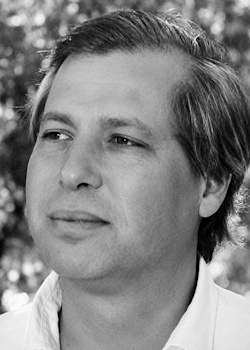 Composer, arranger and record producer Miles Goodman died in Santa Monica, California, ten years ago today, on August 16, 1996, after suffering a heart attack at his Brentwood home. He was 47.
During a career cut short at its peak, Goodman became particularly associated with comedy, scoring films including Teen Wolf, About Last Night…, Dirty Rotten Scoundrels, What About Bob? and The Muppet Christmas Carol, while his work on Little Shop of Horrors earned him a Golden Globe nomination.
Elliot Miles Goodman was born in Los Angeles on August 27, 1948. He graduated from Antioch College in Ohio with a degree in English and initially planned to become a director, also studying Shakespeare in London. His cousin, Oscar-winning composer Johnny Mandel, encouraged him to pursue film music instead, and Goodman returned to Los Angeles to study composition and scoring privately with teachers including Albert Harris.
His early career included television and low-budget films, but Mandel also provided valuable practical experience. Goodman orchestrated portions of Being There (1979) and worked with his cousin on Sidney Lumet’s The Verdict (1982), absorbing the sophisticated jazz harmonies and understated dramatic approach that would remain evident in much of his own music. By the mid-1980s he was receiving increasingly prominent feature assignments, including the Michael J. Fox comedy Teen Wolf (1985) and Edward Zwick’s romantic comedy-drama About Last Night… (1986). Read more…
Academy Award Winners 2005
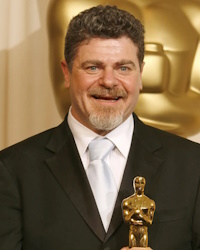 The Academy of Motion Picture Arts and Sciences (AMPAS) have announced the winners of the 78th Academy Awards, honoring the best in film in 2005.
In the Best Original Score category, Argentine composer Gustavo Santaolalla won the Academy Award for his score for director Ang Lee’s Brokeback Mountain, a tender love story about two gay cowboys in rural Montana struggling to reconcile their sexuality. In his acceptance speech Santaolalla said:
Thank you so much, members of the Academy. I’m so proud to have work in this movie, “Brokeback Mountain,” a movie that once again shows us that love is what makes us all very similar in spite that we can be so different, too. I want to thank a few people. I want to thank Ang Lee for his vision, his support, his guidance. I want to thank Diana Ossana, Larry McMurtry and Annie Proulx for their inspiration; James Schamus and David Linde, everybody at Focus; Kathy Nelson; Robert Messinger at First Artists; my co-producer and brother Anibal Kerpel; my orchestrator David Campbell; Bob Bernstein; Ron Goldstein. I want to thank my family: my wife Alejandra, my kids Anna, Luna and Don Juan. And last but not least, I want to dedicate this to my mother, a mi madre; to my country, Argentina; and to all the Latinos, para todos Latinos. Muchas gracias. Thank you.
The other nominees for Best Original Score were Alberto Iglesias for The Constant Gardener, John Williams for Memoirs of a Geisha, John Williams for Munich, and Dario Marianelli for Pride & Prejudice.
In the Best Original Song category, Jordan Houston (Juicy J), Cedric Coleman (Frayser Boy) and Paul Beauregard (DJ Paul) won the Academy Award for the hip-hop rap song “It’s Hard Out Here for a Pimp” from Craig Brewer’s Hustle & Flow.
The other nominees for Best Original Song were Kathleen “Bird” York and Michael Becker for “In the Deep” from Crash, with lyrics by York; and Dolly Parton for “Travelin’ Thru” from Transamerica.
Remembering Toru Takemitsu, 1930-1996
 Composer Toru Takemitsu died ten years ago today, on February 20, 1996, in Tokyo, Japan, of pneumonia while undergoing treatment for bladder cancer. He was 65.
Takemitsu was born in Tokyo in October 1930 and spent part of his childhood in Japanese-occupied Manchuria. During the final years of World War II he encountered Western classical music, and after the war immersed himself in composers including Claude Debussy, Olivier Messiaen and Arnold Schoenberg. Although he studied briefly with Yasuji Kiyose, he was largely self-taught.
Film soon became central to his career. His association with composer Fumio Hayasaka helped introduce him to the Japanese film industry, and in 1956 he co-wrote the music for Ko Nakahira’s Crazed Fruit, an early landmark of the Japanese New Wave. The score’s jazz influences already revealed Takemitsu’s willingness to combine popular styles, avant-garde techniques, electronics and unconventional instrumental sounds.
During the 1960s he became one of the defining musical voices of Japanese cinema, collaborating repeatedly with directors Hiroshi Teshigahara, Masaki Kobayashi, Masahiro Shinoda and Nagisa Oshima. Takemitsu treated the entire soundtrack as a compositional object, often giving music, ambient noise, electronically manipulated sound and silence equal dramatic importance. Read more…
Akira Ifukube, 1914-2006
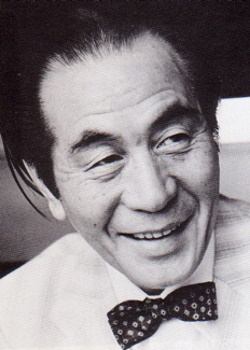 Composer Akira Ifukube died in Tokyo, Japan, on February 8, 2006, at the age of 91, from multiple organ failure.
One of the most important Japanese composers of the twentieth century, Ifukube wrote nearly 300 film scores during a career spanning half a century, but remains internationally famous for his association with Toho’s monster films and especially for creating the thunderous musical identity of Godzilla.
Ifukube was born in Kushiro, Hokkaido, on May 31, 1914. Growing up in northern Japan, he was exposed to the music of the indigenous Ainu people, whose rhythms and melodic patterns would profoundly influence his musical language. Largely self-taught as a composer, he originally studied forestry at Hokkaido Imperial University and worked in the timber industry before turning professionally to music. After World War II he began teaching composition in Tokyo and entered the Japanese film industry.
His first feature score was Senkichi Taniguchi’s Snow Trail in 1947, beginning an extraordinarily prolific period in which he worked with many prominent Japanese directors. Early assignments included Akira Kurosawa’s The Quiet Duel (1949), Kaneto Shindo’s Children of Hiroshima (1952), Josef von Sternberg’s Anatahan (1953), and Hideo Sekigawa’s Hiroshima (1953). His music already displayed the characteristics that would define his career: heavy rhythmic writing, powerful brass, modal melodies and a distinctive fusion of Western symphonic technique with Japanese musical traditions. Read more…

Shop at the Movie Music UK Store

Member of the


