Remembering Les Baxter, 1922-1996
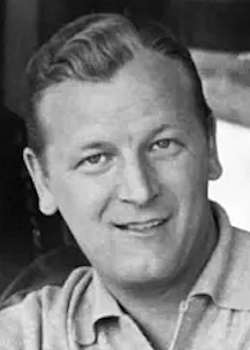 Composer, arranger and conductor Les Baxter died ten years ago today in Newport Beach, California, on January 15, 1996, at the age of 73.
One of the most prolific and colorful figures in American popular music, Baxter enjoyed parallel careers as a recording artist and film composer, becoming a pioneer of the exotica movement while writing music for well over 100 films. His screen work ranged from low-budget crime pictures and westerns to teenage comedies and some of the most memorable horror films produced by American International Pictures.
Leslie Thompson Baxter was born in Mexia, Texas, on March 14, 1922. He studied piano before moving toward composition and arranging, and began his professional career as a performer. During the 1940s he sang with Mel Tormé’s vocal group the Mel-Tones and worked as an arranger and conductor, eventually becoming closely associated with Capitol Records.
Baxter first achieved national prominence through a series of lush orchestral recordings that combined traditional popular music with unusual percussion, voices and instrumental colors. His 1951 album Ritual of the Savage became one of the foundational recordings of what would later be called exotica, with pieces such as “Quiet Village” evoking imaginary tropical landscapes through percussion, strings and wordless voices. Albums including Tamboo!, Caribbean Moonlight, Ports of Pleasure and Space Escapade further established his distinctive mixture of orchestral sophistication and unabashed escapism.
Film scoring developed alongside his recording career. Baxter began working regularly in Hollywood during the 1950s and became particularly associated with producers Samuel Z. Arkoff and James H. Nicholson at American International Pictures. The company’s modest budgets demanded composers who could work quickly and imaginatively, and Baxter proved ideally suited to its mixture of horror, science fiction, juvenile delinquency pictures and exploitation cinema.
His most enduring film collaboration was with director Roger Corman. Baxter scored Corman’s House of Usher (1960), the first of the director’s celebrated Edgar Allan Poe adaptations starring Vincent Price. He followed it with The Pit and the Pendulum (1961), Tales of Terror (1962) and The Raven (1963), providing richly Gothic orchestral music that gave the films a grandeur often far exceeding their budgets. His scores combined ominous brass, swirling strings and eerie instrumental colors with surprisingly strong romantic writing, becoming an important element of the cycle’s atmosphere.
Baxter also scored Corman’s remarkable science-fiction thriller X: The Man with the X-Ray Eyes (1963), while his other horror and fantasy credits included Black Sabbath in its American release version, The Dunwich Horror (1970) and Frogs (1972). His versatility was equally evident in AIP’s hugely successful beach-party films, including Beach Party (1963), Muscle Beach Party and Bikini Beach (both 1964), where his music embraced surf, pop and contemporary dance styles.
Although Baxter was frequently dismissed during his lifetime as a purveyor of easy listening, later generations reassessed his work with considerable enthusiasm. His exotica recordings became influential on lounge, electronic and alternative musicians, while his horror scores attracted a growing following among film-music collectors. The sheer variety of his output—from imaginary Polynesian soundscapes to Gothic terror and teenage surf music—reflected a composer who rarely allowed stylistic boundaries to restrict him.
Baxter was married three times and had three daughters.

Shop at the Movie Music UK Store

Member of the


