GARDEN OF EVIL – Bernard Herrmann
 GREATEST SCORES OF THE TWENTIETH CENTURY
Original Review by Craig Lysy
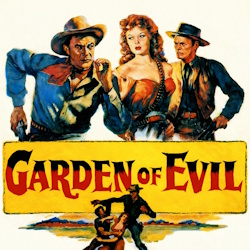
CinemaScope technology with its anamorphic lens transformed film-making in 1953, by allowing Hollywood studios to shoot widescreen pictures to offer big screen visuals that could not be duplicated by the emerging TV market. 20th Century Fox studio executive Daryl F. Zanuck decided that he wanted to use the new technology to bring a Western to the big screen as never seen before. Writers Fred Freiberger and William Turnberg were hired to write an original screenplay, Charles Brackett was assigned production with a $2.1 million budget, and Henry Hathaway was tasked with directing. A fine cast was assembled, including; Gary Cooper as Hooker, Susan Hayward as Leah Fuller, Richard Widmark as Fiske, Cameron Mitchell as Luke Daly, Hugh Marlowe john Fuller, and Victor Manuel Mendoza as Vincente Madariaga.
The film is set in the late 19th century and follows the fortunes of three American soldiers of fortune; Hooker, an ex-lawman, Fiske a gambler, and Luke, a bounty hunter. When their steamer suffers engine problems, the men find themselves stranded in a Mexican Fishing village. In a saloon they encounter Leah Fuller, a desperate gold prospector’s wife who offers volunteers $2,000 each to help rescue her husband who is trapped by a mine collapse. The three Americans and Vincente, a Mexican local, all volunteer. The harrowing adventure eventually takes the lives of most of the expedition, save Leah and Hooker who fall in love and ride off into the sunset to begin a new life together. The film was a commercial success, earning a profit of $1 million. Critical reception was mixed with praise of the cinematography, but criticism of a weak script, as well as depicting Apache Indians as Mohawks. The film failed to earn any Academy Award nominations.
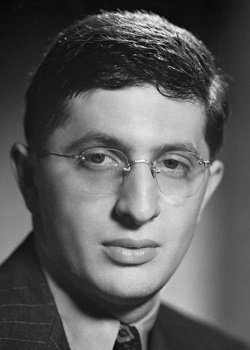 Director of Music Alfred Newman assigned Bernard Herrmann to the project. He was highly motivated given that this was his first opportunity to score a Western, but also because the new CinemaScope technology offered him four track stereo. Director Henry Hathaway gave Herrmann complete discretion to score the film. He was given forty-eight days to compose and record the score, and augmented his orchestra with nine percussion musicians, an organist, and a chorale of clarinets. Like a cinematographer, he chose to infuse his soundscape with finely attuned aural auras using instrumental sonorities and precisely configured placements of musicians and microphones.
Upon viewing the film Herrmann quickly came to the realization that it was a feeble effort to duplicate the success of “The Treasure of Sierra Madre” (1948). He never the less gave the film his best effort, helping to mitigate some of its flaws, however when all was said and done, he remarked to studio executive Daryl F. Zanuck; “I can dress a corpse, but I can’t bring it back to life”. In conceiving his soundscape, I believe Herrmann understood that the film’s narrative driver was man’s lust for gold, and to that end he composed the six-note Gold Lust or Main Theme. The foreboding horn empowered theme serves as an idée fix, that permeates the film. It emotes with dark purpose, empowering the men’s obsession for gold, and insatiable greed. Yet it also provides propulsion, supporting horse rides, flight, and as a tool used to fuel the film and maintain its forward momentum. Hooker’s Theme supports our quiet, laconic, and unflappable hero. Herrmann embraces quintessential Americana offering a noble, warm, yet reserved melody, borne by upper register woodwinds joined with low register contrapuntal woodwinds and horns. When strings take up the primary line, we perceive Herrmann’s capacity to capture the essence of the western genre.
The Apache, who are cast as villains, are supported by two motifs. Apache Motif 1 consists of a steady drum cadence by timpani. Its war-like rhythms are pervasive throughout the score, warning us of their lurking presence and menace. Apache Motif 2 offers an eerie and menacing two-note chirping motif by piccolo, which always accompanies their presence on camera. The Suspense Motif offers one of Herrmann’s trademark motifs, in this case, a repeating four note phrase, with a declarative first note, answered by three notes. He uses it to sow suspense shifting its phrasing from strings, to woodwinds, to horns. The motif never resolves, which keeps the audience on edge. For the cantina scene, which featured Rita Moreno, two songs, “Le Negra Noche” by Emilio D. Uranga, and “Aqui”, by Ken Darby and Lionel Newman, which were provided to showcase the young singer and provide the requisite ambiance. Lastly, Herrmann once again chose to interpolate the “Dies Irae” (Day Of Wrath) melody from the Roman Catholic requiem Mass. Within the words of the Dies Irae chant is revealed the Day of Judgment, which devout Christians believe they will ascend to heaven while the accursed will descend unto the fire pit of Hell. A haunting woodwind choral joined with declarations by muted trumpets portend doom and a terrible retribution.
“Prelude” offers a grandiose score highlight where Herrmann strives to impart the epic sweep the film so desperately needed. Alfred Newman’s iconic 2oth Century Fox fanfare is replaced with a drum roll dramtico joined with resounding portentous horn declarations of the Gold Lust Theme for an extended and dramatic musical narrative as the bright red opening credits unfold against a stunning sunset panorama. At 1:36 we segue into “Siesta” and enter the film proper as the ship captain, Hooker, Fiske, and Luke come ashore in the Mexican town of Puerto Miguel, which is asleep during siesta. The captain returns to the ship to oversee the repair of the engine and Hooker and Fiske head to the cantina for a drink. Herrmann supports with a repeating Suspense Motif, one of his trademarks, in this case, a repeating four note phrase, with a declarative first note, answered by three notes. He shifts shifting its phrasing from strings, to woodwinds, to horns, never allowing it to resolve, which keeps the audience on edge.
“Aqui” reveals Hooker and Fiske entering the cantina where a beautiful singer with guitar accompaniment, sings the traditional Mexican folk song. After Hook orders some drinks, the woman takes a fancy to them and we segue into the seductive love song “La Negra Noche (Me-Mue)”. One of the Mexican patrons makes a pass on her, which elicits Vicente Madariaga to throw him out as the woman stops singing. Luke then enters the cantina and joins the two for a drink. It is clear Fiske and Luke dislike each other as the woman resumes singing. A woman, (Leah Fuller) enters the cantina and pleads with the Mexican patrons to come with her to her husband’s mine and save him, offering $1,000 per man, yet they all turn away, except Vincente. She doubles the offer for the Americans and they all, led by Hooker agree, understanding that the rescue takes them into dangerous Apache territory. “The Cliffs” reveals the rescue party riding up a steep trail under towering cliffs. Herrmann empowers the scene with repeating, grand horns dramatico declarations of the Gold Lust Theme, answered by trumpets, which support their progress. A pulsing two-note motif and an eerie five-note motif join creating a musical narrative of unease punctuated by declarations of the Gold Lust Theme. At 1:28 a dire declaration portends danger as the ride past an Apache warning marker.
“The Chasm and The Valley” reveals a chasm in the cliffside path. Leah charges forth and leaps over it, then turns her head back – the implicit challenge being, if a woman can do it, so can you. Each man follows with Vincente making the last jump, but losing the frying pan, which clangs do the cliff side. A new ominous 3-1 note motif punctuated by percussion propels them onward. As they ride Herrmann supports with an ever-shifting musical narrative of tension underpinned throughout by the lurking timpani drum cadence of the Apache Motif 1. At 0:48 the music softens and becomes more intimate atop strings tenero as Fiske joins Leah in conversation, as we see both curiosity and her attractiveness as motivators. At 1:10 foreboding declarations of the Gold Lust Theme carries their descent into a verdant valley. At 2:03 a misterioso with chirping woodwinds supports their ride through a stream bed as an interested Luke now joins Leah side. Muted tin trumpets resound at 2:29 as Leah suddenly bolts up the embankment. The ominous 3-1 note motif punctuated by percussion joins and supports the Hooker, and Fiske following. A variant form of the motif is sustained, perpetuating suspense as the team continues their ride. At 2:34 dire repeating statements of the Suspense Motif offer an ominous musical narrative, which supports effort by the lagging Vincente who is placing trail markers.
“Leah” reveals the men setting up camp for the night, with Herrmann supporting with a nocturne borne by solo woodwinds, beginning with oboe, shifting to English horn, flute and then solo bassoon, each draped with harp adornment. Fiske, who is an astute observer informs Hooker that the reason Leah knows the route so well is a map she consults, and then hides in her blouse. “The Stone Arrow” reveals Hooker dissuading Luke from following Leah to the river bank, saying he needs to speak to her. The lustful Luke grudgingly agrees. Hooker departs and the combative Luke voices his dislike of both Hooker, and Fiske to his face. The men are ready to come to blows, but Fiske turns away saying he does not care how Luke feels about him. Herrmann supports with a 2-3 note motif, which offers an ominous musical narrative with undercurrents of simmering menace, punctuated by timpani strikes. She finds Vincente’s stone arrow trail marker and angrily throws them into the river. Hooker joins, she pulls out a pistol and threatens him to forget placing markers and to rely on her. He is calm, stoic, and diffuses her anger, saying he understands her motivation as a very simple one – trying to save a man trapped in a gold mine.
“The Hooker” reveals him calmly walking away, carried by a diminuendo as we see gears churning in Leah’s expression. At 0:15 the next day they resume their trek across a plain supported by a plodding, yet suspenseful variant of the Gold Lust Theme where trumpets are joined by strings. The music is underpinned by the lurking timpani cadence Apache Motif 1. At 0:35 Herrmann introduces Hooker’s Theme offering a warm, melodic, yet reserved melody, borne by upper register woodwinds joined with low register contrapuntal woodwinds and horns. When strings take up the primary line at 1:07, we perceive Herrmann’s capacity to capture the very essence of the western genre, and its heroes. At 1:30 a wary diminuendo supports the sight of Vincente continuing to ride at the rear of the column. We close with a final declaration of the Gold Lust Theme, again underpinned by the steady timpani cadence of Apache Motif 1. “The Mission” reveals the trek continuing across a savannah empowered by a refulgent ostinato misterioso. At 0:22 Leah points to a mission, and declares we will bed there tonight. A foreboding crescendo slowly swells as she gallops towards it, cresting dramatically at 0:37 with the Gold Lust Theme declared by horns. The Suspense Motif joins, dissipating at 0:58 on a diminuendo as the team arrives and dismounts.
“The Circle” Hooker notices something in the courtyard and enters it to find a circle with six smoking fires. Herrmann sow mystery and unease using the repeating two-note piccolo calls of Apache Motif 2, each answered by foreboding horn chords. The motif again plays over the lurking timpani cadence of the Apache Motif 1. Hooker advises that last night was a sacred night of the new moon, called by the Apache, “Moon of the White Man”. It celebrates their triumph massacring all the white settlers. Herrmann shifts to a foreboding and unsettling musical narrative as the revelation unsettles the men who begin to wonder if $2,000 is worth the risk. This arouses Leah’s fury as she discounts Hooker’s explanation and reminds the men that her husband’s life is at stake, and that they have a contract. “The Church” reveals Leah walking to the church, with Hooker suggesting that they make coffee. A pall of sadness descends joined at 0:14 by woodwinds solenne voicing the Dies Irae melody as Leah walks within the ruins of the church. “Nocturne” offers a score highlight. It reveals Fiske asking Hooker about the meaning of the “White Man Moon”, and he replies that is kind of an ‘Open Season’. When Fiske asks on who? Hooker replies “You and Me”, which is crowned by a dire three-note descent. At 0:09 we flow into a nocturne, the melody shifting among various woodwinds tranquillo with harp adornment, then shifting to clarinet as the team beds down around a courtyard fire under the stars. Leah looks at her map, but quickly hides it when Vincente enters the courtyard and beds down. After he closes his eyes, Leah gets up, departs and is followed by Luke. She dismantles another of Vincente’s trail markers, and the music sours at 2:27 as Luke joins her.
“The Quarrel” Luke declares that he is not here for the gold like the others, but for more. Herrmann unleashes a grotesque musical narrative as Luke grabs Leah and forces a kiss, which elicits a scream that wakes and alarms the men. At 0:27 a diminuendo of shame carries Leah’s return to her bed. She says nothing, and at 0:40, tremolo strings sinistri support the return of Luke, with Hooker moving forward to confront him. Hooker’s order to get back is refused as Luke pulls his pistol and threatens to kill him. Hooker stares him down and reveals knowledge of Luke’s past – a ruthless bounty hunter who has murdered many. He walks toward Luke unafraid and defiant and a stinger at 1:02 supports a punch, which sends Luke into the fire pit. Luke gets up, but is pummeled two more times with punches that each time again land in in the fire pit. Burnt, and in pain he sobs on the ground as Hooker rebukes Leah, saying she should blame herself, not Luke or any of the men. A paternal Hooker then brings water to Luke, and counsels that he made a fool out of himself, just like everyone else. Adding that there is only one thing in Leah’s mind – her husband. He then hands Luke back his gun saying he needs him and that we have to rely on each other.
In “Aftermath” Hooker counsels Luke to get to bed and Herrmann masterfully uses aural-tography and texturalism to sow an eerie, portentous and ever shifting musical narrative with forlorn woodwinds, pizzicato strings, bass grave, and grim horns. At 0:38 a sad string borne musical narrative unfolds with Hermann introducing a new theme, Leah’s Theme as a cynical Fiske admonishes Hooker for being ensnared by Leah’s wiles, and permitting her to manipulate him. At 1:28 the 2-2 motif of forlorn woodwinds answered by pizzicato strings heard earlier in the scene, supports Fiske voicing his loyalty to Hooker. Yet we see as he beds down, an expression suggesting that he believes this remains to be seen. “The Wooden Cross” opens with a dramatic declaration of the Main Theme as the teams resumes its trek in the morning as they ride past a large wooden cross. At 0:18 bubbling woodwinds spiritoso and horns energico with quotes of the Main Theme propel their ride through open country. At 0:38 a more vibrant string borne Leah’s Theme joins over the bubbling woodwinds spiritoso as their ride cross country continues. At 0:55 ominous timpani bellicoso and dire horns declare the Apache Motif 1 as they enter a forest at the base of an imposing mountain. We close ominously as they rest in the shade of a large tree.
In an unscored scene Hooker and Leah share an intimate moment by the stream bank. She advises that they will arrive the next day, which elicits his query regarding her husband. He says he is a mining engineer and came here prospecting for gold based on a map a priest gave them. She advises that the mining town was buried in lava, and the gold abandoned, as the Apache regard and defend the area as sacred ground. “The Mine” opens with dramatic declarations of the Gold Lust Theme, shifting among the horn section, and rendered with a militant march cadence as the teams resumes its trek in the morning. A brief diminuendo at 0:31 supports a view of the lava buried town in which only the church steeple can be seen. Leah says that the mine is on the other side and a more energetic rendering of the militant travel music resumes as they gallop towards it. At 1:08 a powerful and dramatic horn declaration of the Gold Lust Theme supports their arrival and dismount at the mine entrance. At 1:18 a grim, dirge-like narrative carries Leah and the men’s run to her husband John. She hugs him and declares that he is alive.
In an unscored scene, the mine roof is unstable and Hooker orders the men to find lumber so they can use it as a lever to free John, whose legs are pinned under a fallen celling strut. They free him, and pull him to safety as the mine ceiling collapses. They place him on a liter and carry him out of the mine. Leah’s tells them to take him to their house, where she tends to him. Hooker orders Leah out and holds two small planks that he will use to set John’s broken leg. Hooker and Vincente pull upwards and downwards on the leg to realign the broken bone, and then secure the leg with the splints. They call to Leah, who comes to the bed and lovingly caresses John, who expresses his thanks for coming back for him. Hooker orders her to make him some soup, and to wash him. “Unused” was dialed out of the film. It offers a grim Gold Lust Theme joins with the five-note suspense Motif, which I believe as intended to support the following scene; outside Hooker confides to Fiske that John may not be able to ride back, but that there are sufficient provisions to sustain him until he heals. Fiske then informs Hooker of Luke’s gold lust, which has consumed him as he digs in the mine.
“The Feather” offers a wonderful score highlight. It reveals Hooker heading off to a spring to bathe. Herrmann offers a sumptuous exposition of Hooker’s Theme, perhaps the scores finest moment. Afterwards at 0:28 the melody shift to a solo flute tenero as the now clean and refreshed Hooker returns. At 0:38 the music sours as he sees an Apache feather lying on the ground. After he picks it up Herrmann sow a musical narrative of fear as we see Hooker unsettled by the discovery. He looks out and at 0:57 horns bellicoso resound with buttressed by the war-like timpani of Apache Motif 1 as he sees a smoke signal in the distance. A foreboding Gold Lust Theme and the Suspense Motif carries his return to the house. The musical narrative shifts to uncertainty, replete with a solo oboe triste as Hooker and John at last meet. Leah dissuades John from trying to walk as the bones had not set. In “The Shrine”, John unleashes a grievous personal attack against Leah, saying that while he loved her, all she loved was gold, using him to obtain it. She admits that she did want gold, like everyone else, but not like this. Music enters as she becomes tearful and leaves. Hooker sits down and John, who is bitter, unloads, saying that Leah is playing you just as she did him. He said the Apache found him, but left, believing a slow death sufficient punishment.
(*) “John’s Dire Warning” John adds that they are all going to die a gruesome death as hundreds of Apache have assembled in the hills. Herrmann sow a musical narrative of despair to support the scene. Surging strings irato and horns bellicoso erupt with the Main Theme, with the revelation giving Hooker pause as he departs. By the shrine of the Madonna, he joins Leah and asks if what John said is true. She answers that it is. He tries to console her, but we see that she is bitter. When she asks if he was once a preacher, he answers, no a sheriff. Herrmann supports the scene tenderly and we discern a nascent romanticism seeking to coalesce. The moment is shattered as a drunk Luke and Vincente stagger out of the mine saying “Finders Keepers. Losers Weepers”, revealing that they are stealing from her. When she asks if he is in on it, he answers no, and that they have a bigger problem. We segue into “The Smoke Signals” as he points to the hills saying they have company, and then displays the Apache feather he found. Herrmann sow fear with an eerie violin sustain, the drumbeat of Apache Motif 1 and yelping flute of Apache Motif 2. She offers him a deal, take all the gold she has stashed away and depart with John. She will light a fire tonight as a diversion to allow him and the others to escape. Hooker departs and walks to join the drunken Vicente and Luke.
In “The Revelers” a foreboding three-note motif by dissonant trumpets and bass grave and woodwinds support John, who seems agitated by the sound of Luke and Vincente. He sees his pistol hung over the bed post of the other bed. At 0:21 a horrific, stepped descent motif supports John making his way on the floor towards the pistol. He grabs it, places it in his pants, and returns to his bed. We segue into “The Wild Party” and a comedic musical narrative unfolds atop strings energico, bubbly woodwinds comici as the drunk Vincente and Luke celebrate. At 0:25 the music, like them surges out of control as they toss their hats in the air with Luke shooting his, and Vincente downing it with a knife.
At 0:52 a diminuendo supports Hooker’s revelation that Apache are in the hills, saying he saw their smoke signals, and then offering the feather he found. Leah joins and shares her plan saying she will stay to dupe the Apache that everyone remains, with the proviso that they must take John on a litter. Luke will have none of it and storms off. Hooker then asks Fiske if he has an alternative? “Leah’s Vigil” reveals her tending to the sleeping John, covering him with a blanket. Despite the acrimony between them, Herrmann’s musical narrative belies this, offering a warm and tender narrative.
“Fuller’s Devotion” reveals Fiske confronting Leah, saying her offer is a deception as she knows the men would never agree to leave a woman alone to such a horrible fate. He then surprises her by saying that he will stay with her, because he is a fool. When she replies, not to me, he takes the bait and asks what is he to her? Music enters as a grim descent motif of rejection as her reply is devastating; “You’re nothing at all, absolutely nothing”. With his pride wounded, Fiske departs. And we shift to an aching and wistful musical narrative of regret, which supports John’s observation that even though Fiske understood her, it was still not enough. He then pines, I had only known the truth about you. As she prepares his clothes, he adds, Fiske would stay with you, and so would I. At nightfall Leah tends to the fire and John comes out and declares he can ride. They hoist him on the horse and prepare to depart, leaving her. In “The Departure” Hooker asks Leah if she is still committed to this? After she says yes, he sucker punches her, knocking her out. Music enters grimly with rolling drums and foreboding horn and woodwinds declarations. At 0:14 tense strings support him laying her atop his horse, which he mounts. At 0:26 an urgent and tense staccato musical narrative of flight propelled by the Main Theme unfolds as they ride out hoping to elude the Apache.
In an unscored scene Hooker orders the party to take a rest break as the horses and John are exhausted. A recalcitrant Luke bucks the orders saying to leave John and push on. Hooker calls his bluff, saying his is free to go on alone, which causes Luke to grudgingly acquiesce. In “The Indian”, Herrmann again uses aural-tography and texturalism to sow unease, including the chirping two-note Apache Motif 2. We see an Apache scout observing them from a hillside perch as John is helped down to rest. He argues against starting a fire for coffee, saying that the Indians already know their location and that the best chance of survival is to abandon him a ride for your lives. Hooker is dismissive and orders Vincente and Luke to deploy as lookouts. We segue seamlessly into “Fuller’s Plan” where Herrmann sow unease and a mounting tension atop the steadily increase drum beat tempo of the two Apache motifs, with an eerie call and response effect for woodwinds and horns. Hooker joins Luke and Vincente on a cliff and scans the valley below for any sight of an Apache war party as the Indian scout continues to observe unnoticed. John crawls up the hill and asks Luke to fetch him a horse so he can ride off and remove himself as a burden.
In “The Apache” Luke runs down to fetch a horse. Herrmann reprises the texturalism of the “The Indian” track to sow tension. At 0:17 an intensification supports Luke’s arrival with a horse and him helping John to mount it. “Daly’s Death” reveals Hooker arriving and yelling for them to stop as Luke hat whips the horse causing it to bolt. Luke pulls his pistol and prepares to shoot Hooker. Music enters atop dire horns declarations buttressed by the drum beat of Apache Motif 1 as an arrow mortally strike Luke in the back. A descent motif of death carries Luke tumbling down the cliff, landing feet away from a horrified Leah. We segue into “Fuller’s Death” where Hooker informs Leah that Luke helped John escape, which makes her distraught. Herrmann sows a mournful musical narrative as Hooker orders the party to mount and flee. At 0:32 the chirping Apache Motif 2 supports the Indian scout observing from above. At 0:42 a galloping rendering of the Main Theme propels their flight. At 0:55 Herrmann uses a horrific declaration of death to support Leah’s scream as she sees John’s arrow ridden corpse hung upside down from a cross. The Flight Motif carries their gallop to him, with Hooker ordering Vincente to cut him down. We close with anguish as a distraught Leah collapses and weeps.
(*) “Burial” reveals John buried under the cross, with Leah removing her wedding ring and pushing it into the grave’s dirt. Fiske looks upwards at an overlooking ridge and the Apache Chirping Motif 2 sounds as he sees four Apache warriors. He alerts Hooker and the motif reprises as he cautions everyone to be steady. As they depart, Herrmann sow a grim tension. As they gallop away, a forceful, and charging trumpet empowered Main Theme propels them. With nightfall, a diminuendo brings them to a stop, with Hooker saying to set up camp. “Night Scene” offers a soothing nocturne emoted by repeating, ever shifting four-note phrases by strings with harp adornment as we see the party bedded down for the night with Hooker taking the first watch. At 1:07 Leah wakes, and an oboe tenero supports her walk to Hooker. This tender and intimate musical narrative supports Leah distraught that John hated her so much to ride off, with Hooker offering an alternative explanation, that it was an act of love as he realized that he was a burden, which placed her life in peril. Reassured he gently places his arm around her and escorts her back to get some sleep.
“The High Rocks” reveals it is morning and Herrmann supports the sight of the Apache war party poised for attack from an overlooking ridge with a ferocious and primal musical narrative empowered by flutter-tongue blasts shifting among the horn section, drums of doom, and a now fierce Apache Chirping Motif 2. At 0:14 a desperate and charging Flight Motif shifting back and forth from horns to woodwinds propels the party fleeing for their lives. The Apache shout war cries and at 0:23 a shrill trumpet blast supports an arrow strike of Vincente’s saddle, which sends him toppling to the ground. He stands, shouts out a defiant challenge as he pulls out his knife, only to be taken down by arrow strikes. We segue into “The Chase”, a powerful score highlight which offers a ferocious horn and drum propelled tour de force as the Apache charge and the party flees for their lives. Leah says the cliff edge path is just ahead and they ride furiously towards it. The music swells on a stepped crescendo furioso with primal ferocity as two additional war parties appear on their flanks and move to cut off their escape. Hooker manages to shoot two Apache at the entrance of the cliff path, and then several more as they are forced to ride single file and easy targets on the narrow path. They dismount and from the safety of some large rocks Hooker and Fiske shoot several Apache who flee as their arrows cannot reach their targets.
“The Cards” reveals an argument between Hooker and Fiske as to who should remain to hold back the Apache. Hooker agrees to Fiske’s proposal to let cards decide who stays and they agree that who ever pulls the high card, stays. Fiske draws a king to Hooker’s seven and wins. He tells Hooker to accept his loss, go, and take her with you. Music enters in the aftermath, borne by aching strings doloroso. Hooker departs, and Fiske tells Leah, that cards are the only thing he was ever good at, which elicits her to hug him. At 0:43 the music softens and gains tenderness a Fiske motions Hooker to take her away. In “The Ridge”, horns declare the Main Theme to support Hooker and Leah riding out. Thematic interplay now unfolds as the camera shifts from Fiske, to the Apache, and Hooker and Leah. We shift to a ridge overlooking the path below and the Apache Chirping Motif 2 supports their stealth approach. Bassoon grave portend a growing danger as Fiske stands guard while nonchalantly flinging cards into the wind. Apache Motif 2 continues to support their stealth approach, with a propulsive Main Theme continuing to support Hooker and Leah’s ridge along the cliff path. We close with a diminuendo of uncertainty as Hooker and Leah hear rifle shots. As Fiske is shooting, an Apache shoots an arrow from behind that misses him. Fiske then turns and shoots the warrior.
In “The Return” Hooker and Leah dismount as they hear rifle shots. Hooker says Fiske cheated, and that he has to go back, hoping she understands. She says she does, and as he mounts and rides off, aching strings of regret and horns tristi carry him away from her. At 0:25 a dire musical narrative carries Hooker’s return ride on the cliff path as more rifle shots are heard. At 0:44 a diminuendo of tension commences joined by foreboding woodwinds led by bassoons as Hooker slows, pulls out his rifle and warily advances. A lurking Apache Motif 2 joins eerily on strings as Hooker looks aloft at the ridge. “The Sharpshooter” opens with a musical narrative of menace as dire horns and the Apache Drum Motif 1 support Hooker riding on as Apache are seen on the ridge above. He comes to a clearing, sees Apache ready to ambush and shoots both, each punctuated with a chord of death. As Apache drums pound, the Main Theme propels Hooker forward until 0:33 when a grim diminuendo supports him finding Fiske laying face down. He rushes to him, turns him over, and finds a mortal arrow strike near the heart. A stepped woodwind descent motif unfolds with each step losing vitality. The men come to terms with both commending each other. We flow seamlessly into “Finale” a score highlight. Fiske points to the setting sun, and says that each day when it sets, it takes someone with it, and today it will be taking me. Herrmann offers a tender elegy with refulgent, ethereal strings, crowned at 1:06 by mournful woodwinds as Fiske expires. At 1:33 the shimmering ethereal strings support Hooker gazing at the sunset and saying, that if the world was made of gold, men would die for a handful of earth. At 1:52, as we see him riding against fiery sunset lit clouds, the Main Theme sounds one last time on French horns nobile. As a silhouette against a fiery horizon, we see him join another rider (Leah), and they ride off together to a happy life together uplifted by Herrmann’s hopeful music.
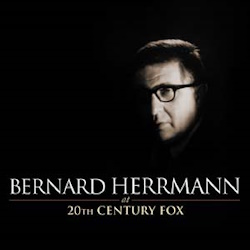 I would like to thank the late Nick Redman, and Robert Townson for their magnificent 14 CD box set “Bernard Herrmann at 20th Century Fox. The score for “Garden of Evil” was expanded by fifteen cues and the audio quality enhanced thanks to the efforts of Daniel Hersch and Mike Matessino. Although 21st century audio quality was not achieved, the score still allows Herrmann’s handiwork to shine. This was Herrmann’s first and last foray in the Western genre. He did not channel the classic Americana romanticism long associated with the genre, instead scoring the film in his inimitable style. His dramatic Main or Gold Lust Theme drives the film’s narrative, offering a versatility that infused drama and energy into the leaden film narrative, consistently propelling its forward momentum. Notable for this score is Herrmann’s renowned use of his trademark succinct, repeating motifs. Several are offered, often shifting among the instruments, each precisely conceived to evoke a particular emotion; suspense, tension, fear, anger etc. Eschewing melody, he embraced texturalism and like a cinematography’s manipulation of light to evoke emotion, Herrmann created aural-tography using sound to evoke emotion. His two Apache Identities are simple in construct; the first offering an ominous and pervasive drum beat, the second a primal two-note chirping effect. Both masterfully instilled fear and danger. Folks, this is not a classic western genre score, but instead a unique one in which Herrmann singular compositional style shines. The box set is out of production and prohibitively expensive at secondary markets. If you can afford it, do so as it is a treasure trove. Do take in the film and bear witness to how Herrmann enhanced this flawed film in every way imaginable.
For those of you unfamiliar with the score, I have embedded a YouTube link to the Main Title; https://www.youtube.com/watch?v=yCRF33Xy4J0
Buy the Garden of Evil soundtrack from the Movie Music UK Store
Track Listing:
- Prelude/Siesta (3:38)
- The Cliffs (2:03)
- The Chasm and The Valley (3:34)
- Leah (0:50)
- The Stone Arrow (1:03)
- The Hooker (2:06)
- The Mission (1:11)
- The Circle (2:07)
- The Church (0:54)
- Nocturne (2:37)
- The Quarrel (1:06)
- Aftermath (1:44)
- The Wooden Cross (1:14)
- The Mine (1:41)
- Unused (0:28)
- The Feather (1:47)
- The Shrine (1:00)
- The Smoke Signals (0:29)
- The Revelers (0:58)
- The Wild Party (1:09)
- Lean’s Vigil (0:48)
- Fuller’s Devotion (1:23)
- The Departure (1:08)
- The Indian (0:43)
- Fuller’s Plan (3:05)
- The Apache (0:42)
- Daly’s Death (0:42)
- Fuller’s Death (1:49)
- Night Scene (2:53)
- The High Rocks (0:31)
- The Chase (2:37)
- The Cards (1:11)
- The Ridge (1:33)
- The Return (1:28)
- The Sharpshooter (1:04)
- Finale (2:27)
- La Negra Noche (Me-Mue) (2:38) BONUS
- Aqui (3:15) BONUS
Varese Sarabande CD Club VCL 1211 1128 (1954/2011)
Running Time: 62 minutes 14 seconds
Music composed and conducted by Bernard Herrmann. Orchestrations by Bernard Herrmann. Recorded and mixed by XXXX. Score produced by Bernard Herrmann and Alfred Newman. Album produced by Nick Redman and Robert Townson.

Shop at the Movie Music UK Store

Member of the


