Under-the-Radar Round Up 2023, Part 3
 Original Reviews by Jonathan Broxton
I’m pleased to present the latest instalment in my on-going series of articles looking at the best under-the-radar scores from around the world. This article, the third of 2023, covers five scores from independent British and American projects, films slightly off the mainstream beaten track, but which all contain outstanding music. The scores cover a variety of genres and mediums, from nature documentaries to sports dramas, animated short films to children’s fantasy adventures, and more!
BLUE WHALES: RETURN OF THE GIANTS – Steven Price
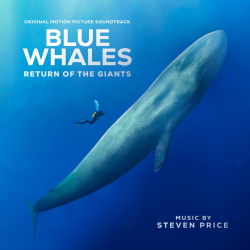 Blue Whales: Return of the Giants is a 3D nature documentary which, per the film’s production notes, takes viewers on a journey of a lifetime to explore the world of the magnificent blue whale, a species rebounding from the brink of extinction. Following two scientific expeditions—one to find a missing population of blues off the exotic Seychelles Islands, the other to chronicle whale families in Mexico’s stunning Gulf of California—the film is an inspirational story that transforms our understanding of the largest animal ever to have lived. The film is directed by Hugh Pearson, narrated by Andy Serkis and has an original score by Steven Price.
Since winning his Oscar for Gravity in 2013 – now a decade ago! – Price has made some interesting career choices. He has scored action movies like Fury and Baby Driver, super her movies like Suicide Squad, horror films, historical adventures, and straight dramas, but for me he has found an excellent niche in the world of nature documentaries. Scores like Dolphin Reef, David Attenborough: A Life On Our Planet, The Hunt, Our Eternal Sky, and Our Planet have all showcased his talent, and now Blue Whales: Return of the Giants is another to add to that list of excellent works.
The score is very much in the same wheelhouse as those other works; large orchestral forces, appealing thematic content, moments of power and majesty tempered with moments of calmness and intimacy, some judicious and appropriate electronic content, some moments of more contemporary scoring featuring guitars and light rock percussion, and a few sequences of powerful action. In terms of approach, the score reminded me very much of 1990s Basil Poledouris and 1990 Cliff Eidelman – I’m specifically thinking of things like Free Willy 3, Ocean Men, Big Miracle, and others – which, if you know my taste, is a very good thing indeed.
Several cues stand out for their sense of scope. The opening “The Age of Giants” introduces the impressive main theme. “Finding the Lost Population” is a little bittersweet, combining electronic tonalities with a heartfelt solo cello performance. There’s superb sense of openness, positivity, and freedom, and even some whimsical light comedy in “Nice and Fat”. Both “100 Miles in a Day,” “In Luck” and “The Push For More” contain terrific, confident reprises of the main theme. “A Big Cloud” and the brilliantly intense “A Narrow Window” are serious and dramatic, determinedly energetic with a sense propulsive forward motion. The quirky, idiosyncratic light comedy comes back in “The Inevitable,” but is quickly replaced with the hopeful ebullience of the superb “Life Flourishes”. The final statement of the main theme in “Hope” is superb.
This is a terrific score, and comes especially recommended to anyone who has enjoyed any of Steven Price’s previous nature documentary scores in particular, or who enjoys sweeping, melodic, engaging ‘spectacle music’ with more than a passing reference to the orchestral stylistics of the late-1990s. The score for Blue Whales: Return of the Giants is not available to purchase on CD, but it is available to download and stream via Spotify, Apple Music, and all the usual online retailers on the Milan label.
Track Listing: 1. The Age of Giants (4:00), 2. Finding the Lost Population (2:48), 3. Lifeless Again (1:57), 4. Like the Sea Is Breathing (2:25), 5. Social Networks (3:12), 6. Nice and Fat (1:56), 7. 100 Miles in a Day (2:54), 8. In Luck (1:59), 9. An Unexpected Sight (2:42), 10. A Big Cloud (3:47), 11. The Inevitable (1:12), 12. Life Flourishes (2:24), 13. To Push for More (1:21), 14. A Narrow Window (2:18), 15. They Will Return (1:04), 16. Hope (3:28). Milan, 39 minutes 35 seconds.
THE MIRACLE CLUB – Edmund Butt
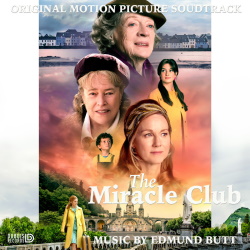 The Miracle Club is an Irish comedy-drama film directed by Thaddeus O’Sullivan that follows the story of three generations of close friends, Lily (Maggie Smith), Eileen (Kathy Bates), and Dolly (Agnes O’Casey), all working class women from Dublin who dream of going on a pilgrimage to the French town of Lourdes. However, just before their trip, their childhood friend Chrissie (Laura Linney) arrives for her mother’s funeral from the United States, causing friction among the friends, and makes their journey to the ‘miracle capital of the world’ in jeopardy.
The score for The Miracle Club is by composer Edmund Butt, who is prolific in the British film and TV music industry, but has yet to make a real breakthrough internationally – perhaps his most acclaimed score to date was for the 2009 nature documentary Yellowstone. While the film itself is unlikely to change things, the music for The Miracle Club could bring Butt some well-deserved attention; it’s a charming, lively, engaging score that combines a bright orchestra with traditional Irish instrumentation, and some lovely light religioso work relating to the spiritual aspects of the story.
The scene is set in the pretty but somewhat downbeat “Dublin 1967,” which addresses the working class setting of the film in urban Dublin, but offers hints of the optimism at the heart of the story. Lively strings, light pianos, dainty woodwinds, and harps form the bulk of the orchestration, and the style moves between being retrained and engaging in some Philip Glass-like minimalist rhythmic content. Similar later cues, notably the gorgeous “I Missed You” and the Thomas Newman-esque “Forgive Me” continue this approach to excellent effect.
Cues like “A Leak,” “To Lourdes,” “The Cure,” and “Arriving at Lourdes” are sprightly and whimsical, charming representations of the cantankerous relationships between the women, but also containing a sort of excited romantic aspect that illustrates the women fulfilling a lifelong dream; Butt uses dancing classical violins, dance-like rhythms, and fluttering woodwind textures to capture their feistiness. Some of these cues, especially “Ma’s Soup” and “A Miracle,” also feature faux-Gallic textures – accordions, and so on – which speak to the women’s dreams of visiting Lourdes and France. On the flipside, “Spancill Hill” has a gorgeous Irish lilt which is really appealing.
The music related to Laura Linney’s character Chrissie is built around strings, pianos, and solo harp, and most often than not is phrased with a touch of longing and regret, and then later in “My Abortion” the music is still beautiful, but is as serious and emotional as one would expect. “Lilly Bathes” has an unexpectedly dark tone, propulsive to the point that it’s almost an action cue, but with a bubbling undertone that reminded me of Alexandre Desplat.
This a fun, charming score full of warmth and appeal, some moments of genuine emotional depth, counterbalanced by lightly whimsical comedy and references to stereotypical Irish and French musical tropes. In short, it’s lovely, and a nice reminder of Edmund Butt and the type of music he can write when given the right canvas. The score for The Miracle Club is not available to purchase on CD, but it is available to download and stream via Spotify, Apple Music, and all the usual online retailers.
Track Listing: 1. Dublin 1967 (3:18), 2. A Leak (2:21), 3. Dear Chrissie (2:46), 4. To Lourdes (1:59), 5. My Abortion (2:49), 6. Spancill Hill (1:18), 7. The Cure (1:25), 8. Ma’s Soup (3:08), 9. No Miracles (2:28), 10. Chrissie’s Theme (2:03), 11. Lilly Bathes (2:42), 12. Arriving at Lourdes (3:24), 13. I Missed You (5:31), 14. Blackberries (2:58), 15. A Miracle (1:20), 16. Pretty Globe (2:23), 17. Forgive Me (1:06), 18. The Miracle Club End Roller (4:48). Dubois Records, 47 minutes 59 seconds.
SWEETWATER – Jeff Cardoni
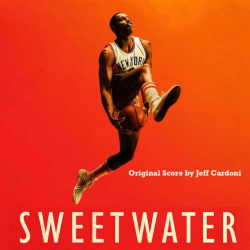 Sweetwater is a sports-themed period drama film that follows the life of Nathaniel “Sweetwater” Clifton, the star player on Harlem Globetrotters exhibition basketball team, who changed the game – and American sports culture – forever when he became the first black player to sign a contract with the NBA in the fall of 1950. The film stars Everett Osborne as Sweetwater, plus Cary Elwes, Jeremy Piven, Richard Dreyfuss, and Kevin Pollak in supporting roles, and is directed by Argentinian filmmaker Martin Guigui.
The score for Sweetwater is by Jeff Cardoni, who has written prominent scores for films like Just Friends, Firehouse Dog, and Mike and Dave Need Wedding Dates, and TV shows like Entourage, Silicon Valley, CSI Miami, and The Kominsky Method, but who has (in my opinion) never truly broken out in the way his talent deserves Over the past couple of years he has carved out a little niche for himself as a go-to guy for independent sports dramas; his score for the baseball movie The Royal last year was notably excellent, but Sweetwater is perhaps even better.
It’s a classic, rousing, inspirational orchestral score, thematic and melodic, and with a surprisingly old fashioned sound that is immediately appealing. It’s in the same vein as things like Jerry Goldsmith’s Rudy, Mark Isham’s Miracle, William Ross’s Tin Cup, or Randy Newman’s The Natural; warm, appealing orchestral Americana that paints a portrait of a time and a place, and slowly builds to a massive, celebratory finish.
Cues like “Cab Driver,” “Big Plans,” “You’re A Knick Now,” and “Practice With the Knicks” are just lovely, and are usually built around inviting string passages accompanied by subtle acoustic guitar phrases, wholesome and engaging, and with a sincere emotional side that acknowledges Sweetwater’s dreams of making it big in the NBA. Cues like “I Know My Game” are lively and jazzy, blending the orchestral tones with an authentic jazz combo and rhythm section that speaks both to Sweetwater’s cultural heritage, and his energy on the basketball court. There are some moments of subdued drama too, in cues like “League Unrest” and “Lapchick’s Distraught,” during which Cardoni blends his strings with some melancholy but pretty woodwind writing.
However, it’s in the score’s 20-minute finale that score comes alive; those two conclusive cues, “The Garden” and “The Big Game,” are for me two of the standout cues of Cardoni’s entire career to date. These two cues reach some enormous heights of orchestral grandeur, ebbing and flowing, swelling and dropping as each new phase of the climactic game develops. Cardoni drops all the tricks in the book into the sequence: tolling bells to emphasize the drama, regular reference to four-note main motif, slightly more emphasis on earnest-sounding brass, exciting and triumphant action music, and numerous moments where the orchestra just soars. There is a roaring intensity to part of “The Big Game” that is just magnificent, and it ends with an emotional sweep that is genuinely satisfying. I know I wrote something like this before in my review of The Royal, but it’s so good to hear music like this from Cardoni because he’s super talented and he deserves significantly more mainstream attention than he gets.
If you’ve never heard a Jeff Cardoni score before, then Sweetwater would be a good place to start. The score album is not available to purchase on CD, but it’s available to download and stream via Spotify, Apple Music, and all the usual online retailers.
Track Listing: 1. Cab Driver (2:24), 2. I Know My Game (1:09), 3. Big Plans (1:07), 4. League Unrest (0:47), 5. Lapchick’s Distraught (1:20), 6. Philosophy (1:19), 7. Harlem Wins (1:08), 8. The Knick’s Offer (3:42), 9. You’re A Knick Now (2:29), 10. Press Conference (1:57), 11. Dinner Phone Call (0:56), 12. Practice with the Knicks (1:03), 13. Irish Confronts the League (1:55), 14. The Garden (8:57), 15. The Big Game (11:14). Fallout Shelter Recordings, 41 minutes 37 seconds.
TAHLEQUAH THE WHALE: A DANCE OF GRIEF – Lolita Ritmanis
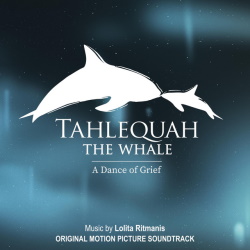 Tahlequah the Whale: A Dance of Grief is an award-winning animated short film, written and directed by Daniel Kreizberg, which re-tells the true story of Tahlequah, a female orca killer whale, who in 2018 was observed carrying the body of her newborn baby calf across the Salish Sea in Canada and out into open water, in an apparent show of grief that attracted international attention. It sounds like a lovely film, but it’s not something I would usually pay attention to – except for the fact that it has an astonishingly beautiful score by Latvian-American composer Lolita Ritmanis.
Ritmanis is, of course, very well known for her work scoring animated super-hero movies and TV shows, initially with her mentor the late Shirley Walker, and subsequently with her regular composing partners Kristopher Carter and Michael McCuistion. Lately, however, Ritmanis has been quietly developing an excellent reputation as a composer of more serious symphonic orchestral music for more highbrow projects; she was one of the 15 shortlisted composers for the Best Score Oscar in 2021 for her score for the Latvian film Blizzard of Souls (Dvēseļu Putenis), and then in 2022 she was among the several woman who won the Grammy for Best Classical Compendium for their work ‘Women Warriors: Voices of Change’. For Tahlequah, Ritmanis re-united with several of her collaborators on those projects, including the Latvia Studio Orchestra, conductor Amy Andersson, violinist Sandis Šteinbergs, flautist Anete Toča, and cellist Dace Zālīte-Zilberte, as well as her daughter Aija Mattson-Jovel, a French horn virtuoso.
The resulting score is just gorgeous; lush, lyrical, emotional, passionate, but also a little sad, painting a lovely portrait of love and loss in the animal kingdom. The soundtrack album runs for just a hair over 20 minutes and is anchored by its standout piece, the “Tahlequah Concert Suite,” which features standout solo performances by Šteinbergs and Toča, and is just superb: eloquent, elegant, with some delightful interplay between the instruments, a livelier interlude half way through the cue, and a warm, inviting tone that encourages the listener to empathize with the whale at the heart of the story. Stylistically it actually reminds me very much of 1990s Thomas Newman; some of the chord progressions, the way the instruments harmonize with each other in specific ways, and so on.
The rest of the score is structured similarly, taking elements from the concert suite and fleshing them out into different moods and colors. The “Tahlequah Main Title” has a darker tone that hints at the tragedy to come, and has some excellent moments featuring a piano. “A Gift to the Family” is light, playful, and charming. “Threats to Their Lives” uses some contemporary synth textures alongside the orchestra, which gives the whole thing a new dimension. The cello writing in “A Mother Mourns” is especially striking for its emotional resonance. The violin performance of the main theme in “A Phoenix Rises” is staggeringly beautiful, a hauntingly appropriate tribute to the depth of feeling between a mother and her child – whether human, cetacean, or anything else.
This is an outstanding score by Lolita Ritmanis, and just shows yet again what a talented composer she is. Due to it being a short film, this isn’t a score that will be eligible for Oscars or Golden Globes or even Emmys, but if it had been, it’s the kind of thing that would have been pushing for a nomination. It gets a strong recommendation from me; it’s available to download and stream via Spotify, Apple Music, and all the usual online retailers.
Track Listing: 1. Tahlequah Concert Suite (5:48), 2. Tahlequah Main Title (1:44), 3. A Gift to the Family (1:33), 4. Threats to Their Lives (1:02), 5. A Mother Mourns (3:31), 6. A Dance of Grief (1:44), 7. Her Final Act (2:15), 8. A Phoenix Rises (1:34), 9. Tahlequah End Credits (1:38). Ritmanis-Andersson Music, 20 minutes 49 seconds.
WONDERWELL – William Ross, Angelo Badalamenti
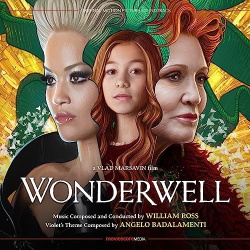 Wonderwell is a fantasy coming-of-age film that follows Violet, a naive and inquisitive 12 year-old-girl living in an Italian forest, who is lured by a kindly witch into another realm, where she must help defeat an evil witch from taking over. The film stars newcomer Kiera Milward as Violet, plus Rita Ora and the late Carrie Fisher as the witches, and is directed by Vlad Marsavin; it was actually filmed seven years ago, before Fisher’s death in 2016, but has been stuck in distribution hell since then, and is now just limping into release now, amid terrible reviews.
The score for Wonderwell is by William Ross, who was the second composer attached to the film; the score was originally a project for Angelo Badalamenti, and one of his themes for the film – “Violet’s Theme” – remains in the score. Badalamenti himself passed away December 2022, which gives you an idea how long this thing has been kicking around. When talking about the score Ross says: “Writing the score to Wonderwell was a bittersweet experience. It was wonderfully ‘sweet’ in the sheer beauty of the film, it’s locations, it’s script, actors… and of course the musical approach that the film makers wanted. ‘Bitter’ in the sense that it was difficult to see Carrie Fisher on screen, knowing that she was no longer with us. It had been less than a year since she had passed away. It was a pleasure for me to get the chance to work with Angelo Badalamenti’s beautiful ‘Violet’s Theme’.”
In reality, the score for Wonderwell may very well be the best thing about the project. It was recorded in London with the London Symphony Orchestra and is a big, lush, classic children’s fantasy score, fully orchestral, and overflowing with themes motifs, gorgeous symphonic passages, occasional choral parts, and rich emotional content. There are two main themes – one by Ross, which is first heard in the gorgeously romantic “Main Title” and is often carried by a solo piano, and then the one by Badalamenti, “Violet’s Theme,” which is a little more subdued, perhaps even a little melancholy at times, focuses on cello and guitar, and offers a nice contrast with Ross’s more traditional and magical tone.
What’s really good about the score, though, is that Ross uses Badalamenti’s theme throughout the score; it receives notably prominent performances in cues like “Hazel’s Garden,” “Violet’s Journey,” the wondrous “Hearing the Lyre,” “The Contract” and several others, and then it’s at the forefront of the entire finale, from “Kiss and Rescue” onwards. Every time Badalamenti’s theme kicks in it gives the score a slightly wistful tone that I really appreciate. Occasionally the woodwind variations on the theme remind of Rachel Portman in her more introspective moments, which I really like.
Everything else in the score is mostly magic and wonderment, but several cues stand out as being something a bit different. “Rescue,” “A Way Out” and parts of “The Creature” are big, bold action cues that really shake the rafters. The darker material in “Wilted Flower” and “In the Church” offsets the magic with some slightly abstract instrumental and vocal textures that have an undercurrent of danger. “Midnight Blue” features a wordless vocal performance by lead actress Kiera Milward that is effectively haunting. The second half of “Searching for Violet and the Ritual” has a chanted choral part that reminds me of a ‘lighter’ version of Bruce Broughton’s Young Sherlock Holmes. Many of Ross’s harmonies and instrumental textures have a classic James Horner or Jerry Goldsmith sound, which of course appeals to me greatly.
There’s some real, raw emotion in “Can’t Find the Plug,” but then in the conclusive trio – “The Power of the Flower,” “Finale” and “Heroes Reunite” – Ross and his co-composer Alex Kovacs really pull out all the stops, with some bombastic action music, vivid dissonance, a gorgeous final statement of Violets theme, and finally a beautiful reprise of the main theme. One thing I will say is that some people may be a little surprised at the generally downbeat tone of much of the score – it is undeniably beautiful, but does tend to err on the side of melancholy – and so if that is an issue then perhaps a word of caution is appropriate. Personally, however, I loved the whole vibe of the score, which is another reminder of why William Ross is so well-respected. The score for Wonderwell is available to download and stream via Moviescore Media here: https://moviescoremedia.com/newsite/catalogue/wonderwell-william-ross/, and will be available as a CD-On-Demand soon.
Track Listing: 1. Main Title (3:30), 2. Violet’s Theme (written by Angelo Badalamenti) (3:05), 3. Rescue (1:51), 4. Hazel’s Garden (1:59), 5. To Plug (1:48), 6. Violet’s Journey (3:10), 7. Wilted Flower (2:06), 8. Hearing the Lyre (2:29), 9. Midnight Blue (performed by Kiera Milward) (0:54), 10. Violet’s Reflection (2:49), 11. The Contract (3:01), 12. A Way Out (1:59), 13. Dad’s Warning (1:40), 14. Through the Forest (2:09), 15. In the Church (2:20), 16. The Red Dress (2:05), 17. Searching for Violet and the Ritual (3:41), 18. Sunrise Warning (1:56), 19. Red Town (written by Alex Kharmalov, performed by Romany Gilmour) (3:23), 20. We Have to Save Her (2:08), 21. The Creature (3:23), 22. Kiss and Rescue (1:43), 23. Can’t Find the Plug (2:13), 24. The Power of the Flower (1:39), 25. Finale (2:16), 26. Heroes Reunite (2:46). Moviescore Media MMS23023, 62 minutes 19 seconds.
Leave a Reply

Shop at the Movie Music UK Store

Member of the


Thank you for these reviews and related ones; it is so challenging getting past the mainstream monoliths of Netflix and Amazon and Apple etc for film availability, ( I’m resident in Australia now) that ‘under the radar’ reviews are especially welcome and valued. I’m looking forward to listening to the above scores while following Jonathan’s excellent reviews. Thank you once again!
Speaking of Thomas Newman, were you thinking of reviewing his score for Elemental? I’m curious what you thought of that.