Carlo Savina, 1919-2002
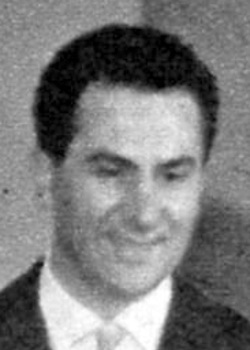 Composer, arranger and conductor Carlo Savina died in Rome on June 21, 2002, at the age of 82.
One of the most prolific and versatile figures in Italian film music, Savina worked on more than 200 films as composer, conductor or musical director. Although his own scores encompassed everything from comedy and drama to spaghetti westerns and horror, he was equally important as a trusted conductor for composers including Nino Rota, Miklós Rózsa, Philippe Sarde and Stephen Sondheim.
Savina was born in Turin on August 29, 1919, into a musical family. His father was principal clarinetist with the EIAR radio orchestra and introduced him to music at an early age. Savina studied violin, piano, composition and conducting at the Giuseppe Verdi Conservatory in Turin, and in 1944 received his diploma in composition. His early concert works included sonatas, chamber pieces and the opera Il vecchio geloso, which won a prize from the Accademia Musicale Chigiana in 1948.
After the Second World War Savina became increasingly active in radio and popular music. He formed his own orchestra, wrote songs and arrangements, and became a prominent conductor for RAI, participating in some of Italian television’s earliest experimental broadcasts. His polished orchestral style and ability to move easily between classical and popular idioms soon led him toward cinema.
Savina’s film career began around 1950 with Il Monello Della Strada, written in collaboration with Nino Rota. During the following two decades he became extraordinarily prolific, sometimes composing music for more than ten films in a single year. Among his more distinguished dramatic scores were Dino Risi’s Una vita difficile (1961) and Joseph Losey’s Eva (1962), while his extensive work in comedy included several films featuring Totò.
Like many Italian composers of his generation, Savina became heavily involved in the spaghetti western. His scores included Johnny Oro (1966), A Few Dollars for Django (1966), Vengeance (1968), And God Said to Cain (1970) and Comin’ at Ya! (1981). His western music ranged from bold orchestral themes and songs to eerie, almost Gothic textures; And God Said to Cain, starring Klaus Kinski, is particularly notable for treating the western almost as a horror film, with organ, distorted guitar and sinister atmospheric writing.
Savina was equally comfortable with horror and exploitation cinema. His score for Mario Bava’s Lisa and the Devil (1973) is one of his most admired works, combining elegant romantic writing with unsettling psychological textures. During the 1970s he also scored thrillers, adventure films, historical dramas and numerous popular Italian genre productions, demonstrating a remarkable ability to adapt to changing fashions.
His career as a conductor was just as significant. Savina became one of Nino Rota’s most trusted musical collaborators and conducted or supervised recordings for several major Fellini films, including The Clowns, Roma and Amarcord. Most famously, he conducted Rota’s music for Francis Ford Coppola’s The Godfather (1972). He also worked with composers including Miklós Rózsa, Dimitri Tiomkin, Armando Trovajoli, Stanley Myers and Philippe Sarde, and conducted orchestras including the London Symphony Orchestra and Rome’s Orchestra dell’Accademia Nazionale di Santa Cecilia.
One of Savina’s finest late scores was Damiano Damiani’s crime drama Pizza Connection (1985). Its dark orchestral writing, blues colors and elegiac themes brought him the David di Donatello Award for Best Music, the most important individual honor of his film career.

Shop at the Movie Music UK Store

Member of the


