Archive
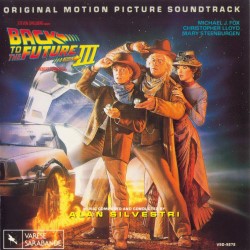
BACK TO THE FUTURE, PART III – Alan Silvestri
 THROWBACK THIRTY
Original Review by Jonathan Broxton
Following the massive success of Back to the Future in 1985, director Robert Zemeckis shot a pair of sequels back-to-back, both of which continued the time traveling exploits of Marty McFly, the suburban kid from 1980s California, and his eccentric inventor friend Doc Brown, who built a time machine out of a DeLorean. Back to the Future II was less of an icon than the original, but has since proven prescient with its vision of a dystopian alternate world where Marty’s nemesis Biff Tannen becomes a Donald Trump-like multi-billionaire. The ending of the second movie saw the 1985 version of Doc, and the DeLorean, being hit by lightning and sent back in time to Hill Valley in 1885, when it was a newly-build town in the Old West. However, Marty discovers some devastating news about his friend’s fate, and manages to convince the 1955 version of Doc to send him back in time too. Marty finds Doc happily working as a blacksmith, unaware of his future, but before long the pair starts getting into trouble, with Marty encountering both his own great-grandparents, and running afoul of one of Biff’s ancestors, the ruthless gunslinger Mad Dog Tannen. With time running out to save the day and finally return home, one final issue arises when Doc falls in love with Clara Clayton, a beautiful schoolteacher played by Mary Steenburgen. Read more…
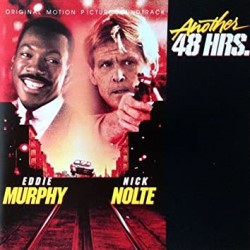
ANOTHER 48 HRS. – James Horner
 THROWBACK THIRTY
Original Review by Jonathan Broxton
The 1980s buddy-cop movie trend arguably began in 1982 with the film 48 Hrs., which paired gruff homicide detective Jack Cates (played by Nick Nolte) with smart-mouthed street criminal Reggie Hammond (played by Eddie Murphy, making his big screen debut). The mismatched duo had two days to find the men responsible for the murder of two of Jack’s colleagues – hence the title of the film – and the confrontational dynamic between the two leads led to box office gold; the film grossed almost $80 million in the US, launched Eddie Murphy’s movie career, and paved the way for future movies in the buddy-cop genre, notably Lethal Weapon. Nine years later Nolte and Murphy re-teamed with director Walter Hill for Another 48 Hrs., a somewhat belated sequel. In this story, Jack is accused of murder after killing a suspect while trying to capture ‘The Iceman,’ a vicious San Francisco drug lord. Meanwhile, Reggie is due to be released from prison, but discovers that the Iceman has put a bounty on his head, although Reggie doesn’t know why. To solve their mutual problems with the Iceman, Jack teams up with Reggie once more – to save Reggie’s life, and to clear Jack’s name and prove his innocence. Read more…
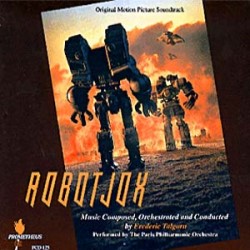
ROBOT JOX – Frédéric Talgorn
 THROWBACK THIRTY
Original Review by Jonathan Broxton
The cinematic sub-genre of ‘enormous things fighting each other’ has a small but storied history. The Japanese do it best, with their myriad of monstrous kaiju in the enduring Godzilla series. Michael Bay’s risible Transformers movies made a ton of money at the box office but remain mindless, brain-dead Hollywood products. Director Guillermo del Toro tried to pump some life back into genre with yet more robots when he produced Pacific Rim in 2013, and did so to some acclaim, even though I personally didn’t care for them. However, one of the least-known efforts in the genre is this one: Robot Jox, which actually predates all the American entries. Written and directed by Stuart Gordon, the film is set in a post-apocalyptic future where traditional warfare has been outlawed and, instead, giant machines fight international battles to settle territorial disputes. The film follows the adventures of Achilles (Gary Graham), one of the ‘jox’ pilots who controls these robots in a series of gladiatorial encounters, and who is called on to take part in a vital contest against a Russian opponent for the fate of Alaska. Read more…
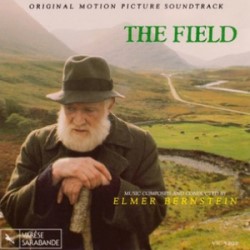
THE FIELD – Elmer Bernstein
 THROWBACK THIRTY
Original Review by Jonathan Broxton
The Field is a quietly devastating drama written and directed by Jim Sheridan, adapted from the 1965 play of the same name by John Keane. Set in Ireland in the 1930s, the film stars Richard Harris as Bull McCabe, an impoverished farmer who rents a dilapidated field on the cliffs by the sea. When the wealthy widow who owns the field decides to sell it, McCabe assumes that he will be given the first chance to buy it, but unknown to McCabe the widow has been holding on to a grudge for decades, and in a public display of spiteful pettiness directed at McCabe, holds an open auction instead. A rich American named Peter (Tom Berenger), who wants to build a factory on the site, outbids him, and so begins a bitter war which leads to betrayal, death, and madness, with the field itself acting as a symbolic representation of the desperately difficult lives the characters lead. The film has a terrific supporting cast including John Hurt, Sean Bean, Brenda Fricker, and a very young Brendan Gleeson, and was a critical success when it was first released. Read more…
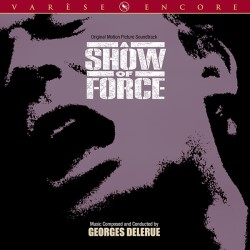
A SHOW OF FORCE – Georges Delerue
 THROWBACK THIRTY
Original Review by Jonathan Broxton
A Show of Force is a thriller directed by Bruno Barreto, based on true events which occurred in Puerto Rico in 1978. Amy Irving stars as television reporter Kate Ryan, who is investigating the circumstances surrounding the brutal deaths of two Puerto Rican teenagers, Carlos Enrique Soto-Arriví and Arnaldo Darío Rosado-Torres. The government claimed the victims were radical terrorists, while their families said they were pro-independence student activists, and as Ryan gets deeper and deeper into the mystery, she finds herself embroiled in a much larger political scandal and cover-up involving the local police, and which may eventually lead to the corridors of power at the CIA. The film is adapted from Anne Nelson’s book ‘Murder Under Two Flags’, and co-stars Andy Garcia, Lou Diamond Phillips, Robert Duvall, and Kevin Spacey. The film marked the English-language debut of Brazilian director Barreto, who would later go on to make the films Carried Away and One Tough Cop (both scored by Bruce Broughton). Read more…
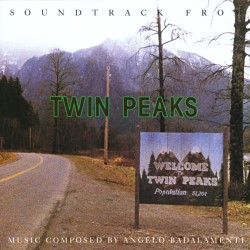
TWIN PEAKS – Angelo Badalamenti
 THROWBACK THIRTY
Original Review by Jonathan Broxton
There’s a case to be made for the notion that television as we know it changed on April 8th, 1990. On that date, on the American network channel ABC, Twin Peaks premiered. The brainchild of surrealist writer-director David Lynch, and TV producer Mark Frost, Twin Peaks was ostensibly a murder-mystery show that followed an investigation led by FBI Agent Dale Cooper (Kyle McLachlan) into the death of Laura Palmer (Sheryl Lee), a teenage beauty queen from a fictional town in Washington state. But of course, it was much more than that. It touched on elements of horror and science fiction, offbeat comedy, and satirized many of the tropes inherent on American soap operas. It had a sprawling cast of eccentric characters, whose interlocking lives drive the plot. It was also deeply, deeply weird: there are giants delivering cryptic messages, dwarves talking backwards, demons possessing people, doppelgängers, fever dreams and horrific nightmares, and copious amounts of coffee and cherry pie. By the end of the second season the plot had become so incomprehensible and maddeningly obtuse that it hemorrhaged viewers and was eventually cancelled; I admit that I found the show incredibly frustrating, and by the end of it I was convinced that Lynch was playing an elaborate prank on his own audience – he created a show that was so impenetrable, was so confusing, had such a bizarre visual style, and contained so much ‘intentional bad acting,’ because he wanted to see how long people would tolerate it by convincing themselves it was ‘art’. Read more…
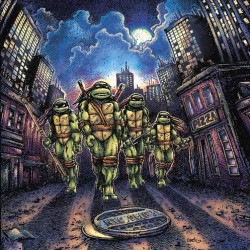
TEENAGE MUTANT NINJA TURTLES – John Du Prez
 THROWBACK THIRTY
Original Review by Jonathan Broxton
For a short while, in the 1990s, the biggest piece of kids pop culture in the world was a story about four wise-cracking reptiles with Japanese fighting skills. Originally appearing in a cult comic book series created by Kevin Eastman and Peter Laird, the Teenage Mutant Ninja Turtles broke through as an animated television series in 1987. The four titular anthropomorphic turtles – who are named after the Italian Renaissance artists Leonardo, Donatello, Raphael, and Michelangelo – were originally unwanted pets flushed into the New York sewers. After coming into contact with some radioactive ooze, the turtles slowly mutate and eventually become human/turtle hybrids who learn to speak like contemporary teenagers, and love pizza. Eventually they meet Splinter, the former pet rat of a disgraced ninja master, who also lives in the same sewers and was similarly transformed. Splinter trains the turtles in the ancient art of ninjutsu, and together they battle criminals, aliens, monsters, and various other threats, all while attempting to remain hidden from society. The TV show was massively popular (although, in the UK, they were the Teenage Mutant *Hero* Turtles because ninjas were illegal at the time), and so of course a movie was inevitable. It eventually arrived in theaters in the spring of 1990 with a quartet of stunt men in animatronic rubber turtle suits acting opposite the very human Elias Koteas and Judith Hoag. The film was directed by Steve Barron, and featured special puppet effects provided by Jim Henson in what turned out to be his final project before he died. Read more…
THE HANDMAID’S TALE – Ryuichi Sakamoto
 THROWBACK THIRTY
Original Review by Jonathan Broxton
The recent Hulu television adaptation of Margaret Attwood’s novel The Handmaid’s Tale is one of the most critically acclaimed shows of all time. It tells of a dystopian future set in the aftermath of a second American Civil War, and the rise of a hard-line Christian theocracy called Gilead in what was once New York State. One of the issues that led to the civil war was a calamitous drop in fertility rates, and in Gilead women who are found to be capable of giving birth to children are commandeered and forced to work as ‘handmaids,’ essentially concubine sex-slaves who are raped monthly by their assigned regional Commanders in the hope that they become pregnant. With this religious authoritarianism, female disenfranchisement, and environmental disaster as its backdrop, the story unfolds through the eyes of a handmaid named Kate, re-named Offred, who is assigned to a family headed by the cruel Commander Waterford and his coldly indifferent wife Serena. What many people forget is that this story has been told once before, as a 1990 movie directed by the acclaimed German filmmaker Volker Schlöndorff from a screenplay by Harold Pinter, which starred Natasha Richardson as Offred, Robert Duvall as the Commander, and Faye Dunaway as Serena. Read more…
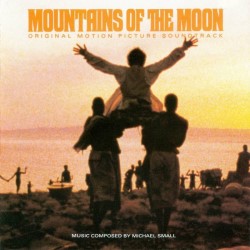
MOUNTAINS OF THE MOON – Michael Small
 THROWBACK THIRTY
Original Review by Jonathan Broxton
Mountains of the Moon is an adventure-drama directed by Bob Rafelson, based on the novel Burton and Speke by William Harrison. A passion project for the director, it starred Patrick Bergin and Iain Glen as the real-life explorers Richard Francis Burton and John Hanning Speke, and is a dramatic chronicle of their expedition to Central Africa in 1857 which culminated in Speke’s discovery of the source of the River Nile. Although it was well received when it originally opened in February 1990 – it was described as ‘an epic of sweep and intimacy’ by Peter Travers in Rolling Stone – it is virtually unknown today, which is a shame because it is a film of genuine visual grandeur (it boasts cinematography by Roger Deakins), and has a terrific supporting cast including Richard E. Grant, Fiona Shaw, Omar Sharif, and Delroy Lindo in a very early role. Read more…
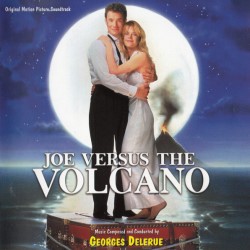
JOE VERSUS THE VOLCANO – Georges Delerue
 THROWBACK THIRTY
GREATEST SCORES OF THE TWENTIETH CENTURY
Original Review by Jonathan Broxton
After receiving his first Oscar nomination for Big in 1988, but before he became an established box office draw with titles like Sleepless in Seattle and Philadelphia, Tom Hanks spent a couple of years trying to find his niche. One of the projects he tried which never took off was Joe Versus the Volcano, a highly peculiar comedy written and directed by John Patrick Shanley. Hanks plays Joe Banks, a luckless everyman who works a terrible dead-end job and is chronically sick. One day Joe is told he is dying of a mysterious and incurable rare disease, and accepts a financial offer from billionaire Samuel Graynamore (Lloyd Bridges) – he can live like a king for a short period, but then has to travel to a South Pacific island and throw himself into a volcano to appease the superstitious natives. With nothing to lose, Joe agrees, but when he meets and falls in love with Patricia (Meg Ryan), Graynamore’s daughter, who is captaining the yacht taking him to the island, he realizes he may have something to live for after all. The film was a critical and commercial flop when it was first released, but has become something of a cult film in the intervening years, receiving praise for its offbeat tone and sweet nature, and for the fact that this was the first on-screen pairing of Hanks and Ryan, who would go on to be Hollywood’s romantic comedy golden couple. Read more…
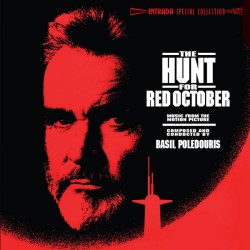
THE HUNT FOR RED OCTOBER – Basil Poledouris
 THROWBACK THIRTY
Original Review by Jonathan Broxton
The character Jack Ryan is ubiquitous in American popular culture. He was created by author Tom Clancy and starred in a series of ‘techno-thriller’ spy novels, the first of which was published in 1984. Depending on how old you are, most people associate two actors with the character: either Harrison Ford, who played him on the big screen in the films Patriot Games in 1992 and Clear and Present Danger in 1994, or John Krasinski, who currently plays him on the small screen in the eponymous Amazon TV series. However, Ryan’s first appearance was actually in this film: The Hunt for Red October, which was released in theaters in the spring of 1990. Here Ryan is played by Alec Baldwin, and the plot of the film revolves around Marko Ramius (Sean Connery), the captain of the nuclear-capable Soviet submarine Red October, which has disappeared while on maneuvers in the north Atlantic. When it is eventually re-discovered, the CIA realizes that the Red October is headed directly for the US eastern seaboard, and immediately fears that an attack is imminent. However Ryan, a respected intelligence analyst, offers a different theory: that Ramius is actually trying to defect. So begins a cat and mouse game between the CIA, the KGB, Ryan, and Ramius, in which each of them is trying to uncover the truth before the incident sparks World War III. The film was directed by John McTiernan, and has an excellent supporting cast including Scott Glenn, Sam Neill, James Earl Jones, Tim Curry, and a young Stellan Skarsgård. Read more…
STANLEY & IRIS – John Williams
 THROWBACK THIRTY
Original Review by Jonathan Broxton
After enjoying a 1980s which saw him score two Star Wars movies (one of which is, in my opinion, the best score ever written), three Indiana Jones films, and such standalone masterpieces as E.T. The Extra-Terrestrial, Empire of the Sun, and Born on the Fourth of July, all while picking up one Oscar from eleven Best Score nominations, one could be forgiven for thinking that Williams would begin the 1990s with yet another blockbuster to put under his belt. Instead, his first score of the new decade was for Stanley & Iris, a small, intimate drama directed by his old friend Martin Ritt, for whom he previously scored Pete ‘n’ Tillie in 1973 and Conrack in 1974. The film starred Robert de Niro and Jane Fonda in the title roles, and it tells the story of the gentle romantic relationship that develops between Stanley, a kind-hearted baker who loses his job when it is discovered that he is illiterate, and Iris, a lonely widow who teaches him how to read and write. It was also the last film Ritt directed prior to his death in December of that year. Read more…
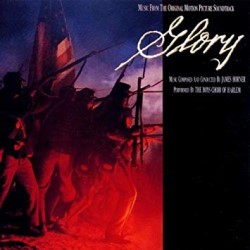
GLORY – James Horner
 THROWBACK THIRTY
GREATEST SCORES OF THE TWENTIETH CENTURY
Original Review by Jonathan Broxton
Blow the horn, play the fife, beat the drum so slowly. Blow the horn, play the fife, make the drum beat glory…
Stories from the American Civil War have fascinated filmmakers for decades. Films as great and respected as Gone With the Wind, The Red Badge of Courage, and even things like The Outlaw Josey Wales, have examined different elements of the conflict that so ravaged the fledgling nation from 1861 to 1865. However, for my money, one of the best movies about that period was the 1989 epic Glory, written by Kevin Jarre and directed by Edward Zwick. It tells the story of the 54th Massachusetts Infantry Regiment, a platoon of ‘free black’ soldiers and former slaves fighting for the Union Army. Under the command of Colonel Robert Shaw, the regiment becomes involved in numerous battles and incidents, culminating with their heroic charge on Fort Wagner, a Confederate stronghold in South Carolina. But the film is about more than that – it’s about bravery, and honor, and courage. It’s about the dignity of these African American soldiers, and how they inspired similar feelings of honor and dignity in their communities. It’s about the relationships between Shaw and his officers and soldiers, and how the racism and prejudice that still existed in the North was turned into friendship and mutual respect as a result of their experiences. The film has an astonishing cast – Matthew Broderick, Cary Elwes, Morgan Freeman, Denzel Washington who won an Oscar – and was a major critical success. Read more…
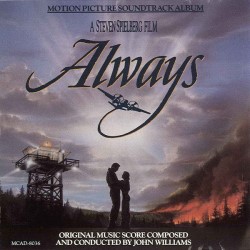
ALWAYS – John Williams
 THROWBACK THIRTY
Original Review by Jonathan Broxton
Always is the Steven Spielberg film most people tend to forget. Sandwiched between such classics as Indiana Jones and the Last Crusade, Schindler’s List, and Jurassic Park, it came during the period where Spielberg was alternating between making major box office blockbusters and smaller, more personal films that tackled intimate themes and emotions. Always is a remake of the 1943 Spencer Tracy film A Guy Named Joe, which was written by Dalton Trumbo. Richard Dreyfuss stars in the Tracy role as Pete Sandich, a daredevil pilot who works putting out forest fires; his long-time girlfriend Dorinda (Holly Hunter) and best friend Al (John Goodman) fear that his recklessness in the air will lead to tragedy. Their worst fears come true when Pete is killed in a plane crash saving Al’s life; in the afterlife, Pete is given guidance by an angel-like figure (Audrey Hepburn, in her final screen role), and told that he has one last life to save before he can move on to heaven – Dorinda’s, who has become overwhelmingly grief stricken and suicidal as a result of Pete’s death. Read more…
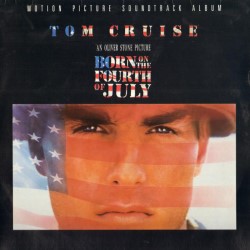
BORN ON THE FOURTH OF JULY – John Williams
 THROWBACK THIRTY
Original Review by Jonathan Broxton
In the late 1970s and 1980s a number of prominent American filmmakers took it upon themselves to take a long, hard look at the political and social ramifications of the country’s involvement in the Vietnam War. American involvement in the conflict began in the early 1960s, and lasted until the fall of Saigon in 1975, resulting in the deaths of more than 50,000 American military personnel, and hundreds of thousands more wounded. Chief among those filmmakers was Oliver Stone, who was himself a Vietnam vet. His 1986 film Platoon took a harrowing look at the war from the point of view of the men serving on the front lines, and he won Best Picture and Best Director Academy Awards for his trouble. Born on the Fourth of July, which was released in December 1989, took an equally harrowing look at what happened to those men when they finally came home. Read more…

Shop at the Movie Music UK Store

Member of the


