Archive
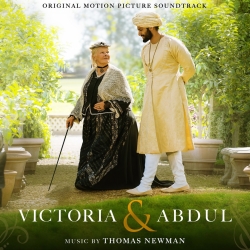
VICTORIA & ABDUL – Thomas Newman
 Original Review by Jonathan Broxton
There has long been a cinematic fascination with the life of Queen Victoria, who reigned in the United Kingdom from 1837 until 1901; numerous actresses have portrayed her, both on the big and the small screen, but for contemporary audiences the quintessential Victoria is the one played by Dame Judi Dench. She first played the role in 1997’s Mrs. Brown, which examined the controversial relationship between the long-widowed queen and her Scottish equerry John Brown, which ended with Brown’s death in 1883. This new film, directed by Stephen Frears, is essentially a sequel to Mrs. Brown, and again stars Dench as the much loved monarch. It picks up Victoria’s story in 1887, and focuses on another unusual relationship Victoria developed with a different manservant; however, rather than being a Scottish gamekeeper, her new confidante was an Indian Muslim named Abdul Karim, played by Ali Fazal. Cue the scandals in the palaces of London and the halls of Westminster. Read more…
TULIP FEVER – Danny Elfman
 Original Review by Jonathan Broxton
The tale of Tulip Fever is a long and sad one in terms of the way the film has been treated by its distributor. It’s an adaptation of the enormously popular novel by Deborah Moggach, directed by Justin Chadwick, and written by the great Tom Stoppard. Set in the Netherlands in the 17th century, during the period of the tulip mania (when the Dutch economy was almost ruined by the enormous inflation, then the sudden collapse, of the price of tulips), the film tells the story of an impoverished artist who falls in love with a young but unhappily married woman after he is commissioned to paint her portrait by her husband, a rich and powerful flower merchant. The film stars Dane De Haan, Alicia Vikander, and Christophe Waltz, and was originally scheduled for release in late 2015, in order to prime itself for a run at that’s year’s Academy Awards. However, for some reason, the film was delayed and delayed and delayed by the distributor, Harvey Weinstein. Release dates came and went until the film finally dragged itself into cinemas in a limited release in August 2017, almost two years after it was first scheduled to appear; virtually no-one went to see it, and it was a critical disaster, with one writer memorably describing it as ‘a floral-scented fiasco that is so lifeless you can barely feel a pulse.’ Read more…
BEN-HUR – Miklós Rózsa
 GREATEST SCORES OF THE TWENTIETH CENTURY
Original Review by Craig Lysy
As a new decade dawned, MGM studio executives began searching for a grand tale to bring to the screen. They decided in 1952 to cast their lot with a remake of their epic 1925 silent film, Ben-Hur. The film’s source material would again reference Lew Wallace’s 1880 novel Ben-Hur: A Tale of the Christ. It would take six years before producer Sam Zimbalist could bring the project to fruition. It required twelve versions of the script, from four different writers, to finally satisfy the demands of director William Wyler. Casting was also challenging as over 5,000 people needed to be hired for minor roles and extras. The studio spared no expense, ultimately providing Wyler with an astounding $15 million budget. Charlton Heston secured the titular role of Judah Ben-Hur and was supported by a fine cast, which included Stephen Boyd as Messala, Jack Hawkins as Quintus Arius, Haya Harareet as Esther, Martha Scott as Miriam, Sam Jaffe as Simonides, Hugh Griffith as Sheik Ilderim, Cathy O’Donnell as Tirzah, Frank Thring as Pontius Pilate, and Finlay Currie as Balthazar narrator. Read more…
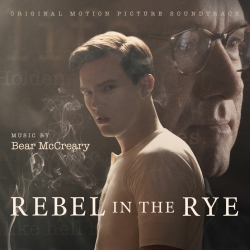
REBEL IN THE RYE – Bear McCreary
 Original Review by Jonathan Broxton
Rebel in the Rye is a biopic about the life of J. D. Salinger, the reclusive author of the classic 1951 novel about teenage angst and social alienation, Catcher in the Rye. It looks mainly at Salinger’s life as a young man, charting the time he spent serving on the front lines in World War II, following the creation and publication of Catcher, examining his relationships with his girlfriend Oona O’Neill, his mentor Whit Burnett, and his supportive publisher Dorothy Olding, and lamenting the subsequent unwanted fame and notoriety Salinger suffered through, which led him to withdraw from public view for most of the rest of his life. The film was written and directed by Danny Strong, and stars Nicholas Hoult as Salinger, with Zoey Deutsch, Kevin Spacey, and Sarah Paulson in supporting roles. Read more…
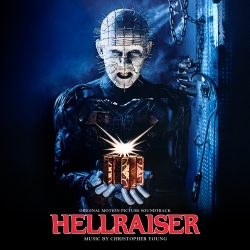
HELLRAISER – Christopher Young
 THROWBACK THIRTY
GREATEST SCORES OF THE TWENTIETH CENTURY
Original Review by Jonathan Broxton
In the early autumn of 1987 the movie world was introduced to its newest horror franchise: Hellraiser, based on the acclaimed novella ‘The Hellbound Heart’ by British author Clive Barker. It was directed by Barker himself, making his filmmaking debut, and contains sinister themes involving sexual experimentation and sadomasochism, dressed up with a darkly romantic sheen of gothic horror. The plot involves an ancient puzzle box which falls into the hands of the amoral Frank Cotton (Sean Chapman) and which, once solved, releases a group of demonic figures known as Cenobites, who then abduct and subject their unwitting victims to endless torture. Years after Frank’s disappearance his brother Larry (Andrew Robinson), Larry’s daughter Kirsty (Ashley Laurence), and Larry’s new wife Julia (Clare Higgins) move into Frank’s old house; Larry is unaware that Julia had a passionate affair with Frank before he disappeared. A common household accident results in the skinless corpse of Frank somehow being resurrected in the attic; in order to finalize his reincarnation, Frank needs a fresh supply of human blood, which the still-obsessed Julia agrees to provide. However, the Cenobites have found out about Frank’s escape from ‘hell,’ and their terrifying leader, Pinhead (Doug Bradley), resolves to bring him back – at which point Kirsty finds herself caught in the middle of the nightmare. Read more…
IT – Benjamin Wallfisch
 Original Review by Jonathan Broxton
It has been one of Stephen King’s most enduring and popular novels since it was first published back in 1986. Conceptually, it covers two bases. Firstly, it’s a terrifying horror story, which takes many of the most basic human fears – death, disease, growing older – and personifies them into a single, unifying threat. Secondly, it’s a classic examination of childhood nostalgia, which looks at very adult themes through a kid’s eyes: friendship, the loss of innocence, blossoming sexuality, and the way the onset of adulthood strips you of your inquisitiveness and imagination. King sets the story in the small town of Derry, Maine, where kids are going missing, and adults seemingly turn a blind eye to the bizarre goings on in the community. Eventually seven friends, who call themselves the Losers Club, realize that the common link between all the disappearances is an evil clown named Pennywise, who re-appears to prey on the innocent every 27 years, and whose reign of terror they vow to end once and for all. The book was originally adapted into an acclaimed TV mini-series in 1990 which featured an iconic performance by Tim Curry as Pennywise; this new version is directed by Andy Muschietti, stars Bill Skarsgård as the clown, and features Jaeden Lieberher, Sophia Lillis, and Finn Wolfhard as three of the Losers Club kids, all of whom are uniformly excellent. Read more…
EL CID – Miklós Rózsa
 GREATEST SCORES OF THE TWENTIETH CENTURY
Original Review by Craig Lysy
Producer Samuel Bronston had just finished his epic film King of Kings (1961) and decided that the time was finally right to realize his long desired ambition to bring the story of El Cid to the screen. Fredric Frank, a longtime collaborator with Cecil B. DeMille, had written a brilliant story and Bronson tasked him, Philip Yordan and Ben Barzman with writing the screenplay. Anthony Mann was given the director reigns and a stellar cast was hired. Charlton Heston was cast for the titular role and joined by Sophia Loren as Doña Chimene, Herbert Lom as Ibn Yussuf, Raf Vallone as Count García Ordóñez, Geneviève Page as Doña Urraca, John Fraser as King Alfonso VI, Michael Hordem as Don Diego, and Frank Thring as Emir Al-Kadir. Controversy among the two principle actors arose when Heston found out that Loren was being paid one million dollars more than him. He became furious and his disdain leaked out into his performance. You will notice that he consistently refuses to look at Loren, even during romantic moments, which detracted from his performance and the film’s narrative. Read more…
JOHN WILLIAMS REVIEWS – 1960-1969
 In this latest installment of the new irregular series looking at the early career of some iconic composers, we switch to Hollywood to look at the work of John Williams.
Williams attended the University of California, Los Angeles, and studied privately with the Italian composer Mario Castelnuovo-Tedesco, before being drafted into the U.S. Air Force, where he conducted and arranged music for Air Force bands as part of his assignments. After his service, Williams moved back to New York, and studied both at the Juilliard School, and at the Eastman School of Music, while moonlighting as a jazz pianist.
After completing his studies, Williams worked in Hollywood, orchestrating and performing piano on film scores for composers such as Alfred Newman, Bernard Herrmann, Elmer Bernstein and Jerry Goldsmith. Williams made his film music composing debut in 1959 on the film Daddy-O at the age of 27 – credited as Johnny Williams – and these first reviews look at sixteen subsequent film scores Williams that wrote between 1960 and 1969.
Not included here are the multitude of episodic TV scores he wrote during the period for shows and anthology series like Alcoa Premier, Playhouse 90, M-Squad, Wagon Train, Impact, The Virginian, Lost in Space, The Time Tunnel, and Land of the Giants, and others. Nor am I including the two scores where Williams adapted music by other people: Valley of the Dolls (1967), where Williams worked with music by André Previn and Dory Previn and for which he received his first Oscar nomination for Best Adaptation Score of a Musical Picture, and Goodbye, Mr. Chips (1969), where Williams adapted music by Leslie Bricusse, and for which he earned his second nomination in the same category. Read more…
TOKYO GHOUL – Don Davis
 Original Review by Jonathan Broxton
In 2003, Don Davis had the film music world at his feet. Having spent much of the 1990s working a dual career, both as a successful TV composer and as a first-rate orchestrator for many of Hollywood’s leading talents, he burst into the spotlight off the back of his score for the smash hit 1999 sci-fi movie The Matrix. He followed that up with a string of excellent scores for genre pictures, notably Jurassic Park III and House on Haunted Hill, and then finished the Matrix trilogy with his scores for The Matrix Reloaded and The Matrix Revolutions. Following the completion of the Matrix series, Davis stepped away from film music for what was expected to be a brief sabbatical, so that he could complete his long-desired passion project, the opera Rio de Sangre, but this took longer than expected; excerpts from the opera were performed in Los Angeles with the Los Angeles Master Chorale in 2005, and more was performed at the New York City Opera in 2007, but it did not receive its full premiere until 2010. In the meantime, something utterly inexplicable happened: Davis stopped getting film work. Read more…
CHERRY 2000 – Basil Poledouris
 THROWBACK THIRTY
Original Review by Jonathan Broxton
Like most composers, Basil Poledouris scored his fair share of terrible films in his career. 1977’s Tintorera, one of the first films he ever scored, was a Mexican rip-off of Jaws. Amazons, from 1984, was basically a sexier version of Conan the Barbarian with warrior women in fur bikinis. However, 1987 may have seen him reach a low point in terms of ‘quality of movie’ when he was asked to score Cherry 2000, a low-budget sci-fi thriller. Directed by Steve De Jarnatt, the film is set in a post-apocalyptic America circa 2017 and stars Don Johnson wannabe David Andrews as Sam, who sets off on a dangerous mission across the lawless wasteland of what was once Nevada in order to find someone who can repair his Cherry 2000 sex robot (Pamela Gidley); to help him, he hires a tough-but-beautiful tracker named E (a strangely-cast Melanie Griffith), and together they set off into the desert. Read more…
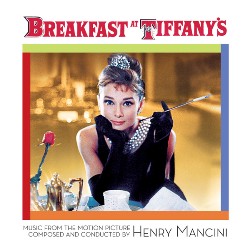
BREAKFAST AT TIFFANY’S – Henry Mancini
 GREATEST SCORES OF THE TWENTIETH CENTURY
Original Review by Craig Lysy
Hollywood producers Martin Jurow and Richard Shepherd saw opportunity beckoning with Truman Capote’s controversial 1958 novella Breakfast at Tiffany’s, and convinced Paramount Studios to purchase the film rights. They hired George Axelrod to write a screenplay that “softened” Capote’s edgy narrative, and Blake Edwards was given the director reigns. Edwards assembled a fine cast, which included Audrey Hepburn as Holly Golightly, George Peppard as Paul Varjak, Patricia Neal as Emily Eustace, Buddy Ebsen as Doc Golightly, Martin Balsam as O. J. Berman, and Mickey Rooney as Holly’s landlord Mr. Yunioshi. For the 1950’s, this truly sordid story broke all the sensibilities of the day – Holly was a foul-mouthed, bisexual, social-climbing and gold-digging prostitute, who has had an abortion and smokes marijuana! The fact that the story’s narrator was gay only added to the controversy. Jurow and Shepherd knew the story as written would never fly, so they chose not to make a modern and edgy social drama. They astutely recast the story’s narrative into a more conventional, and emotionally accessible direction – a romantic comedy. Well, Holly’s love affair with struggling writer Paul succeeded on all counts and won audience hearts worldwide. The film was also a critical success, earning five Academy Award Nominations, winning two for best Original Song and Best Score. Read more…
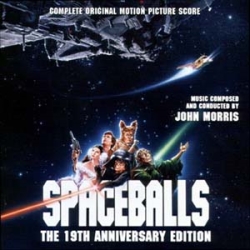
SPACEBALLS – John Morris
 THROWBACK THIRTY
Original Review by Jonathan Broxton
Comedy is such a subjective thing. What makes one person laugh uncontrollably leaves the next person totally confused as to what they could possibly find funny, and vice versa. My personal taste in comedy is one of extremes – on the one hand I like the smart and sophisticated comedy found in a lot of British films, while on the other hand I also love the absurdity, slapstick, and sight gags of things like Airplane and The Naked Gun. Mel Brooks is a director who made a career, at least in the movies, of parody. Blazing Saddles was a parody of westerns. Young Frankenstein was a parody of horror movies. And Spaceballs, my favorite movie of his, was a parody of Star Wars. It stars Bill Pullman as Lonestarr, a roguishly handsome space pirate, who has been hired to find and bring home Princess Vespa (Daphne Zuniga) after she runs away from her wedding on her home planet, Druidia. Meanwhile, the evil Spaceballs, led by the incompetent President Skroob (Brooks) and the ruthless Dark Helmet (Rick Moranis), have hatched a plan to steal Druidia’s air supply, and want to kidnap Vespa before Lonestarr gets to her… Read more…
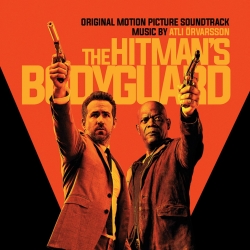
THE HITMAN’S BODYGUARD – Atli Örvarsson
 Original Review by Jonathan Broxton
An unusual action-comedy buddy movie, The Hitman’s Bodyguard stars Ryan Reynolds as Michael Bryce, who was once one of the world’s most trusted and respected freelance bodyguards, but who fell into disgrace after one of his most high-profile clients was assassinated. Out of the blue Bryce is called back into action several years later; his job is to protect the key witness against the ruthless and bloodthirsty dictator of an east European country, who is about to be put on trial for crimes against humanity. The twist comes from the fact that the witness Bryce is assigned to protect is Darius Kincaid (Samuel L. Jackson), formerly one of the world’s most notorious hitmen, and who was likely responsible for the death of Bryce’s previous client. The film, which was directed by Patrick Hughes and co-stars Gary Oldman and Salma Hayek, was met with generally positive reviews after it opened during the slow end-of-summer period in August 2017. Read more…
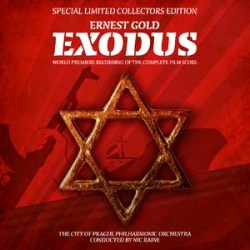
EXODUS – Ernest Gold
 GREATEST SCORES OF THE TWENTIETH CENTURY
Original Review by Craig Lysy
In 1958 Otto Preminger and United Artists studio purchased the film rights to Leon Uris’s forthcoming novel, “Exodus”. Preminger, who would both produce and direct the film, felt that this was a story that needed to be told, and for him it became a passion project. He hired Dalton Trumbo who had been blacklisted as a communist by the infamous McCarthy Committee to write the screenplay. From day one he had Paul Newman in mind to play the lead role of Ari Ben Canaan. The stellar cast rounded off with Eva Marie Saint as Kitty Fremont, Ralph Richardson as General Sutherland, Peter Lawford as Major Caldwell, Lee Cobb as Barak Ben Canaan, Sal Mineo as Dov Landau, and John Derek as Taha. The story is based on the actual historical events in 1947, which began with the ship Exodus, and the lead up to the founding of the modern state of Israel in 1948. Nurse Kitty’s fate becomes entwined with Ari Ben Canaan a Hagannah rebel who obtains a cargo ship and smuggles 611 Jewish inmates out of the Cypriot internment camp for passage to Israel. In Israel, the British are preparing to leave, and the unfolding partition of Palestine into separate Jewish and Arab states portends war. Read more…
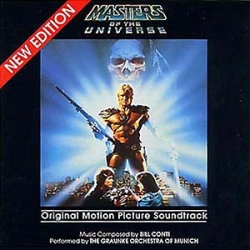
MASTERS OF THE UNIVERSE – Bill Conti
 THROWBACK THIRTY
Original Review by Jonathan Broxton
When I was a kid, He-Man was all the rage, a staple of playgrounds the length and breadth of the United Kingdom. The franchise began as a line of toys introduced by the Mattel company in 1981, which were accompanied by mini-comic books giving each figure a backstory; this morphed into an immensely popular animated TV series which debuted in 1983, telling the story of the heroic Prince Adam, who transforms into He-Man when he holds aloft his magic sword and says ‘by the power of Greyskull,’ and his battles the evil forces of Skeletor, who wants to take over Adam’s home planet of Eternia. Naturally, a film adaptation of the story was put into production, and in the summer of 1987 Masters of the Universe opened. Directed by Gary Goddard, it starred the muscle-bound Dolph Lundgren in the leading role, with Frank Langella hamming it up in full prosthetic makeup as his bone-faced nemesis. Read more…

Shop at the Movie Music UK Store

Member of the

 MOVIE MUSIC UK