Archive
DICK TRACY – Danny Elfman
 THROWBACK THIRTY
Original Review by Jonathan Broxton
One of the earliest comic strips ever created was Chester Gould’s Dick Tracy, which debuted in the Detroit Mirror in 1931, and subsequently gained immense popularity through syndication in newspapers in Chicago, New York, and elsewhere. It’s a crime story following the adventures of the titular hard-boiled detective, an Elliot Ness-style lawman taking on various gangsters and villains in the New York underworld, clad in his iconic yellow trench coat. There were several Dick Tracy movies made in the late 1930s and early 1940s, usually with Morgan Conway in the lead role, but the character was curiously ignored for more than 45 years until he was brought back in 1990 by director Warren Beatty, who played the title role himself. The plot saw Tracy locking horns with the vicious gangster Big Boy Caprice (Al Pacino), who Tracy had been investigating for years. When a young street urchin known only as ‘the Kid’ (Charlie Korsmo) witnesses Caprice committing a murder, Tracy takes the boy under his wing, both to protect him from retribution, and also to groom him as a potential protégé. Meanwhile, the seductive nightclub singer Breathless Mahoney (Madonna) also emerges as a witness to Caprice’s crimes, but her involvement in the case threatens to disrupt Tracy’s relationship with his long-term girlfriend Tess Trueheart (Glenne Headly). After all, sooner or later, she always gets her man… Read more…
DA 5 BLOODS – Terence Blanchard
 Original Review by Jonathan Broxton
Considering that this week has seen worldwide protests relating to the death of George Floyd, systemic racism against black people, and the cause of the Black Lives Matter movement, it is perhaps appropriate that there is a new movie by director Spike Lee. Ever since he broke into the mainstream with his scintillating directorial effort Do The Right Thing in 1989, Lee has been at the forefront of African-American filmmaking, creating movies which tackle many of the aforementioned issues with insight, clarity, depth, emotion, and no small amount of theatrical skill. His latest movie is Da 5 Bloods, a Vietnam-era drama in which four African American war veterans return to Vietnam with a dual purpose: to search for the remains of their former squad leader, who was killed in action but was never returned home, and to uncover a hoard of gold that they found during the war, but which they were forced to bury. However, as the men journey back to what was once the front lines, they also find themselves confronted with the memories of their worst experiences, and how it shaped their lives since the conflict ended. The film was written by Lee with Danny Bilson, Paul De Meo, and Kevin Willmott (who co-wrote Blackkklansman), and stars Chadwick Boseman, Delroy Lindo, Clarke Peters, Jonathan Majors, and Jean Reno. Read more…
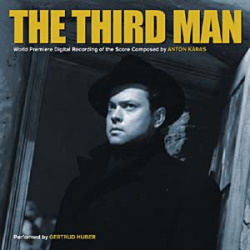
THE THIRD MAN – Anton Karas
 MOVIE MUSIC UK CLASSICS
Original Review by Craig Lysy
English novelist Graham Greene became intrigued by post war events unfolding in Europe and decided to write a suspense novella titled “The Third Man”. Unlike his previous novels, he intended for this latest effort to serve as source material for a film noir screenplay set in post WWII Vienna. As part of his research, he met Elizabeth Montagu in Vienna, who served as a tour guide for traditional landmarks, but also its renowned sewers and unsavory night clubs. She introduced him to Peter Smolka, the European correspondent for the Times, who provided him with stories of Vienna’s underbelly of black markets. The tours and tales were invaluable and inspired Greene to write one of the finest stories in his career. Well he had no problem selling his handiwork, and a legendary collaboration of talent joined together to produce the film, which included Alexander Korda, David O. Selznick and Carol Reed, who was also tasked with directing. A fine cast was assembled, which included Joseph Cotton as Holly Martins, Alida Valli as Anna Schmidt, Orson Welles as Harry Lime and Trevor Howard as Major Calloway. Reed had a vision for the film and brought in Austrian expressionist cinematographer Robert Krasker who would use harsh lighting and “Dutch Angle” camera technique to create an avant-garde atmospheric black-and-white viewing experience. Read more…
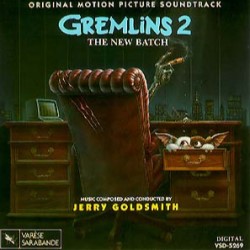
GREMLINS 2: THE NEW BATCH – Jerry Goldsmith
 THROWBACK THIRTY
Original Review by Jonathan Broxton
Gremlins, the film in which a whole host of nasty little creatures take over a small town at Christmas, was one of the most popular and successful films of 1984. It introduced the world to Gizmo, the cute and fuzzy little ‘mogwai’ who has some rather unfortunate traits – he multiplies if you get him wet, and terrible things happen if he eats after midnight. A somewhat belated sequel, subtitled ‘The New Batch,’ opened in cinemas in June 1990. Following the events of the first film, little Gizmo was re-united with his original elderly owner Mr. Wing, and the survivors of the carnage – Billy and Kate – are now a couple and have moved to the Big City. Both Billy and Kate work for a company owned by the eccentric multi-billionaire Daniel Clamp (a thinly veiled parody of Donald Trump), and are astonished when they find Gizmo in one of the company’s laboratories, being subjected to all manner of awful tests by the cruel researcher Dr Catheter. Billy and Kate break Gizmo out and plan to have him live with them but – of course – things go wrong, and before long there are dozens of Gremlins infesting the Clamp skyscraper, threatening to break out and overrun New York. The film is directed by Joe Dante, stars Zach Galligan and Phoebe Cates reprising their roles from the first film, and again features Howie Mandel as the voice of Gizmo; they are joined in the cast by John Glover, Christopher Lee, Robert Prosky, and Robert Picardo. Read more…
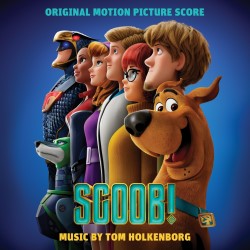
SCOOB – Tom Holkenborg
 Original Review by Jonathan Broxton
Scoob is the latest movie to star Scooby-Doo, the cowardly canine crime-fighter who, along with his best friend Shaggy and the other members of Mystery Inc., have been unmasking cartoon villains since they first debuted on CBS in 1969. There have been literally dozens of TV shows starring the character, as well as an astonishing 40 straight-to-video movies between 1987 and 2019, but only two projects premiered on the big-screen: the 2002 live-action film Scooby-Doo starring Freddie Prinze Jr. and Sarah Michelle Gellar, and it’s 2004 sequel ‘Monsters Unleashed’. This film was intended to be the third cinematic outing, but the COVID-19 outbreak nixed that idea, and instead it premiered straight-to-streaming in May 2020. The film is a CGI animated adventure directed by Tony Cervone, and is a sort of re-imagined and re-booted origin story about how Scooby-Doo met Shaggy as a puppy, how they first teamed up with Fred, Velma, and Daphne to form Mystery Inc., and what happened on their first adventure and beyond. Scoob is also intended to be a launching point for a larger Hanna-Barbera ‘shared universe’ series, as the film also features such characters as Blue Falcon and Dyno-Mutt, Dick Dastardly and Muttley, and Captain Caveman, among others. It also has an absolutely stellar voice cast, including Will Forte, Mark Wahlberg, Jason Isaacs, Amanda Seyfried, Ken Jeong, Tracy Morgan, Zac Efron, Henry Winkler, and many more! Read more…
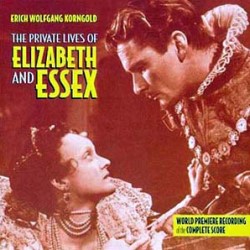
THE PRIVATE LIVES OF ELIZABETH AND ESSEX – Erich Wolfgang Korngold
 GREATEST SCORES OF THE TWENTIETH CENTURY
Original Review by Craig Lysy
Warner Brothers Studio executives saw the commercial success of Maxwell Anderson’s 1930 New York stage production of “Elizabeth The Queen,” which ran for an impressive 147 performances, and decided to purchase the film rights. Hal B. Wallis would produce the film, Michael Curtiz was tasked with directing, and Norman Reilly Raine and Aeneas MacKenzie were hired to write the screenplay. A stellar cast was assembled with Bette Davis starring as Queen Elizabeth I, Errol Flynn as Robert Devereux the Earl of Essex, Olivia de Havilland as Lady Penelope Gray, Donald Crisp as Francis Bacon, Alan Hale Sr. as Earl of Tyrone and Vincent Price as Sir Walter Raleigh. Drama arose immediately as Davis and Flynn did not like each other, something which was exacerbated by his insistence that his character be included in the film title led. This did not sit well with Davis; in a dress rehearsal scene, she purposely slapped Flynn’s face hard in front of the entire production crew instead of feigning it. Flynn did not retaliate and luckily, she did not reprise the slap during live filming. as he related in his memoirs that he would have slapped her back! Read more…
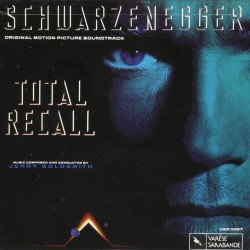
TOTAL RECALL – Jerry Goldsmith
 THROWBACK THIRTY
GREATEST SCORES OF THE TWENTIETH CENTURY
Original Review by Jonathan Broxton
Total Recall is one of my all-time favorite sci-fi action films, and is one of the best movies Arnold Schwarzenegger ever made. Adapted from the short story ‘We Can Remember It For You Wholesale’ by Philip K. Dick, it was the third English-language film from Dutch director Paul Verhoeven, following Flesh + Blood in 1985 and Robocop in 1987, and continued his explorations of American consumerism and capitalism through thinly-veiled satire, dressed up with large-scale action sequences. The film is set in a future time period where humans have colonized other planets, and have invented technology that allows ‘false memories’ to be implanted into the mind. Schwarzenegger plays Doug Quaid, a regular blue collar worker who has vivid recurring dreams of visiting Mars. One day Quaid decides to visit Rekall, a company which implants memories of vacations in people who have never been on them. However, the process goes wrong, and Quaid learns that he has already had his memory wiped; he is, in fact, a deep-cover elite secret agent with ties to Vilos Cohaagen, the corrupt and ruthless governor of the Mars Colony. Before long Quaid is knee deep in an inter-planetary adventure involving shady secret organizations and underground resistance movements seeking to overthrow the Martian government. The film co-stars Rachel Ticotin, Ronny Cox, Michael Ironside, and a pre-Basic Instinct Sharon Stone, and was a massive hit with both critics and audiences, who praised its clever story, vivid action sequences, impressive (if occasionally gory) special effects, and mind-bending distortions of what is real and what isn’t. Read more…
ALEXANDRE DESPLAT: EN FRANÇAIS – PART THREE
Over the past decade or so, Alexandre Desplat has cemented his status amongst the world’s most respected film composers with a series of scores for major studio films in the United States. He has been nominated for eleven Academy Awards – for The Queen (2006), The Curious Case of Benjamin Button (2008), Fantastic Mr. Fox (2009), The King’s Speech (2010), Argo (2012), Philomena (2013), The Imitation Game (2014), The Grand Budapest Hotel (2014), The Shape of Water (2017), Isle of Dogs (2018), and Little Women (2019) – winning twice. However, much of his early work in his native France remains relatively unknown to wider audiences – something this article intends to rectify!
In this third installment of Alexandre Desplat: En Français, we take a look at five scores Desplat wrote during the first half of the 2000s, just as he was starting to make in-roads into the international film music scene.
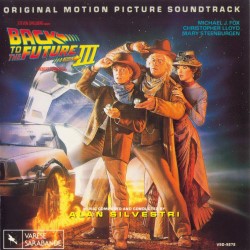
BACK TO THE FUTURE, PART III – Alan Silvestri
 THROWBACK THIRTY
Original Review by Jonathan Broxton
Following the massive success of Back to the Future in 1985, director Robert Zemeckis shot a pair of sequels back-to-back, both of which continued the time traveling exploits of Marty McFly, the suburban kid from 1980s California, and his eccentric inventor friend Doc Brown, who built a time machine out of a DeLorean. Back to the Future II was less of an icon than the original, but has since proven prescient with its vision of a dystopian alternate world where Marty’s nemesis Biff Tannen becomes a Donald Trump-like multi-billionaire. The ending of the second movie saw the 1985 version of Doc, and the DeLorean, being hit by lightning and sent back in time to Hill Valley in 1885, when it was a newly-build town in the Old West. However, Marty discovers some devastating news about his friend’s fate, and manages to convince the 1955 version of Doc to send him back in time too. Marty finds Doc happily working as a blacksmith, unaware of his future, but before long the pair starts getting into trouble, with Marty encountering both his own great-grandparents, and running afoul of one of Biff’s ancestors, the ruthless gunslinger Mad Dog Tannen. With time running out to save the day and finally return home, one final issue arises when Doc falls in love with Clara Clayton, a beautiful schoolteacher played by Mary Steenburgen. Read more…
THE WILLOUGHBYS – Mark Mothersbaugh
 Original Review by Jonathan Broxton
The importance of family is the thematic driving force behind The Willoughbys, a new CGI animated comedy from director Kris Pearn, which premiered on Netflix in April 2020. The film is based on a popular book by author Lois Lowry and follows the adventures of the four Willoughby children – intelligent Tim, precociously talented Jane, and a pair of creepy twin boys both called Barnaby – who conspire to rid themselves of their neglectful and disinterested parents after they find an abandoned baby, but are ordered to get rid of it. After tricking their parents into going on an insanely dangerous European vacation, the Willoughby’s are shocked to find that a Nanny has been hired to look after them; Tim immediately distrusts the Nanny as being in league with his parents, and does everything to thwart her plans. However, there is more to Nanny than meets the eye, and before long a plan is in motion to find their now-missing parents and keep the family together. The film has an excellent voice cast, including Will Forte, Maya Rudolph, Martin Short, Jane Krakowski, and Ricky Gervais, and has been quite well received by critics as a wholesome story that blends slapstick comedy hi-jinks with warm sentiment and heart. Read more…
JANE EYRE – Bernard Herrmann
 MOVIE MUSIC UK CLASSICS
Original Review by Craig Lysy
In 1941 independent producer David O. Selznick hired director John Houseman to write the script for his next project, a retelling of Charlotte Bronte’s classic novel, Jane Eyre; ultimately the screenplay was realized thanks to the collaboration of fellow director Robert Stevenson and writer Aldous Huxley. However, at this point of his career, Selznick was tired and seeking a respite from producing films. As such he sold production rights for Jane Eyre and several other films to William Goetz of 20th Century Fox. Kenneth MacGowan and Orson Welles were assigned to produce the film and Robert Stevenson was tasked with directing. Welles would star as Edward Rochester with Joan Fontaine as Jane Eyre. Joining them would be a fine cast which included Margaret O’Brien as Adele Verans, Peggy Ann Garner as young Jane Eyre, John Sutton as Dr. Rivers, Sara Allgood as Bessie, Agnes Moorhead as Mrs. Reed and Elizabeth Taylor as Helen Burns. Read more…
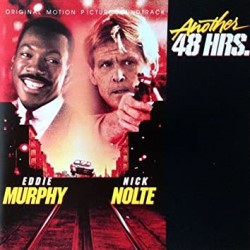
ANOTHER 48 HRS. – James Horner
 THROWBACK THIRTY
Original Review by Jonathan Broxton
The 1980s buddy-cop movie trend arguably began in 1982 with the film 48 Hrs., which paired gruff homicide detective Jack Cates (played by Nick Nolte) with smart-mouthed street criminal Reggie Hammond (played by Eddie Murphy, making his big screen debut). The mismatched duo had two days to find the men responsible for the murder of two of Jack’s colleagues – hence the title of the film – and the confrontational dynamic between the two leads led to box office gold; the film grossed almost $80 million in the US, launched Eddie Murphy’s movie career, and paved the way for future movies in the buddy-cop genre, notably Lethal Weapon. Nine years later Nolte and Murphy re-teamed with director Walter Hill for Another 48 Hrs., a somewhat belated sequel. In this story, Jack is accused of murder after killing a suspect while trying to capture ‘The Iceman,’ a vicious San Francisco drug lord. Meanwhile, Reggie is due to be released from prison, but discovers that the Iceman has put a bounty on his head, although Reggie doesn’t know why. To solve their mutual problems with the Iceman, Jack teams up with Reggie once more – to save Reggie’s life, and to clear Jack’s name and prove his innocence. Read more…
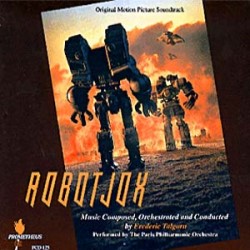
ROBOT JOX – Frédéric Talgorn
 THROWBACK THIRTY
Original Review by Jonathan Broxton
The cinematic sub-genre of ‘enormous things fighting each other’ has a small but storied history. The Japanese do it best, with their myriad of monstrous kaiju in the enduring Godzilla series. Michael Bay’s risible Transformers movies made a ton of money at the box office but remain mindless, brain-dead Hollywood products. Director Guillermo del Toro tried to pump some life back into genre with yet more robots when he produced Pacific Rim in 2013, and did so to some acclaim, even though I personally didn’t care for them. However, one of the least-known efforts in the genre is this one: Robot Jox, which actually predates all the American entries. Written and directed by Stuart Gordon, the film is set in a post-apocalyptic future where traditional warfare has been outlawed and, instead, giant machines fight international battles to settle territorial disputes. The film follows the adventures of Achilles (Gary Graham), one of the ‘jox’ pilots who controls these robots in a series of gladiatorial encounters, and who is called on to take part in a vital contest against a Russian opponent for the fate of Alaska. Read more…
BAD EDUCATION – Michael Abels
 Original Review by Jonathan Broxton
Bad Education is a true-life political drama set in the American school system. Based on the New York magazine article “The Bad Superintendent” by Robert Kolker, it exposes the largest public school embezzlement scam in American history, which occurred in a small town on Long Island, New York, in 2002. The focus is on two individuals – Frank Tassone, the superintendent of the school district, and his assistant, Pam Gluckin – who between them embezzled $7.1 million dollars from the school board finances, until their misdeeds were uncovered by a tenacious high school reporter who found discrepancies in the budget. The film stars Hugh Jackman, Allison Janney, Ray Romano, and Geraldine Viswanathan, and was a major critical success when it premiered on HBO in the United States in April 2020. The film is directed by Cory Finley, and has a score by composer Michael Abels. Read more…
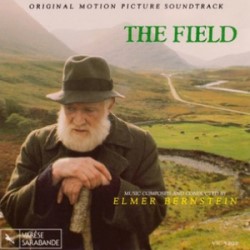
THE FIELD – Elmer Bernstein
 THROWBACK THIRTY
Original Review by Jonathan Broxton
The Field is a quietly devastating drama written and directed by Jim Sheridan, adapted from the 1965 play of the same name by John Keane. Set in Ireland in the 1930s, the film stars Richard Harris as Bull McCabe, an impoverished farmer who rents a dilapidated field on the cliffs by the sea. When the wealthy widow who owns the field decides to sell it, McCabe assumes that he will be given the first chance to buy it, but unknown to McCabe the widow has been holding on to a grudge for decades, and in a public display of spiteful pettiness directed at McCabe, holds an open auction instead. A rich American named Peter (Tom Berenger), who wants to build a factory on the site, outbids him, and so begins a bitter war which leads to betrayal, death, and madness, with the field itself acting as a symbolic representation of the desperately difficult lives the characters lead. The film has a terrific supporting cast including John Hurt, Sean Bean, Brenda Fricker, and a very young Brendan Gleeson, and was a critical success when it was first released. Read more…

Shop at the Movie Music UK Store

Member of the

 MOVIE MUSIC UK