Archive
STAR TREK: THE MOTION PICTURE – Jerry Goldsmith
 GREATEST SCORES OF THE TWENTIETH CENTURY
Original Review by Craig Lysy
The rebirth of the science fiction genre with Star Wars in 1977, and the continued success of the Star Trek series in syndication, convinced Paramount Studio to begin work on a feature film. In 1978, Paramount assembled the largest press conference held at the studio since the 1950s to announce that double Academy Award winning director Robert Wise would direct a $15 million film adaptation of the television series. The film in the finest tradition of Star Trek is a classic morality play, which speaks to a universal and transcendent yearning shared by all cultures, namely La Ricerca di Dio – the quest for God. The story line reveals the menace of a massive energy cloud of enormous power on a set course to Earth. Admiral James Kirk reassumes command of a newly refitted Enterprise and leads a desperate mission to save humanity. But all is not as it seems as we see Kirk discover that he faces a first contact encounter with an entity of insurmountable power programmed to a singular purpose – to find its creator. By maintaining fidelity to the fundamental Federation principles of seeking out new life forms in the spirit of peace and understanding, Kirk, using his usual guile and experience, is able to overcome technological, linguistic and conceptual challenges and establish a dialogue. With Spock’s assistance, he ultimately succeeds in potentiating within the mechanistic alien entity a spiritual epiphany, which catalyzes a breath-taking transformation, thereby saving the Earth. The film was slow paced, cerebral and ponderous, yet never the less became a huge commercial success. It earned Paramount three times its production costs, there-by setting the stage for a second film. Goldsmith was also honored with Golden Globe and Oscar nominations for best score. Regretfully, he failed to win. Read more…
SUPERMAN – John Williams
 GREATEST SCORES OF THE TWENTIETH CENTURY
Original Review by Craig Lysy
In 1973 producers Ilya Salkind and Pierre Spengler believed it was time to bring a classic super hero to the big screen. After protracted negotiations with DC Comics, they secured film rights to produce two Superman movies, which they would shoot back to back. A number of screenwriters were hired and let go before until a team comprised of Mario Puzo, David Newman, Leslie Newman and Robert Benton took up the project. Yet Salkind and Spengler were still not satisfied and so hired Tom Mankiewicz to do the final rewrite, which was completed in July 1976. Thematic for the film was taking the long and tortuous road to hire a director and cast. Richard Donner finally won out over nine other directors. As for the titular role, almost all of the leading men of the day were either turned down, or showed no interest. As such, Spengler decided to cast an unknown, and after over 200 auditions, newcomer Christopher Reeve won the part – bu it was felt he was too skinny. Rather than wear a muscle suit, Reeve went on a weight-lifting regimen, adding a massive 24 pounds of muscle. Joining the cast would be Marlon Brando as Jor-El, Gene Hackman as Lex Luthor, Ned Beatty as Otis, Jackie Cooper as Perry White, Glenn Ford as Jonathan Kent, Phyllis Thaxter as Martha Kent, Margot Kidder as Lois Lane, and Valerie Perrine as Eve Teschmacher. Read more…
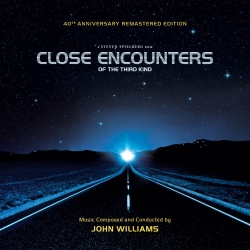
CLOSE ENCOUNTERS OF THE THIRD KIND – John Williams
 GREATEST SCORES OF THE TWENTIETH CENTURY
Original Review by Craig Lysy
Since his youth, Steven Spielberg had aspired to create a feature length science fiction film. His 1970 short story Experiences was his initial conception, which explored teenagers witnessing a wondrous “meteor shower light show” in the night sky. He pitched his idea and secured backing from Columbia Studios to proceed with “Watch the Skies”. Rewrites caused delays, and it was decided that he proceed with another project first, “Jaws”. The enormous financial success of “Jaws” resulted in Columbia Studios granting him significant creative control, which allowed for the development of the science fiction film he had always dreamed of. The script was written by Spielberg, but had input and additional refinements by several screenwriters. The title was changed to its final form as a derivation of ufologist J. Allen Hynek’s classification methodology for “close encounters”. Spielberg assembled a fine cast anchored by “Jaws” star Richard Dreyfuss as Roy Neary, Francois Truffault as Claude Lacombe, Melinda Dillon as Jillian Guiler, Teri Garr as Veronica Neary, and Cary Guffey as Barry Guiler. Read more…
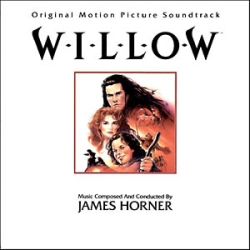
WILLOW – James Horner
 THROWBACK THIRTY
GREATEST SCORES OF THE TWENTIETH CENTURY
Original Review by Jonathan Broxton
Willow is a high fantasy film, which takes well-loved genre tropes from Lord of the Rings and elsewhere, and casts them in an adventure filled with magic, monsters, evil queens, beautiful princesses, soaring romance, daring sword fights, and much much more. Written by Bob Dolman from a story by George Lucas, and directed by Ron Howard, Willow is the story of a newborn baby prophesized to bring about the downfall of the evil witch Queen Bavmorda; to prevent the prophecy from coming to pass Bavmorda imprisons all expectant mothers, but after it is born, the baby is smuggled out of Bavmorda’s castle by a midwife, and eventually finds its way into the hands of Willow Ufgood, a Nelwyn (dwarf) farmer and aspiring magician. Determined to protect the baby, Willow journeys far from his home, and eventually finds himself in the company of a roguish swordfighter named Madmartigan, the good witch Fin Raziel, and a pair of mischievous woodland sprites. As the story progresses they all become involved in a large scale war between Bavmorda’s army and those who oppose her, while Bavmorda’s daughter Sorsha and the fearsome General Kael continue to hunt for the baby. The film stars Warwick Davis, Val Kilmer, Joanne Whalley, and Jean Marsh, and has a spectacular original score by James Horner. Read more…
STAR WARS – John Williams
 GREATEST SCORES OF THE TWENTIETH CENTURY
Original Review by Craig Lysy
George Lucas conceived of a space adventure drawn from the Flash Gordon sequels in 1971 following the completion of his first feature film, THX 1138. When his efforts to secure film rights were rebuffed, he resolved to create his own fantasy adventure. He wrote a script in 1973 and producer Larry Kurtz assisted him in securing financing, but United Artists, Disney and Universal Studios all declined, stating that they found the story strange. Lucas however persevered and finally obtained backing by 20th Century Studio exec Alan Ladd Jr. The script evolved through several incarnations, finally coalescing into the film version in 1975. Lucas formed a visual effects company, Industrial Light & Magic to realize his technical vision, which would demand visuals not seen before by the industry. The film and company would provide a seminal event, which would usher in a new age of filmmaking. Read more…
ROCKY – Bill Conti
 GREATEST SCORES OF THE TWENTIETH CENTURY
Original Review by Craig Lysy
Sylvester Stallone was enduring hard times in 1975. Despite having appeared in a few movies – including The Lords of Flatbush, Farewell My Lovely, and Death Race 2000 – he had only $100 in the bank, and was seeking to sell his dog Butkus because he could not afford to feed it. Ending up on the street was a looming possibility, which focused his resolve to engineer the big career break he needed. Seeking inspiration, Stallone found it in a famous match between heavyweight boxing champion Muhammad Ali and underdog no-hoper Chuck Wepner, who somehow managed to take the legendary Ali to fifteen rounds. Over three nights Stallone wrote a quintessential American rags-to-riches story about a down-and-out boxer named Rocky Balboa. This is a classic underdog narrative, where we bear witness to a determined man, who through perseverance, guile and sheer force of will, overcomes all obstacles to achieve greatness. Entwined within the narrative is a surprisingly tender love story, which served to endear Rocky to audiences as a relatable and fallible hero, one of the common folk whose story informs us that anything is possible. United Artist producers Robert Chartoff and Irwin Winkler loved the script and bought the film rights, with Stallone leveraging its sale with the stipulation that he would star. Studio executives baulked, but when Stallone refused to blink, they acquiesced, but with a severely reduced budget of $1 million. John G. Avildsen was tasked with directing the film. Read more…
THE OMEN – Jerry Goldsmith
 GREATEST SCORES OF THE TWENTIETH CENTURY
Original Review by Craig Lysy
Bob Munger, a friend of Producer Harvey Bernhard of 20th Century Fox, suggested that he consider making a supernatural horror drama based on the anti-christ of the apocalypse. Bernhard was intrigued by the idea, and hired screenwriter David Seltzer to come up with a story, who exceeded Bernhard’s expectations and delivered a classic story. Richard Donner was hired to direct and he assembled a stellar cast, which included Gregory Peck as Ambassador Robert Thorn, Lee Remick as his wife Katherine, David Warner as photographer Keith Jennings, Billie Whitelaw as the sinister Mrs. Baylock, Patrick Troughton as Father Brennan, and young Harvey Stephens as Damien Thorn, the young boy at the center of the narrative. Read more…
BEETLEJUICE – Danny Elfman
 THROWBACK THIRTY
GREATEST SCORES OF THE TWENTIETH CENTURY
Original Review by Jonathan Broxton
Beetlejuice is an irreverent supernatural comedy, one of the best of the 1980s, and is the film which introduced the world to one of the most iconic characters of the period – the ghoulish, disgusting, undead horror-for-hire played by Michael Keaton at his most madcap. The film is set in an idyllic New England town, where blissful newlyweds Adam and Barbara Maitland are renovating their dream home; unfortunately, they are killed in a car crash on their way back from the hardware store, and become ghosts, stuck haunting their home for 125 years. Some time later the home is sold to a new family, the Deetzes, comprising the insufferable and talentless artist Delia, her henpecked developer husband Charles, and his goth daughter Lydia; immediately, Delia begins ripping out the country charm of the house, replacing it with garish modern art. Desperate to save their home, the Maitlands travel to the afterlife – a dreary netherworld set up like the universe’s worst DMV office – where they are advised that they can scare out the Deetzes if they so desire. To accomplish this, the Maitlands find and hire a ‘bio-exorcist’ named Betelgeuse, who can be summoned by saying his name three times – but the perverted, irreverent ghost quickly causes more chaos then he cures. Not only that, but it quickly becomes apparent that the introverted and sensitive Lydia can actually see the ghosts… Read more…
JAWS – John Williams
 GREATEST SCORES OF THE TWENTIETH CENTURY
Original Review by Craig Lysy
As we today look back to 1975, we recognize that Jaws was a transformative film, which forever altered how the film industry would operate. Jaws inaugurated what has become known in the modern lexicon as, the Summer Blockbuster. After 1975 studio executives would thereafter conceive and fund big summer action and adventure films, which would take the public by storm, and fill studio coffers. The film was adapted from a Peter Benchley novel, which was originally conceived with the title “Leviathan Rising”, but later discarded for Jaws. It is as simple a tale as they come, man against the beast. We find the summer vacation community Amity Island plagued by a series of shark attacks, which threaten the island’s livelihood. Rogue seafarer Quint (Robert Shaw) is hired to hunt down and kill the beast with all dispatch. Accompanying him would be landlubber Police Captain Brody (Roy Scheider) and, oceanographer Hooper (Richard Dreyfuss). They wage war against this massive leviathan, which leads to Quint’s death, the loss of his boat, the Orca, and Hooper and Brody barely surviving. Well, the film was a massive commercial success, which spawned a franchise of sequels. It was also a critical success, earning four Academy Award nominations for Best Picture, Best Film Editing, Best Sound and Best Film Score, winning three; best Film Editing, Best Sound and Best Film Score. Read more…
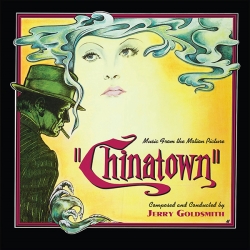
CHINATOWN – Jerry Goldsmith
 GREATEST SCORES OF THE TWENTIETH CENTURY
Original Review by Craig Lysy
Producer Robert Evans of Paramount Studio was determined to bring F. Scott Fitzgerald’s literary classic, The Great Gatsby (1925) to the big screen. He hired trusted screenplay writer Robert Towne for $175,000 to write the script. Towne however had a different ambition and managed to convince Evans to take on his own 1930’s detective mystery thriller titled “Water and Power” for $25,000. Well, Evans liked the script saw opportunity, and so moved forward with production. He greatly enjoyed his collaboration with Roman Polanski with Rosemary’s Baby (1968), and so brought him in to direct. They assembled a fine cast, which included Jack Nicholson as detective J.J. “Jake” Gittes, Faye Dunaway as Evelyn Cross Mulwray, John Huston as Noah Cross, John Hillerman as Russ Yelburton, Perry Lopez as Lieutenant Lou Escobar, and Darrell Zwerling as Hollis Mulwray. Read more…
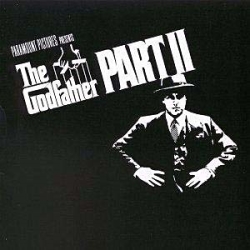
THE GODFATHER, PART II – Nino Rota
 GREATEST SCORES OF THE TWENTIETH CENTURY
Original Review by Craig Lysy
The Godfather proved to be a sensational critical success and cash cow for Paramount Studio. That there would be a sequel was a foregone conclusion, and studio executives planned to capitalize quickly. Francis Ford Coppola desired to produce, not direct the film, however he returned grudgingly to the franchise as director after the studio rejected his selection of Martin Scorsese to replace him as director. Regretfully Marlon Brando, who felt mistreated by the studio, refused to reprise his role, but six of his fellow stars did including Al Pacino as Michael Corleone, Robert Duvall as Tom Hagen, Talia Shire as Connie Corleone, Diane Keaton as Kay-Adams Corleone, Abe Vigoda as Salvatore Tessio, and Joe Spinelli as Willi Cicci. Joining the cast for the first time were Robert De Niro as the young Vito Corleone, and John Cazale as Fredo Corleone. Read more…
PATTON – Jerry Goldsmith
 GREATEST SCORES OF THE TWENTIETH CENTURY
Original Review by Craig Lysy
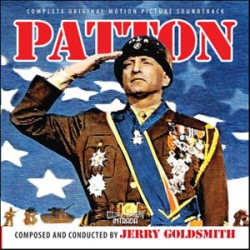
A Patton biopic film was first conceived by Frank McCarthy, a retired general working as a producer for 20th Century Fox in the 1950s. After selling the concept to Studio Executive Richard Zanuck, a screenplay was commissioned that resulted in two incarnations, one by Francis Ford Coppola and another by Edmund H. North. Over time these two screenplays were eventually merged into a single version. Both efforts drew inspiration from two books, Patton: Ordeal And Triumph, a biography by Ladislas Farago and A Soldier’s Story, the memoir of General Omar Bradley. After many years of ‘fine-tuning’, a final script was born and the search for a director and lead actor proceeded in earnest, eventually settling upon Franklin J. Schaffner and George C. Scott respectively. The film from the start was a one-man show, a biopic of a giant among men. Patton can best be described as charismatic, complicated and contradictory; he was deeply religious and yet both vulgar and profane, he was an insufferable narcissist and yet a supreme patriotic, and lastly he was a military tactical genius and yet a poor post war administrator. The film covered Patton’s rise to prominence in World War II during his military campaigns in Tunisia, Sicily, France and the occupation of Germany. It suffices to say that Scott’s performance was a tour de force that transcended the film and earned him a best actor Oscar award that he ungraciously declined to accept. The film went on to win seven Oscars including best picture and remains a popular film to this day. Read more…
THE LION IN WINTER – John Barry
 GREATEST SCORES OF THE TWENTIETH CENTURY
Original Review by Craig Lysy
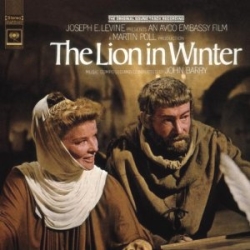
Producer Joe Levine had a contract with Peter O’Toole and was looking for a film to again showcase his talent. He found the vehicle in the Broadway play “The Lion In Winter” by James Goldman that offered dramatic dialogue, which would play to O’Toole’s thespian strengths. Anthony Harvey was brought in to direct the film and they hired an amazing cast to support Peter O’Toole (King Henry II), which included Katherine Hepburn (Queen Eleanor of Aquitaine), their three sons, Anthony Hopkins (Richard), John Castle (Geoffrey), and Nigel Terry (John). Also joining was Jane Morrow (Henry’s mistress Alais) and Timothy Dalton (King Philip II of France). Hopkins and Dalton were both making their screen acting debuts. Read more…
EMPIRE OF THE SUN – John Williams
 THROWBACK THIRTY
GREATEST SCORES OF THE TWENTIETH CENTURY
Original Review by Jonathan Broxton
By the end of 1986, Steven Spielberg was probably the most famous and financially successful director in Hollywood. However, although he had directed a handful of the highest grossing films of all time – Jaws, Close Encounters of the Third Kind, Raiders of the Lost Ark, E. T. The Extra-Terrestrial, Indiana Jones and the Temple of Doom –he privately expressed a desire to make more serious films. The comparative failure of The Color Purple in 1985 just magnified that desire, so in 1987 he decided to try again, by making a movie based on J. G. Ballard’s semi-autobiographical coming-of-age novel Empire of the Sun. The film starred the then 13-year-old Christian Bale as Jim Graham, an upper class English schoolboy living with his diplomat parents in Shanghai in 1941, whose life is shattered by the outbreak of World War II, and who ends up desperately trying to survive in a Japanese prisoner of war camp. Unfortunately for Spielberg, the film – which also starred John Malkovich, Miranda Richardson, and Nigel Havers – did not ignite the passions of audiences like his popcorn blockbusters did, and it was only a moderate critical and commercial success; Spielberg would have to wait another five years for his breakthrough into cinematic respectability with Schindler’s List in 1993. In addition, the film was largely overlooked at the Academy Awards, receiving only six technical nominations, but not winning any. Read more…
PLANET OF THE APES – Jerry Goldsmith
 GREATEST SCORES OF THE TWENTIETH CENTURY
Original Review by Craig Lysy
Producer Arthur P. Jacobs sold 20th Century Fox on a bold new effort to reinvigorate the science fiction genre, which had languished since the start of the decade. The vehicle for the genre resurrection would be Pierre Boulle’s 1963 novel La Planète des Singes (Planet of the Apes). After securing the film rights Rod Serling and Michael Wilson were tasked with writing the screenplay. The technical challenges of the required prosthetic make-up delayed the film for quite some time. Fox Studios finally gave the green light to film when make-up designer John Chambers developed prosthetics flexible enough for the actors to express facial emotions. Jacobs had always seen Charlton Heston playing the lead role of John Taylor and on his request, Franklin Schaffner was hired to direct. A fine cast was assembled, which included Roddy McDowell as Cornelius, Kim Hunter as Zira, Maurice Evans as Dr. Zaius, James Daly as Honorius, Lou Wagner as Lucius, and Linda Harrison as Nova. Read more…

Shop at the Movie Music UK Store

Member of the

 MOVIE MUSIC UK