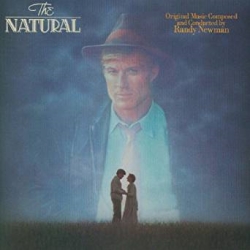
THE NATURAL – Randy Newman
 GREATEST SCORES OF THE TWENTIETH CENTURY
Original Review by Craig Lysy
In 1982 Columbia Pictures studio executive Victor Kaufman created a joint venture, TriStar Pictures, with CBS and HBO. The goal was to pool their resources given the ever-escalating costs of making movies. For their first film they chose to celebrate America’s national pastime by adapting The Natural, a baseball biopic novel by Bernard Malamud. The film offered classic Americana and Kaufman believed it was the perfect vehicle for launching TriStar Pictures. Mark Johnson was given the reigns to produce the film, and Barry Levinson was tasked with directing. Roger Towne and Phil Dusenberry were brought in to write the screenplay, which would be loosely based on the life of Roy Hobbs, a man of incredible “natural” baseball talent. Robert Redford, whose good looks and leading man talents were ascendant, was cast for the titular role. Joining him would be Robert Duvall as Max Mercy, Glenn Close as Iris Gaines, Kim Basinger as Memo Paris, Barbara Hershey as Harriet Bird, Wilford Brimley as Pop Fischer, Darren McGavin as Gus Sands, and Robert Prosky as the Judge. Read more…
CHRISTOPHER ROBIN – Geoff Zanelli, Jon Brion
 Original Review by Jonathan Broxton
Winnie the Pooh has been a character beloved to millions of children all over the world since author A. A. Milne first created him in 1926. The honey-loving bear of ‘very little brain’ has been a part of the Disney stable of characters since the 1960s, and has gone on to appear in multiple animated films. This new film, Christopher Robin, is somewhat different. Directed by Marc Forster and starring Ewan McGregor, it is the first ever live action Pooh film, and the first one ever to explore the lives of the characters after the books and stories ended. McGregor plays the adult Christopher Robin, now all grown up and living in post-war London with his wife Evelyn and young daughter Madeline. As a manager at a struggling luggage company, Christopher Robin spends far too much time at work, neglecting his family; he has also seemingly forgotten all about his beloved childhood friends, and lost the gift for playful imagination that he had in abundance as a youth. During one particularly stressful weekend, having been forced to work by his superior instead of going to the countryside with his family, Christopher Robin is visited by Winnie the Pooh; Pooh tells him that all his friends in the Hundred Acre Wood – Piglet, Eeyore, and the rest – have vanished and he needs Christopher Robin’s help to find them. The film co-stars Hayley Atwell, Mark Gatiss, and Bronte Carmichael, as well as the voices of Jim Cummings and Brad Garrett. Read more…
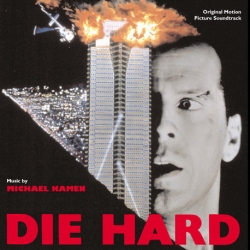
DIE HARD – Michael Kamen
 THROWBACK THIRTY
Original Review by Jonathan Broxton
Die Hard is one of the most iconic, enduring, and ground-breaking action films ever made; it made an action star of former TV leading man Bruce Willis, launched the cinematic career of the late great Alan Rickman, and set the high benchmark for all the action movies that would follow it. The film is directed by John McTiernan and written by Steven de Souza and Jeb Stuart, based on the novel ‘Nothing Lasts Forever’ by Roderick Thorp. Willis plays John McClane, a New York cop who has travelled to Los Angeles for his Christmas vacation, where he intends to try to reconcile with his estranged wife Holly (Bonnie Bedelia). He arrives at his wife’s office skyscraper building, Nakatomi Plaza, where a Christmas party is underway. The party is disrupted by the arrival of a German terrorist group led by the suave but ruthless Hans Gruber (Rickman), which takes all the party-goers hostage – except for McClane, who escapes undetected onto a different floor. After Gruber brutally executes the company CEO, McClane becomes involved in a game of cat-and-mouse with the terrorists, picking them off one by one in an attempt to rescue the hostages. The film co-stars Alexander Godunov, Reginald Veljohnson, and Hart Bochner, and remains to this day one of my all-time favorite action movies. Read more…
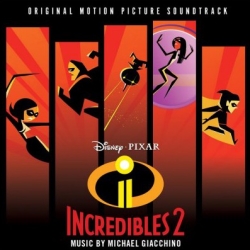
THE INCREDIBLES 2 – Michael Giacchino
 Original Review by Jonathan Broxton
14 years ago, in 2004, Michael Giacchino became the first composer to successfully make the transition from video games to movies when he was asked to score a Disney-Pixar animated action adventure super hero film called The Incredibles. Giacchino’s career to that point had been filled with high quality scores for games such as The Lost World, Call of Duty, Secret Weapons Over Normandy, and several entries in the groundbreaking Medal of Honor series, plus work on TV shows like Alias, but The Incredibles was his first film work of any significance. It was a sensation – the combination of jazzy John Barry-style big band arrangements and broad, exciting action music was a breath of fresh air, and essentially launched a career which has seen him become one of the most in-demand and well-loved composers in Hollywood, with his musical fingers in multiple franchise pies comprising Star Wars, Star Trek, Mission Impossible, Planet of the Apes, Jurassic Park, several Marvel super hero movies, and many other Pixar films, including the Oscar-winning Up. Now, after all this time, Giacchino is returning to the place it all started, with his score for the long-awaited sequel The Incredibles 2. Read more…
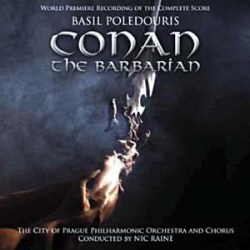
CONAN THE BARBARIAN – Basil Poledouris
 GREATEST SCORES OF THE TWENTIETH CENTURY
Original Review by Craig Lysy
Conan The Barbarian is based on the Conan stories penned by author Robert E. Howard. The movie adaptation tells the story of a young Conan who lives in the mythic Hyborean Age and suffers grievously at the hands of an evil ruler of the Snake Cult, Thulsa Doom, who kills his parents and sells him into slavery. Eventually after much suffering he gains his freedom and trains to become a mighty warrior. He then sets out to solve the riddle of steel and avenge his parent’s death. As such, this is a classic morality tale with an unambiguous hero and villain. The film was a commercial success, which spawned a sequel and served to reinvigorate the fantasy genre. Read more…
DEATH OF A NATION – Dennis McCarthy, John Beal
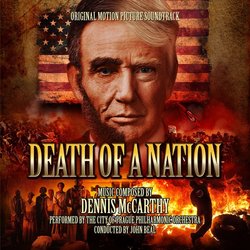 Original Review by Jonathan Broxton
The world is in a strange place, politically. The rise of Donald Trump to the office of President of the United States has forced the country into a sort of ideological schism between Republicans and Democrats, red states and blue states, right wing and left wing. Across the world authoritarian leaders are flexing their muscles, from Vladimir Putin in Russia to Recep Tayyip Erdoğan in Turkey. In Europe, Britain’s still-controversial Brexit is causing discord in the European Union. There remains political turmoil in the Middle East, while in places like China people like Xi Jinping are looking to consolidate their power in increasingly draconian ways. I’m not going to get into the meat of any of those thorny issues in this review, but I will ask this: where does art fall into this equation? Does art and music have a role to play? If so, what is it? Read more…
A FISH CALLED WANDA – John Du Prez
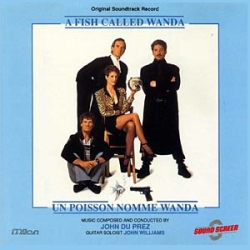 THROWBACK THIRTY
Original Review by Jonathan Broxton
A Fish Called Wanda is one of the best comedies of the 1980s – one part romance, one part crime caper, one part English farce – which teams several members of the classic Monty Python comedy troupe with several popular American stars. Jamie Lee Curtis and Kevin Kline play Wanda and Otto, American jewel thieves in London who, along with stuttering getaway driver Ken (Michael Palin) and East End gangster George (Tom Georgeson), plan an elaborate diamond heist. However, in-fighting and double-crossing within the gang leads to George being arrested, which proves to be a problem for everyone else as he is the only one who knows where the loot has been stashed. In order to get information about the location of the diamonds, Wanda decides to seduce George’s barrister, Archie Leach (the irrepressible John Cleese), a repressed middle-class Englishman stuck in a loveless marriage. Archie, flattered by the attention, immediately falls for Wanda, but shockingly Wanda also finds herself genuinely attracted in return – which causes more friction within the gang, not least because Otto and Wanda are also secretly lovers themselves. Read more…
MISSION: IMPOSSIBLE – FALLOUT – Lorne Balfe
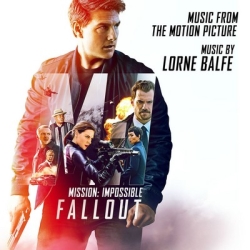 Original Review by Jonathan Broxton
When actor/producer Tom Cruise got together with director Brian De Palma in 1996 to make a brand new big-screen version of the classic 1960s spy TV series Mission: Impossible, I doubt that even he expected that he would still be playing the role of action hero Ethan Hunt 22 years later – yet, here we are. We’ve gone through multiple director changes in the intervening two decades – John Woo, J. J. Abrams, Brad Bird – but for the time being the series appears to have settled on Christopher McQuarrie, who with this film becomes the first director to make two Mission: Impossible films. Fallout is, in many ways, a continuation of the story established during Rogue Nation in 2015, as it sees Hunt and his IMF compatriots again locking horns with the shadowy villain Solomon Lane, whose sinister Syndicate organization continues to be a threat to the stability of the world. The globetrotting adventure sees the action moving from Berlin to Paris to London to the foothills of the Himalayas – and what action it is! The staggering set-pieces in the film include a HALO jump over Paris which Cruise did for real, a brutal three-way fight sequence in a bathroom, a high-speed motorbike chase around the Arc de Triomphe and beyond, an epic foot chase through the streets of Britain’s capital that contains a scene where Cruise smashed his ankle – for real – jumping from one building to another, and an exhilarating helicopter dogfight weaving between the towering peaks of the Kashmir. The film co-stars Henry Cavill, Ving Rhames, Simon Pegg, Rebecca Ferguson, Sean Harris, Angela Bassett, and Alec Baldwin, and has been widely acclaimed as one of the best action movies in recent years. Read more…
E.T. THE EXTRA-TERRESTRIAL – John Williams
 GREATEST SCORES OF THE TWENTIETH CENTURY
Original Review by Craig Lysy
Steven Spielberg, like most kids, suffered with the divorce of his parents. He was 14, and to cope with his circumstances, he created an imaginary alien friend, who became a surrogate brother. Over time this evolved into a story, which his sought to film called “Growing Up”. After the success of Raiders of The Lost Ark, he returned to fashioning his childhood story, which would now incorporate elements from another story he had written called “Night Skies,” where aliens terrorize a family. He brought in screenwriter to Melissa Mathison to craft a story of a special needs child bonding with a friendly alien. The result was a story to be called “E.T. and Me,” which Spielberg pitched to Columbia Studios. Remarkably they rejected the project, believing that it would only appeal to small kids. Well, Spielberg was undeterred, and approached Sid Sheinberg of MCA, who saw the success of Raiders of the Lost Ark, and agreed to fund the project. They bought back the script from Columbia Pictures for $1 million dollars and granted 5% of the film’s net profits. Spielberg and Kathleen Kennedy would produce the film, with Spielberg also directing. For his creative team, he brought in Carlo Rambaldi, who had created the aliens seen in Close Encounters of the Third Kind. The story required Spielberg to cast child actors, and he screened hundreds. His patience and hard effort paid off as he managed to secure a perfect cast, which included; Henry Thomas as Elliot, Drew Barrymore as Gertie, Dee Wallace as Mary, Peter Coyote as Keys, and Robert MacNaughton as Michael. Read more…
WHO FRAMED ROGER RABBIT – Alan Silvestri
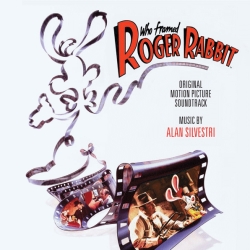 THROWBACK THIRTY
Original Review by Jonathan Broxton
When cinematic scholars make lists of truly groundbreaking films, very few of them ever mention Who Framed Roger Rabbit, but in my opinion they absolutely should. It’s an anarchic action-comedy-murder mystery directed by Robert Zemeckis, adapted from a novel by Gary K. Wolf. Set in Los Angeles in the 1940s, the film stars Bob Hoskins as Eddie Valiant, a down-on-his-luck private detective who is hired by the head of a movie studio to investigate the wife of one of its box office stars; there are rumors that she is having an affair, and the studio feels that the scuttlebutt is affecting their star’s performances. But here’s the catch: the star in question is a cartoon rabbit named Roger, and this version of Los Angeles is an alternate universe where all the classic animated characters from Disney and Warner Brothers’ Looney Tunes live side-by-side with humans. As the plot progresses Eddie and Roger team up when Roger is accused of murder; as Eddie tries to exonerate the bothersome bunny he crosses paths not only with Roger’s sensationally seductive wife Jessica, but a creepy law enforcement officer named Judge Doom, who has a pathological hatred of cartoons, and wants Roger to pay the ultimate price for his alleged crime. The film co-stars Christopher Lloyd and Joanna Cassidy, as well as the voices of Charles Fleischer and Kathleen Turner. Read more…
SKYSCRAPER – Steve Jablonsky
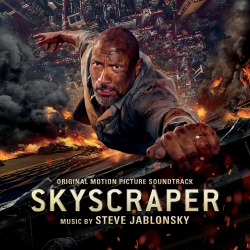 Original Review by Jonathan Broxton
In 1988 director John McTiernan made a film called Die Hard, in which a group of terrorists take over a Los Angeles skyscraper, and a hard nosed cop played by Bruce Willis must defeat them to protect his family. Now, in 2018, director Rawson Marshall Thurber has made a film called Skyscraper, in which a group of terrorists takes over a Hong Kong skyscraper, and a hard nosed ex-FBI agent played by Dwayne ‘The Rock’ Johnson must defeat them to protect his family. And they say originality is dead in Hollywood. The reviews and box office returns for the film have not been great, especially compared to the director’s previous efforts Dodgeball and Central Intelligence, and despite the star-heavy power of The Rock in the leading role, serviceable support from Neve Campbell, and a decent amount of vertiginous thrills and spills. Read more…
RAIDERS OF THE LOST ARK – John Williams
 GREATEST SCORES OF THE TWENTIETH CENTURY
Original Review by Craig Lysy
In 1973 George Lucas wrote a story titled “The Adventures of Indiana Smith”, drawing inspiration from adventure movies of the 1930s and 1940s. While on a shared vacation to Hawaii with Steven Spielberg, Lucas pitched his story, and convinced him to direct a trilogy of films. Upon Spielberg’s suggestion, the surname was changed to Jones and screenwriter Lawrence Kasdan was hired to create the script. The major Hollywood studios all rejected the project because of the $20 million price tag and Lucas’ exacting terms. Eventually Paramount took the gamble and Frank Marshall was tasked with producing the film. After exhausting efforts to cast the lead man, Spielberg convinced Lucas to cast Harrison Ford for the role of Indiana Jones. Joining him on the project would be Paul Freeman as Dr. René Belloq, Karen Allen as Marion Ravenwood, John Rhys-Davies as Sallah, Ronald Lacey as Major Arnold Toht, Denholm Elliot as Dr. Marcus Brody, and Wolf Kahler as Colonel Dietrich. Read more…
JURASSIC WORLD: FALLEN KINGDOM – Michael Giacchino
 Original Review by Jonathan Broxton
The second film in the re-imagined Jurassic Park franchise is Jurassic World: Fallen Kingdom, directed by Spanish filmmaker Juan Antonio Bayona. It takes place several years after the events of the first Jurassic World film, in which the fully operational theme park was, as one would expect, fully overtaken and virtually destroyed by the genetically modified dinosaurs it housed. Claire Dearing, Jurassic World’s former operations manager, is now the head of a dinosaur rights organization; when a volcanic eruption on the Jurassic World island Isla Nublar threatens to wipe out the remaining animals, she is called to action by multibillionaire philanthropist Sir Benjamin Lockwood and his aide Eli Mills, who say they want her to help them move the dinosaurs off the island to a safe location. To this end Claire recruits Owen Grady, Jurassic World’s dinosaur expert and her former lover, to accompany her and a team of mercenaries on the mission. However, once Claire, Owen, and the team arrives back on the island, it quickly becomes clear that the priorities regarding the dinosaurs have shifted. The film stars Chris Pratt, Bryce Dallas Howard, Rafe Spall, and James Cromwell, and has an original score by the composer of Jurassic World – Michael Giacchino. Read more…
THE MAN WHO KILLED DON QUIXOTE – Roque Baños
 Original Review by Jonathan Broxton
In 1989 writer-director and former Monty Python member Terry Gilliam began to develop the screenplay for a film called The Man Who Killed Don Quixote, which he was co-writing with British scribe Tony Grisoni. While Don Quixote was being finalized Gilliam and Grisoni made Fear and Loathing in Las Vegas together, and then returned to Quixote to begin shooting in 2000, with Johnny Depp and French actor Jean Rochefort in the lead roles. What transpired would eventually become one of the worst examples of ‘development hell’ in the history of cinema, as Gilliam had to abandon production an astonishing three times between 2000 and 2016, due to various issues ranging from financial mis-management to legal wranglings to actor illnesses, and even a flood which destroyed much of the set. The story of Gilliam’s tribulations while making the film even became an acclaimed documentary, Lost in La Mancha, which was released in theaters in 2002. Eventually, against all odds, the film was finally shot and completed in 2017, with Adam Driver, Jonathan Pryce, Stellan Skarsgård, and Olga Kurylenko eventually being the ones in the lead roles. Read more…
THE EMPIRE STRIKES BACK – John Williams
 GREATEST SCORES OF THE TWENTIETH CENTURY
Original Review by Craig Lysy
The stunning success of Star Wars caused George Lucas to rethink his original vision of a single stand-alone film. He now saw opportunity for a story arc, which would span additional films. To that end, he hired veteran science fiction writer Leigh Brackett to write the next screenplay, based on his story titled The Empire Strikes Back. Lucas did not like her first draft, and when she died shortly there after of cancer, he was left to rewrite the script himself. He shifted the story into a much darker narrative, which critics today acknowledge as the best film of the franchise. Lucas did not want to direct and so brought in trusted friend Irvin Kershner, his former professor. Most of the original cast would reprise their roles; Mark Hamill as Luke Skywalker, Harrison Ford as Han Solo, Carrie Fisher as Princess Leia Organa, Anthony Daniels as C-3PO, Kenny Baker as R2-D2, Peter Mayhew as Chewbacca, and David Prowse as Lord Darth Vader (voiced by James Earl Jones). Joining them would be Frank Oz as Yoda, Billy Dee Williams as Lando Calrissian, and Jeremy Bulloch as Boba Fett. Read more…

Shop at the Movie Music UK Store

Member of the

 MOVIE MUSIC UK