MOTHERLESS BROOKLYN – Daniel Pemberton
 Original Review by Jonathan Broxton
Motherless Brooklyn is a period drama-thriller written and directed by Edward Norton, based on the acclaimed novel by Jonathan Lethem. It’s set in New York in the 1950s and stars Norton as Lionel Essrog, a detective who has Tourette’s Syndrome, a mental disorder marked by involuntary physical and vocal tics. Essrog works for Frank Minna (Bruce Willis), the owner of a small-time neighborhood detective agency, who is shot with his own gun by unknown assailants. As Lionel and his fellow detectives start to probe further into Frank’s murder they uncover a complicated conspiracy of power, corruption, and racism that stretches all the way to the top of New York’s political structure. The film co-stars Willem Dafoe, Gugu Mbatha-Raw, Bobby Cannavale, and Alec Baldwin, and reminds me very much of films like Chinatown, wherein a relentless underdog detective takes on the wealthy and privileged and finds that the combination of money and influence is a powerful motivator for unscrupulous men – and that they will squash anyone who gets in their way to attain them. Norton optioned the story of Motherless Brooklyn almost 20 years ago, just after the original novel was published, and it has taken this long to be able to transfer his passion project to the silver screen. Read more…
TRIUMPH OF THE SPIRIT – Cliff Eidelman
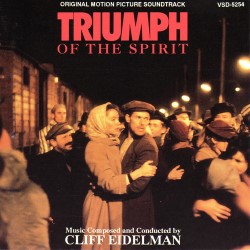 THROWBACK THIRTY
Original Review by Jonathan Broxton
Triumph of the Spirit is a 1989 Holocaust-themed drama, directed by Robert M. Young, based on a screenplay by Shimon Arama, Zion Haen, Andrzej Krakowski, and Laurence Heath. It stars Willem Dafoe and is based on the true life story of Salamo Arouch, a Jewish former Olympic boxer who is taken as a prisoner during World War II and sent to he Auschwitz concentration camp. While there, Salamo is literally forced to fight for his life, taking part in brutal boxing matches for the amusement of the guards, who threaten to murder his family if he refuses to fight. With only the love of his girlfriend Allegra (Wendy Gazelle) to sustain him, Salamo fights over 200 matches while in captivity – knowing that every person he defeats will be killed – all the while dreaming of the day that he and his loved ones would again be free. The film co-stars Edward James Olmos and Robert Loggia, and was heralded at the time for the fact that it was the first major film to actually be shot on location at the real Auschwitz. The other aspect of the film – and the most pertinent one to me – is the fact that its score was written by the then 24-year-old Cliff Eidelman. Read more…
JOJO RABBIT – Michael Giacchino
 Original Review by Jonathan Broxton
I’m trying to imagine the pitch meeting that writer-director Taika Waititi had with the executives at Twentieth Century Fox regarding Jojo Rabbit. “It’s a comedy set in Germany during World War II where the hero is a little boy who’s a Nazi and has an idealized version of Adolf Hitler as an imaginary best friend.” This starting off point is utterly ludicrous but – contrary to every reasonable thought process – the film works. Waititi’s film is not only hilarious and clever and subversive, but it’s also profoundly emotional, and it has some vital and important things to say about racism and the power of propaganda that are just as pertinent today as they were in 1943. 11-year-old Roman Griffin Davis stars in the title role as young Jojo Betzler, who lives in Nazi Germany and has been so affected by the pervasive propaganda that he dreams of joining the Hitler Youth and has a friendly version of Der Führer as his imaginary best friend and surrogate father figure. However, things change enormously in Jojo’s when he discovers that his patient and loving mother Rosie (Scarlett Johansson) is harboring a devastating secret that could have a profound effect on everyone’s lives. The film co-stars Thomasin McKenzie, Sam Rockwell, Rebel Wilson, and Stephen Merchant, as well as Waititi himself as old Adolf. Read more…
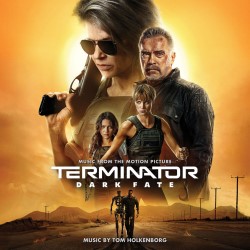
TERMINATOR: DARK FATE – Tom Holkenborg
 Original Review by Jonathan Broxton
It’s been a somewhat depressing experience to watch the once brilliant and groundbreaking Terminator franchise descend into one of the most risible series of films in Hollywood’s recent history but, unfortunately, that’s what has happened. In the aftermath of Terminator 2: Judgment Day in 1991, there was a 12-year gap before Terminator 3: Rise of the Machines appeared in 2003, during which time creator James Cameron went off and began prepping Avatar and its 282 sequels, leaving directorial duties in the hands of Jonathan Mostow. Terminator Salvation came and went in 2009 amid Christian Bale’s on-set meltdown, and Terminator Genisys opened in 2015 with the hope that Emilia Clarke could transfer her Daenerys Targaryan Game of Thrones fan base to the big screen as a new version of Sarah Connor. Spoiler: she couldn’t. The only constant through all this has been the presence of Arnold Schwarzenegger, but as is often the case in this situation, his original terrifying performance as the ultimate unstoppable killing machine eventually morphed into something approaching self-parody, especially when you consider that the Governator was 68 years old when Genisys came out and was barely able to walk without limping, let alone do any stunts. Read more…
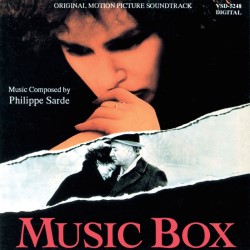
MUSIC BOX – Philippe Sarde
 THROWBACK THIRTY
Original Review by Jonathan Broxton
Music Box was a political thriller directed by the great Franco-Greek filmmaker Constantin Costa-Gavras, based on a semi-autobiographical screenplay by Joe Eszterhas. Although Eszterhas soon became better known for writing rather more sordid murder mysteries – Basic Instinct, Jade, and Showgirls, for example – Music Box is a very different, much more serious film. It stars Jessica Lange as Ann Talbot, a Chicago defense attorney, who learns that her father, Hungarian immigrant Michael Laszlo (Armin Mueller-Stahl), is in danger of having his U.S. citizenship revoked. As Ann digs deeper into her father’s past she discovers a shocking truth – that he may have been involved in atrocities during World War II while collaborating with Nazis. It was a moving, emotional film, which won the Golden Bear at the Berlin International Film Festival in 1989, and earned Lange an Academy Award nomination for Best Actress. Read more…
JUDY – Gabriel Yared
 Original Review by Jonathan Broxton
The life and death of Judy Garland stands as one of Hollywood’s most tragic cautionary tales. As a young actress she was catapulted to stardom in 1939 at the age of just 17 when she appeared in The Wizard of Oz, but over the next thirty years her life was a rollercoaster of cinematic and musical successes and failures, mental illness problems, drug addiction and alcoholism, failed marriages, and studio-mandated meddling which effectively destroyed her private life. Garland died of a barbiturate overdose in London in 1969, a shell of the woman she had once been. She was only 47 but her career as a Hollywood leading light had long since dimmed, and she had been reduced to playing revues at small nightclubs, partly to simply pay her bills, and partly as a way to possibly reignite her work. Director Rupert Goold’s film Judy, based on the play ‘End of the Rainbow’ by Peter Quilter, is an intimate look at those last months of Garland’s life as she reflects on her years, not knowing that she was in the latter stages of it. The film is anchored by an astonishing performance by Renee Zellweger as Garland, who somehow simultaneously captures both the glamorousness of her early life and the booze-soaked faded glory that typified her last hurrah. Read more…
MALEFICENT: MISTRESS OF EVIL – Geoff Zanelli
 Original Review by Jonathan Broxton
The 2014 film Maleficent, a revisionist re-imagining of the Sleeping Beauty fairytale told from the point of view of the story’s ‘villain,’ was an unexpected box office hit for Walt Disney Pictures, and so it was inevitable that a sequel would follow. That sequel is Maleficent: Mistress of Evil, and it once again stars Angelina Jolie and her razor-like cheekbones in the title role, bringing back her cut glass English accent to terrorize elocutionists the world over. It is a continuation of the original film’s story and sees young Aurora – newly crowned the Queen of the Moors – falling in love with the handsome Prince Philip of Ulstead. After Philip proposes marriage, Aurora and Maleficent are invited to Philip’s home castle by the king and queen, John and Ingrith; however, unknown to all, Ingrith has been hiding a deep lifelong hatred of fairies and moorland people, and has a plan to destroy them all. The film co-stars Elle Fanning, Michelle Pfeiffer, and Harris Dickinson, and is directed by Norwegian filmmaker Joachim Rønning, who took over duties from Robert Stromberg. Read more…
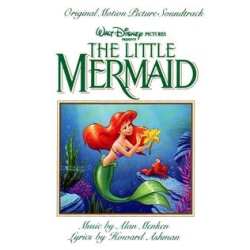
THE LITTLE MERMAID – Alan Menken, Howard Ashman
 THROWBACK THIRTY
Original Review by Jonathan Broxton
The Walt Disney Corporation is, for better or worse, probably the world’s biggest and most influential media and entertainment company. Not only does it own its own catalogue of classic live action and animated films, including those made by Pixar, it of course also owns Lucasfilm and the rights to the Star Wars universe, Marvel and the Avengers universe, and has recently bought Twentieth Century Fox and it’s entire cache of intellectual property. As I write this five of the six highest grossing films of 2019 are Disney features, and we haven’t even seen Frozen II or Star Wars: The Rise of Skywalker yet, which could lock out seven of 2019’s Top 10. It’s easy to forget that it wasn’t always this way, and even easier to forget that the film that turned it all around was an animated feature based on a classic story by a children’s author from Denmark. Read more…
Under-the-Radar Round Up 2019, Part 3
 Original Reviews by Jonathan Broxton
I am pleased to present the third installment in my ongoing series of articles looking at the best “under the radar” scores from around the world in 2019. Rather than grouping the scores on a geographical basis, this year I decided to again simply present the scores in a random order, and so this third batch includes reviews of four more disparate scores from the first nine months of the year – including two magnificent nature documentaries from Germany and Romania, a swashbuckling adventure score from a Spanish animated film, and a gritty 1970’s inspired action-thriller score from a historical Spanish drama!
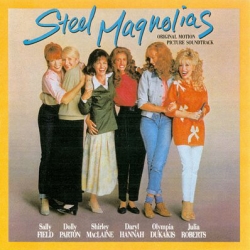
STEEL MAGNOLIAS – Georges Delerue
 THROWBACK THIRTY
Original Review by Jonathan Broxton
A classic Hollywood emotional melodrama based on the play of the same name by Robert Harling, Steel Magnolias is a close look at the lives of a group of women in a small town in Louisiana. It is a detailed examination of all aspects of life – weddings and funerals, children, husbands, and boyfriends, love and infidelity, loneliness, sickness, and death – and is mostly set around the town’s local beauty parlor, where the women often congregate to gossip, congratulate, commiserate, and mourn. The film is anchored by an astonishing ensemble cast of female acting brilliance, including Sally Field, Dolly Parton, Shirley MacLaine, Daryl Hannah, Olympia Dukakis, and most notably Julia Roberts in the role that made her a star. It’s one of those three-handkerchief movies that is entirely intended to wring every drop of emotion out of its audience, and it is considered somewhat manipulative and mawkish today, but in 1989 it was a huge hit, earning Roberts her first Academy Award nomination. The film was also the biggest box office success of director Herbert Ross’s career – despite him having previously made such acclaimed films as The Sunshine Boys, The Turning Point, The Goodbye Girl, California Suite, and Footloose – and it had a score by the great Georges Delerue. Read more…
JOKER – Hildur Guðnadóttir
 Original Review by Jonathan Broxton
In this era where super hero movies are a dime a dozen, where in the past 30 years we’ve had at least three Supermen, five Batmen, three Spider-Men, and innumerable iterations of other DC and Marvel comic book characters, it was only a matter of time before someone tried to do something completely out-of-the-box different. While the majority of these films concentrate on the heroes, perhaps the most iconic villain in all of comic book history is the Joker, the long-standing nemesis of Batman. He has been portrayed on film multiple times himself; by Cesar Romero in 1966, by Jack Nicholson in 1989, by Heath Ledger in 2008, and by Jared Leto most recently in 2016, with Ledger’s Oscar-winning performance in The Dark Knight coming to be considered the gold standard. There have been multiple origin stories for the character, but he has never been the sole focus of a film before – until now. Read more…
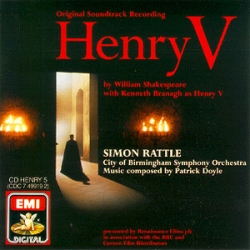
HENRY V – Patrick Doyle
 THROWBACK THIRTY
GREATEST SCORES OF THE TWENTIETH CENTURY
Original Review by Jonathan Broxton
In 1989 Kenneth Branagh was a brash, handsome, dazzlingly talented young actor and director, who emerged from the Royal Academy of Dramatic Arts in the early 1980s and set the British theatrical world alight with his electrifying Shakespearean productions. He was part of a group of talented contemporaries which included people like Emma Thompson, Alan Rickman, Jonathan Pryce, Stephen Fry, Hugh Laurie, and Rowan Atkinson, all of whom began to have a profound effect on British stage society through their respective careers in drama and comedy. Branagh then went on to create the Renaissance Theatre Company, which brought his troupe of players into the circle of beloved stage veterans like Judi Dench, Richard Briers, Derek Jacobi, and Sir John Gielgud. Together they made enormously successful stage productions of Much Ado About Nothing, Hamlet, As You Like It, and Twelfth Night, the latter of which directly led to Branagh receiving funding to make a big-screen adaptation of one of Shakespeare’s most beloved works, Henry V. Read more…
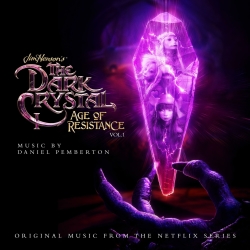
THE DARK CRYSTAL: AGE OF RESISTANCE – Daniel Pemberton, Samuel Sim
 Original Review by Jonathan Broxton
In 1982 the Jim Henson Company released what was, at the time, the most ambitious puppet-centric movie ever made: The Dark Crystal. Despite being a rich fantasy film of evil monsters and gallant heroes, visually stunning and wondrously creative, it was not an immediate success upon its release, with many people considering it much too scary for its young target audience. However, in the intervening 37 years it has become a beloved cult classic, a cultural touchstone for many 1980s children who were left enchanted and terrified in equal measure. Fans have been clamoring for a sequel for decades, but have been forced to be content with various comic books and novels to quench their thirst for additional tales from this universe – until now. The Dark Crystal: Age of Resistance is a 10-episode series produced by Netflix which acts as a prequel to the original movie, and with its increased budget actually surpasses the original in terms of its larger scope, richer detailing, brilliant storytelling, and visual majesty. Read more…
DAD – James Horner
 THROWBACK THIRTY
Original Review by Jonathan Broxton
Dad was a sentimental family drama starring Jack Lemmon, Ted Danson, and Ethan Hawke as Jake, John, and Billy Tremont, three generations of fathers and sons who are brought together when Jake’s wife Bette, played by Olympia Dukakis, suffers a health emergency. Needing to fend for himself for the first time in decades, Jake finds a new lease of life through his forced independence, and bonds with his workaholic son and free-spirited grandson, as well as members of his extended family that he has been neglecting. However, when Bette returns home, she baulks at the formerly-passive Jake’s new assertiveness, which leads to conflict and – eventually – more medical drama. The film was written and directed by Gary David Goldberg (the creator of Family Ties), adapted from a novel by William Wharton, and was an unexpected critical success, with special praise reserved for Jack Lemmon’s performance, and for the Oscar-nominated old age makeup. Read more…
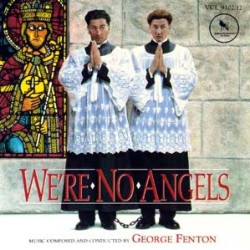
WE’RE NO ANGELS – George Fenton
 THROWBACK THIRTY
Original Review by Jonathan Broxton
We’re No Angels was a loose remake of a 1955 Humphrey Bogart film of the same name, which was itself adapted from a French play, La Cuisine des Anges, by Albert Husson. The film is set in the 1930s and stars Robert De Niro and Sean Penn as Ned and Jim, two amiable convicts who inadvertently escape from jail when they are caught up in a plot masterminded by Bobby, a vicious killer played by James Russo. The convicts eventually find themselves in a small upstate New York town near the Canada–US border, where Ned and Jim are mistaken for a pair of priests expected at the local monastery. Circumstances are such that crossing the town bridge into Canada is extremely difficult, so Ned and Jim decide to play the long game and embrace the misunderstanding until the time is right. However, as Ned and Jim spend more time in the town, they find themselves forming real bonds with the locals, especially a beautiful single mother played by Demi Moore, and soon they begin to wonder whether they have a shot at genuine redemption. The film was written by David Mamet and directed by Neil Jordan, but was unfortunately a massive box office flop, grossing just $10.5 million on a $20 million budget. Read more…

Shop at the Movie Music UK Store

Member of the

 MOVIE MUSIC UK