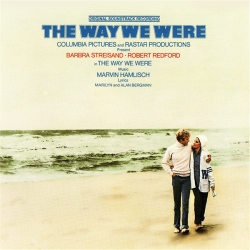
THE WAY WE WERE – Marvin Hamlisch
 MOVIE MUSIC UK CLASSICS
Original Review by Craig Lysy
Producer Ray Stark saw pay gold in the script and bought the film rights. He hired veteran director Sydney Pollack to direct. Casting the right principle actors was essential to the story’s success and so Barbara Streisand was cast as Katie, and Robert Redford as Hubble – a perfect pairing. The supporting ensemble included Bradford Dillman (J.J.), Lois Chiles (Carol Ann), Patrick O’Neal (George Bissinger) and Allyn Ann McLerie (Rhea Edwards). Writer Arthur Laurents created the screenplay based on his real life experiences as an undergraduate at Cornell in 1937. The story revolves around two people attracted in love by their differences, yet ultimately broken apart because of their inability to reconcile those differences. Katie is a strident and vocal Marxist Jew, while Hubble is carefree unaffected, apolitical WASP. They date and eventually marry, with her constantly pushing Hubble to excel and utilize his gift. He however settles for less, a Hollywood screenwriter where he becomes successful writing banal sitcoms. They are affluent, yet increasingly alienated. Her political activities begin to intrude into their lives as Studio executives pressure Hubble to rein her in, in light of the House Committee On Un-American Activities, which is targeting the Hollywood establishment. Well when an emotionally exhausted Hubble has an affair with his ex-girl friend while Katie is pregnant the relationship is ruptured. They divorce and years later re-encounter each other, she with militant flyers in her hand he insulated, but happy with a new wife. It is bittersweet as she relates that he was at his best as a writer when he was with her. They part, cherishing the memory of the way they were… Read more…
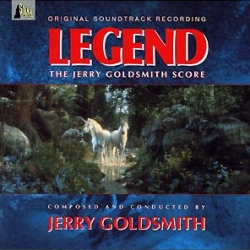
LEGEND – Jerry Goldsmith, Tangerine Dream
 THROWBACK THIRTY
GREATEST SCORES OF THE TWENTIETH CENTURY
Original Review by Jonathan Broxton
Capitalizing on the enormous commercial success of Alien in 1979, and the critical acclaim afforded to Blade Runner in 1982, director Ridley Scott left the world of hard science fiction for his next film, Legend, which instead embraced the mystical world of high fantasy. A sylvan story of elves and goblins, unicorns and fairies, princesses and demons, Legend was a hugely ambitious exploration of northern European folk tales and myths, woven together by screenwriter William Hjortsberg. The film starred Tom Cruise as Jack, a forest-dwelling young boy who is chastely in love with a young princess, Lili, played by Mia Sara. Together they explore their beautiful woodland home, but all is not well in the world; the Lord of Darkness (Tim Curry) has sensed the presence of two unicorns in the forest, and sent three of his goblin minions to kill them and steal their horns. Circumstances result in Lili inadvertently leading the goblins to the unicorns, and when their horns are stolen, the world is plunged into a dark, wintry nightmare from which there appears to be no return – but Jack has other ideas, and resolves to infiltrate the evil palace where Darkness resides and restore the world to its former glory. Read more…
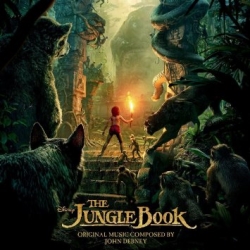
THE JUNGLE BOOK – John Debney
 Original Review by Jonathan Broxton
Rudyard Kipling’s 1894 collection of short stories, The Jungle Book, has been a source of inspiration for filmmakers for decades. A series of stories about the adventures of the man-cub Mowgli, who is raised by wolves in the jungle after being orphaned as a baby, the book chronicles his encounters with the good-natured bear Baloo, the wise panther Bagheera, the seductive and untrustworthy snake Kaa, a gang of monkeys who try to kidnap him, and the menacing tiger Shere Khan, while he learns important lessons about life and man’s relationship with nature. Prior to this year, the most popular and influential version of the story was the animated musical made by Walt Disney in 1967, which introduced a whole generation to the story via popular songs like “The Bare Necessities” and “I Wanna Be Like You”. For this new live-action version, director Jon Favreau returned to the slightly more serious tone of Kipling’s original stories, but followed much of the basic plot of the animated film, while simultaneously creating staggering photo-real environments for Mowgli to play in, and astonishing CGI animals for Mowgli to interact with. The film stars 12-year old newcomer Neel Sethi as Mowgli, and features voice talent that includes Bill Murray as Baloo, Ben Kingsley as Bagheera, Idris Elba as Shere Khan, Scarlett Johansson as Kaa, and Christopher Walken as King Louie, leader of the Bandar-Log monkeys. Read more…
LIMELIGHT – Charles Chaplin, Raymond Rasch, Larry Russell
 MOVIE MUSIC UK CLASSICS
Original Review by Craig Lysy
Charles Chaplin produced, directed, wrote the screenplay and starred in Limelight, a story is set in London, 1914 on the eve of World War I. Calvero (Chaplin) is a famous stage clown who has fallen on bad times and descended into alcoholism. By chance he comes to rescue Terry (Claire Bloom) from herself, as she was poised to commit suicide. He shelters her and helps to heal her, and in so doing, heals himself, regaining his confidence and will to live. Terry falls in love with Calvero, but he believes the age difference is wrong, and that the younger Neville (Sydney Chaplin) would be a more appropriate match. And so Calvero sets off on his own, becoming a street entertainer. Terry rebounds and lands a leading role in a stage production. She is thankful for her new life and so invites Calvero to return to his first love, the stage. He agrees, and reunites with his old partner (Buster Keaton) and brings the house down with a magnificent performance. At this grand moment, tragedy strikes as he succumbs to a heart attack during the second act while Terry is performing. The film is a a truly remarkable achievement, with a stellar cast that supports his passion project. Noteworthy is the fact that in the final musical number we bear witness to the only time Chaplin and Keaton – two iconic actors – ever performed together. Read more…
PEE-WEE’S BIG HOLIDAY – Mark Mothersbaugh
 Original Review by Jonathan Broxton
Looking back at it now, thirty years into the future, it’s astonishing when you realize just what an influential film Pee-Wee’s Big Adventure was. It launched the career of Paul Reubens, the comedian and writer behind the Pee-Wee Herman character, which led to a second Pee-Wee film, and a classic Saturday morning kids show. It launched the career of director Tim Burton – we all know what happened to him. It also launched the second career of composer Danny Elfman – we all know what happened to him, too. Reubens’s career stalled after a rather sordid run-in with the law in 1991, but gradually he has been working his way back, initially as a jobbing actor, and now, after a successful Broadway show, resurrecting the Pee-Wee character for a third ‘big-screen’ film, Pee-Wee’s Big Holiday, produced by Netflix, and directed by John Lee. The film sees Pee-Wee being encouraged by his friend, actor Joe Mangianello (playing himself), to go on his first ever vacation to New York; on the way, Pee-Wee manages to get himself involved in a number of ridiculous adventures, crossing paths with a trio of female bank robbers, a travelling disguise kit salesman, a farmer who wants him to marry one of his nine daughters, the owner of a flying car, and the members of an Amish community. Read more…
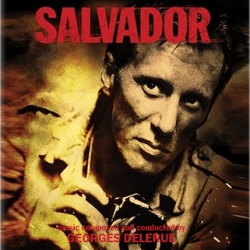
SALVADOR – Georges Delerue
 THROWBACK THIRTY
Original Review by Jonathan Broxton
Salvador is a hard-hitting war drama written and directed by Oliver Stone, starring James Woods as photographer Richard Boyle. Boyle is a hard-drinking, drug-using, arrogant son of a bitch, whose irascible attitude has rendered him practically unemployable by the world’s major news agencies. Needing money, Boyle and his friend, former DJ Rock (James Belushi), head to El Salvador thinking they can earn some quick cash shooting footage of the country’s under-reported civil war. However, once they arrive in the country, they quickly realize that the situation is much more dangerous than the rest of the world believes, with government-sponsored death squads roaming the streets, and simmering violence bubbling under the surface of the already terrified populace. Having observed the actions of both the leftist guerrillas and the American-backed right wing paramilitary, Boyle becomes increasingly convinced that El Salvador is a disaster starting to happen, and decides that it’s time to get out; but he has fallen in love with a woman named Maria (Elpidia Carrillo), and he doesn’t want to leave her or her children behind. Read more…
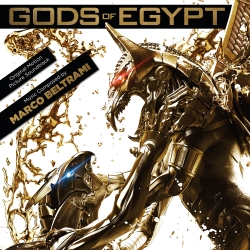
GODS OF EGYPT – Marco Beltrami
 Original Review by Jonathan Broxton
For quite a long time I considered Alex Proyas to be one of the best ‘serious sci-fi’ directors working in the film business. From the gothic darkness of The Crow, to the time-bending mind-fuck of Dark City, to the examination of Isaac Asimov’s Laws of Robotics in I Robot, Proyas’s films have been challenging and thought provoking and enjoyable, not an easy triumvirate of achievements to successfully attain, especially across multiple projects. With this in mind, it was greatly disappointing to read the reviews of his latest film, Gods of Egypt, which called it everything from “a colossal wreck” “completely lacking in appeal,” and “noisy, chaotic, and meaningless” to – worst of all – “boring”. This is especially surprising because it’s basic plot sounds fascinating: using the ancient mythology of Egyptian Gods as its starting point, the film stars Gerard Butler and Nicolaj Coster-Waldau as Set and Horus, two warring deities. Set, the God of Darkness, launches a coup during Horus’s coronation, and takes over the Egyptian empire, forcing Horus to join forces with a human named Bek (Brenton Thwaites) to defeat him. Read more…
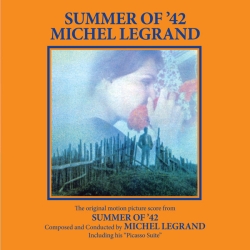
SUMMER OF ‘42– Michel Legrand
 MOVIE MUSIC UK CLASSICS
Original Review by Craig Lysy
Screenwriter Herman Raucher wrote his autobiographical script in 10 days as a tribute to his fallen comrade Oscy who lost his life in the Korean War. He was initially unable to sell the script to any studio, so it languished for many years until producer Robert Roth found a dusty copy lying in an agent’s office. He fell in love with it and resolved to bring this story to the big screen. He hired director Robert Mulligan (To Kill A Mockingbird) and decided to cast the parts of the boys with unknowns. Also, following in the steps of Love Story (1970) Raucher expanded the story into a book that was published as a prelude to the film. Well it became an instant hit and the film’s promotion had “Based on the national best seller” added to its advertisement. For the cast, Jennifer O’Neil was cast as Dorothy with the three boys Gary Grimes (Hermie), Jerry Houser (Oscy) and Oliver Conant (Benjie). Read more…
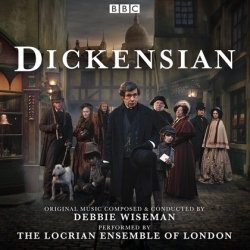
DICKENSIAN – Debbie Wiseman
 Original Review by Jonathan Broxton
Dickensian is a fascinating British drama series from the BBC, which re-imagines many of the numerous characters from Charles Dickens’s most famous works – A Christmas Carol, Great Expectations, Oliver Twist, Bleak House, Our Mutual Friend – and places them into a shared single setting in Victorian London. The plot of the series concerns Scotland Yard police inspector Bucket (Stephen Rea), and his investigation into the apparent murder of a prominent businessman, Jacob Marley, on Christmas Eve, an event which gradually draws many local figures into the plot. The series, which has an ensemble cast that includes Peter Firth, Tuppence Middleton, Pauline Collins, Caroline Quentin, and many others, was a critical success when it aired during the early months of 2016, and looks likely to be renewed for a second season in 2017. Read more…
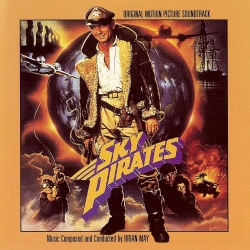
SKY PIRATES – Brian May
 THROWBACK THIRTY
Original Review by Jonathan Broxton
Sky Pirates is an action-adventure film directed by Colin Eggleston, which has been described as ‘the Australian Raiders of the Lost Ark’. John Hargreaves stars as Lt. Dakota Harris, a Royal Air Force Pilot during World War II, who is entrusted by the Australian military with a mysterious object which apparently can be used to travel through time, and which they do not want to fall into the hands of the Nazis. Travelling with several companions, Harris starts on the journey to the United States, intending to the deliver the object to the Americans for safekeeping, but somewhere over the Pacific Ocean their plane is caught in a supernatural storm – apparently caused by the object – which transports them to a parallel dimension filled with the wreckage of military vehicles from numerous different wars. After escaping from this phantom zone, Harris shockingly finds himself being accused of treason by one of his comrades, General Savage (Max Phipps); with the help of a beautiful minister’s daughter, Melanie (Meredith Phillips), Harris must escape from military custody, and uncover the true secret of the object. Read more…
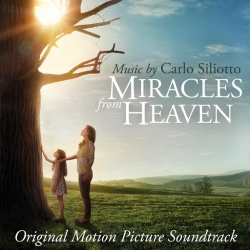
MIRACLES FROM HEAVEN – Carlo Siliotto
 Original Review by Jonathan Broxton
There has been an interesting resurgence recently of films made by directors telling religious stories that promote Christianity in a strong, almost evangelical, light; contemporary films like God’s Not Dead and Heaven is for Real have done decent business at the box office, while more traditional period films like Son of God, and recently Risen and The Young Messiah, continue to prove to be a lure for believers. The latest of these contemporary Christian films is Miracles From Heaven, directed by Patricia Riggen, which tells the apparently true story of a young Texas girl named Anna (Kylie Rogers), who is suffering with a rare, incurable, terminal disorder that leaves her unable to digest food. Anna’s mother (Jennifer Garner) and father (Martin Henderson) have struggled unsuccessfully for years to find a cure for Anna’s illness, but everything suddenly changes when she accidentally falls out of a tree and suffers a serious head injury. When she wakes up, Anna claims that she ‘visited heaven’ while she was unconscious, while even more amazingly her doctor (Eugenio Derbez) reveals that, following the accident, Anna is beginning to show signs of recovering from her fatal condition. Read more…
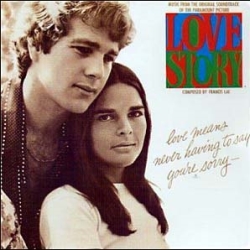
LOVE STORY – Francis Lai
 MOVIE MUSIC UK CLASSICS
Original Review by Craig Lysy
Producer Howard Minsky and Paramount Studios saw opportunity when he read Erich Segal’s “Love Story” script and secured the film rights. They also asked him to publish a novel in advance for the film so as to cultivate public interest. This proved to be a masterstroke, as the Valentine’s Day publication lead to a national best seller. Arthur Hiller was hired to direct and he brought in a fine cast, which included Ryan O’Neal (Oliver Bartlet IV), Ali McGraw (Jenny Cavalleri), Ray Milland (Oliver Barrett III), Katherine Balfour (Mrs. Barrett), John Marley (Phil Cavalleri) and Tommy Lee Jones (Hank Simpson) in his film debut. Read more…
RACE – Rachel Portman
 Original Review by Jonathan Broxton
Jesse Owens is generally considered to be one of the greatest American track and field athletes in history. Born in Alabama in 1913, Owens suffered as a result of the racist and segregationist political climate that all African-Americans endured at that time, but it was his athletic prowess that brought him fame. He broke three world records in less than an hour while competing for Ohio State University at a meet in Michigan in 1935, and subsequently represented the United States at the 1936 Summer Olympic Games in Berlin. In open defiance of German chancellor Adolf Hitler, who intended to use the games as a showpiece to promote his philosophy of Aryan physical perfection, Owens won four gold medals in the 100m, 200m, 4x100m relay, and long jump, cementing his place in sporting history. Director Stephen Hopkins’s film Race – a multi-meaning title if ever there was one – is a fairly straightforward biopic of Owens’s life, starring Stephan James, Jason Sudeikis, Jeremy Irons, William Hurt, and Carice van Houten. Read more…
Terry Plumeri, 1944-2016
 Composer, conductor and double bassist Terry Plumeri died at his home in Dunnellon, Florida, on March 31, 2016, at the age of 71.
A versatile musician whose career encompassed jazz, classical music and more than 50 film and television scores, Plumeri was best known to film-music listeners for Black Eagle, Sometimes They Come Back, One False Move and Death Wish V: The Face of Death.
John Terryl Plumeri was born in Greensboro, North Carolina, on November 28, 1944, and grew up in Tampa, Florida. He began studying music at ten and took up the double bass while attending Chamberlain High School. He subsequently studied at the Manhattan School of Music with Robert Brennand, principal bassist of the New York Philharmonic, and served in the United States Air Force Band. While working as a bassist with the National Symphony Orchestra in Washington, D.C., he also studied composition and conducting with Antal Doráti.
Plumeri initially established himself as a jazz musician. During the late 1960s and 1970s he performed with artists including Herbie Hancock, Wayne Shorter, Cannonball Adderley, Yusef Lateef and Quincy Jones, and toured and recorded extensively with Roberta Flack between 1969 and 1974. He played both acoustic and electric bass on albums including Chapter Two, Quiet Fire and the Grammy-winning Killing Me Softly, for which he also wrote “Conversation Love.” His lyrical approach to the bowed bass became one of his particular musical trademarks. Read more…
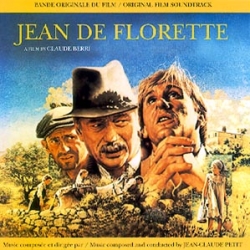
JEAN DE FLORETTE – Jean-Claude Petit
 THROWBACK THIRTY
Original Review by Jonathan Broxton
Jean de Florette is one of the most critically acclaimed and important French films of the 20th century. Directed by Claude Berri and adapted from the novel by Marcel Pagnol, it stars three of France’s most prominent actors of the era – Gérard Depardieu, Daniel Auteuil, and Yves Montand. Montand and Auteuil play César and Ugolin, uncle and nephew, impoverished farmers in Provence shortly after the end of World War I. They covet the neighboring farm owned by the Cadoret family, especially its abundant water, provided by a natural spring on the property. When ownership of the Cadoret farm transfers to Jean (Depardieu), a city tax collector and hunchback with a young daughter named Manon, César and Ugolin see an opportunity to seize the farm for themselves, and embark on a series of schemes designed to turn the community against Jean and drive him away. The film was a massive success, and saw audiences connecting with its universal themes of jealousy and greed, while simultaneously being charmed by cinematographer Bruno Nuytten’s gorgeous photography of the French landscape. The film received eight César and ten BAFTA nominations, winning a total of five, and was largely responsible for the tourist boom in Provence during the 1980s and 90s, especially among the British. Read more…

Shop at the Movie Music UK Store

Member of the


