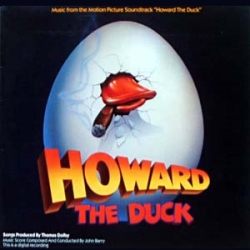
HOWARD THE DUCK – John Barry
 THROWBACK THIRTY
Original Review by Jonathan Broxton
Howard the Duck was one of the most critically lambasted films of 1986, and probably represents the low point of George Lucas’s entire career as a filmmaker. The film was adapted from a cult comic book by Steve Gerber and Val Mayerik by screenwriters Willard Huyck and Gloria Katz, and was originally intended to be an animated film, but became live-action because of a contractual obligation, a decision which rendered much of the original comic book’s surrealist imagery difficult to convey. Despite being about a walking, talking, anthropomorphic duck, the comic book was essentially a satire on the human condition; desperate to appeal to a larger audience, Huyck and Katz stripped away most of Gerber’s scathing social commentary and adult story elements, and reduced it to an absurdist action-buddy-comedy – as such, it failed to satisfy fans of the original comic, nor did it have any real crossover appeal with the general public, and unsurprisingly it failed miserably at the box office. Read more…
STAR TREK BEYOND – Michael Giacchino
 Original Review by Jonathan Broxton
Star Trek Beyond is the third film of the ‘rebooted’ Star Trek series, and the thirteenth film overall since the original Star Trek: The Motion Picture in 1979. Directed by Fast and the Furious veteran Justin Lin – taking over the helm from J. J. Abrams – the film sees the crew of the starship Enterprise half way through their five year mission to explore the farthest reaches of space, under the command of Captain James T. Kirk (Chris Pine). After briefly docking at the new starbase Yorktown, the Enterprise is dispatched to conduct a rescue mission inside a previously uncharted nebula, but falls victim to a surprise attack by a lizard-like warrior named Krall (Idris Elba), and crash-lands on a mysterious world. Left stranded in a rugged wilderness, Kirk, Spock (Zachary Quinto), McCoy (Karl Urban), Scotty (Simon Pegg), and the rest of the crew must now battle a deadly alien race while trying to find a way off the hostile planet. Read more…
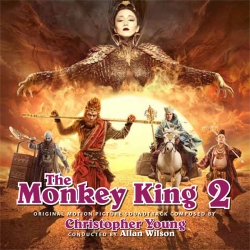
THE MONKEY KING 2 – Christopher Young
 Original Review by Jonathan Broxton
Xi You Ji Zhi: Sun Wukong San Da Baigu Jing – known in English as The Monkey King 2 – is the second in the series of Chinese films based on “Journey to the West,” one of the four great classical novels of Chinese literature, which was written in the 16th century during the Ming Dynasty by Wu Cheng En. Directed by Cheang Pou-Soi, the film continues the adventures of Sun Wukong, a monkey born from a magical stone who acquires supernatural powers. Following the events of the previous film, when he rebelled against heaven and was subsequently imprisoned under a mountain for 500 years, Sun Wukong (Aaron Kwok) is released and becomes the companion of a monk named Tang Sanzang (Shaofeng Feng), who is on a journey to India on a quest for enlightenment. However, their journey is fraught with danger, not least from Baigujing, White Bone Spirit (Gong Li), a demon who seeks immortality, and believes Tang Sanzang has the power to grant it to her. Read more…
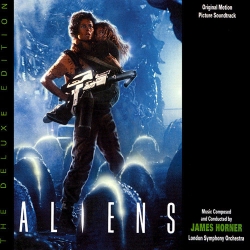
ALIENS – James Horner
 THROWBACK THIRTY
GREATEST SCORES OF THE TWENTIETH CENTURY
Original Review by Jonathan Broxton
Ridley Scott’s 1979 sci-fi horror masterpiece Alien was a watershed landmark, a seminal film that forever changed the genre, so it was something of a surprise that a sequel was not forthcoming straight away. With behind-the-scenes wrangling between executives at 20th Century Fox, and a script that languished in development hell, it actually took almost seven years for Aliens to hit the big screen, but with hindsight it was more than worth the wait. For me, Aliens is one of the greatest action films ever made; a blockbuster war movie allegory about the Vietnam War, inspired by several seminal works in classic sci-fi literature, written and directed by the young and hungry auteur behind the 1984 hit The Terminator. In James Cameron’s capable hands, Aliens became a masterpiece of tension and horror, pulsating adventure, and noble sacrifice. Read more…
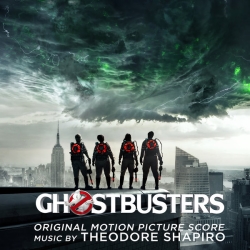
GHOSTBUSTERS – Theodore Shapiro
 Original Review by Jonathan Broxton
Plans for a third Ghostbusters movie have been floating around Hollywood since the 1990s, but for a variety of reasons a true continuation of the story never materialized. Incomplete screenplays, lack of money, and reluctance from the stars of the original film – Bill Murray, especially – frustrated fans for decades, and the death of original cast member Harold Ramis in 2014 seemingly put an end to the possibility. However, in early 2015, it was unexpectedly announced that a complete reboot of the franchise had been green-lit, with Paul Feig directing a screenplay by Katie Dippold, and a brand new all-female leading cast comprising Melissa McCarthy, Kristen Wiig, Leslie Jones, and Kate McKinnon. That there was uproar about this is an understatement; almost from the moment the project was announced, there was a social media backlash, much of it aimed, somewhat misogynistically, at the fact that the leads were women, combined with the fact that the story completely ignored the characters and heritage of the first two films. Read more…
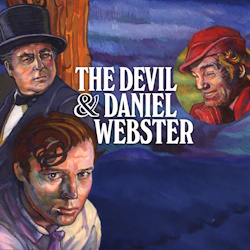
THE DEVIL AND DANIEL WEBSTER – Bernard Herrmann
 MOVIE MUSIC UK CLASSICS
Original Review by Craig Lysy
1941 would prove to be a banner year for Bernard Herrmann as he was honored with two Academy Award nominations. Having completed Citizen Kane, what many believe to be his Magnum Opus, RKO Studios tasked him with a new project The Devil and Daniel Webster for director William Dieterle. Note that the studio later changed the title to “All That Money Can Buy”. From both Herrmann’s and Dieterle’s perspectives, the collaboration was collegial, and in the end, The Devil and Daniel Webster triumphed over Citizen Kane, earning Herrmann his only Academy Award win. Herrmann’s entry into the realm of film score music atop two nominated scores and an Oscar win was an outstanding achievement. Herrmann would later relate that he believed Citizen Kane was a superior score in that it was more original and better integrated into the film’s narrative – your author agrees. Read more…
SWISS ARMY MAN – Andy Hull, Robert McDowell
 Original Review by Jonathan Broxton
One of the strangest films in recent memory, Swiss Army Man is a surreal comedy-drama written and directed by two ‘Daniels’, Daniel Kwan and Daniel Scheinert. The film stars Paul Dano as Hank, a depressed young man who has been stranded on an island for an indeterminate length of time, and who has decided to commit suicide. However, before he can end it all, Hank’s life is saved when he finds a dead body (Daniel Radcliffe) on the beach; incredibly, Hank discovers that the gases inside the decomposing body – who he has named Manny – are so powerful and potent, he can literally ride him like a jet-ski, thrust across the water by Manny’s forceful farts. After they wash up on a remote part of the mainland, Hank is even more astounded to discover that Manny is capable of speech, although he has no memory of who he was before he died. So begins the story of an incredible friendship, as Hank discovers that Manny has even more incredible powers, including the ability to vomit fresh water, the ability to shoot projectiles from his mouth, and – best of all – erections which act like a compass guiding him home. In return, Hank begins to educate Manny about life itself, imparting words of wisdom on love and friendship, as they slowly make their way back towards civilization. Read more…
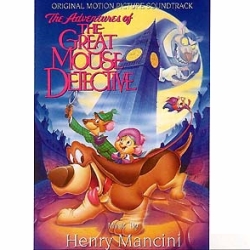
THE GREAT MOUSE DETECTIVE – Henry Mancini
 THROWBACK THIRTY
Original Review by Jonathan Broxton
Looking back from the vantage point we have now, thirty years into the future, it’s difficult to picture just how much trouble Walt Disney’s animated feature film department was in during the 1980s. A world away from their heyday of Snow White, Bambi, and Cinderella, Disney’s output in the late 1970s and early 1980s comprised some of their most forgettable works, ranging from The Rescuers in 1977 to The Fox and the Hound in 1981, The Black Cauldron in 1985, and Oliver & Company in 1988 – a year before everything changed with the release of The Little Mermaid in 1989. Released right in the middle of this lackluster phase, The Great Mouse Detective was Disney’s attempt to capture the essence of Sherlock Holmes in an animated film. Based on the popular children’s books by Eve Titus, the film is set in a version of Victorian England populated by anthropomorphic mice and rats, and follows the adventures of the famous detective Basil of Baker Street, who is hired by a young mouse named Olivia to investigate the disappearance of her toymaker father, who has been kidnapped by the evil Professor Ratigan as part of a fiendish plot involving robot clones and the Queen of England. The film was directed by Ron Clements, Burny Mattinson, David Michener, and John Musker, and features the voice talents of Barrie Ingham and Vincent Price, among others. Read more…
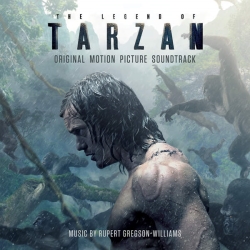
THE LEGEND OF TARZAN – Rupert Gregson-Williams
 Original Review by Jonathan Broxton
There have been dozens of movies and TV shows based on Edgar Rice Burroughs’s classic Tarzan story since he was first introduced in literature in 1912. This latest cinematic adaptation, directed by Harry Potter alumnus David Yates, could almost be seen as a sequel to the excellent 1984 film Greystoke, which told the chronological origins of Tarzan. In this new story, Swedish actor Alexander Skarsgård stars as John Clayton, the Earl of Greystoke, who has abandoned his Tarzan name and settled fairly comfortably into the life of an English aristocrat. Clayton is convinced to return to Africa by American lawyer George Washington Williams (Samuel L. Jackson) to help investigate possible acts of slavery against the native population by representatives of King Leopold II of Belgium; upon their return Clayton and his wife Jane (Margot Robbie) encounter the ruthless Leon Rom (Christophe Waltz), King Leopold’s emissary in the Congo, who is soon revealed to be using slaves to extract diamonds and build railroads on behalf of the Belgians. However, unknown to Clayton, Rom has an additional ulterior motive with links to his past, and before long Clayton is forced to adopt his Tarzan persona once more, interacting with the animals of the jungle to save his wife and free the slaves. Read more…
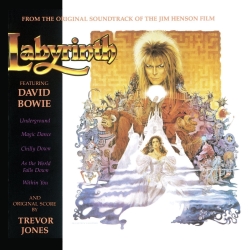
LABYRINTH – Trevor Jones, David Bowie
 THROWBACK THIRTY
Original Review by Jonathan Broxton
Labyrinth is a fantasy for children, an allegory about growing up, transitioning from teenager to adult, and assuming responsibility, dressed up as an adventure with monsters and magic. Written by Monty Python’s Terry Jones and directed by Jim Henson, the film stars Jennifer Connelly as Sarah, a typical American teenager, frustrated at having to baby-sit her young brother Toby. One night when Toby won’t stop crying, Sarah rashly wishes for Jareth, the Goblin King, to take the baby away – and, shockingly, he does. Jareth, played with dangerous sexuality by David Bowie, magically transports Sarah to his kingdom and tells her that she has thirteen hours to navigate her way through his labyrinth and rescue Toby, or he will be transformed into a goblin. As she makes her way through the maze, Sarah is both helped and hindered by numerous characters, including a cowardly dwarf named Hoggle, a kind-hearted monster named Ludo, and a courageous but rather dimwitted fox named Sir Didymus. The film is visually and conceptually impressive, taking inspiration from artists and authors as varied as M. C. Escher, Maurice Sendak, and Frank Baum, but it was not a success at the time of its release, only becoming a cult hit on VHS in subsequent years. Read more…
THE BFG – John Williams
 Original Review by Jonathan Broxton
Roald Dahl’s The BFG has been one of the most beloved stories of British children’s literature since it was first published in 1982. It tells the story of a young girl named Sophie, who lives in an orphanage in London, and who one night sees a giant blowing something via a trumpet-like object into a bedroom window down the street from where she lives. Fearing that his existence will be revealed, the giant kidnaps Sophie and takes her far away to his home in Giant Country. However, rather than being a fearsome monster, the giant turns out to be a Big Friendly Giant – a “BFG” – and the two quickly become friends. Unfortunately, a dozen or so other giants also live in Giant Country, and these giants are fearsome cannibals who eat children and bully the BFG, who is the smallest of their kind. Having witnessed the cruelty of the giants first hand, Sophie convinces the BFG to help her hatch a plan to stop them and their child-chomping ways once and for all. The story was originally made into a much-loved animated film in 1989 featuring the voice of the great David Jason, and has now been given the Hollywood live-action treatment, with Oscar-winning actor Mark Rylance in motion capture as the BFG, newcomer Ruby Barnhill as Sophie, and Steven Spielberg in the director’s chair. Read more…
RICHARD ADDINSELL – Fathers of Film Music, Part 16
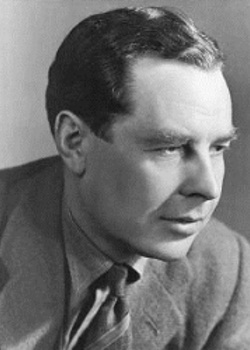 Article by Craig Lysy
Born: 13 January 1904, London, England.
Died: 14 November 1977.
Richard Stewart Addinsell was the youngest of two sons born to business accountant Arthur Addinsell and his wife, Annie Beatrice Richards. His mother was so possessive and protective of young Richard that he was kept from public school and instead educated at home. Although fascinated by music, he was enrolled by his family at Hertford School, Oxford to pursue a degree in Law. He found his studies uninspiring and after two terms left, never to return. On his own initiative, he enrolled in the Royal College of Music, where he hoped to pursue his true passion – music. Yet he was not a good student and soon left the college to express his talent in the real world. In 1926 he began collaborating with writer Noel Grey, writing songs for the Andre Charlot revue to support himself. This led to travel to the continent where he visited the major musical and theatrical cultural centers of the day, including Berlin and Vienna. By chance he came to meet singers Gertrude Lawrence and Clemence Dane, with whom he began a fruitful collaboration, which led to success theatrically. He collaborated with Dane to provide incidental music for Adam’s Opera in 1929, and then in 1932 an Eva Le Gallienne adaptation of the Lewis Carroll’s alice in Wonderland tale. These successes were fortuitous in that their notoriety opened an amazing door – film work. Read more…
ME BEFORE YOU – Craig Armstrong
 Original Review by Jonathan Broxton
A romantic comedy-drama based on the popular novel by Jojo Moyes, Me Before You stars Game of Thrones’s Emilia Clarke, taking a break from riding dragons to play Louisa, an eccentric and hopelessly optimistic young woman who is hired by a wealthy family to care for their son Will (Sam Claflin), who was paralyzed in a motorbike accident. Successful, handsome and adventurous before his accident, Will has become bitter and sullen in the time since, alienating his parents (Janet McTeer and Charles Dance), and causing endless carers to quit due to his hostility. However, despite some initial misgivings, Louisa manages to connect with Will and, unexpectedly, the two begin to fall in love – until Will drops a bombshell on Louisa that causes her to re-examine her life. The film is the cinematic debut of acclaimed London theatre director Thea Sharrock, and has an original score by Scottish composer Craig Armstrong. Read more…
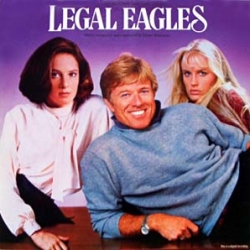
LEGAL EAGLES – Elmer Bernstein
 THROWBACK THIRTY
Original Review by Jonathan Broxton
Legal Eagles is a fun comedy-drama-thriller written by Jim Cash and Jack Epps, and directed by Ivan Reitman. It stars Robert Redford as New York assistant district attorney Tom Logan, who teams up with his rival, public defender Laura Kelly (Debra Winger), after he becomes convinced that her client, eccentric art dealer Chelsea Dearden (Daryl Hannah), is genuinely innocent of the crime she is accused of committing. As Tom and Kelly delve deeper into the case they find themselves becoming embroiled in a web of mystery, cover-ups, and police corruption, dating back to the night 20 years previously when Chelsea’s father was killed in a mysterious fire; not only that, and despite their own better judgment, the two lawyers find themselves developing romantic feelings for each other. The film is a breezy, enjoyable caper, with Redford and Winger’s relationship clearly inspired by the sexual tension between Spencer Tracy and Katharine Hepburn, and was one of the box office successes of 1986. Read more…
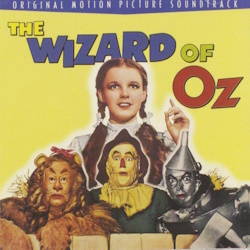
THE WIZARD OF OZ – Herbert Stothart, Harold Arlen, E. Y. Harburg
 GREATEST SCORES OF THE TWENTIETH CENTURY
Original Review by Craig Lysy
Following the enormous commercial success of Walt Disney’s “Snow White And The Seven Dwarfs” (1937), MGM Studio Executive Louis Mayer was determined to cash in and duplicate its success. He found the story he felt was needed and purchased the rights to L. Frank Baum’s novel, “The Wonderful Wizard of Oz” (1900). Noel Langley, Florence Ryerson and Edgar Allan Woolf were tasked with writing the screenplay. Veteran director Victor Fleming was hired for the project and he assembled a cast, which is now legend; Judy Garland (Dorothy), Frank Morgan (Professor Marvel/Wizard of Oz), Ray Bolger (Hunk/Scarecrow), Jack Haley (Hickory/Tin Man), Bert Lahr (Zeke/Cowardly Lion), Billie Burke (Glinda) and Margaret Hamilton (Miss Gulch and the Wicked Witch of the West). Read more…

Shop at the Movie Music UK Store

Member of the


