Archive
Remembering Johnny Green, 1908-1989
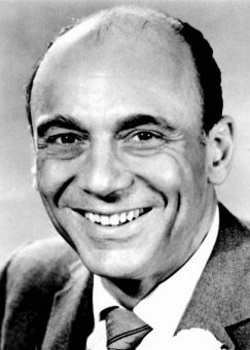 Composer, arranger, conductor and songwriter Johnny Green died ten years ago today, on May 15, 1989, at his home in Beverly Hills, at the age of 80. Green, who had suffered a stroke two years earlier, died from pulmonary edema.
One of the dominant musical figures of Hollywood’s golden age, he served for a decade as music director at MGM, received numerous Academy Award nominations and won five Oscars, four for his work on major film musicals and another as producer of a musical short.
John Waldo Green was born in New York City on October 10, 1908. A musical prodigy, he entered Harvard at 15 and graduated with a degree in economics, briefly working on Wall Street before abandoning finance for music. During the late 1920s and 1930s he became a successful songwriter, arranger, pianist and bandleader. His greatest song, “Body and Soul,” written in 1930, became one of the most enduring standards in jazz, while other successes included “Out of Nowhere” and “I Cover the Waterfront.”
Green’s involvement with films began at Paramount’s Astoria studios in New York, but his Hollywood career took off after he joined MGM during the 1940s. He worked as conductor, arranger and composer before becoming the studio’s music director in 1949, a position he held through the 1950s. In that capacity Green supervised and conducted the music for many of MGM’s most lavish productions, working closely with orchestrators such as Conrad Salinger and helping establish the exceptionally rich orchestral sound associated with the studio’s post-war musicals. Read more…
Academy Award Winners 1998
 The Academy of Motion Picture Arts and Sciences (AMPAS) have announced the winners of the 71st Academy Awards, honoring the best in film in 1998.
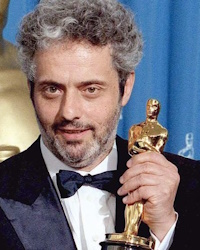
In the Best Original Dramatic Score category, Italian composer Nicola Piovani won the award for his score for Roberto Benigni’s Life Is Beautiful. In his acceptance speech, Piovani said:
It’s impossible for me in this moment [to] speak about my emotion in English. I can tell just: Thank you to the jury. Thank you, the Academy. Thank you, Roberto.
The other nominees for Best Original Dramatic Score were David Hirschfelder for Elizabeth, Randy Newman for Pleasantville, John Williams for Saving Private Ryan, and Hans Zimmer for The Thin Red Line.
In the Best Original Comedy Score category composer Stephen Warbeck won for his score for the Elizabethan-era comedy Shakespeare in Love. In her acceptance speech, Warbeck said:
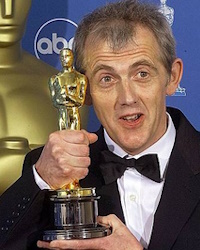 It’s a very, very exciting moment. Thank you very much. Especially exciting because John Madden is such a fantastically stimulating person to collaborate with. So thank you, John. Thank you to the Academy. Thank you to Sarah, Jessica, Herbert, Matilda. And thank you to my mother and father. Thank you to the lovely producers, without whom we wouldn’t be here or the people involved in this. Thank you to William Shakespeare, Bertolt Brecht, and The Kippers, for inspiring me to write music for the theater and other things. And thank you, thank you to all the friends who worked on the music, without whom it would just be squiggles on a piece of paper: John Parricelli, Eleanor Alberga, Chris Dibble, Nick Ingman, Martin Robinson, Paul, Gary and Frank. Thank you very much indeed. This is lovely. Thank you.
The other nominees were Randy Newman for A Bug’s Life; Matthew Wilder, David Zippel and Jerry Goldsmith for Mulan; Marc Shaiman for Patch Adams; and Stephen Schwartz and Hans Zimmer for The Prince of Egypt.
In the Best Original Song category, composer and lyricist Stephen Schwartz won for “When You Believe” from The Prince of Egypt performed by Whitney Houston and Mariah Carey. Schwartz, however, was not present to accept the award, as he was in New York rehearsing a show.
The other nominees were Diane Warren for “I Don’t Want to Miss a Thing” from Armageddon; Carole Bayer Sager, David Foster, Tony Renis and Alberto Testa for “The Prayer” from Quest for Camelot; Allison Moorer and Gwil Owen for “A Soft Place to Fall” from The Horse Whisperer; and Randy Newman for “That’ll Do” from Babe: Pig in the City.
Ernest Gold, 1921-1999
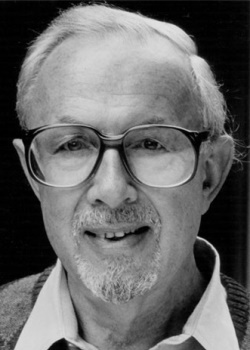 Composer and conductor Ernest Gold died in Santa Monica, California, on March 17, 1999, at the age of 77, following a stroke.
An Austrian-born composer who became one of Hollywood’s leading musical voices during the 1950s and 1960s, Gold wrote scores for more than 100 film and television productions. He received four Academy Award nominations, winning for Otto Preminger’s Exodus, and enjoyed an especially fruitful collaboration with director Stanley Kramer.
Gold was born Ernst Sigmund Goldner in Vienna on July 13, 1921, into a musical family and began composing while still a child. Following the Nazi annexation of Austria, his family emigrated to the United States in 1938, settling in New York. Gold initially wrote popular songs while continuing his musical studies, and eventually moved to Hollywood, where he began working on low-budget features while also orchestrating and conducting for other composers.
After a decade of smaller assignments, Gold’s career accelerated in the late 1950s. He worked with Stanley Kramer on The Defiant Ones (1958) and then composed On the Beach (1959), Kramer’s bleak drama about the aftermath of nuclear war. Gold ingeniously incorporated the Australian song “Waltzing Matilda” throughout the score, transforming the familiar melody from something nostalgic and comforting into an increasingly tragic reminder of a world facing extinction. The score earned him his first Academy Award nomination and won the Golden Globe for Best Original Score.
Gold’s greatest success came the following year with Otto Preminger’s epic Exodus (1960), starring Paul Newman. Its expansive main theme, combining sweeping romanticism with musical gestures intended to evoke the film’s Israeli setting, became one of the most popular film themes of its era. The soundtrack was an enormous commercial success, the theme was recorded by numerous artists, and Gold won the Academy Award for Best Dramatic or Comedy Score as well as two Grammy Awards. Exodus remains by far his best-known work and established him internationally as a major film composer. Read more…
BAFTA Nominations 1998
 The British Academy of Film and Television Arts (BAFTA) has announced the nominations for the 52nd British Academy Film Awards, honoring the best in film in 1998.
In the Best Original Music category, which is named in memory of the film director Anthony Asquith, the nominees are:
- DAVID HIRSCHFELDER for Elizabeth
- BARRINGTON PHELOUNG for Hilary and Jackie
- STEPHEN WARBECK for Shakespeare In Love
- JOHN WILLIAMS for Saving Private Ryan
These are the first nominations for Pheloung and Warbeck. It is the third nomination for Hirschfelder, and the ninth nomination for Williams. Hirschfelder previously won for Strictly Ballroom in 1992. Williams previously won for Jaws and The Towering Inferno in 1975, Star Wars in 1978, The Empire Strikes Back in 1980, E.T. the Extra-Terrestrial in 1982, Empire of the Sun in 1988, and Schindler’s List in 1993.
The winners of the 52nd BAFTA Awards will be announced on April 11, 1999.
Academy Award Nominations 1998
 The Academy of Motion Picture Arts and Sciences (AMPAS) have announced the nominations for the 71st Academy Awards, honoring the best in film in 1998.
In the Best Original Dramatic Score category, the nominees are:
- DAVID HIRSCHFELDER for Elizabeth
- RANDY NEWMAN for Pleasantville
- NICOLA PIOVANI for Life is Beautiful
- JOHN WILLIAMS for Saving Private Ryan
- HANS ZIMMER for The Thin Red Line
In the Best Original Musical or Comedy Score category, the nominees are:
- JERRY GOLDSMITH, MATTHEW WILDER, and DAVID ZIPPEL for Mulan
- RANDY NEWMAN for A Bug’s Life
- MARC SHAIMAN for Patch Adams
- STEPHEN WARBECK for Shakespeare in Love
- HANS ZIMMER and STEPHEN SCHWARTZ for The Prince of Egypt
These are the first Oscar nominations for Piovani, Warbeck, Wilder, and Zippel, and is the second nomination for Hirschfelder. These are the 6th and 7th nominations for Newman, the 32nd nomination for Williams, the 5th nomination for Zimmer, the 17th nomination for Goldsmith, the 3rd nomination for Shaiman, and the 3rd nomination for Schwartz.
Goldsmith previously won for The Omen in 1976. Schwartz previously won for Pocahontas in 1996. Williams previously won for Fiddler on the Roof in 1971, Jaws in 1975, Star Wars in 1977, E.T. the Extra Terrestrial in 1982, and Schindler’s List in 1993. Zimmer previously won for The Lion King in 1994.
In the Best Original Song category, the nominees are:
- CAROLE BAYER SAGER, DAVID FOSTER, TONY RENIS, and ALBERTO TESTA for “The Prayer” from Quest for Camelot
- ALLISON MOORER and GWIL OWEN for “A Soft Place to Fall” from The Horse Whisperer
- RANDY NEWMAN for “That’ll Do” from Babe: Pig in the City
- STEPHEN SCHWARTZ for “When You Believe” from The Prince of Egypt
- DIANE WARREN for “”I Don’t Want to Miss a Thing” from Armageddon
The winners of the 71st Academy Awards will be announced on March 21, 1999.
Remembering Lionel Newman, 1916-1989
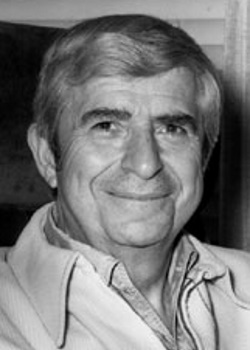 Composer, conductor, arranger and music executive Lionel Newman died in Los Angeles ten years ago today, on February 3, 1989, at the age of 73, following a heart attack.
A member of Hollywood’s extraordinary Newman musical dynasty, he spent more than four decades at 20th Century Fox, eventually becoming senior vice president of music. Newman received 11 Academy Award nominations and won for his adaptation of Hello, Dolly! in 1970.
Newman was born in New Haven, Connecticut, on January 4, 1916, the youngest of several musically gifted brothers, including composers Alfred and Emil Newman. He began working professionally while still a teenager, conducted for producer Earl Carroll and spent several years accompanying Mae West before following Alfred to Hollywood. In 1943 he joined 20th Century Fox as a rehearsal pianist and gradually progressed through the studio’s music department as conductor, composer, arranger and musical supervisor.
As an original composer, Newman worked on films including Cheaper by the Dozen (1950), Road House (1948), Love Me Tender (1956), The Proud Ones (1956), April Love (1957) and North to Alaska (1960). His song “Again,” written with Dorcas Cochran for Road House, became a popular standard, while Love Me Tender, Elvis Presley’s screen debut, demonstrated Newman’s ability to work comfortably within the changing musical world of 1950s Hollywood. Read more…
Golden Globe Nominations 1998
 The Hollywood Foreign Press Association (HFPA) has announced the nominations for the 56th Golden Globe Awards, honoring the best in film and American television of 1998.
In the Best Original Score category, the nominees are:
- BURKHARD DALLWITZ and PHILIP GLASS for The Truman Show
- JERRY GOLDSMITH for Mulan
- RANDY NEWMAN for A Bug’s Life
- JOHN WILLIAMS for Saving Private Ryan
- HANS ZIMMER and STEPHEN SCHWARTZ for The Prince of Egypt
These are the first nominations for Dallwitz and Schwartz. This is the second nomination for Glass, the second nomination for Newman, the second nomination for Zimmer, the ninth nomination for Goldsmith, and the seventeenth nomination for Williams. Zimmer previously won for The Lion King in 1994. Williams previously won for Jaws in 1975, Star Wars in 1977, and E.T. The Extra-Terrestrial in 1982
In the Best Original Song category, the nominees are:
- CAROLE BAYER SAGER, DAVID FOSTER, TONY RENIS, and ALBERTO TESTA for “The Prayer” from Quest for Camelot
- CHRIS DIFFORD, MARTI FREDERIKSEN, and MICK JONES for “The Flame Still Burns” from Still Crazy
- ALANIS MORISSETTE for “Uninvited” from City of Angels
- STEPHEN SCHWARTZ and KENNETH EDMONDS (BABYFACE) for “When You Believe” from The Prince of Egypt
- GORDON SUMNER (STING) for “The Mighty” from The Mighty
- MATTHEW WILDER and DAVID ZIPPEL for “Reflection” from Mulan
The winners of the 56th Golden Globe Awards will be announced on January 24, 1999.
John Addison, 1920-1998
 Composer John Addison died on December 7, 1998, at his home in Bennington, Vermont, after a short illness. He was 78.
John Mervyn Addison was born in Chobham, Surrey, England, in March 1920, and studied composition at the Royal College of Music. His education was interrupted by service in World War II, where he served with distinction in the British Army, seeing action in Normandy and the Netherlands, and participating in Operation Market Garden. The experience would later inform one of his best-known works: the rousing score to A Bridge Too Far (1977), a film about the Allied operation that Addison survived.
Addison’s breakthrough in film came in 1950 with the British thriller Seven Days to Noon, and over the course of the subsequent decade he wrote scores for popular British films such as The Man Between (1953), The Cockleshell Heroes (1955), Reach for the Sky (1956), Three Men in a Boat (1956), Lucky Jim (1957), A Taste of Honey (1961), and The Loneliness of the Long Distance Runner (1962).
It was Addison’s sparkling, Oscar-winning score for Tony Richardson’s Tom Jones in 1963 that brought him international recognition. The music’s vivacious period stylings, full of energy and wit, became a defining element of the film’s success. Following his Oscar win Addison split his time between the UK and Hollywood, and in the years thereafter he composed scores for films such as Smashing Time (1967), The Honey Pot (1967), The Charge of the Light Brigade (1968), Sleuth (1972, his second Oscar nomination), Swashbuckler (1976), and The Seven-Per-Cent Solution (1976), earning both critical acclaim and popular success. Notably, Addison also composed the replacement score for Alfred Hitchcock’s film Torn Curtain in 1966, which is now remembered as the film which ended Hitchcock’s relationship with Bernard Herrmann. Read more…
Paul Misraki, 1908-1998
 Composer and songwriter Paul Misraki died in Paris on October 29, 1998, at the age of 90.
One of the most prolific figures in French popular music and cinema, Misraki enjoyed a career spanning more than six decades, writing hundreds of songs and scores for well over 100 films. Although best remembered in France for a succession of enormously popular songs, film-music enthusiasts know him for works including And God Created Woman, Les Cousins, Le Doulos and Jean-Luc Godard’s science-fiction classic Alphaville.
Paul Misrachi was born in Constantinople, then part of the Ottoman Empire, on January 28, 1908, into a Jewish family of Italian ancestry. He spent part of his childhood in Bucharest before the family settled in Paris, where he received a classical musical education and developed an enthusiasm for jazz and popular song. His professional breakthrough came when he joined Ray Ventura’s celebrated orchestra, Les Collégiens, initially as a pianist and arranger and soon as one of its principal songwriters.
During the 1930s Misraki became one of France’s most successful popular composers. His songs included “Tout va très bien, Madame la Marquise,” “Qu’est-ce qu’on attend pour être heureux?” and “Ça vaut mieux que d’attraper la scarlatine,” witty and immediately memorable pieces that became closely associated with Ventura and the carefree musical culture of pre-war France. He also began composing for films, an activity which eventually became a major part of his career. Read more…
Remembering Ronald Stein, 1930-1988
 Composer Ronald Stein died in Los Angeles ten years ago today, on August 15, 1988, at the age of 58, from pancreatic cancer.
One of the defining musical voices of American low-budget genre cinema, Stein wrote music for more than 140 films during a career stretching from the mid-1950s into the 1970s. He was especially associated with American International Pictures and producer-director Roger Corman, bringing invention and musical seriousness to films including It Conquered the World, Attack of the Crab Monsters, Attack of the 50 Foot Woman, The Premature Burial and The Haunted Palace.
Louis Ronald Stein was born in St. Louis, Missouri, on April 12, 1930. His mother, Cecilia, had played piano for silent films and gave him his earliest musical training, encouraging both his musicianship and his fascination with cinema. He studied at Washington University in St. Louis, where he wrote for theatrical productions and worked with the Municipal Opera, before continuing his studies at Yale. His education was interrupted by military service, during which he composed and conducted shows for the U.S. Army Special Services.
After leaving the Army, Stein moved to Hollywood determined to become a film composer, despite receiving discouraging advice from established studio musicians. His opportunity came through Roger Corman, who hired him to score the western Apache Woman in 1955. Stein’s ability to compose and conduct quickly on tiny budgets led to a five-year contract with American International Pictures and an extraordinary period of productivity. Read more…
Edwin Astley, 1922-1998
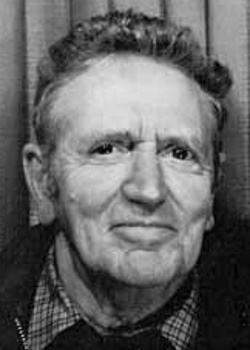 Composer, arranger and conductor Edwin “Ted” Astley died in Goring, Oxfordshire, England, on May 19, 1998, at the age of 76, following several years of declining health.
One of the defining musical voices of British adventure television during the 1950s and 1960s, Astley created memorable themes and incidental scores for Danger Man, The Saint, The Baron, Department S and Randall and Hopkirk (Deceased), while also writing for cinema and documentary television.
Edwin Thomas Astley was born in Warrington, Cheshire, on April 12, 1922. He left school at 14 and initially worked for a gas-oven manufacturer, but music quickly became his profession. During World War II he joined the Royal Army Service Corps band, playing clarinet and saxophone and arranging military and dance-band music. After the war he led the Ted Astley Orchestra before moving to London, where he became an arranger for singers including Vera Lynn and Anne Shelton.
Astley began composing for film and television in the mid-1950s. His early television work included The Adventures of Robin Hood, for which he supplied incidental music and a memorable brass fanfare, followed by The Buccaneers and International Detective. His film assignments included the science-fiction monster film The Giant Behemoth (1959), Peter Sellers’s comedy The Mouse That Roared (1959), The Day They Robbed the Bank of England (1960) and Hammer’s The Phantom of the Opera (1962), for which he composed both the dramatic score and original operatic material. Read more…
Albert Glasser, 1916-1998
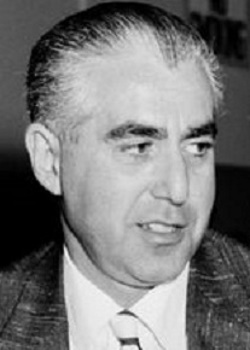 Composer, conductor and arranger Albert Glasser died in Los Angeles on May 4, 1998, at the age of 82, following a heart attack.
One of the most prolific composers in American low-budget cinema, Glasser wrote music for well over 100 films and became particularly associated with the science-fiction and horror pictures of the 1950s. His scores for The Amazing Colossal Man, The Cyclops, Beginning of the End, Earth vs. the Spider and Attack of the Puppet People helped define the sound of an entire era of B-movie filmmaking.
Albert Glasser was born in Chicago on January 25, 1916, the son of Latvian immigrants. He took up the flute as a youngster and developed an enthusiasm for orchestral music, especially Wagner and Richard Strauss. At 18 he received a scholarship to study composition and orchestration at the University of Southern California, and in 1935 joined Warner Bros. as a music copyist. There he encountered the work of Max Steiner, Erich Wolfgang Korngold and Hugo Friedhofer at close range, an invaluable practical education in the techniques of Hollywood scoring.
After further work as an orchestrator and arranger, Glasser received his first credited feature assignment with the Poverty Row horror film The Monster Maker in 1944. He subsequently wrote for westerns, crime pictures and adventure films, including several Cisco Kid features. His music for those films was later adapted for the popular television series, while he also composed extensively for radio programs including Hopalong Cassidy, Tarzan and Clyde Beatty. Read more…
Academy Award Winners 1997
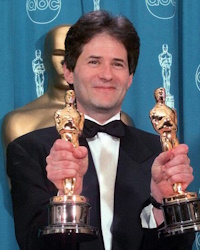 The Academy of Motion Picture Arts and Sciences (AMPAS) have announced the winners of the 70th Academy Awards, honoring the best in film in 1997.
In the Best Original Dramatic Score category James Horner won the award for his score for director James Cameron’s epic drama Titanic. In his acceptance speech, Horner said:
“Oh my dear God. I’m sort of speechless. One wants this to happen, of course, but I’ve been so close quite a few times but never actually won. I’ve got to get my wits about me. I don’t write speeches because I’m always so superstitious. I want to thank my wife, my family for all of their support and nourishment. Jim, thank you so much for the chance to do it. And the musicians who I know so well, and so many other people but I have so little time. I want to thank Michael Gorfaine, Jim Henrikson, but Michael Gorfaine especially. You’ve been around so long and I cannot thank you enough. Thanks, everybody.”
The other nominees for Best Original Dramatic Score were John Williams for Amistad, Danny Elfman for Good Will Hunting, Philip Glass for Kundun, and Jerry Goldsmith for L.A. Confidential.
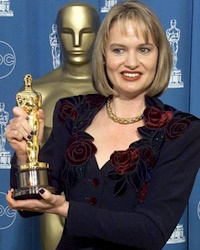 In the Best Original Comedy Score category Anne Dudley won the award for her score for The Full Monty, about a group of former steelworkers from Sheffield who become male strippers. In her acceptance speech, Dudley said:
“Thank you very much. This is a great honor. It’s great to be here; it’s wonderful. It’s been amazing being part of the success of “The Full Monty” over the past year. Nobody, of course, works alone on a film, and I’d really like to thank Peter Cattaneo and Uberto Pasolini for their brilliance and inspiration and encouragement. And the musicians who played the music and brought it to life. Thank you very much.”
The other nominees were Stephen Flaherty, Lynn Ahrens and David Newman for Anastasia; Hans Zimmer for As Good as It Gets; Danny Elfman for Men in Black; and James Newton Howard for My Best Friend’s Wedding.
In the Best Original Song category, James Horner won his second Oscar of the evening alongside lyricist Will Jennings for “My Heart Will Go On” from Titanic performed by Céline Dion.
The other nominees for Best Original Song were Alan Menken and David Zippel for “Go the Distance” from Hercules; Diane Warren for “How Do I Live” from Con Air; Stephen Flaherty and Lynn Ahrens for “Journey to the Past” from Anastasia; and Elliott Smith for “Miss Misery” from Good Will Hunting.
BAFTA Nominations 1997
The British Academy of Film and Television Arts (BAFTA) has announced the nominations for the 51st British Academy Film Awards, honoring the best in film in 1997.
In the Best Original Music category, which is named in memory of the film director Anthony Asquith, the nominees are:
- ANNE DUDLEY for The Full Monty
- JERRY GOLDSMITH for L. A. Confidential
- NELLEE HOOPER, CRAIG ARMSTRONG, and MARIUS DE VRIES for William Shakespeare’s Romeo + Juliet
- JAMES HORNER for Titanic
These are the first nominations for Armstrong, De Vreis, Dudley, and Hooper. It is the third nomination for Horner, and the fourth nomination for Goldsmith.
The winners of the 51st BAFTA Awards will be announced on April 19, 1998.
Academy Award Nominations 1997
The Academy of Motion Picture Arts and Sciences (AMPAS) have announced the nominations for the 70th Academy Awards, honoring the best in film in 1997.
In the Best Original Dramatic Score category, the nominees are:
- DANNY ELFMAN for Good Will Hunting
- PHILIP GLASS for Kundun
- JERRY GOLDSMITH for L.A. Confidential
- JAMES HORNER for Titanic
- JOHN WILLIAMS for Amistad
In the Best Original Musical or Comedy Score category, the nominees are:
- ANNE DUDLEY for The Full Monty
- DANNY ELFMAN for Men in Black
- JAMES NEWTON HOWARD for My Best Friend’s Wedding
- DAVID NEWMAN, STEPHEN FLAHERTY, and LYNN AHRENS for Anastasia
- HANS ZIMMER for As Good As It Gets
These are the first and second Oscar nominations for Elfman, the first Oscar nomination for Glass, the first Oscar nomination for Dudley, and the first nominations for Newman, Flaherty, and Ahrens. This is the 5th nomination for Horner, the 16th nomination for Goldsmith, the 31st nomination for Williams, the 3rd nomination for Howard, and the 4th nomination for Zimmer
Goldsmith previously won for The Omen in 1976. Williams previously won for Fiddler on the Roof in 1971, Jaws in 1975, Star Wars in 1977, E.T. the Extra Terrestrial in 1982, and Schindler’s List in 1993. Zimmer previously won for The Lion King in 1994.
In the Best Original Song category, the nominees are:
- STEPHEN FLAHERTY and LYNN AHRENS for “Journey to the Past” from Anastasia
- JAMES HORNER and WILL JENNINGS for “My Heart Will Go On” from Titanic
- ALAN MENKEN and DAVID ZIPPEL for “Go the Distance” from Hercules
- ELLIOTT SMITH for “Miss Misery” from Good Will Hunting
- DIANE WARREN for “How Do I Live” from Con Air
The winners of the 70th Academy Awards will be announced on March 23, 1998.

Shop at the Movie Music UK Store

Member of the


