Archive
BAFTA Nominations 2000
 The British Academy of Film and Television Arts (BAFTA) has announced the nominations for the 54th British Academy Film Awards, honoring the best in film in 2000.
In the Best Original Music category, which is named in memory of the film director Anthony Asquith, the nominees are:
- T-BONE BURNETT and CARTER BURWELL for O Brother, Where Art Thou?
- TAN DUN for Crouching Tiger Hidden Dragon
- STEPHEN WARBECK for Billy Elliot
- NANCY WILSON for Almost Famous
- HANS ZIMMER and LISA GERRARD for Gladiator
These are the first nominations for Burnett, Burwell, Dun, Gerrard and Wilson. It is the second nomination for Warbeck, and the third nomination for Zimmer.
The winners of the 54th BAFTA Awards will be announced on February 25, 2001.
Golden Globe Nominations 2000
 The Hollywood Foreign Press Association (HFPA) has announced the nominations for the 58th Golden Globe Awards, honoring the best in film and American television of 2000.
In the Best Original Score category, the nominees are:
- TAN DUN for Crouching Tiger Hidden Dragon
- MAURICE JARRE for Sunshine
- ENNIO MORRICONE for Malèna
- RACHEL PORTMAN for Chocolat
- MARTY STUART, LARRY PAXTON, and KRISTIN WILKINSON for All the Pretty Horses
- HANS ZIMMER and LISA GERRARD for Gladiator
These are first nominations for Dun, Stuart, Paxton, Portman, and Wilkinson. It is the second nomination for Gerrard, the third nomination for Zimmer, the seventh nomination for Morricone, and the tenth nomination for Jarre. Zimmer previously won for The Lion King in 1994. Morricone previously won for The Mission in 1986 and The Legend of 1900 in 1999. Jarre previously won for Doctor Zhivago in 1965, A Passage to India in 1984, Gorillas in the Mist in 1988, and A Walk in the Clouds in 1995.
In the Best Original Song category, the nominees are:
- GARTH BROOKS and JENNY YATES for “When You Come Back to Me Again” from Frequency
- BOB DYLAN for “Things Have Changed” from Wonder Boys
- BJÖRK GUÐMUNDSDÓTTIR, LARS VON TRIER, and SIGURJÓN SIGURÐSSON for “I’ve Seen It All” from Dancer in the Dark
- STAFFAN OLSSON (BOSSON) for “One in a Million” from Miss Congeniality
- GORDON SUMNER (STING) and DAVID HARTLEY for “My Funny Friend and Me” from The Emperor’s New Groove
The winners of the 58th Golden Globe Awards will be announced on January 21, 2001.
Remembering Aaron Copland, 1900-1990
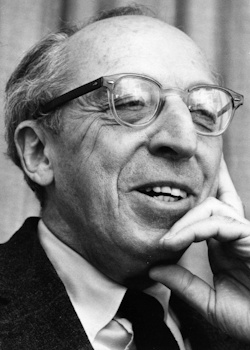 Composer, conductor and teacher Aaron Copland died ten years ago today in North Tarrytown, New York, on December 2, 1990, at the age of 90, following years of declining health.
Widely regarded as one of the defining voices of American concert music, Copland also enjoyed a brief but highly influential career in Hollywood, bringing to films the spacious harmonies, direct melodies and unmistakably American character that had already distinguished works such as Billy the Kid, Rodeo and Appalachian Spring.
Copland was born in Brooklyn on November 14, 1900, the youngest of five children in a Russian-Jewish immigrant family. After studying in New York he travelled to Paris, where he became one of the first American pupils of the influential teacher Nadia Boulanger. Returning home in the 1920s, Copland gradually developed a musical language that combined European modernism with jazz, folk material and an increasingly accessible style intended to speak directly to American audiences.
His first film assignment was Ralph Steiner and Willard Van Dyke’s documentary The City (1939), produced for the New York World’s Fair. That same year Copland entered Hollywood with Lewis Milestone’s adaptation of John Steinbeck’s Of Mice and Men. Rather than imitate the lush late-Romantic style then dominant in studio scoring, Copland used clear textures, folk-like melodies and restrained orchestration, allowing the rural setting and loneliness of the characters to emerge without excessive sentimentality. The score received Academy Award nominations for both original score and scoring. Read more…
Remembering Leonard Bernstein, 1918-1990
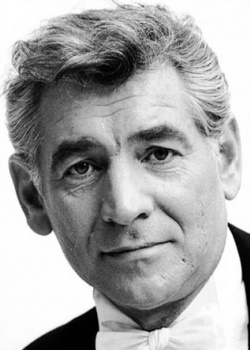 Composer, conductor, pianist and educator Leonard Bernstein died at his Manhattan, New York, home ten years ago today, on October 14, 1990, at the age of 72, from complications of progressive lung failure.
One of the towering figures of twentieth-century American music, Bernstein achieved international fame in the concert hall and on Broadway, but his relationship with cinema was surprisingly brief. He wrote only one original score specifically for a motion picture, yet that score—Elia Kazan’s On the Waterfront—became one of the landmarks of American film music.
Bernstein was born Louis Bernstein in Lawrence, Massachusetts, on August 25, 1918, the son of Ukrainian Jewish immigrants. He studied at Harvard University and the Curtis Institute of Music and achieved national prominence in 1943 when he famously substituted at short notice for Bruno Walter with the New York Philharmonic. He subsequently became one of America’s most celebrated conductors, eventually serving as music director of the Philharmonic while simultaneously pursuing careers as a composer, pianist, broadcaster and teacher.
Cinema first encountered Bernstein’s music through On the Town. The 1944 Broadway musical, written with Betty Comden and Adolph Green and developed from Bernstein’s ballet Fancy Free, was purchased by MGM and filmed in 1949 with Gene Kelly and Frank Sinatra. However, studio chief Louis B. Mayer replaced almost all of Bernstein’s original score, an early indication of the difficulties the fiercely independent composer would have with Hollywood filmmaking. Read more…
Remembering Werner Janssen, 1899-1990
 Composer and conductor Werner Janssen died ten years ago today, on September 19, 1990, in Stony Brook, New York, following a brief illness, at the age of 91,
A distinguished symphonic conductor as well as a Hollywood film composer, Janssen enjoyed an unusually varied career, earning six Academy Award nominations for his film music while also championing contemporary concert music in the United States and Europe.
Janssen was born in New York City on June 1, 1899, the son of German immigrants. He studied at Dartmouth College and the New England Conservatory, and later pursued conducting studies in Europe. After winning the Rome Prize in 1930 he studied orchestration in Rome, and during the early 1930s established an international reputation as a conductor. In 1934 he became the first American-born conductor to lead the New York Philharmonic, and subsequently served as conductor of the Baltimore Symphony Orchestra from 1937 to 1939.
Janssen entered Hollywood relatively late. His first major film score was Lewis Milestone’s The General Died at Dawn (1936), starring Gary Cooper. The film’s Chinese setting gave Janssen an opportunity to incorporate Asian-influenced colors into an otherwise large-scale symphonic score, while its combination of romance, political intrigue and action brought out the dramatic instincts he had developed in the concert hall. The score immediately earned him an Academy Award nomination. Read more…
Jack Nitzsche, 1937-2000
 Composer Jack Nitzsche died on August 25, 2000, in hospital on Los Angeles, of cardiac arrest brought on by a recurring bronchial infection. He was 63.
Bernard Alfred Nitzsche was born in Chicago, Illinois, in April 1937, the son of German immigrants, and raised on farm in Michigan. He moved to Los Angeles in the late 1950s with aspirations of becoming a jazz saxophonist, but soon found his calling in arranging and studio work. He initially worked for Sonny Bono, but later found his niche working as an arranger for producer Phil Spector. He played a pivotal role in shaping Spector’s the “Wall of Sound,” and was an important contributor to legendary recordings by pop and rock artists including The Ronettes, The Righteous Brothers, Jackie De Shannon (‘Needles and Pins’), and Ike and Tina Turner (‘River Deep Mountain High’).
Later, in the 1960s and ’70s, he collaborated with a wide array of artists, including The Rolling Stones – contributing keyboards and orchestration on several albums, especially songs such as ‘Paint It, Black’ and ‘You Can’t Always Get What You Want’ – and Neil Young, with whom he had a long and occasionally volatile creative partnership.
Nitzsche’s film work was equally distinguished. His first important score was for the 1970 thriller Performance starring Mick Jagger, and he provided ‘uncredited contributions’ to the soundtrack for The Exorcist in 1973. He received his first Oscar nomination for One Flew Over the Cuckoo’s Nest in 1975, and he won an Oscar for the song “Up Where We Belong” from An Officer and a Gentleman in 1982, which he co-wrote with Buffy Sainte-Marie and Will Jennings.
His other important scores include Cruising (1980), Starman (1984), The Razor’s Edge (1984), The Jewel of the Nile (1985), 9½ Weeks (1986), Stand By Me (1986), Revenge (1990), Mermaids (1990), and Blue Sky (1994). His last major score was the for the Sean Penn-director drama The Crossing Guard in 1995; he suffered a stroke in 1998 which ended his scoring career. Read more…
Remembering David Rose, 1910-1990
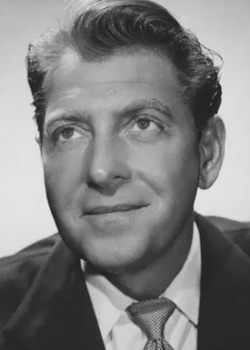 Composer, arranger, conductor and orchestra leader David Rose died ten years ago today in Burbank, California, on August 23, 1990, at the age of 80, from heart failure.
One of Hollywood’s busiest musical craftsmen, Rose scored 36 films and wrote themes and background music for 24 television series, while also enjoying major success as a recording artist. His best-known compositions included “Holiday for Strings” and the chart-topping instrumental “The Stripper.”
David Daniel Rose was born in London on June 15, 1910, and grew up in Chicago. He began playing piano professionally as a teenager and by the early 1930s was leading the house orchestra at radio station WGN. Moving to California in 1940, he became increasingly active in radio and subsequently joined MGM as a musical director. During World War II he served in the U.S. Army and worked on the musical Winged Victory, where he met comedian Red Skelton.
Rose’s first major popular composition was “Holiday for Strings,” recorded in the early 1940s and soon established as one of the most familiar pieces of American light orchestral music. His Hollywood career developed alongside his recording work, and in 1944 he received an Academy Award nomination for the Bob Hope comedy The Princess and the Pirate. The following year, “So in Love,” written with lyricist Leo Robin for Wonder Man, brought him a second Oscar nomination. Read more…
Academy Award Winners 1999
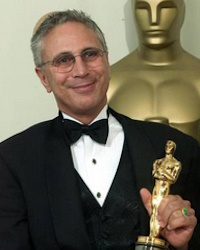 The Academy of Motion Picture Arts and Sciences (AMPAS) have announced the winners of the 72nd Academy Awards, honoring the best in film in 1999.
In the Best Original Score category, American composer John Corigliano won for his score for François Girard’s music-themed drama The Red Violin. In his acceptance speech Corigliano said:
I didn’t think I was going to be here, up here, and I’m really speechless, but I just want to tell you thanks so much. You know, I’m from another world of classical music, and when I write my symphonies and my concertos it’s a very lonely profession. And one thing I have learned about film writing is how communal it is. And the reason people give thanks is because there’s so many people that had so much to do with this film and with the music. From Peter Gelb from Sony Classics who introduced me to François Girard, the wonderful director of this film, and Niv Fichman the producer. But then you have to go to the voice of the violin and say, you know, you can write all the notes you want, but if someone doesn’t play them like a god they’ll never sound that way. And Joshua Bell, the great violinist, played them like a god. Thank you, Josh. Esa-Pekka Salonen, and all my other friends. I would like to thank all my other friends for that. Thank you so much.
The other nominees were Thomas Newman for American Beauty, John Williams for Angela’s Ashes, Rachel Portman for The Cider House Rules, and Gabriel Yared for The Talented Mr. Ripley.
In the Best Original Song category, British singer, songwriter and musician Phil Collins won the Oscar for “You’ll Be in My Heart” from Disney’s Tarzan.
The other nominees were Trey Parker and Marc Shaiman for “Blame Canada” from South Park: Bigger, Longer & Uncut; Diane Warren for “Music of My Heart” from Music of the Heart; Aimee Mann for “Save Me” from Magnolia; and Randy Newman for “When She Loved Me” from Toy Story 2.
BAFTA Nominations 1999
The British Academy of Film and Television Arts (BAFTA) has announced the nominations for the 53rd British Academy Film Awards, honoring the best in film in 1999.
In the Best Original Music category, which is named in memory of the film director Anthony Asquith, the nominees are:
- RY COODER and NICK GOLD for Buena Vista Social Club
- THOMAS NEWMAN for American Beauty
- MICHAEL NYMAN for The End of the Affair
- GABRIEL YARED for The Talented Mr. Ripley
These are the first nominations for Cooder, Gold, Newman. It is the second nomination for Nyman, and the second nomination for Yared. Yared previously won for The English Patient in 1996.
The winners of the 53rd BAFTA Awards will be announced on April 9, 2000.
George Duning, 1908-2000
 Composer, arranger and conductor George Duning died in San Diego, California, on February 27, 2000, just two days after his 92nd birthday.
One of the most prolific composers of Hollywood’s studio era, Duning spent 15 years at Columbia Pictures and wrote music for more than 100 films, receiving five Academy Award nominations during a career that later extended successfully into television.
Duning was born in Richmond, Indiana, on February 25, 1908, into a musical family; his father was a singer and conductor and his mother taught piano and organ. He studied theory at the Cincinnati Conservatory of Music and composition with Mario Castelnuovo-Tedesco, while also developing a strong background in jazz. After college he worked as a trumpeter and arranger with dance bands before becoming musical director of Kay Kyser’s enormously popular radio program Kollege of Musical Knowledge. During World War II he served in the US Navy as a conductor and arranger for the Armed Forces Radio Service.
After the war Duning joined Columbia Pictures as an arranger and orchestrator. His first substantial original film score was Robert Rossen’s noir Johnny O’Clock (1947), and he quickly became one of the studio’s principal composers. His first Oscar nomination came for Jolson Sings Again (1949), followed by another for the intimate drama No Sad Songs for Me (1950).
Duning’s reputation grew considerably during the 1950s. Among his major scores were Salome (1953), Miss Sadie Thompson (1953), From Here to Eternity (1953), My Sister Eileen (1955), Picnic (1955), The Eddy Duchin Story (1956), 3:10 to Yuma (1957), Cowboy (1958), Bell, Book and Candle (1958) and Houseboat (1958). From Here to Eternity brought him his third Academy Award nomination, while The Eddy Duchin Story earned his fifth.
Academy Award Nominations 1999
 The Academy of Motion Picture Arts and Sciences (AMPAS) have announced the nominations for the 72nd Academy Awards, honoring the best in film in 1999. After four years of being a split category between Drama scores and Comedy/Musical scores, the category re-combined back into one overall Best Score category.
In the Best Original Score category, the nominees are:
- JOHN CORIGLIANO for The Red Violin
- THOMAS NEWMAN for American Beauty
- RACHEL PORTMAN for The Cider House Rules
- JOHN WILLIAMS for Angela’s Ashes
- GABRIEL YARED for The Talented Mr Ripley
This is the 2nd Oscar nomination for Corigliano, the 4th nomination for Newman, the 2nd nomination for Portman, the 33rd nomination for Williams, and the 2nd nomination for Yared. Portman previously won for Emma in 1996. Williams previously won for Fiddler on the Roof in 1971, Jaws in 1975, Star Wars in 1977, E.T. the Extra Terrestrial in 1982, and Schindler’s List in 1993. Yared previously won for The English Patient in 1996.
In the Best Original Song category, the nominees are:
- PHIL COLLINS for “You’ll Be in My Heart” from Tarzan
- AIMEE MANN for “Save Me” from Magnolia
- RANDY NEWMAN for “When She Loved Me” from Toy Story 2
- TREY PARKER and MARC SHAIMAN for “Blame Canada” from South Park: Bigger, Longer & Uncut
- DIANE WARREN for “Music of My Heart” from Music of the Heart
The winners of the 72nd Academy Awards will be announced on March 26, 2000.
Golden Globe Nominations 1999
The Hollywood Foreign Press Association (HFPA) has announced the nominations for the 57th Golden Globe Awards, honoring the best in film and American television of 1999.
In the Best Original Score category, the nominees are:
- ANGELO BADALAMENTI for The Straight Story
- PIETER BOURKE and LISA GERRARD for The Insider
- GEORGE FENTON for Anna and the King
- ENNIO MORRICONE for The Legend of 1900
- THOMAS NEWMAN for American Beauty
- MICHAEL NYMAN for The End of the Affair
- JOCELYN POOK for Eyes Wide Shut
- JOHN WILLIAMS for Angela’s Ashes
- GABRIEL YARED for The Talented Mr. Ripley
These are first nominations for Badalamenti, Bourke, Gerrard, Newman, and Pook. It is the second nomination for Fenton, the second nomination for Yared, the third nomination for Nyman, the sixth nomination for Morricone, and the eighteenth nomination for Williams. Morricone previously won for The Mission in 1986. Yared previously won for The English Patient in 1996. Williams previously won for Jaws in 1975, Star Wars in 1977, and E.T. The Extra-Terrestrial in 1982.
In the Best Original Song category, the nominees are:
- MADONNA CICCONE and WILLIAM WAINWRIGHT for “Beautiful Stranger” from Austin Powers: The Spy Who Shagged Me
- PHIL COLLINS for “You’ll Be in My Heart” from Tarzan
- GEORGE FENTON, ROBERT KRAFT, and KENNETH EDMONDS (BABYFACE) for “How Can I Not Love You” from Anna and the King
- AIMEE MANN for “Save Me” from Magnolia
- RANDY NEWMAN for “When She Loved Me” from Toy Story 2
The winners of the 57th Golden Globe Awards will be announced on January 23, 2000.
Masaru Sato, 1928-1999
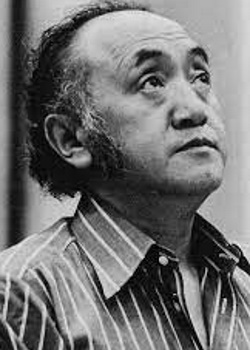 Composer Masaru Sato died in Tokyo on December 5, 1999, at the age of 71, after collapsing at a celebration held in his honor.
One of the most prolific composers in Japanese cinema, Sato wrote more than 300 film scores during a career spanning almost five decades. He is best remembered internationally for his ten-year collaboration with Akira Kurosawa, including Throne of Blood, The Hidden Fortress, Yojimbo, Sanjuro, High and Low and Red Beard, as well as for several entries in the Godzilla series.
Sato was born in Rumoi, Hokkaido, on May 29, 1928, the youngest of six brothers in a music-loving family. He studied at the National Music Academy in Tokyo and became particularly inspired by fellow Hokkaido composers Akira Ifukube and Fumio Hayasaka. After seeing Kurosawa’s Rashomon, Sato sought out Hayasaka personally and became his pupil and assistant, eventually helping orchestrate Hayasaka’s monumental score for Seven Samurai (1954).
Sato’s first major independent assignment was Godzilla Raids Again (1955), the sequel to Toho’s original Godzilla. That same year Hayasaka died suddenly while working on Kurosawa’s I Live in Fear, and Sato was asked to complete the score. Kurosawa was sufficiently impressed that Sato became his regular composer for the following decade. Read more…
Frank De Vol, 1911-1999
 Composer, arranger, conductor and actor Frank De Vol died in Lafayette, California, on October 27, 1999, at the age of 88, from congestive heart failure.
One of Hollywood’s most versatile musical craftsmen, De Vol wrote more than 50 film scores while also enjoying major careers in radio, recordings and television. He received five Academy Award nominations and five Emmy nominations, and composed some of the most familiar television themes of the 1960s and 1970s.
Frank Denny De Vol was born in Moundsville, West Virginia, on September 20, 1911, and grew up in Canton, Ohio, where his father conducted the orchestra at a local vaudeville theatre. He played violin and piano professionally while still a teenager and later taught himself saxophone. By the late 1930s he was arranging for Horace Heidt and subsequently worked with guitarist Alvino Rey before settling in California, where he became a successful radio musical director.
During the 1940s and early 1950s De Vol became one of the busiest arrangers in popular music, working with singers including Dinah Shore, Doris Day, Ella Fitzgerald, Tony Bennett and Vic Damone. His experience writing quickly and effectively for orchestras proved ideal preparation for Hollywood, and in 1954 director Robert Aldrich hired him to score the low-budget thriller World for Ransom. It began one of the most important professional relationships of De Vol’s career. Read more…
Remembering Irving Berlin, 1888-1989
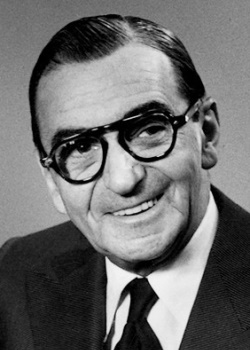 Composer and lyricist Irving Berlin died ten years ago today at his home in Manhattan on September 22, 1989, at the age of 101.
One of the most important songwriters in American history, Berlin’s career stretched from Tin Pan Alley and vaudeville through Broadway and the golden age of the Hollywood musical. He wrote more than 1,200 songs, including “Alexander’s Ragtime Band,” “Always,” “Blue Skies,” “Puttin’ on the Ritz,” “Cheek to Cheek,” “There’s No Business Like Show Business,” “God Bless America” and “White Christmas,” and his music became an essential part of the American popular songbook.
Berlin was born Israel Beilin in the Russian Empire on May 11, 1888, into a Jewish family that emigrated to the United States when he was a child. Growing up in poverty on New York’s Lower East Side, he left school early and worked as a singing waiter and song plugger before beginning to write songs himself. His breakthrough came with “Alexander’s Ragtime Band” in 1911, an international sensation that established him as one of America’s leading popular composers. Remarkably, Berlin never became a conventionally trained musician and could read music only with difficulty, generally composing at the piano and relying on musical assistants to transcribe and arrange his ideas.
Cinema became increasingly important to Berlin as talking pictures transformed Hollywood during the late 1920s. His songs appeared in some of the earliest musicals, including The Cocoanuts (1929), based on the Marx Brothers’ Broadway show, Puttin’ on the Ritz (1930), and Reaching for the Moon (1930). Unlike conventional film composers, Berlin rarely wrote dramatic underscore; instead he created complete song scores in which the numbers themselves drove the entertainment and often became hits independently of the films. Read more…

Shop at the Movie Music UK Store

Member of the


