Ennio Morricone, 1928-2020
 Composer Ennio Morricone died in Rome on July 6, 2020, at the age of 91, several days after suffering a fall in which he fractured his femur.
One of the most prolific and influential film composers in cinema history, Morricone wrote music for more than 500 films and television productions during a career spanning six decades. From the revolutionary westerns of Sergio Leone to The Battle of Algiers, Days of Heaven, Once Upon a Time in America, The Mission, Cinema Paradiso and The Hateful Eight, he created a body of work of extraordinary breadth, combining unforgettable melody with an endlessly adventurous approach to sound.
Ennio Morricone was born in Rome on November 10, 1928, the son of professional trumpet player Mario Morricone. He entered the Conservatory of Santa Cecilia, studying trumpet, orchestration and composition, most importantly under the distinguished composer Goffredo Petrassi. Although Morricone always regarded himself as a serious composer whose film work was only one part of his musical life, his early professional career was spent playing trumpet and arranging popular music. During the 1950s and early 1960s he became one of RCA Italy’s busiest arrangers while simultaneously writing concert music and participating in Rome’s avant-garde scene. He later became a member of the experimental Gruppo di Improvvisazione Nuova Consonanza, an experience that helped shape his willingness to use unconventional sounds.
After ghostwriting and arranging for other composers, Morricone received his first major screen credit on Luciano Salce’s Il Federale in 1961. His career changed permanently three years later when he was reunited with Sergio Leone, with whom he had briefly attended primary school. A Fistful of Dollars (1964), For a Few Dollars More (1965) and The Good, the Bad and the Ugly (1966) transformed both the western and the possibilities of film scoring. Working with limited budgets, Morricone replaced the traditional Hollywood symphonic sound with electric guitars, bells, whip cracks, gunshots, Jew’s harps, whistles, chanting voices and the extraordinary wordless soprano of Edda Dell’Orso. Alessandro Alessandroni’s distinctive whistling became another essential part of the sound.
The main title from The Good, the Bad and the Ugly became one of the most recognizable pieces of film music ever written, while “The Ecstasy of Gold” developed a life far beyond the film itself. For Once Upon a Time in the West (1968), Morricone created individual musical identities for the principal characters, including the soaring soprano theme for Jill and the distorted harmonica associated with Charles Bronson’s mysterious gunman. At Leone’s request much of the music was written and recorded before filming, allowing the director to play it on set and shape the performances and camera movements around Morricone’s score. Their collaboration continued through Duck, You Sucker! and culminated magnificently with Once Upon a Time in America (1984), whose wistful melodies rank among the composer’s most beautiful creations.
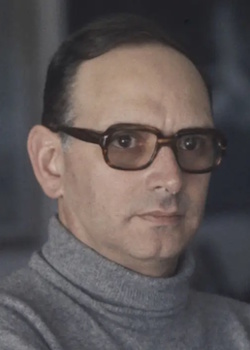 Yet the westerns represented only a small fraction of Morricone’s output. During the late 1960s and 1970s he worked at an astonishing pace across political dramas, thrillers, comedies, romances and horror films. His credits included Gillo Pontecorvo’s The Battle of Algiers and Burn!, Elio Petri’s Investigation of a Citizen Above Suspicion, Giuliano Montaldo’s Sacco & Vanzetti, Pier Paolo Pasolini’s Salò and Bernardo Bertolucci’s 1900. He also became an important musical voice in the Italian giallo, with scores such as Dario Argento’s The Bird with the Crystal Plumage, The Cat o’ Nine Tails and Four Flies on Grey Velvet, combining dissonance, whispered voices, strange percussion and deceptively delicate melodies.
International filmmakers increasingly sought him out. Don Siegel employed him on Two Mules for Sister Sara, while Terrence Malick’s Days of Heaven (1978) brought Morricone his first Academy Award nomination. In the 1980s he produced an extraordinary succession of major works. John Carpenter’s The Thing (1982) used bleak electronic pulses and sparse orchestral writing; Once Upon a Time in America offered nostalgia and tragic romanticism; and Roland Joffé’s The Mission (1986) fused liturgical choral writing, European orchestral tradition and South American instrumental colors. Its principal themes, including “Gabriel’s Oboe” and “On Earth as It Is in Heaven,” became concert standards, and the score remains one of the most beloved works of his career.
Morricone received further Academy Award nominations for Brian De Palma’s The Untouchables (1987), Warren Beatty’s Bugsy (1991) and Giuseppe Tornatore’s Malèna (2000). His relationship with Tornatore became one of the most important collaborations of his later career, beginning with Cinema Paradiso (1988), for which Morricone and his son Andrea created music of exquisite warmth and nostalgia. They subsequently worked together on films including Everybody’s Fine, The Star Maker, The Legend of 1900, Baarìa, The Best Offer and The Correspondence. Other notable later scores included Casualties of War, In the Line of Fire, Wolf, Disclosure and Mission to Mars. Morricone and Andrea shared the BAFTA for Cinema Paradiso.
By the early 2000s Morricone increasingly preferred to work in Europe rather than involve himself in Hollywood’s often difficult post-production process, but he remained prolific and eventually enjoyed a remarkable late-career triumph. Quentin Tarantino had used existing Morricone recordings in several of his films before finally commissioning him to write an original score for The Hateful Eight (2015). Its brooding orchestral writing brought Morricone his first competitive Academy Award for Best Original Score in 2016, at the age of 87.
The victory came nine years after the Academy had presented Morricone with an Honorary Oscar for his “magnificent and multifaceted contributions to the art of film music.” Before The Hateful Eight he had received five competitive nominations without winning. His extraordinary collection of honors also included six BAFTA Awards, four Grammy Awards and three Golden Globes; his sixth BAFTA came, appropriately, for The Hateful Eight.
Morricone’s popularity extended far beyond the cinema. “Chi Mai,” originally written for the 1971 film Maddalena and later used as the theme for the British television series The Life and Times of David Lloyd George, became an unexpected hit and reached number two on the UK singles chart in 1981. He also continued writing chamber, choral and orchestral concert music throughout his life and increasingly conducted his own film music in packed concert halls and arenas around the world. His farewell concert tour concluded in Italy in 2019.
Morricone married Maria Travia in 1956, and they remained together for more than six decades. They had four children: Marco, Alessandra, Andrea and Giovanni. Andrea followed his father into music as a composer and conductor, while Giovanni became a filmmaker. Morricone remained firmly based in Rome throughout his international career, resisting the temptation to relocate permanently to Hollywood.
=====================================
At this point I would like to offer a couple of personal reflections on Morricone.

Meeting Ennio Morricone
I was fortunate enough to see him in concert in London twice, at the Barbican in 2001 and then at the Royal Albert Hall in 2003, and both events were spectacular celebrations of the man and his music. I only met him face-to-face once, in February 2016, when he travelled to Los Angeles to attend the Academy Awards. The Society of Composers and Lyricists arranged a reception for that year’s music nominees, and I was able to shake his hand and pose for a quick photograph with him. As he famously refused to learn English, and considering that my Italian is virtually zero, I said just two words to him – ‘mille grazie’ – to thank him not only for the photo, but as a completely inadequate ‘thank you for everything you have done for music in your life’. He replied with a ‘prego,’ and gave me a tiny hint of a smile of acknowledgement, and that was that.

Morricone and Williams
But one magical thing I did witness was a conversation between Morricone and John Williams, who was also nominated that year. These two giants of music were sat, heads together, engrossed with each other for more than 15 minutes, animatedly chatting away while Ennio’s son Giovanni translated. I was standing just a few feet away from them, and I couldn’t really tell what was being said, but it struck me that this was something of an iconic moment. It was like watching a conversation between Mozart and Beethoven, Shakespeare and Dickens, Da Vinci and Van Gogh, had these people not been separated by time and geography.
It’s almost impossible to overstate just how influential, just how brilliant, just how much of a genius Morricone was. Morricone didn’t compose at a piano, nor did he use a computer. He used a pencil and a piece of staff paper, and just wrote whatever was in his head. It’s astonishing to think that, one morning, he sat down to write some music, and then by the end of the day “The Ecstasy of Gold” existed in the world. Or “Gabriel’s Oboe”. Or “Deborah’s Theme”. Or any of the dozens and dozens of iconic themes that he penned over the course of his career. And he was prolific – there were years in the 1960s and 70s where he was writing more than 20 scores in a single year, two per month, without ever phoning it in or allowing for a dip in quality.
I don’t think there is a film composer alive today who has not been influenced in some way by Ennio Morricone. The fact that he essentially invented an entire genre of music for spaghetti westerns is achievement enough, but the fact that he was also so proficient across every other conceivable genre of music is almost unprecedented. His scores for the giallo thrillers and horror movies gave him the opportunities to push the boundaries of what film music could be, and offered early examples of what would now be classified as sampling, electronic sound design, and aural manipulation. And then there are his romantic themes; his longing, rapturous, sometimes bittersweet evocations of love and passion, which swell with orchestral elegance and are often achingly, heartbreakingly beautiful.
I don’t love everything Morricone has ever written, and there are still dusty corners of his filmography that I have yet to explore, but those scores I do love I love wholeheartedly. The Good the Bad and the Ugly. Il Mercenario. Once Upon a Time in the West. La Tenda Rossa. Vamos A Matar Compañeros. La Califfa. Giù La Testa. Questa Specie d’Amore. Allonsanfàn. Days of Heaven. Marco Polo. Once Upon a Time in America. La Venexiana. The Mission. The Untouchables. Cinema Paradiso. Nostromo. I Guardiani del Cielo. The Legend of 1900. The rejected score for What Dreams May Come. Canone Inverso. Malèna. Fateless. And I’m probably forgetting some, such was his immense and varied output.
I don’t think the full impact of Ennio Morricone’s legacy will be fully appreciated for quite some time, but I do know that, as I write this, I can say with absolute confidence that he will go down as one of the greatest composers – not just film composers, but composers, period – of the twentieth century.
Addio, Maestro.
Leave a comment

Shop at the Movie Music UK Store

Member of the


Thank you for a wonderful review. I am listening to “OnEarth as it is inHeaven” as I write this. I have searched the internet to find as much as I can about this genius, wonderful, dear man who is now gone. I bought the album in 1986 and the memory faded till now. I have purchased the album on iTunes. I will never know in my lifetime or understand the genius of how this music was made but will be ever so thankful that I can listen to this music till the end of my days. Thank you again for your review.