Gil Mellé, 1931-2004
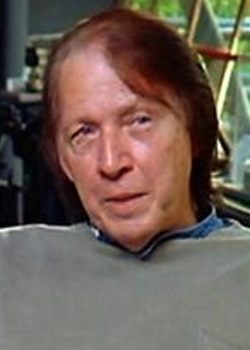 Composer, jazz musician, artist and electronic-music pioneer Gil Mellé died at his home in Malibu, California, on October 28, 2004, at the age of 72, following a heart attack.
One of the most unconventional figures in American film and television music, Mellé wrote scores for more than 125 productions, but remains best remembered for Robert Wise’s The Andromeda Strain and his groundbreaking use of electronic instruments.
Gilbert John Mellé was born in New York City on December 31, 1931. A gifted visual artist as well as a musician, he began playing saxophone as a teenager and was performing in Greenwich Village jazz clubs before he was 16. At 19 he signed with Blue Note Records, becoming the label’s first white musician, and recorded a series of albums including Patterns in Jazz and 5 Impressions of Color. He also designed album artwork for musicians including Miles Davis, Thelonious Monk and Sonny Rollins.
Mellé’s interests increasingly turned toward technology and electronic music. After moving to Los Angeles during the 1960s, he built his own synthesizers and other electronic devices and formed the Electronauts, an all-electronic jazz ensemble which performed at the Monterey Jazz Festival. His 1967 album Tome VI explored electronic jazz at a time when synthesizers were still a novelty.
His defining film assignment was The Andromeda Strain (1971), Wise’s adaptation of Michael Crichton’s science-fiction novel. Mellé created an almost entirely electronic sound world of pulses, oscillations, distorted tones and mechanical textures that perfectly complemented the film’s clinical laboratories and technological paranoia. He even recorded sounds at the Jet Propulsion Laboratory while researching the score. The result was one of the pioneering electronic scores for a major Hollywood film and earned Mellé a Golden Globe nomination for Best Original Score.
The same experimental instincts informed his television work. Mellé composed the distinctive electronic theme for Rod Serling’s Night Gallery, later expanding it with acoustic instruments, and became a prolific composer for television movies and series. His credits included Columbo, The Six Million Dollar Man, The Questor Tapes, Frankenstein: The True Story, That Certain Summer and Kolchak: The Night Stalker.
Mellé continued scoring theatrical films throughout the 1970s and early 1980s. His credits included The Organization (1971), You’ll Like My Mother (1972), The Ultimate Warrior (1975), Embryo (1976), Starship Invasions (1977), The Sentinel (1977), Blood Beach (1980), Borderline (1980) and The Last Chase (1981). Unlike The Andromeda Strain, many of these combined conventional orchestral writing with electronics, jazz and unusual instrumental colors.
Television increasingly dominated his later career, with scores for productions including Attica, World War III, Fatal Vision, The Deliberate Stranger and The Taking of Flight 847. By the mid-1990s Mellé had largely withdrawn from screen composition and returned increasingly to visual art, particularly computer-generated painting.

Shop at the Movie Music UK Store

Member of the


