Archive
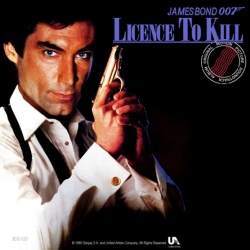
LICENCE TO KILL – Michael Kamen
 THROWBACK THIRTY
Original Review by Jonathan Broxton
The second – and last – James Bond film to star Timothy Dalton was 1989’s Licence to Kill, directed by John Glen from a screenplay by Michael G. Wilson and Richard Maibaum. I have long been of the opinion that Dalton was a hugely underrated Bond who should have been given more opportunities to succeed and develop his gritty version of the character, and that Licence to Kill is one of the best of the entire series. In it, Bond finds himself disavowed by British secret service agency MI6 and ‘going rogue’ after his best friend, CIA agent Felix Leiter, and his new bride Della are viciously attacked on their wedding day. The perpetrator is Franz Sanchez, a drug lord and ruthless cartel boss in a fictional Central American country; seeking personal vengeance, Bond teams up with Pam Bouvier, an ex Army-pilot with a vendetta against Sanchez of her own, and crosses paths with two very different members of Sanchez’s entourage: the beautiful Lupe Lamora, and the sadistic henchman Dario. The film co-stars Robert Davi, Carey Lowell, Talisa Soto, and a very young Benicio del Toro, but unfortunately the film was not a commercial success; adjusted for inflation. It remains the lowest-grossing Bond film of all time, something which, sadly, hastened to the end of Dalton’s tenure and his subsequent replacement with Pierce Brosnan in Goldeneye in 1995. Read more…
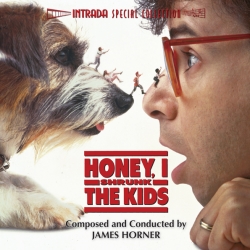
HONEY, I SHRUNK THE KIDS – James Horner
 THROWBACK THIRTY
Original Review by Jonathan Broxton
One of the most popular and successful children’s adventure films of 1989, Honey I Shrunk the Kids starred Rick Moranis as Wayne Szalinsky, a scientist and inventor who makes a machine capable of shrinking objects down to miniscule size. One day, Wayne accidentally shrinks his son Nick, his daughter Amy, and the two brothers who live next door, and throws them out in the trash. Stranded at the bottom of their back yard – which, due to their size, is now the equivalent of several miles away from their house and looks like the Amazon rain forest– the children must fight their way through this jungle of plants and enormous insects in order to return home; meanwhile, Wayne has realized what he has done, and desperately begins searching for his kids so he can restore them to their regular size. The film co-starred Thomas Brown, Amy O’Neill, Robert Oliveri, and Jared Rushton as the kids, and marked the directorial debut of Joe Johnston, a special effects genius who had previously worked on several Star Wars and Indiana Jones films. Read more…
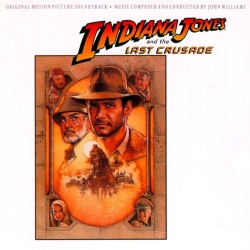
INDIANA JONES AND THE LAST CRUSADE – John Williams
 THROWBACK THIRTY
GREATEST SCORES OF THE TWENTIETH CENTURY
Original Review by Jonathan Broxton
The third movie in director Steven Spielberg’s Indiana Jones series was Indiana Jones and the Last Crusade, and whereas 1984’s Temple of Doom was a prequel to Raiders of the Lost Ark, Last Crusade was a direct sequel, set just two years later in 1938. Harrison Ford returns as the titular archaeologist-adventurer, who is sent off on a globe-trotting escapade when he receives news from American billionaire Walter Donovan (Julian Glover) that his long-estranged father Henry Jones (Sean Connery) has gone missing while searching for the holy grail. Jones teams up with his old friends and colleagues Marcus Brody (Denholm Elliott) and Sallah (John Rhys-Davies) on the quest to find his father, and quickly becomes embroiled in a vast labyrinthine plot involving ancient myths and legends, a brotherhood of religious warriors, way too many Nazis, and a beautiful Austrian art professor named Elsa Schneider (Alison Doody) to whom there is more than meets the eye. The whole thing is a delight from start to finish, with several wonderfully exciting action set pieces, and beautiful location settings, but the cornerstone of the film is the father-and-son chemistry between Ford and Connery, whose outward gruffness and constant bickering masks a deep love and affection. Whereas Ford is an all-action matinee idol hero, Connery is a slightly bumbling academic, more at home with books and libraries than punching Nazis in the face, but who is still able to make his son feel like a 12-year old when he calls him ‘junior’. Read more…
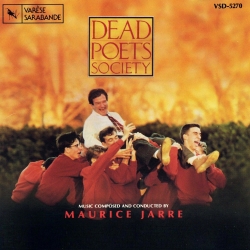
DEAD POETS SOCIETY – Maurice Jarre
 THROWBACK THIRTY
Original Review by Jonathan Broxton
There have been a lot of great movies about inspirational teachers over the years, from Goodbye Mr. Chips in 1939 (and its musical remake in 1969), to Dangerous Minds and Mr. Holland’s Opus in the 1990s, but for my money the best of them all is Dead Poets Society. Directed by Peter Weir and written by Tom Schulman, the film is set at an elite all-male New England prep school in 1959, a stuffy establishment whose school motto – tradition, honor, discipline, excellence – tells you everything you need to know about the faculty. Everything changes when a new English teacher, John Keating, joins the school, bringing with him a brash and innovative philosophy that teaches students to think for themselves. Keating has a particular influence on a group of seven young men who, having been inspired by Keating’s love of classic poetry, form the eponymous society and begin to embrace their lives, loves, and ambitions more than they had ever done before. The film is anchored by an utterly astonishing lead performance by Robin Williams as Keating, who brings depth and emotion and sincerity and manic energy to what is, to my mind, the greatest role of his entire career. The young men of the society are also superb, notably Robert Sean Leonard as a boy whose passion for acting is constantly crushed by his overbearing father, and Ethan Hawke, who overcomes his crippling shyness as a result of Keating’s encouragement. Read more…
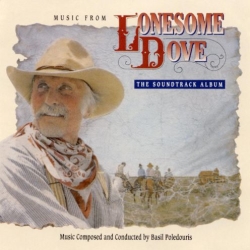
LONESOME DOVE – Basil Poledouris
 THROWBACK THIRTY
Original Review by Jonathan Broxton
Lonesome Dove, an epic western mini-series based on the Pulitzer Prize-winning novel by Larry McMurtry, was one of the television successes of the year after it premiered on CBS in the spring of 1989. Directed by Simon Wincer and starring Robert Duvall and Tommy Lee Jones, and set in the closing years of the Old West, the story focused on the relationship between Gus (Duvall) and Call (Jones), two retired Texas Rangers who decide to leave their quiet town on the Mexican border and drive a herd of cattle north to Montana. McMurtry’s original novel – which explores themes of old age, death, unrequited love, and friendship – was based on a screenplay that he had co-written with Peter Bogdanovich for a movie that was intended to star John Wayne, James Stewart, and Henry Fonda, but the project collapsed when John Ford advised Wayne to reject the script. Prior to its airing, the ‘classic western’ was considered to be a virtually dead genre, but Lonesome Dove almost singlehandedly re-vitalized it. The series drew staggering viewership numbers of more than 20 million homes, went on to win 7 Emmys from 18 nominations (including Best Director and a slew of technical awards), and paved the way for the cinematic resurrection of the genre with Kevin Costner’s Dances With Wolves in 1990 and Clint Eastwood’s Unforgiven in 1992. Read more…
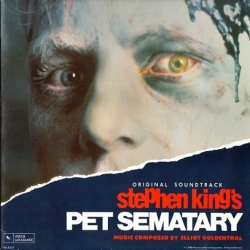
PET SEMATARY – Elliot Goldenthal
 THROWBACK THIRTY
Original Review by Jonathan Broxton
Pet Sematary was an adaptation of a popular novel by horror author Stephen King. Directed by Mary Lambert from a screenplay by King himself, the film starred Dale Midkiff as Louis Creed, a doctor who moves with his family – wife Rachel (Denise Crosby), children Gage and Ellie (Miko Hughes and Blaze Berdahl) – from Chicago to rural Maine. Louis befriends his elderly neighbor Jud Crandall (Fred Gwynne), who alerts him to the existence of a pet cemetery in the woods on his new property. One day, months later, the family cat is run over and killed on the highway outside their home; wanting to save little Ellie from the pain of losing her beloved pet, Jud reveals to Louis that things that are buried in the cemetery often return from the dead, and sure enough the cat comes back, albeit with a much different, more aggressive personality. Months later still, little Gage is hit by a truck and killed on the same highway – and despite dire warnings from Jud, Louis buries his young son in the cemetery too. Sure enough, the next day, little Gage returns… but, as the film’s famous tagline suggests, sometimes dead is better. Pet Sematary was a popular success at the box office in 1989, despite many critics feeling that the sense of dread that was prominent in the book, as well as its more thoughtful ruminations on grief and death, were missing from the finished film. Read more…
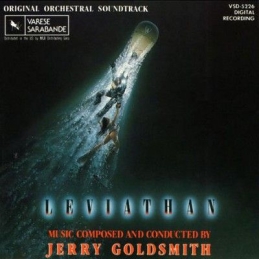
LEVIATHAN – Jerry Goldsmith
 THROWBACK THIRTY
Original Review by Jonathan Broxton
Hollywood has long had a history where multiple studios release films about the same general subject at around the same time, in an effort to one-up each other. In 1989, the hot topic was ‘people who live and/or work underwater being attacked by monsters,’ a somewhat niche genre if ever there was one. Sandwiched between the schlocky low-budget Deep Star Six and the more respectable and ultimately Oscar-winning The Abyss was this film: Leviathan, directed by George P. Cosmatos for MGM. It’s odd that Leviathan has been somewhat forgotten these days, considering that it starred Peter Weller hot-foot from his success as Robocop, and has a supporting cast of reliable character actors including Richard Crenna, Daniel Stern, Ernie Hudson, and Lisa Eilbacher. Weller plays Steven Beck, the head engineer working on an underwater mining rig, whose team discovers the wreck of a Soviet submarine called the ‘Leviathan’. Of course, this discovery leads to terrible things happening to Beck and his crew, as the mystery of what happened to the Leviathan is revealed. Unfortunately the film was not especially financially successful and, like I said, is virtually forgotten now, despite the fact that it boasted a respectable crew including the writers of Die Hard and Blade Runner, as well as special effects wizard Stan Winston. Read more…
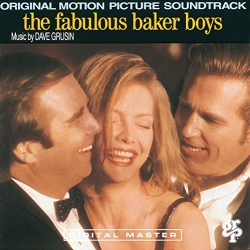
THE FABULOUS BAKER BOYS – Dave Grusin
 THROWBACK THIRTY
Original Review by Jonathan Broxton
The Fabulous Baker Boys is a musical comedy-drama, written and directed by Steve Kloves. It stars real-life brothers Jeff Bridges and Beau Bridges as Jack Baker and Frank Baker, jazz musicians who are struggling to find success. Frank is a happy family man, whereas Jack is single and lonely, his personal life little more than a series of one night stands. Things change when Suzie Diamond (Michelle Pfeiffer), a former escort and aspiring singer, comes into their lives; in addition to having a surprisingly terrific singing voice, she also increases their commercial potential, and soon the duo becomes a trio. However, as it always does, trouble rears its ugly head when Jack and Suzie start having romantic feelings for each other, a relationship which has the potential to drive the brothers apart. The film was a massive commercial and critical success at the time, and received four Academy Award nominations, but is now mostly remembered for the scene in which Pfeiffer performs an impossibly sexy rendition of Walter Donaldson and Gus Kahn’s “Makin’ Whoopee” while draped across Bridges’s grand piano. Read more…
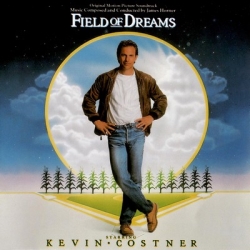
FIELD OF DREAMS – James Horner
 THROWBACK THIRTY
GREATEST SCORES OF THE TWENTIETH CENTURY
Original Review by Jonathan Broxton
Field of Dreams is a film about baseball, but it’s also about much, much more than that. It’s a film about regret, about missed opportunities, about the relationships we allow to fritter away through petty disagreements and neglect. It’s a film about life, about how the ambitions we had in our youth turn into something completely different in adulthood, and how we deal with that change. It’s a film about hope, about how each of us longs to re-capture that innocence and optimism we once had, and the things we will do to get it. And it’s a film about reconciliation, coming to terms with the mistakes we have made, and making things right. The film is written and directed by Phil Alden Robinson, based on the novel ‘Shoeless Joe’ by W. P. Kinsella; it stars Kevin Costner as Ray, a corn farmer who lives in Iowa with his wife Annie (Amy Madigan), and their young daughter Karen (Gaby Hoffmann), on the property that his late father left him. Ray had been estranged from his father for many years before he died, and the legacy of that relationship weighs heavily upon him. One day, while out in the cornfield, Ray hears a spectral voice whispering the words ‘if you build it, he will come,’ and he is subsequently inspired to build a full-size baseball diamond on his property. This event sends Ray off on a voyage of personal self-discovery involving Shoeless Joe Jackson (Ray Liotta) and the ghosts of the disgraced 1919 Chicago White Sox team, a reclusive political author (James Earl Jones), and a beloved country doctor (Burt Lancaster) who played just a single game in the major leagues for the New York Giants in 1922. Read more…
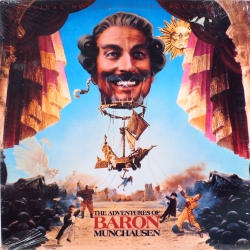
THE ADVENTURES OF BARON MUNCHAUSEN – Michael Kamen
 THROWBACK THIRTY
Original Review by Jonathan Broxton
The fictional German aristocrat Baron Hieronymus Karl Friedrich Freiherr von Munchausen was created in 1785 as a conduit for author Rudolf-Erich Raspe’s fanciful tales of absurdity and social and political satire. Munchausen had been a familiar name in literary circles for more than 200 years before writer-director and former Monty Python member Terry Gilliam embarked on making a film based on the ‘life’ of the Baron. A lavish and almost cartoonishly flamboyant adventure, the film stars John Neville as the elderly Baron, who interrupts a play based on his own life in order to correct the details. Munchausen regales the rapt audience with recollections of his astonishing life, during which he fought in a war against the Turks, traveled to the moon in a hot air balloon, was swallowed by an enormous sea creature, and much more besides – but by the end of the story many of the audience members are questioning whether the far-fetched tales really have any basis in reality. The film co-starred Eric Idle, Sarah Polley, Oliver Reed, Uma Thurman, Jonathan Pryce, and Robin Williams, and was the third of Gilliam’s Imagination trilogy of films that also included Time Bandits and Brazil, and which were intended to explore the ‘battle between fantasy and what people perceive as reality’. Unfortunately the film was a commercial disaster, grossing less than $10 million at the box office, although its visual elements were praised and received Academy Award nominations for Art Direction, Costume Design, Visual Effects, and Makeup. Read more…
FAREWELL TO THE KING – Basil Poledouris
 THROWBACK THIRTY
Original Review by Jonathan Broxton
Farewell to the King is an action-adventure-drama written and directed by John Milius, adapted from the 1969 novel L’Adieu au Roi by Pierre Schoendoerffer. The film stars Nick Nolte as Learoyd, an American soldier during World War II, who escapes from a Japanese firing squad and flees into the jungles of Borneo. Over time, Learoyd is adopted into a tribe of Dayaks, the original inhabitants of the island, and becomes their leader, finding peace and tranquility in his new, simple life. That life is shattered, however, when British soldiers led by Captain Fairbourne (Nigel Havers) and Colonel Ferguson (James Fox), approach the tribe and try to convince Learoyd to re-join the war against the Japanese. When he refuses to do so, Learoyd quickly finds himself having to fight to protect his new tribe. The film, which shares tonal and story similarities with films ranging from The Man Who Would Be King, Heart of Darkness, and Dances With Wolves, to Avatar, is virtually forgotten today. Behind-the-scenes in-fighting between Milius and the studio led to the film staggering into cinemas in the spring of 1989, having been heavily re-edited against the director’s wishes. It was not a success, either critically or financially, and would likely not be on anyone’s radar today were it not for the score, by Basil Poledouris. Read more…
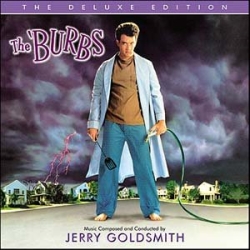
THE BURBS – Jerry Goldsmith
 THROWBACK THIRTY
Original Review by Jonathan Broxton
Director Joe Dante has made a career of peeking behind the white picket fences of suburban America and making films about the mysteries and horrors he finds there. In The Howling in 1978 he found werewolves. In Gremlins in 1984 he found an entire species of murderous little monsters. In 1989’s The Burbs, however, what Dante found was that, sometimes, the monsters are us. It’s a comedy-horror that explores the concept of the ‘nosy neighbor,’ and stars Tom Hanks as Ray Peterson, who lives on a quiet Norman Rockwell cul-de-sac with his wife Carol (Carrie Fisher), and spends time goofing off with his best friends Art (Rick Ducommun), who lives next door, and Mark (Bruce Dern), a slightly eccentric military veteran. Ray becomes obsessed with the sinister-seeming Klopek family when they move into a recently-vacated home on their block; convinced that the Klopeks are murderers, Ray and his buddies begin to stalk the family, determined to uncover the truth. The Burbs is a clever, subversive film that blends broad comedy hi-jinks with some more meaningful satire, something which also translated into Jerry Goldsmith’s original score. Read more…
THE FLY II – Christopher Young
 THROWBACK THIRTY
Original Review by Jonathan Broxton
David Cronenberg’s horror classic The Fly was such a critical and commercial success in 1986 that 20th Century Fox and Brooksfilms green-lit a sequel almost immediately. The Fly II was written by Frank Darabont and Mick Garris, and directed by Chris Walas, who supervised the first film’s makeup effects, and won an Academy Award for his grotesque efforts. The film is set several months after the events of the first one, and begins when Veronica (Geena Davis’s character from the first movie) gives birth to a baby, the son of Seth Brundle (Jeff Goldblum’s character). The baby was conceived after Seth began mutating into a fly, and Veronica dies in childbirth, but the infant – who is named Martin – initially appears to be healthy. Martin grows up in a laboratory owned by Anton Bartok (Lee Richardson), the scientist-businessmen who funded Seth’s research, but before long it becomes clear that Martin is different – he possesses a genius-level intellect, has incredible reflexes, and grows faster than a normal human, so much so that by the age of five he has the mental capacity of a 25-year-old man, and looks like Eric Stoltz. Eventually, Martin begins to question his life and existence, and slowly begins to learn some unnerving truths about Bartok, especially when he starts to exhibit some of the same fly-related symptoms as his father… Read more…
DANGEROUS LIAISONS – George Fenton
 THROWBACK THIRTY
Original Review by Jonathan Broxton
Dangerous Liaisons was originally a stage play by British playwright Christopher Hampton, whose work was an ambitious attempt to adapt Pierre Choderlos de Laclos’s classic 1782 novel Les Liaisons Dangereuses for modern audiences through the Royal Shakespeare Company. It is a dark drama about seduction and revenge set in France in the years immediately preceding the Revolution. Two aristocrats, the Marquise de Merteuil and the Vicomte de Valmont, conspire together to ruin the lives of various former lovers for no other reason than to satisfy their own amusement and petty jealousies; eventually, they fixate on the virginal Cécile de Volanges, who is engaged to Merteuil’s former lover, and Madame de Tourvel, the devoutly religious wife of one of Valmont’s supposed friends. What transpires is a damning exposé of the insouciance of the rich, who use wealth and sexuality as weapons, and indulge in selfish whims and fancies with no regard for the destruction it causes to those around them. Hampton re-wrote his play for the big screen in 1988, where it was directed with lavish decadence by Stephen Frears. Glenn Close starred as the merciless Merteuil, John Malkovich was suave as the predatory Valmont, and Michelle Pfeiffer and Uma Thurman suffered as the unwitting subjects of their ploy. Both Close and Pfeiffer received Oscar nominations for their performances, and the film was a critical success, winning three Academy Awards, picking up two more nominations, and inspiring an updated version – Cruel Intentions – set in New York in 1999. Read more…
THE ACCIDENTAL TOURIST – John Williams
 THROWBACK THIRTY
Original Review by Jonathan Broxton
The Accidental Tourist is a romantic drama film directed by Lawrence Kasdan, adapted from the acclaimed novel by Anne Tyler. It stars William Hurt as Macon Leary, an introverted travel writer whose relationship with his wife Sarah (Kathleen Turner) begins to break down after the death of their son. Sarah eventually leaves him and moves out, pending a divorce, and when Macon breaks his leg after tripping over his disobedient dog and falling down the stairs, he moves back into his childhood home with his eccentric siblings to recuperate. After a while, Macon hires the quirky Muriel Pritchett (Geena Davis) as a dog obedience trainer; despite the enormous differences in their personalities, a spark of attraction develops between the two, and they begin a relationship. However, Macon’s new life is thrown into turmoil when Sarah returns, wanting to re-kindle their marriage, forcing Macon to make some difficult decisions. The film was an enormous critical success, earning Academy Award nominations for Best Picture and Best Adapted Screenplay, and winning Geena Davis an Oscar for Best Supporting Actress. Read more…

Shop at the Movie Music UK Store

Member of the

 MOVIE MUSIC UK